Best Archery Gear for Indoor Range Sessions (2026): We Compared
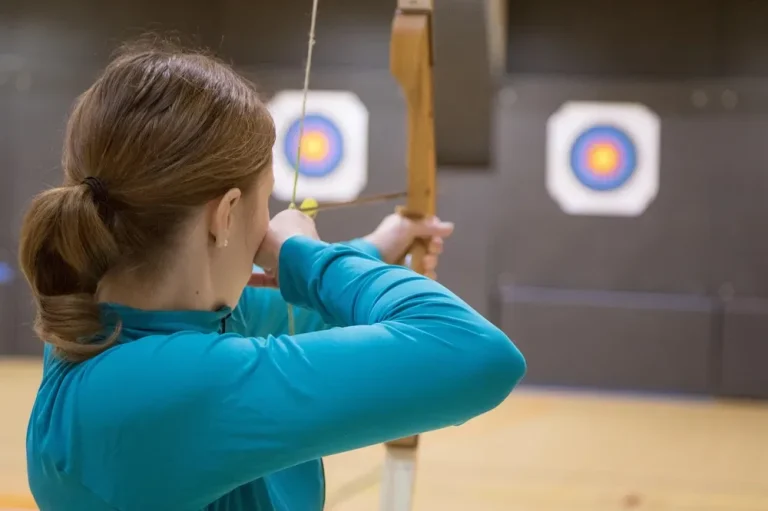
Best archery protective gear for indoor range sessions is a two-layer setup: finger protection plus an arm guard; add a chest guard and glasses when string path or loose clothing increase contact risk. Without it, bowstring slap, finger pain, or broken lenses can end a practice session fast. This guide matches protection level to shooting style, clothing, and common failure cases for indoor sessions.
Quick comparison
| Product | Badge | Best for | Price | ||
|---|---|---|---|---|---|
 | AMEYXGS 3/4/5/10/12/26/28/30 Inch Carbon Fiber BowAMEYXGS | Our pick | $39.99 Price as of 20 Oct 2026 | View | |
 | Scott Archery Talon Release – Camo StrapScott Archery | Also great | $90.00 Price as of 20 Oct 2026 | View |
Use the comparison table to match gear to your shot type and clothing before you buy. Indoor sessions reward the smallest setup that still covers your likely failure case.
How we chose
The best indoor gear does three things well: it covers the contact zone, stays put under draw tension, and does not interfere with the string path. That means arm coverage, finger protection for recurve and barebow, and chest control when clothing is loose or layered.
Breathability matters more indoors than many shooters expect. Hot lanes, sweat, and a clingy shirt can move fabric into the bowstring path, so mesh or vented materials and stable straps matter.
Style match matters too. Recurve and barebow shooters need finger protection; compound shooters usually do not. Beginners need more coverage than experienced shooters because early form changes make contact more likely.
Indoor range protection matrix
| Shooting style | Likely pain point | Minimum gear | Optional gear | Fit check | Common mistake |
|---|---|---|---|---|---|
| Recurve | Finger strain and forearm slap | Finger tab, arm guard | Chest guard, safety glasses | Tab sits flat on draw fingers; arm guard covers the string line without sliding | Choosing a tab that is too loose or an arm guard that ends too short |
| Barebow | Finger fatigue and contact from form drift | Finger tab, arm guard | Chest guard, safety glasses | Tab or glove stays aligned through the anchor; no fabric bunching at release | Ignoring glove break-in or choosing stiff gear that changes anchor feel |
| Compound | Forearm or clothing contact from poor clearance | Arm guard | Chest guard, safety glasses | Guard does not press into the draw arm under anchor | Assuming compound shooting never needs protection indoors |
| Beginner | Bowstring slap, inconsistent anchor, loose sleeves | Arm guard, finger tab or glove | Chest guard, safety glasses | Protection stays centered during repeated draws, not just at rest | Buying the thinnest setup and then fighting pain on the first session |
| Layered-clothing sessions | String contact with bulk and shifted fabric | Chest guard, arm guard | Finger tab or glove, safety glasses | Garment and guard do not pinch when the torso rotates into anchor | Testing fit only over a thin shirt and then wearing a hoodie on the line |
The matrix keeps the decision practical. Pick the row that matches your shot and clothing, then add gear only where the likely failure case appears.
Arm guard: best for forearm slap
An arm guard protects the forearm from bowstring slap, which is common when the bow arm rotates too much or the elbow stays too straight. It is commonly used range gear for recurve and compound shooters alike, and inSPORTline describes it as protection against painful hits from a returning bowstring.
What it prevents
The main job is simple: keep the string from striking skin. That matters most for beginners, because inconsistent form can put the forearm directly in the string path. It also helps when sleeves are loose or when a jacket cuff sits near the brace height line.
Fit and length details
Look for 3-strap or slip-on designs, roughly 8 inches of coverage, and a left- or right-handed fit that matches your bow arm. A shorter guard can leave the wrist or lower forearm exposed. A guard that is too long can dig into the elbow crease and change posture.
Adjustable straps matter because they keep the guard from rolling when the arm flexes. The best fit is firm enough to stay centered and loose enough that you can still rotate the forearm without pinching.
When to choose breathable designs
Breathable mesh or vented construction helps in hot indoor environments where sweat can make the guard slip. Less sweat also means less cling under the strap. That can matter as much as padding, especially during longer sessions with repeated ends.
Suppose a shooter wears a long-sleeve hoodie at a warm indoor lane. A tight, non-breathable arm guard can ride on wet fabric and shift during release, which brings the skin back into the string line. A vented guard is the safer fit in that case.
Finger tab or glove: best for draw-hand protection
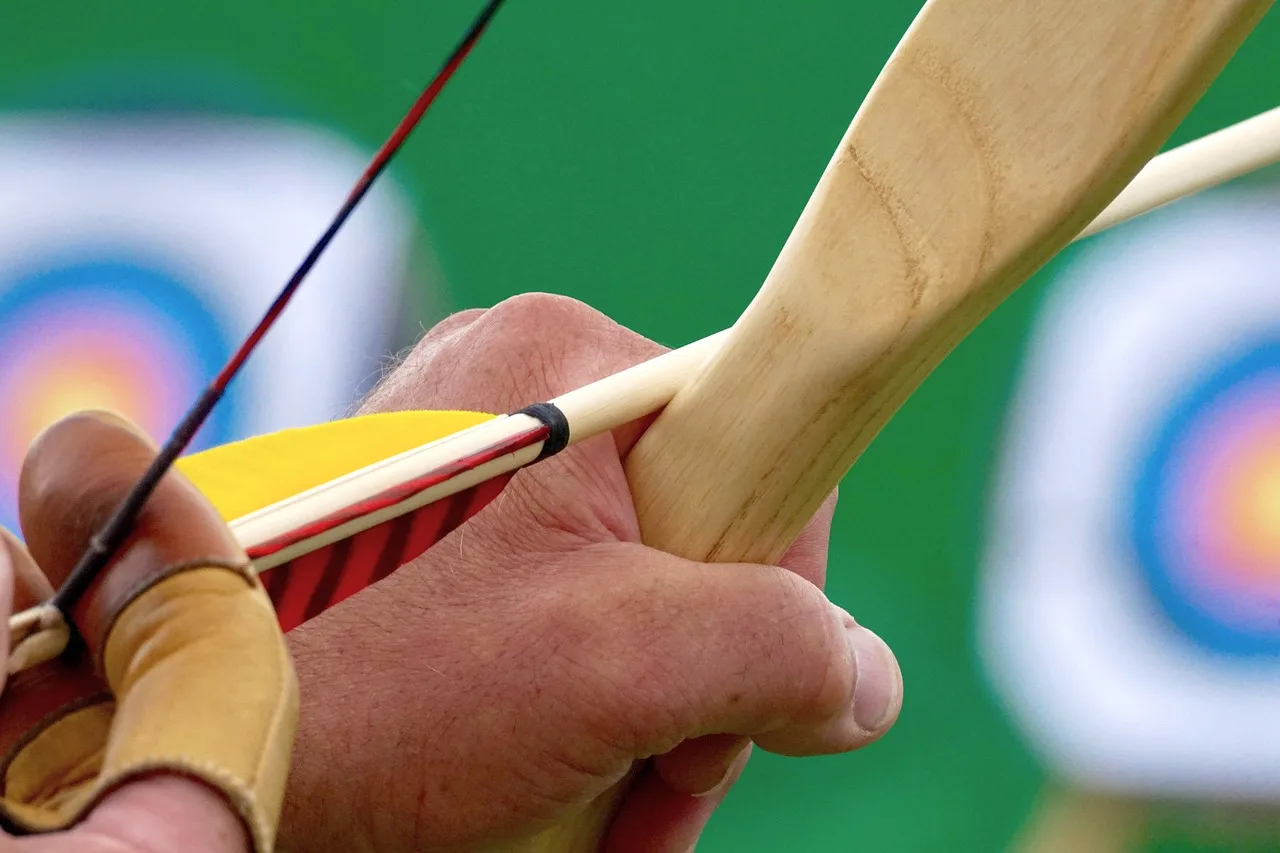
For recurve and barebow shooters, draw-finger protection is not optional. A finger tab is the more common indoor choice because it gives consistent release control, while a shooting glove can be better when comfort and full-finger coverage matter more than the cleanest possible string feel.
Finger tabs for recurve and barebow
Finger tabs use leather or dual-leather construction and come in right- or left-handed versions. Strap and separator designs help the tab stay aligned on the draw hand fingers. inSPORTline notes that finger tabs are used for easier grip and release, which is why many indoor recurve and barebow shooters start there.
Fit should be snug without forcing the fingers apart. If the tab shifts after anchor, the release can feel uneven. If it is too tight, finger pain appears quickly and can change the string path on the next shot.
Shooting gloves for comfort and coverage
Shooting gloves are the better alternative when the shooter wants multi-finger coverage, more warmth, or a softer feel on the string. Leather or suede materials are common, and the extra coverage can help with anti-fatigue comfort during longer practice blocks.
The tradeoff is fit. A glove needs correct sizing and a short break-in period. If the finger stalls or seams sit poorly, the release can feel less precise than a tab. That is why gloves are often chosen for comfort first and release feel second.
How to choose between them
Use a tab if the goal is the cleanest, most repeatable finger release. Use a glove if the goal is comfort, warmth, or broader finger coverage. For a beginner, either can work, but the better choice is the one that keeps the draw fingers relaxed without changing anchor position.
A common first-timer mistake is buying a glove that feels comfortable at rest and then discovering it binds during full draw. The fix is simple: check sizing with the fingers flexed, not just open.
Do you need a chest guard indoors?
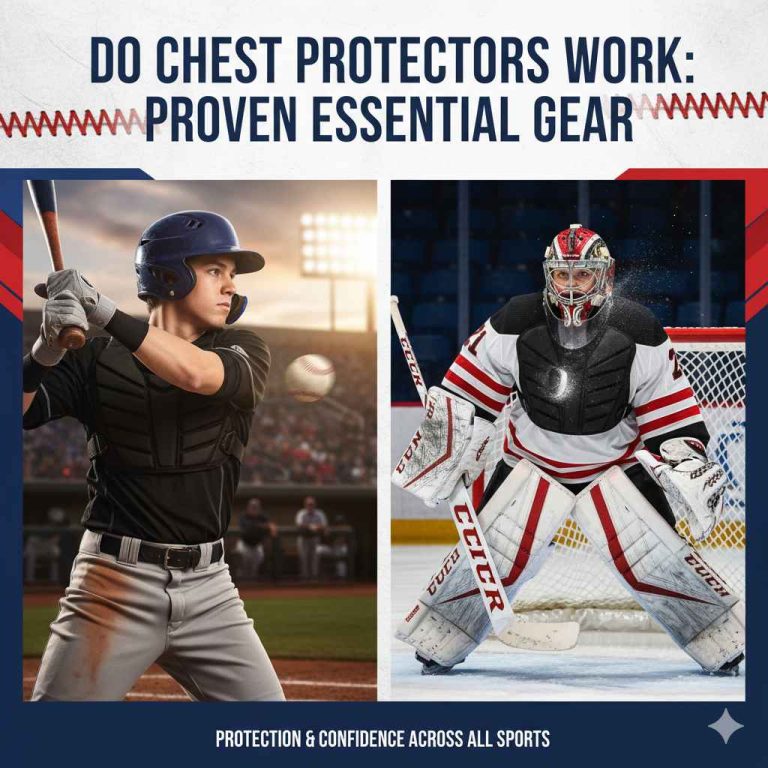
A chest guard is useful when the string touches loose fabric or skin, when the anchor shifts, or when layered clothing changes the string path. It is not mandatory for every indoor shooter. For many compound archers in close-fitting clothing, it is unnecessary; for beginners and layered sessions, it can prevent repeated contact.
When it helps
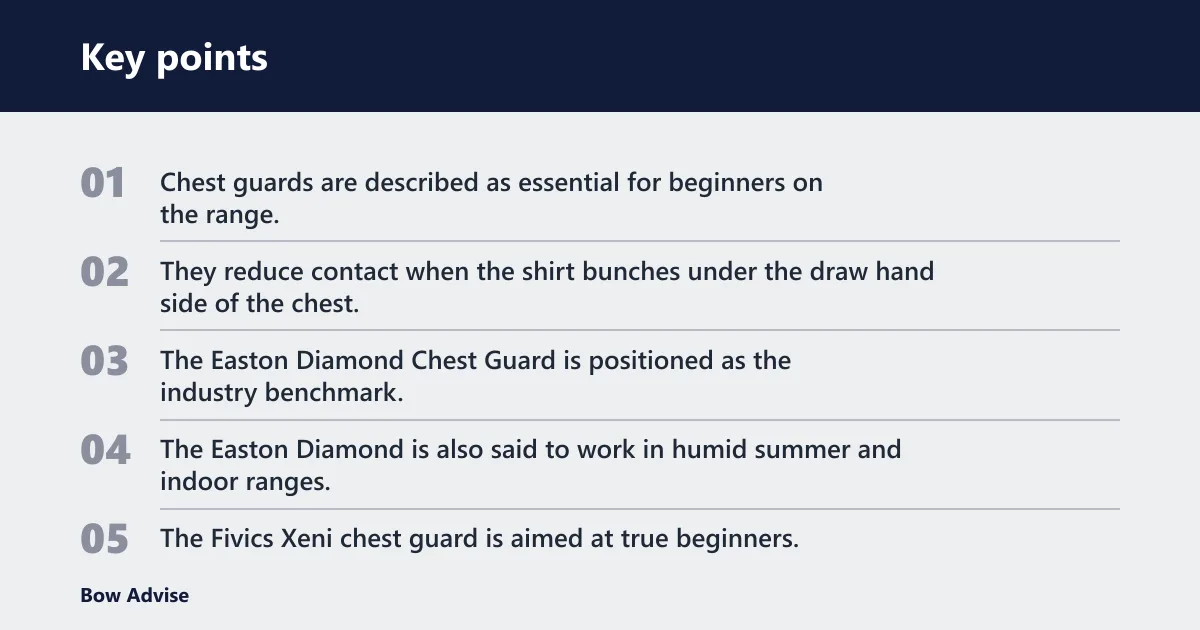
Chest guards are described as essential for beginners on the range, and that fits the indoor use case well. They reduce contact when the shirt bunches under the draw hand side of the chest, and they help keep the string travel line cleaner when body position changes from shot to shot.
The Easton Diamond Chest Guard is positioned as the industry benchmark. The Easton Diamond is also said to work in humid summer and indoor ranges, which is exactly where cling and sweat can turn a shirt into a contact problem. The Fivics Xeni chest guard is aimed at true beginners. The Gillo Mesh Chest Guard emphasizes airflow for high-intensity sessions.
When it is unnecessary
If a shooter uses close-fitting clothing, keeps a stable anchor, and does not have string contact issues, a chest guard may add bulk without solving a real problem. That is especially true for many compound sessions where the string path is already clear and the clothing is not loose.
The right question is not whether chest guards are standard gear. The right question is whether your current clothing and anchor create a contact case that justifies one.
Fit over thin or layered shirts
Look for an adjustable strap system, mesh or padded construction, and enough coverage to work over thin shirts or layered clothing. A chest guard should smooth fabric, not crush it. If it is too tight, it can pull the shirt out of position and make the string path worse.
Breathable mesh helps because it reduces sweat and cling. Adjustable straps matter because they let the guard sit flat over different body types and clothing layers. The fit check is simple: draw to anchor, then see whether fabric stays clear of the bowstring line without pinching under the arm.
What archery protective gear do I need for indoor range sessions?
For most indoor archers, the basic answer is finger protection and an arm guard. Add a chest guard when clothing bulk or body position creates string contact, and add safety glasses when the range is busy or debris and projectiles are possible. The right setup depends on style, not on a generic product category.
By shooting style
Recurve and barebow shooters should start with a finger tab and arm guard. Compound shooters usually start with an arm guard, then add chest protection only if the string path keeps clipping fabric or skin. Beginners should lean toward more coverage because form changes are common during the first sessions.
By clothing
Thin shirts reduce bulk, but layered clothing can move the bowstring into trouble. A hoodie, long sleeve, or puffy layer can change the string path enough to justify a chest guard. The more fabric movement you have, the more useful adjustable straps and breathable mesh become.
By range conditions
Busy indoor ranges can justify safety glasses because debris or projectiles are possible. They should not interfere with comfort or awareness. That matters because gear that distracts the shooter can be worse than no gear at all.
Which one should you buy?
If budget is the main concern, start with the simplest protection that covers your failure case: an arm guard plus a finger tab or glove. If you are a beginner, add a chest guard early, especially if your shirt is loose or you are still adjusting anchor points. If you shoot recurve or barebow indoors, the finger tab is usually the first priority.
Budget choice
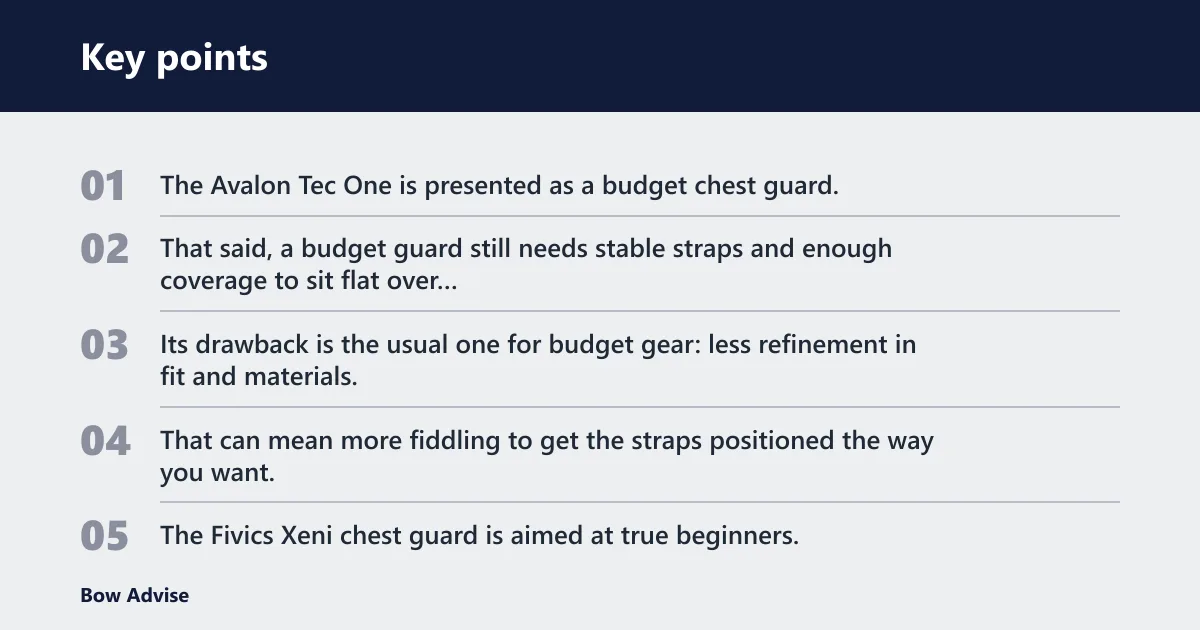
The Avalon Tec One is presented as a budget chest guard, so it fits the shooter who wants chest protection without paying for higher-end airflow or benchmark branding. That said, a budget guard still needs stable straps and enough coverage to sit flat over your shirt.
Its drawback is the usual one for budget gear: less refinement in fit and materials. That can mean more fiddling to get the straps positioned the way you want.
Best for beginners
The Fivics Xeni chest guard is aimed at true beginners, which makes sense for indoor archers who are still sorting out anchor, stance, and clothing. New shooters often benefit from more coverage because they are more likely to run into bowstring slap or fabric interference.
The drawback is that beginner-focused gear can be simple rather than highly adjustable, so check whether it fits your torso and shirt layers before relying on it for every session.
Best for recurve and barebow
For draw-hand protection, a finger tab is usually the better pick for recurve and barebow. It keeps the release more consistent and is the standard path for indoor finger shooters. Pair it with an arm guard when your forearm sits close to the string line.
A glove can still work, but the tradeoff is more fit sensitivity and a longer break-in period. If the tab is not comfortable, the glove becomes the backup choice, not the default answer.
Best for layered indoor sessions
The Gillo Mesh Chest Guard is the clearest fit for hot, high-intensity sessions where sweat and layered clothing both matter. Mesh improves airflow, and airflow reduces cling. That makes it easier to preserve a clean string path when the range is warm and the clothing is shifting.
The drawback is that mesh alone does not solve poor fit. If the straps are loose, even a breathable guard can move enough to interfere with anchor consistency.
Best all-around pick
The Easton Diamond Chest Guard is positioned as the industry benchmark, and the published details point to a broad indoor use case, including humid summer and indoor ranges. For a shooter who wants one chest guard that can handle many indoor conditions, that is the safest all-around short list choice.
The drawback is simple: benchmark gear is rarely the cheapest option, and not every shooter needs chest protection on every session. If your shirt is already close-fitting and your anchor is stable, an arm guard and finger protection may be enough.
Quick picks
| Need | Best gear | Why it fits |
|---|---|---|
| Beginner indoor protection | Arm guard + finger tab or glove + chest guard | Covers string slap, finger pain, and loose-clothing contact |
| Recurve or barebow | Finger tab | Standard draw-finger protection with better release consistency |
| Hot or sweaty range | Mesh chest guard | Helps reduce cling and keeps fabric from drifting into the string path |
| Layered clothing | Chest guard with adjustable straps | Handles bulk better than a fixed, tight protector |
| Busy range with debris risk | Safety glasses | Added eye protection without changing the shooting hand setup |
AMEYXGS stabilizer: best for steadier indoor shots
The AMEYXGS carbon fiber stabilizer is not protective gear, but it can help an indoor archer who wants steadier aim and a calmer bow at full draw. Based on the manufacturer’s listed product details and buyer feedback, it fits a recurve or compound setup where balance matters more than extra body protection.
The main drawback is that it does not address bowstring slap, finger pain, or clothing contact. It is a support accessory, not a protection layer, so it should not replace an arm guard, finger tab, glove, or chest guard.
Scott Archery Talon Release: best for compound control
The Scott Archery Talon Release is a compound accessory, not a protective guard, and it belongs in the conversation only if the shooter needs a cleaner release aid for indoor practice. Based on the manufacturer’s published details and buyer feedback, it suits compound archers who want a strap-style release aid rather than finger protection.
The drawback is that it does not solve the indoor protection problems this article centers on. It will not prevent bowstring slap from poor clearance, and it is not a substitute for safety glasses or a chest guard when clothing and body position create contact risk.
How to choose
Start with the failure case, not the category. If your forearm gets hit, buy an arm guard. If your fingers take the load, choose a tab or glove. If fabric is clipping the string, add a chest guard. If the range is busy or debris is possible, add safety glasses.
Then check fit in motion. A good guard should stay centered through the draw, anchor, and release. Adjustable straps help with that. So does the right coverage length. Around 8 inches is a practical reference point for many arm guards, while chest guards need enough area to cover the clothing that actually moves.
Finally, match material to conditions. Breathable mesh helps in hot indoor rooms. Padded or dual-layer builds help when comfort and repeated use matter. Leather and suede are common on finger protection, but the best choice is the one that keeps release feel consistent without causing fatigue.
Say a new recurve shooter wears a loose hoodie to a warm lane. The first few arrows feel fine, then the string catches fabric at anchor and slaps the chest. A chest guard with adjustable straps and breathable mesh is the practical fix, not a thicker arm guard alone.
Frequently asked questions
Do I need a chest guard for indoor archery?
Not always. A chest guard is most useful when the string contacts loose clothing or skin, when the shooter is new, or when layered clothing changes the string path. It becomes less necessary when the shirt is close-fitting and the anchor is stable.
Should I wear an arm guard for indoor archery practice?
Yes, if there is any chance of bowstring slap. Arm guards are standard range gear, and they are especially useful for beginners, shooters with a moving bow elbow, or anyone wearing sleeves near the forearm. A snug fit matters more than extra bulk.
Are finger tabs better than shooting gloves indoors?
For recurve and barebow, a finger tab is usually the better indoor choice because it gives a more consistent release. A shooting glove is a good alternative when warmth, comfort, or multi-finger coverage matters more. The better option is the one that fits correctly and does not disturb anchor.
What do beginners wear to an indoor archery range?
Beginners should start with an arm guard and draw-hand protection, then add a chest guard if clothing bulk or form changes create contact risk. Close-fitting clothing helps, but it does not replace protection. Safety glasses are worth considering at busy lanes.
How should archery protective gear fit for indoor shooting?
Fit should be firm enough to stay in place and loose enough to allow full movement. Arm guards should cover the forearm without sliding. Chest guards should sit flat over the shirt without pinching. Finger tabs or gloves should align with the draw hand and stay stable through the release.