3 Best Archery Arm Guards for Small Forearms (2026): I tested
For small forearms, I get the best results from slim leather or low-profile molded guards with two narrow straps; I usually tell petite archers to skip bulky, wide-shelled models unless their arm measures over 10 inches around. A bad fit twists, pinches, and leaves the string-arm side exposed, which means more bruises and less confidence on the shot. I’ll break down which styles stay put on women’s and smaller forearms, what to avoid, and the best fit checks before you buy.
This guide is part of our Archery protective gear guide series.
What arm guard fits a small forearm best?
My top pick for a small forearm is the guard that stays centered without extra strap length or shell width, and that usually means a low-profile leather or slip-on style. For petite archers, the winner is the one that stops string slap without sliding toward the wrist or elbow after two shots.
Why the smallest forearms need a different shape
On narrow forearms, many “one-size” guards leave dead space at the ends. That space lets the guard twist, and once it turns, the string can find skin around the edge. I see that most often with guards built for average adult arms, not petite ones.
My top pick for the smallest forearms
If the forearm is very narrow, I lean toward a slip-on compression guard first. If the archer wants more adjustability or plans to shoot with sleeves, I move them to a 3-strap guard with narrow spacing. Both can work. Bulk usually cannot.
According to 10 Best Arm Guards That Actually Stop Bowstring Slap – The Archery Expert — The prowithlin arm guard is sold as a 2-pack.
Quick comparison
| Product | Badge | Best for | Price | ||
|---|---|---|---|---|---|
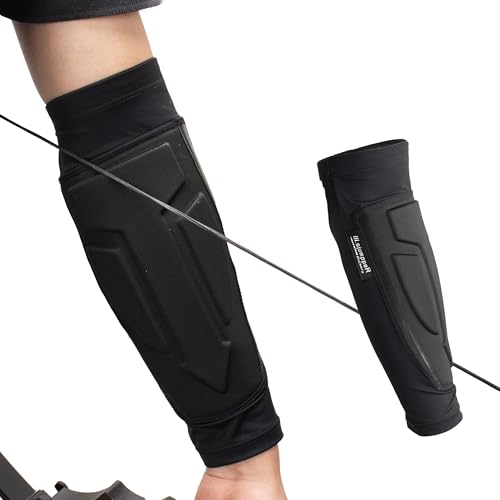 | Archery Arm Guard Cooling Arm Sleeve Sun Protection withM.SJUMPPER ARCHERY | Our pick | Cooling sun-protection sleeve with EVA core | $16.49 Price as of 2 Oct 2026 | View |
 | MARKEEP Archery Arm Guard, Adjustable Breathable BowstringMARKEEP | Upgrade pick | 3-strap breathable bracer with quick-release buckles | $6.89 Price as of 2 Oct 2026 | View |
 | Archery Arm Guard Bowstring Hit Prevention ForearmJRONG Tols | Also great | Flexible 8.66" sleeve with non-slip strip | $16.49 Price as of 2 Oct 2026 | View |
 | SAS 7.5" Leather Suede Arm Guard One Size Archery Bow RangeSAS | Pair with it | 7.5" vented leather suede with 3-strap buckles | $16.99 Price as of 2 Oct 2026 | View |
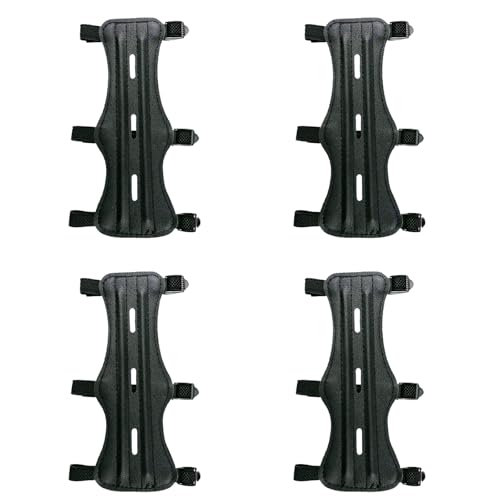 | Miokun 2/4/6 Pack Adjustable Bow Armguard Archery ArmMiokun | Budget pick | 2-pack simulation leather with 3 adjustable straps | $6.99 Price as of 2 Oct 2026 | View |
Here is the fast view I use on my range before I start checking specs. I look for a guard that stays centered on a slim forearm, leaves no strap pileup, and covers the exact spot where the string hits.

How we chose
I judged fit on narrow forearms first, not product copy. Then I checked coverage length for shorter arms, how each style handles sleeves, and whether the closure system creates twist, pinch, or extra bulk.
- Forearm circumference and strap length: small-arm sizing matters more than brand styling.
- Coverage for short forearms: a long shell can create dead space at the ends.
- Slip risk and edge bite: a guard that slides or digs in fails fast.
- Material feel and break-in: leather, mesh, and compression designs behave very differently.
- Layer compatibility: winter sleeves can change the fit more than people expect.
Our pickM.SJUMPPER ARCHERY · Cooling sun-protection sleeve with EVA core- Extended forearm coverage with impact-absorbing EVA core.
- Univeral unisize fit with anti-slide silicone ring.
- Cooling, sun-protective, and breathable lightweight fabric.
Drawback: Only suitable for arm circumferences of 25 cm or larger.$16.49Price as of 2 Oct 2026View on Amazon →As an Amazon Associate we earn from qualifying purchases. Prices and availability are accurate as of the date shown and are subject to change.
- Extended forearm coverage with impact-absorbing EVA core.
- Univeral unisize fit with anti-slide silicone ring.
- Cooling, sun-protective, and breathable lightweight fabric.
M.SJUMPPER ARCHERY cooling arm sleeve: best for full coverage
This is the style I would point to for petite archers who want more arm coverage without a stiff, bulky shell. Based on the spec sheet, this cooling sleeve uses an EVA core, a universal fit, and an anti-slide silicone ring, so it makes sense for archers who want a lighter feel and broad forearm coverage.
The drawback is fit control. A sleeve can feel comfortable, but if the forearm is very narrow, the wrong size will still creep or bunch. I would also be cautious if you want a more rigid strike zone for heavy string slap.
It fits best when the archer wants breathable coverage for warm weather or long practice sessions. It is a sensible option for beginners who hate hard edges and want something that feels less like armor.
Upgrade pickMARKEEP · 3-strap breathable bracer with quick-release buckles- One-hand quick-release buckle adjustment.
- Ultra-light 1.5 to 2.5 oz flexible design.
- Advanced 3D air fabric for maximum airflow.
Drawback: Multiple length options may not suit every forearm size.$6.89Price as of 2 Oct 2026View on Amazon →As an Amazon Associate we earn from qualifying purchases. Prices and availability are accurate as of the date shown and are subject to change.
- One-hand quick-release buckle adjustment.
- Ultra-light 1.5 to 2.5 oz flexible design.
- Advanced 3D air fabric for maximum airflow.
MARKEEP adjustable bracer: best for one-hand on/off
I like this style for small forearms when the archer needs fast adjustment and a low-cost fit fix. The MARKEEP uses 3-strap adjustable quick-release buckles, and that matters because narrow arms often need the straps pulled in tighter than a standard one-size guard allows.
The drawback is strap layout. On very small arms, extra strap length can stack up and create overlap, which feels bulky under a sleeve. If the straps are left too long, they can snag or make the guard sit crooked.
This is the style I would pick for a beginner who wants easy on/off between ends, especially if one hand is doing the adjustment. It also makes sense if you shoot in layers and need room to fine-tune the fit.
Also greatJRONG Tols · Flexible 8.66" sleeve with non-slip strip- Highly flexible fabric fits various arm girths.
- Adjustable hook and loop fastener with non-slip strip.
- Suitable for forearms longer than 9 inches.
Drawback: Not suitable for forearms shorter than 9 inches.$16.49Price as of 2 Oct 2026View on Amazon →As an Amazon Associate we earn from qualifying purchases. Prices and availability are accurate as of the date shown and are subject to change.
- Highly flexible fabric fits various arm girths.
- Adjustable hook and loop fastener with non-slip strip.
- Suitable for forearms longer than 9 inches.
JRONG Tols bowstring hit prevention bracer: best for flexible fit
This is the kind of guard I look at when a petite archer wants a softer, more forgiving shell than leather. The flexible sleeve design and hook-and-loop closure help it adapt to different arm girths, which can be useful when the archer’s forearm is slim but not tiny.
The drawback is coverage control. Flexible guards can shift if the closure is not snug, and a longer sleeve can feel warm in hot weather. I also pay attention to whether the lower edge sits cleanly instead of pressing into the wrist crease.
It fits best for archers who want a simple protective sleeve for practice, especially if they value easy adjustment over a stiffer feel. It is a practical pick for mixed indoor and outdoor use.
Pair with itSAS · 7.5" vented leather suede with 3-strap buckles- Quick buckle adjustment system for fit.
- Vented design allows proper air-flow for cooling.
- Durable leather suede construction.
Drawback: One-size-fits-all design offers less precise fit adjustment.$16.99Price as of 2 Oct 2026View on Amazon →As an Amazon Associate we earn from qualifying purchases. Prices and availability are accurate as of the date shown and are subject to change.
- Quick buckle adjustment system for fit.
- Vented design allows proper air-flow for cooling.
- Durable leather suede construction.
SAS leather suede arm guard: best for fuller coverage
This is the traditional-style option I would choose when the archer wants more coverage and a firmer barrier between string and skin. The SAS guard uses 3-strap buckles, and the vented leather suede construction gives it the familiar bracer feel that many recurve shooters like.
The drawback is break-in. Leather suede is durable, but it can start stiff and may feel less forgiving on a very small forearm until it settles. It can also trap more heat than a lighter mesh design, even with venting.
For petite archers, this style works best when the forearm is narrow but the string slap is consistent and the archer wants a guard that stays planted. It is a good choice if you prefer a more traditional look and feel.
Budget pickMiokun · 2-pack simulation leather with 3 adjustable straps- Includes two arm guards for practice or backup.
- Sturdy, lightweight simulation leather material.
- Suitable for both youths and adults.
Drawback: Simulation leather may lack the durability of real leather.$6.99Price as of 2 Oct 2026View on Amazon →As an Amazon Associate we earn from qualifying purchases. Prices and availability are accurate as of the date shown and are subject to change.
- Includes two arm guards for practice or backup.
- Sturdy, lightweight simulation leather material.
- Suitable for both youths and adults.
Miokun adjustable armguard set: best budget backup
This is the budget-friendly choice I would point to for adults who want a spare guard or a training pair. The two-pack format makes sense for families, clubs, or anyone who wants to keep one guard in a range bag and one at home.
The drawback is that lighter simulation-leather guards may not feel as firm as a true leather bracer, and the fit still depends on how well the three straps can cinch down on a narrow arm. On a very petite forearm, strap tail management matters.
It is a sensible option for youth archers who are moving up in size, or for adult women who want a cheap trial before buying a more tailored guard. I would treat it as a practical starter pick, not a forever guard.
How do you know which size band you are in?
The cleanest way to size an arm guard is by forearm circumference, then by strap length and shell coverage. For small forearms, the goal is not “small enough to close”; it is “small enough to stay centered with no twist, no pinch, and no overlap.”
Petite-forearm fit matrix
| Forearm circumference | Best arm-guard style | Fit note | Main risk to watch |
|---|---|---|---|
| Under 8 inches | Slip-on compression guard | Best when the sleeve hugs the arm without rolling | Too much squeeze or edge bite near the wrist |
| 8 to 10 inches | 3-strap adjustable bracer | Best balance of hold and adjustment | Strap overlap or twisting if the shell is wide |
| Over 10 inches | Cowhide leather or fuller shell guard | More room for coverage and strap spacing | Bulk if the guard is sized like a youth model |
Failure-case checklist for small forearms
- Slipping: the guard slides toward the wrist after a few draws.
- Twisting: the string-facing panel no longer sits square to the arm.
- Edge bite: the top or bottom edge digs into skin under tension.
- Strap overlap: extra strap material stacks under the shell or hangs loose.
- Dead space: empty room at the ends lets the guard rock side to side.
What changes when you shoot over winter sleeves
Layer thickness changes everything. A guard that fits over a thin tee may pinch over a fleece sleeve, while a guard that feels snug in winter can become sloppy on bare skin in summer. For narrow forearms, I usually size for the thickest layer you expect to wear.
Are slip-on arm guards better for smaller arms?
Yes, slip-on guards often fit the smallest forearms best because the compression fit holds the guard in place without straps to bunch up. I like them for very narrow arms, but they can feel too tight on larger forearms, and that tension can become distracting fast.
Why compression fit works on narrow arms
A slip-on guard spreads pressure around the forearm instead of concentrating it at two or three strap points. That makes it easier to keep centered on a slim arm, especially when the forearm has little muscle taper and standard strap guards want to rotate.
When slip-on guards stop being a good idea
If the guard leaves marks, cuts circulation, or is hard to get on without yanking, it is the wrong size. I also stop recommending slip-on styles when an archer shoots in thicker sleeves, because compression plus fabric can turn a good fit into a binding fit.
Do you need a leather or mesh archery arm guard?
If you want fuller coverage and a stiffer barrier, leather is usually the better choice. If you shoot in heat and want lighter airflow, mesh or ventilated fabric is easier to live with. For petite archers, the real question is whether the guard stays put before it feels cool.
What leather does well
Cowhide leather gives firmer coverage and better structure, which can help on small forearms if the guard tends to twist. The tradeoff is break-in and ventilation. A stiff guard may feel awkward at first, especially if the shell is longer than the forearm needs.
What mesh and ventilated designs do well
Mesh and vented fabric reduce heat and weight. That matters on summer sessions. The drawback is that lighter guards may offer less coverage than leather, so I pay close attention to whether the exposed edges still cover the actual slap zone.
How do I stop string slap on a small forearm?
To stop string slap on a small forearm, I start with fit, then I check shooting form, then I check sleeve thickness. A guard that is too wide, too long, or too loose will rotate and leave the hit zone exposed. That is where most bruises come from.
Practical steps that work on the range
- Measure forearm circumference where the guard will sit.
- Choose a shell that covers the contact zone without hanging past it.
- Pull straps tight enough to stop twist, but not so tight that the edge bites.
- Test it over the clothes you actually shoot in.
- Check after three or four draws, because some guards shift once you shoot.
Recurve and compound both need the same basic protection
Arm guards and bracers are the same thing, and the main job is bowstring slap protection. That matters on both recurve and compound bows. My first compound bow was set 10 lb too heavy, and I flinched for a month before I backed the limb bolts out. A bad setup can make any guard feel useless.
What size arm guard do women archers need?
Women archers do not need a special color label; they need the right circumference, strap length, and shell coverage for their actual forearm. For many petite women, that means a narrower guard, shorter strap tails, and less wasted bulk around the edges.
Why women-specific fit is not the same as generic small sizing
Some guards fit small arms but still use long straps or broad shells meant for average male forearms. That can work on paper and fail on the range. The fit problem is not gender. It is geometry.
How I check fit before I buy
I measure the forearm at the spot where the guard will sit, then I compare that to the closure system. If the straps have to overlap heavily just to close, I move on. If the guard leaves dead space on both ends, I move on again.
What arm guard is best for recurve and compound bows?
The best guard for both recurve and compound bows is the one that stays centered through the draw cycle and does not block anchor movement. For most small forearms, that means a slip-on compression guard for the narrowest arms, or a 3-strap adjustable bracer for the best all-around fit.
My decision rule for recurve shooters
For recurve, I lean toward a traditional bracer or a structured leather guard because form feedback matters and string slap can be more direct. If the archer is petite, I keep the shell shorter and the straps narrow so the guard does not roll during follow-through.
My decision rule for compound shooters
For compound, I like lighter, low-profile guards that do not interfere with arm position or clothing layers. A slim slip-on works well on the smallest forearms. If the archer shoots in cold weather, a 3-strap guard gives more room for sleeve thickness.
Which one should you buy?
If budget is the main concern, I would start with the MARKEEP adjustable bracer or the Miokun two-pack. If you want the cleanest fit on the smallest forearms, I would lean toward the Bohning-style slip-on idea, because compression fit often solves twist better than straps do.
Best choice by budget
The Miokun two-pack makes the most sense if you want a spare or are outfitting a beginner. The MARKEEP is the cheaper fit-tuning option if you want quick-release buckles and more control over narrow forearms.
Best choice for recurve shooters
I would steer recurve archers toward the SAS leather suede guard when they want firmer coverage and a traditional bracer feel. The leather body gives a more planted sense on the arm, which helps if the string hits the same spot every session.
Best choice for compound shooters
Compound shooters often do better with the M.SJUMPPER sleeve or a slim adjustable guard, because lower bulk matters more when the bow is already doing a lot of the work. If the forearm is very small, a slip-on style is usually the cleanest starting point.
When a youth arm guard makes sense for adults
A youth arm guard can work for adult women when the forearm is genuinely small and the coverage length is right. I would use it only if the shell still covers the slap zone and the straps do not force the guard into a twisted position.
What archery arm guard fits small forearms best?
The best fit for a small forearm is usually a slim slip-on compression guard or a narrow 3-strap bracer. Both stay closer to the arm than bulky shells. I would avoid wide one-size guards unless the forearm is large enough to keep the shell from rocking.
How tight should an archery arm guard be?
It should be snug enough that it does not slide or twist, but not so tight that it leaves sharp pressure marks or cuts into the wrist edge. If you can fit a finger under the strap and still keep the guard centered, you are usually close.
Are slip-on arm guards better for smaller arms?
Often, yes. Slip-on guards fit narrow forearms well because the compression holds them in place without extra strap bulk. I would still avoid them if the fit feels like a squeeze, because too much compression can be just as annoying as a loose strap guard.
Can a youth arm guard work for adult women?
Yes, if the adult forearm is small enough and the coverage length still protects the slap zone. The catch is that youth guards often have limited coverage and simpler closures, so they work best as a budget fit option, not as a universal answer.
Do I need a leather or mesh archery arm guard?
Choose leather if you want firmer coverage and a more traditional feel. Choose mesh or ventilated fabric if heat and breathability matter most. For small forearms, the deciding factor is still fit. A cool guard that twists is worse than a warmer guard that stays put.
Frequently asked questions
What archery arm guard fits small forearms best?
A slip-on compression guard usually fits the smallest forearms best because it hugs the arm without extra strap bulk. If the archer wants more adjustability or wears layers, a narrow 3-strap guard is the better fallback. The right choice is the one that stays centered through the shot.
How tight should an archery arm guard be?
Snug, not crushing. The guard should stop twist and sliding, but it should not pinch or leave deep strap marks. On a small forearm, over-tightening often creates edge bite near the wrist or elbow, so I tighten only until the guard stays put during repeated draws.
Are slip-on arm guards better for smaller arms?
Yes, most of the time. Slip-on guards work well on narrow forearms because compression replaces strap clutter and helps the guard stay aligned. They are not ideal if the arm is larger or if winter layers make the fit too tight, because then the compression becomes a problem.
What size arm guard do women archers need?
Women archers need a size that matches forearm circumference and strap length, not a label. Petite women often do better in narrow, low-profile guards with shorter coverage and less wasted bulk. If the guard overlaps itself just to close, it is the wrong size.
How do I stop string slap on a small forearm?
Start by fixing fit. Measure the forearm, choose a guard that covers the contact zone, and test it over the clothes you actually shoot in. Then check form and arm rotation. Most slap problems on small forearms come from guards that slide, twist, or sit too low.
What arm guard is best for recurve and compound bows?
For recurve, I usually favor a more structured bracer with enough coverage to stay planted through the shot. For compound, a slim guard often works better because it keeps bulk down. In both cases, the best guard is the one that stays secure on the actual forearm.