Do You Need to Re-Sight Your Bow in Winter?
You usually do not need to re-sight your bow just because winter arrived; re-sight only if cold weather seems to have changed arrow speed, anchor, or reference points. A poor winter setup can move impacts enough to miss cleanly or drift out of the scoring rings. This guide shows when to verify, when to re-zero, and which winter changes actually move your pin.
Signs you need to re-Zero your bow in cold weather
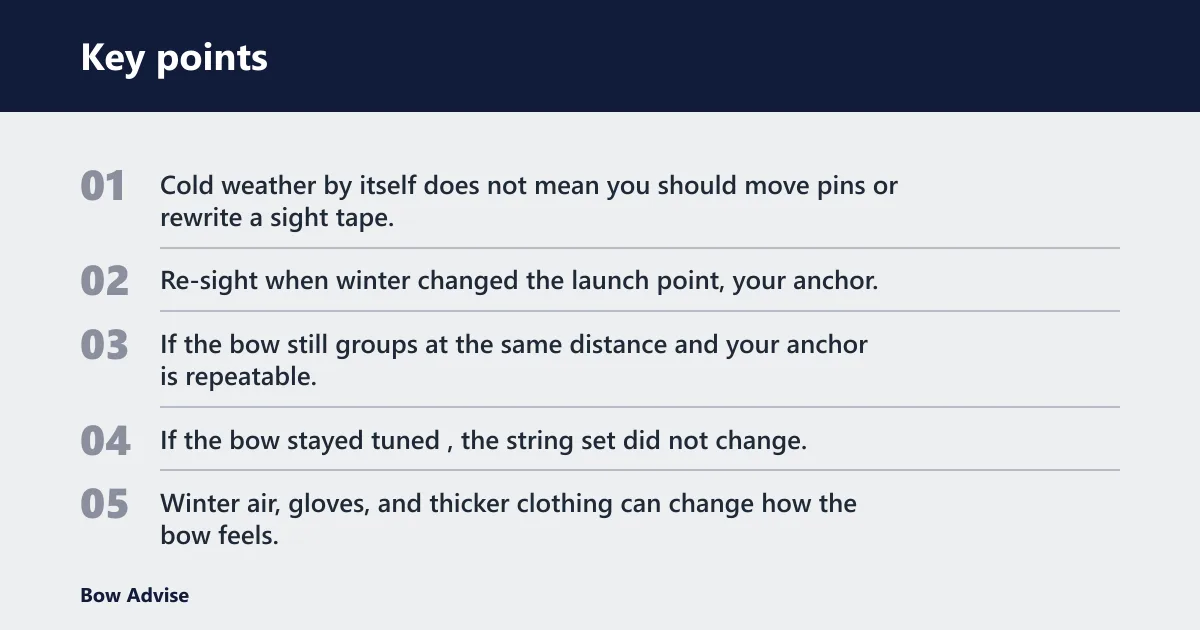


No, not for temperature alone. Cold weather by itself does not mean you should move pins or rewrite a sight tape. Re-sight when winter changed the launch point, your anchor, or the sight reference you are using. If the bow still groups at the same distance and your anchor is repeatable, a quick confirmation is usually enough.
When cold weather alone is not a reason
If the bow stayed tuned, the string set did not change, and your peep and D-loop still line up the same way, keep the current marks and verify them at a known distance. Winter air, gloves, and thicker clothing can change how the bow feels. They do not automatically change the sight.
When a change in launch point means re-zeroing
Re-zero if arrow speed, arrow launch angle, or anchor position appears to have changed. That includes a new string set, draw weight adjustment, peep rotation, rest movement, or a different loop length. Archery 360 recommends checking bows for frayed strings, damage, and loose screws, and Athlon Untamed advises sighting in after the bow is tuned.
Compound bow versus recurve bow differences
Compound bows can shift sight marks when draw weight, cam timing, peep position, or rest timing changes. Recurve bows are simpler, but winter storage and string removal still matter. Archery 360 says recurve bows should be stored with the strings removed, while compound bows should not be stored maxed out.
📊 Archery 360 says winter weather may require a checkup if you pause shooting. Source: Winterize Your Equipment the Right Way.
What you’ll need
- Allen wrenches and the correct screwdriver bits
- Bow scale for checking draw weight
- Wax for strings, cables, and servings
- Serving tool, square, and nocking-point check tool or loop check
- Paper tune or close-range bare-shaft setup
- Known-distance target at 10, 20, or 30 yards
- Spare nock, peep, or D-loop materials if wear is visible
What changed on your bow?
Start with the setup change, not the sight. New strings, changed draw weight, peep rotation, rest movement, and hardware loosening are the winter causes that most often force a new pin setting or tape. If none of those changed, the sight itself may be fine.
New string or cable set
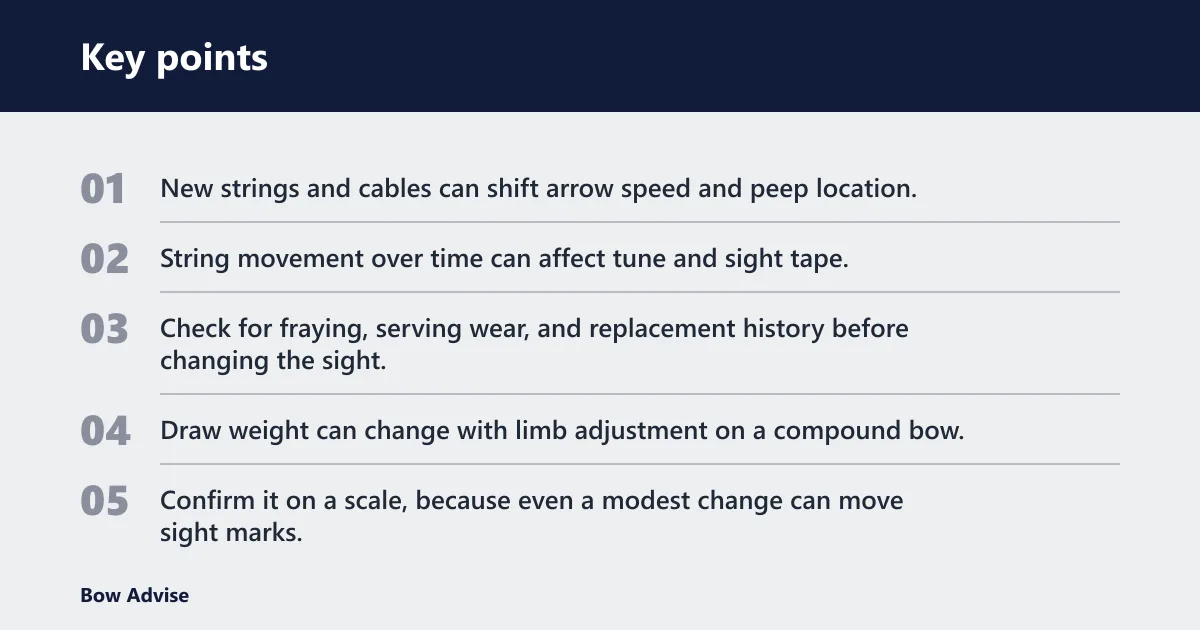
New strings and cables can shift arrow speed and peep location. String movement over time can affect tune and sight tape, and fresh material often settles after the first shooting sessions. Check for fraying, serving wear, and replacement history before changing the sight.
Draw weight adjustment
Draw weight can change with limb adjustment on a compound bow. Confirm it on a scale, because even a modest change can move sight marks. If the limbs were backed out or increased, re-check the 20-yard pin before touching windage and elevation.
Peep rotation or anchor shift
Peep alignment matters more in winter when heavier clothing can change anchor placement. Athlon Untamed notes that the peep and D-loop can turn over time. If the peep is twisted or the anchor moved, the pin picture changes even if the sight housing stayed put.
Rest movement or hardware loosening
Check drop-away or fixed rest timing, plus every visible fastener on the rest and sight. A loose rest screw or timing change can alter arrow flight and make the bow look “off” at distance. If the rest moved, do not adjust pins first.
Is your tune still the same?
A winter sight problem is often a tune problem. Paper tune, broadhead tune, cam timing, and rest timing all affect where arrows land. If the bow sat in a garage, shed, or other changing-temperature space, inspect the tune before moving sight marks.
Paper tune and broadhead tune checks
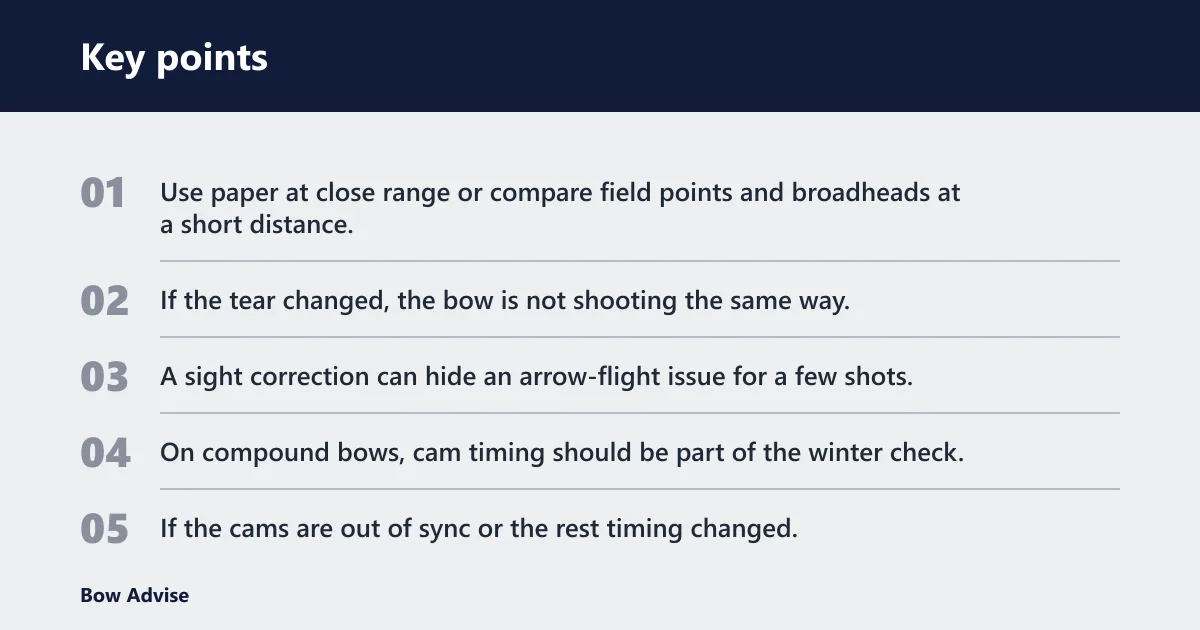
Use paper at close range or compare field points and broadheads at a short distance. If the tear changed, the bow is not shooting the same way. A sight correction can hide an arrow-flight issue for a few shots, but the underlying tune still needs attention.
Cam timing and rest timing checks
On compound bows, cam timing should be part of the winter check. If the cams are out of sync or the rest timing changed, sight marks can drift even with the same anchor. Outdoor Life recommends checking sight and rest timing every month or so.
Signs of wear after storage
Look for stiff servings, cracked serving threads, frayed string fibers, and hardware that backed out during storage. Archery 360 advises waxing strings, cables, and servings before storage. Cold storage and repeated temperature swings can expose wear that was not obvious in warmer months.
How should you confirm sight marks?
Confirm at one known distance before you touch multiple pins. Start with windage and elevation at 20 yards, or your normal starting distance, then compare indoor and outdoor marks before moving tape or pins. Tight fasteners matter, because a loose sight housing can look like a tune issue.
- Set the bow at a known distance and shoot three arrows.
- Check group center before changing the pin position.
- Verify sight housing screws, pin screws, and mounting bolts are snug.
- Compare anchor, peep picture, and D-loop alignment on every shot.
- Adjust only one variable, then shoot another three-arrow group.
Suppose a 20-yard group lands 2 inches left after the bow came out of a cold garage. Do not move the windage first. Check the peep alignment, then the rest timing, then the sight housing screws. One changed anchor point can move the group more than the temperature itself.
Winter sight-check decision table
| Symptom | Likely cause | Re-sight? | What to verify first |
|---|---|---|---|
| Pin marks shifted after a new string or cable set | String stretch, settling, or changed speed | Yes | Measure draw weight, check peep alignment, then confirm tune |
| Groups moved after a draw weight change | Compound limb tension changed arrow speed | Yes | Confirm draw weight on a scale and re-check 20-yard impact |
| Pin picture looks different at full draw | Peep rotation or anchor shift | Maybe | Check peep rotation, D-loop wear, and anchor consistency |
| Arrows hit lower after rest work | Drop-away or fixed rest moved | Yes | Inspect rest timing and mounting screws before adjusting pins |
| Indoor marks do not match outdoor marks | Distance, light, and clothing changes | Often yes | Confirm the distance, lighting, and anchor before changing tape |
| Only the temperature changed | Cold air or storage change without setup drift | No | Do a quick confirmation at a known distance |
Common mistakes
Do not move pins before checking the anchor, peep, and rest. Do not assume a miss is a sight problem when the bow may be out of tune. Do not use the same sight tape indoors and outdoors without confirming the distance and light.
- Changing windage before checking peep rotation
- Ignoring loose sight or rest fasteners
- Skipping a tune check after storage or wear
- Using winter clothing as if it cannot change anchor position
- Assuming a new tape is needed when the bow only changed temperature
A common first-timer mistake is to blame the pin for a noticeable vertical shift, then discover the D-loop is twisted and the anchor moved forward. Fix the anchor point first, then re-check sight marks at the same distance with the same arrow and release.
Frequently asked questions
When do bow sights work best?
Bow sights work best after the bow is tuned and the arrow launch is consistent. That means a correct peep picture, tight mounting hardware, and a verified rest. Once the bow groups at a known distance, the sight marks are reliable enough for hunting or target work.
How do I sight in a bow after changing strings or draw weight?
Set the bow at a known distance, confirm draw weight on a scale, then shoot groups before moving the sight. If the string set is new, check peep rotation and rest timing first. Athlon Untamed advises sighting in after the bow is tuned.
How often should I check my bow sight and rest timing in cold weather?
Check them every month or so, and again after storage, transport, or a hard bump in the case. The same source recommends that cadence. If the bow lives in a garage, add a quick confirmation shot before a hunt or indoor session.
Does cold weather change bow tune and sight tape?
Cold weather can change tune and sight tape when it changes string behavior, hardware tightness, or arrow speed. It does not always do so. If the marks shift, verify peep alignment, draw weight, and rest timing before rewriting the tape.
Can temperature swings make my bow shoot differently?
Yes, especially if the bow moves between a cold garage and a warmer vehicle or house. Temperature swings can expose loose screws, string movement, or material fatigue. Archery 360 also warns extreme cold can make arrow glue brittle, so inspect arrows as well.
Should I use the same sight marks indoors and outdoors?
Not automatically. Indoor and outdoor shooting often use different distances, lighting, and body layers, and those factors can change the sight picture. Confirm the marks at the actual distance you plan to shoot, then adjust only if the groups prove it is needed.