Cold Weather Bow Tuning Checklist Before Late-Season Hunting
A cold-weather bow tune generally passes if bare-shaft or field-point impact stays within about 2 inches at 20 yards after a cold soak, the string tracks cleanly, and nothing shifts after layers go on. Skip that check, and a dead-on setup can start hitting low, sending poor arrow flight or costing you a late-season animal. This guide gives a pass/fail checklist for temperature, clothing, brace-height changes, cable tension, and short-range test shots.


Must-have
These checks decide whether the bow is ready or still needs work. Start here before hunting, because cold can expose a tune problem that warm weather hid.
Bowstring and cables

- Ensures precise string separation for peep sights
- Compact and lightweight design for portability
- Compatible with a wide range of bows
Use a peep alignment tool if the string is hard to read or the peep keeps wandering after a cold soak. Toddmomy’s two-piece set is compact and useful for string separation, but iron construction and simple hardware make it better as a setup aid than a field fix.
Inspect the bowstring for serving separation, fraying, stretch, and wear at the cams and cable guard. Inspect the cables the same way, especially where they touch the cams and cable guard, because those spots show winter wear first. Wax the string before cold hunts, and replace the string or cables if damage is visible or the tune keeps changing.
Peep sight and cam timing
Verify peep orientation before hunting and confirm it still lines up with the anchor point in cold conditions. Cold can change how the bow settles under tension, so peep rotation or a changed anchor often shows up after the bow has sat outside for a while.
Check cam timing after temperature changes and look for noise or a shifting tune. If timing slips, the bow may still shoot, but the impact point can drift and the draw cycle can feel uneven.
Clothing clearance and release feel
Late-season clothing can move the anchor point and change string clearance, so the bow must be checked in the same layers worn in the field. A face mask adds thickness, sleeves can touch the string, and a hood can change peep alignment in late-season hunting.
Check release trigger feel in the cold and practice with gloves or muffs if needed. Stiffness, drag, or freezing can change the release break and send the arrow off line, even when the bow itself is tuned.
Nice-to-have
These checks do not replace the main tune, but they help confirm the setup under hunting conditions. They also catch small issues before they become noise, drift, or a missed shot.
Sight zero and arrow impact
Reconfirm sight zero before hunting and test at hunting distance in cold air. If broadheads are part of the setup, confirm their impact too, since a cool bow, cold fingers, and layered clothing can show a different point of impact than summer practice.
Inspect arrow condition and spine, then confirm point-of-impact consistency with the actual hunting arrows you will use. The hunting shaft matters. A practice arrow that flies well does not prove the broadhead setup is ready.
Hardware fasteners and noise
Check mod screws, sight screws, rest screws, and quiver hardware for looseness, and avoid over-tightening. Listen for rattles when the bow is drawn and let down, because cold can make loose parts easier to hear and harder to ignore.
Hardware does not need to be cranked down hard to stay put. A snug fastener is enough in most cases, while over-tightening can strip threads or shift a part out of alignment.
Consumables and spares
Winter tuning goes better when small wear items are ready. A little prep now can prevent a hunt from ending because of a dry string, a rubbed serving, or a glove that changes the release feel.
Wax, serving, and backup parts
Wax is part of winter maintenance, but it is not a cure for damage. If the serving is separating, the strands are frayed, or the tune keeps changing after correction, replace the damaged part instead of adding more wax.
Keep serving material, an extra peep tube or peep if the setup uses one, and any common fasteners that match the bow. A spare only helps if it matches the exact setup.
Gloves, muffs, and cold-weather aids
Practice with cold-weather gear on, including gloves. Late-season hunters often find that thin gloves preserve more trigger feel, while hand muffs help keep fingers warm during long waits without forcing a bulky release hand.
Choose the aid that preserves the same anchor and trigger control you need in the field. A glove that feels fine at camp can still disturb the release if it changes grip pressure or finger placement.
Budget setups
A low-cost winter check can still catch the problems that matter. Start with the signs that change flight, then move toward the items that simply make the bow quieter and easier to live with.
| Setup level | What to check first | Why it matters | Typical spend |
|---|---|---|---|
| Starter | String, cables, peep, hardware | Finds the most common winter drift before it costs a hunt | Low-cost consumables only |
| Mid | Arrow spine, sight zero, release feel in gloves | Confirms the setup still shoots where it should in layers | Moderate, if a worn part needs replacement |
| Serious | Timing, tune, and backup parts | Best for hunters who want a full season-ready check after cold exposure | Higher if strings, cables, or hardware need replacing |
Low-cost checks that catch winter problems early
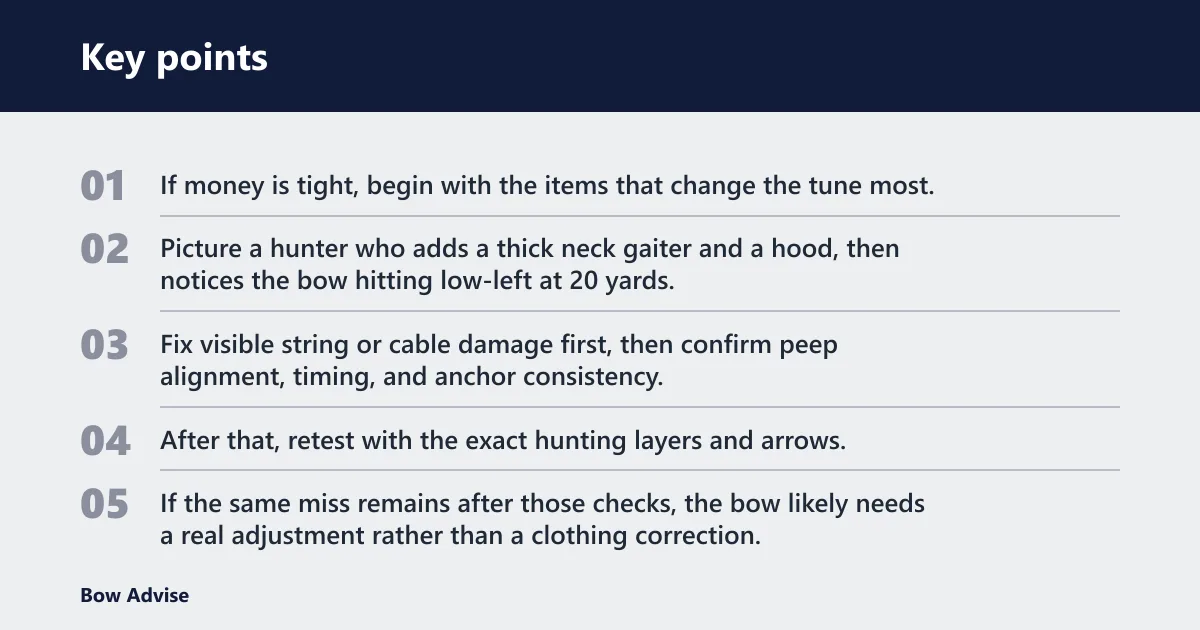
If money is tight, begin with the items that change the tune most. String wear, cable wear, peep rotation, and loose screws are the fastest ways to lose confidence in a cold-weather setup.
Picture a hunter who adds a thick neck gaiter and a hood, then notices the bow hitting low-left at 20 yards. That is not automatically a bad tune; it may be anchor drift from the extra clothing, or sleeve contact, before the bow itself is at fault.
What to fix first if the bow is off
Fix visible string or cable damage first, then confirm peep alignment, timing, and anchor consistency. After that, retest with the exact hunting layers and arrows. If the same miss remains after those checks, the bow likely needs a real adjustment rather than a clothing correction.
What should I check on my bow before hunting in cold weather?
Check the string, cables, peep orientation, cam timing, draw weight, clothing clearance, release feel, sight zero, fasteners, and arrow condition. The goal is to separate a true bow problem from a cold-weather change caused by thick clothing, cold muscles, or a different anchor point.
Start with the parts that can fail visibly. Then move to the parts that change only when the bow is drawn in winter layers.
Do I need to re-tune my bow when temperatures drop?
Not always. If the string tracks cleanly, timing stays set, and impact stays close after a cold soak, the bow may only need a winter check, not a full retune. If timing shifts, the peep moves, or impact changes with the same setup, then adjustment is warranted.
Cold alone does not mean the bow is wrong. It means the bow should be checked under the same conditions used for hunting.
When to leave the tune alone
Leave the tune alone when the same arrows hit in the same area after the bow has been cold-soaked and shot in hunting layers. If the bow still groups and the anchor feels the same, a full retune may add more variables than it solves.
When to adjust timing, nocking point, or draw weight
Adjust when the bow shows a repeatable change that survives a clean check of clothing, anchor, and hardware. A common late-season move is lowering draw weight by 5 to 10 pounds if the draw feels stiff with cold muscles and layered clothing. That reduction can make the shot smoother without forcing a bad draw.
How does cold weather change bow draw weight and point of impact?
Cold weather can make the draw feel heavier because muscles tighten and layers change the way the bow is gripped and anchored. It can also move point of impact if clothing changes string path, peep alignment, or release consistency, even when the bow was on target earlier in the season.
The answer is not guessing. Draw in the same layers, shoot the same hunting arrows, and compare impact after the bow has been outside long enough to match field conditions.
What hardware on a bow should I inspect before late-season hunting?
Inspect mod screws, sight screws, rest screws, quiver hardware, cams, and cable guard contact points. Those are the parts most likely to loosen, rub, or shift when temperatures change and the bow is carried, drawn, and let down in cold air.
Also listen for rattles. A new noise can point to a loose part before it affects accuracy.
Should I shoot my bow in full winter hunting clothes before the season?
Yes. Late-season bowhunters should practice shooting with cold-weather gear on, including gloves. Full layers can change anchor point, sleeve clearance, and peep alignment, so the bow must be checked in the same clothing worn during the hunt.
One useful benchmark is several dozen arrows in full late-season gear. That is enough to show whether the sleeve brushes the string, the hood interferes with the sight picture, or the mask shifts the anchor.
Can cold weather make my peep sight rotate or my release act differently?
Yes. Cold can reveal peep rotation that was not obvious at room temperature, and it can make a release feel stiffer or less consistent. That is why the peep should be verified before hunting and the release should be checked with the same gloves or muffs used in the field.
A release that feels fine barehanded can change when a glove adds bulk. If the trigger breaks differently, that difference matters more than the bow’s paper tune.
How often should I wax my bowstring in winter?
Wax the bowstring before cold hunts and again whenever the serving or exposed fibers look dry. Do not use wax to hide damage. If the serving is separating, the string is fraying, or the tune keeps shifting, replace the worn part instead of relying on more wax.
Wax helps protect the string from dry, cold conditions. It does not fix structural wear.
What should I do if my bow tune keeps changing in the cold?
Start by checking the string and cables for wear, then verify peep orientation, timing, and hardware tightness. After that, shoot in full hunting layers and with the actual hunting arrows. If the tune still changes, the issue is likely mechanical rather than clothing-related.
Suppose the bow groups well in a T-shirt but drifts after a hood and face mask go on. That points first to anchor drift or string clearance, not a mystery winter defect in the bow.
Cold weather bow checklist
Use this checklist in order. A pass means the bow is ready under cold conditions; a fail means the item needs correction before hunting.
| Check | Pass/Fail | Fix |
|---|---|---|
| Bowstring condition | Pass if no fraying, serving separation, or visible stretch | Wax before hunting; replace if damage is visible or tune keeps changing |
| Cable condition | Pass if no fraying or serving wear at contact points | Inspect near cams and cable guard; replace worn cables |
| Peep orientation | Pass if the peep lines up with the anchor in cold conditions | Reset peep orientation and retest after a cold soak |
| Cam timing | Pass if timing stays even after temperature change | Time the cams again if the bow starts making noise or shifting tune |
| Draw weight | Pass if it draws smoothly in layers | Lower draw weight by 5 to 10 pounds if the draw is harsh in cold weather |
| Clothing clearance | Pass if sleeve, hood, mask, and gaiter clear the string | Change layer fit or anchor point if any part touches or shifts the string path |
| Anchor point | Pass if the anchor stays identical with winter layers | Reset face contact and string reference points before hunting |
| Release feel | Pass if the trigger breaks cleanly in cold air | Practice with gloves or muffs; service the release if it feels stiff |
| Sight zero | Pass if impact is correct at hunting distance in cold air | Re-zero before hunting and confirm broadhead impact if relevant |
| Hardware fasteners | Pass if mod screws, sight screws, rest screws, and quiver hardware stay tight | Snug loose parts and avoid over-tightening |
| Arrow condition | Pass if arrows are straight, sound, and matched to the hunt | Inspect spine and condition; use the actual hunting arrows |
| Point of impact consistency | Pass if field points or bare shafts hold within about 2 inches at 20 yards after a cold soak | Retune only after clothing, hardware, and arrow checks are clear |
Common symptom to likely cause
| Common symptom | Likely cause | First fix |
|---|---|---|
| Peep rotation | String twist change, cold tension shift, or peep not set for the anchor | Recheck orientation after the bow has cooled down |
| Sleeve contact | Bulky layers changing string clearance | Shoot in the full layer set and adjust clothing or arm position |
| Stiff trigger feel | Cold release mechanism or thicker gloves changing finger pressure | Practice with gloves or muffs and service the release if needed |
| Shifting point of impact | Anchor drift, loose hardware, timing change, or arrow mismatch | Check clothing, fasteners, timing, and actual hunting arrows in that order |
Quick pass/fail order
- Inspect the string. Look for fraying, serving separation, and wear at the cams and cable guard before any tuning shot. If the string is damaged, stop there and replace it.
- Check the cables. Run the same inspection at the cam and cable guard contact points. A worn cable can create noise and shift the tune after cold exposure.
- Set the peep. Confirm orientation and draw to anchor in the same layers used for hunting. If the peep no longer lines up, correct it before chasing sight issues.
- Verify cam timing. Shoot a few arrows after the bow has cooled and listen for noise or a changing feel. If timing has moved, retime the bow before going farther.
- Draw in layers. Put on the full late-season setup, then draw smoothly several times. If the draw is stiff, consider lowering draw weight by 5 to 10 pounds.
- Check clearance. Watch the sleeve, hood, face mask, and neck gaiter for contact. Any brush against the string or release hand can change impact.
- Test the release. Use the actual gloves or muffs planned for the hunt and feel for stiffness or freezing. A bad trigger feel is a field problem, not a range problem.
- Confirm sight zero. Shoot at hunting distance in cold air and verify the same arrow strike. If broadheads are used, confirm their impact too.
- Tighten hardware. Check mod screws, sight screws, rest screws, and quiver hardware. Snug loose parts, but do not force them past snug.
- Inspect arrows. Use the hunting arrows, not a different practice set, and check spine and condition. A shaft that looks fine can still change impact in cold conditions.
- Recheck consistency. Shoot enough arrows to confirm the result holds. If the bow changes again, the issue is still open.
- Decide hunt or fix. Pass means the bow stays in the field-ready state; fail means stop hunting setup and correct the underlying problem first.