Can You Shoot a Compound Bow in Freezing Temperatures?
A compound bow can be shot in freezing temperatures, but 20°F (-6°C) is commonly treated as a caution line, and it is best to stop if the bow shows stiffness, icing, or visible damage. Cold can turn a small flaw into a broken limb, a derailed cam, or a bad release. This guide gives a component-by-component risk checklist and a simple go/no-go rule for subfreezing shooting.
When to stop shooting in the cold
Yes. Low temperatures do not automatically make a bow unsafe, and many archers stay indoors once temperatures drop below freezing point. The safer answer is conditional: shoot only if the bow has cooled evenly, the string and peep tubing look sound, and the first few shots feel normal. If anything changes, stop.
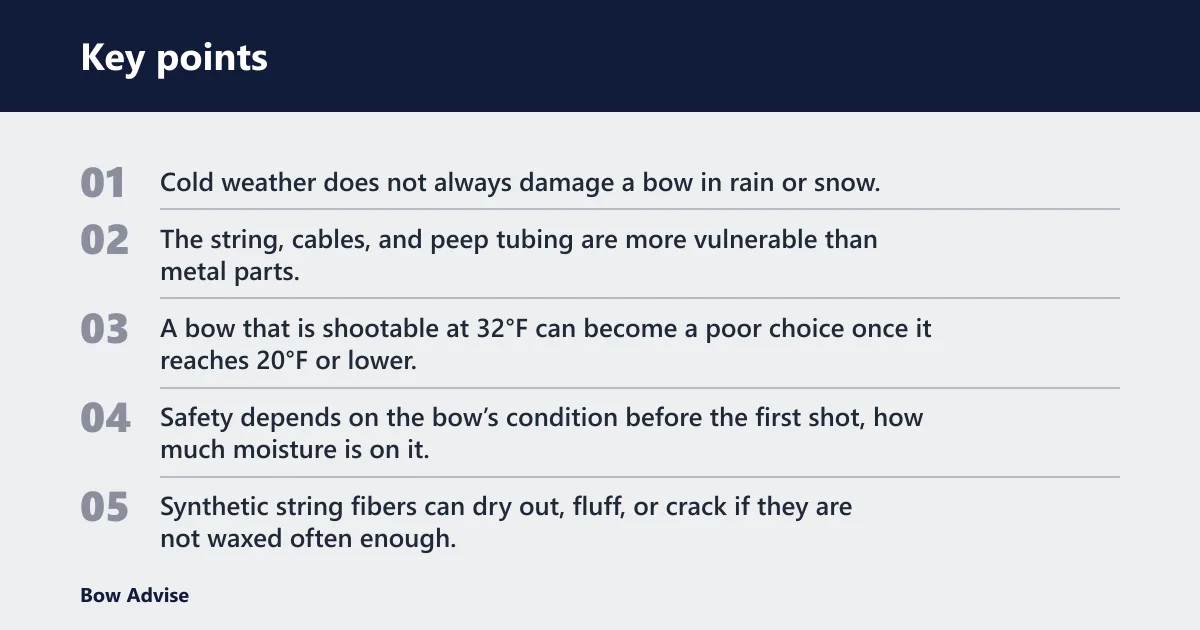
Cold weather does not always damage a bow in rain or snow, but moisture plus temperature cycling raises risk. The string, cables, and peep tubing are more vulnerable than metal parts, and the limbs can stiffen. A bow that is shootable at 32°F can become a poor choice once it reaches 20°F or lower, especially if it has been carried from a warm truck into wet snow.
What makes winter shooting safe or risky
Safety depends on the bow’s condition before the first shot, how much moisture is on it, and whether the shot cycle stays consistent after the bow cools down. Synthetic string fibers can dry out, fluff, or crack if they are not waxed often enough. Cables can show the same wear. The cams can also feel less predictable if snow or slush gets into the system.
Metal hardware usually tolerates cold better than the string path, but that does not make the whole bow safe. A slightly brittle peep tube, a stiff limb, or a serving that has already started to separate can fail when the temperature drops. That is why winter shooting depends more on visible condition and consistent feel than on a thermometer reading alone.
When to stop and wait for warmer conditions
Stop when the bow feels different after cooling, when the peep tubing shows any whitening or cracking, when a limb shows a splinter or unusual sound, or when the cams no longer roll cleanly. Stop if point of impact shifts hard enough that the sight picture no longer matches the last arrow, or if snow, ice, or condensation keeps returning to the string path.
How cold affects a compound bow
Cold changes how a compound bow moves and how it feels at full draw. Limbs tend to stiffen in cold, which can raise break risk in extreme conditions. String and cable materials can also tighten or feel less compliant. That can alter draw cycle, valley feel, and how cleanly the release breaks.
String and cable stiffness
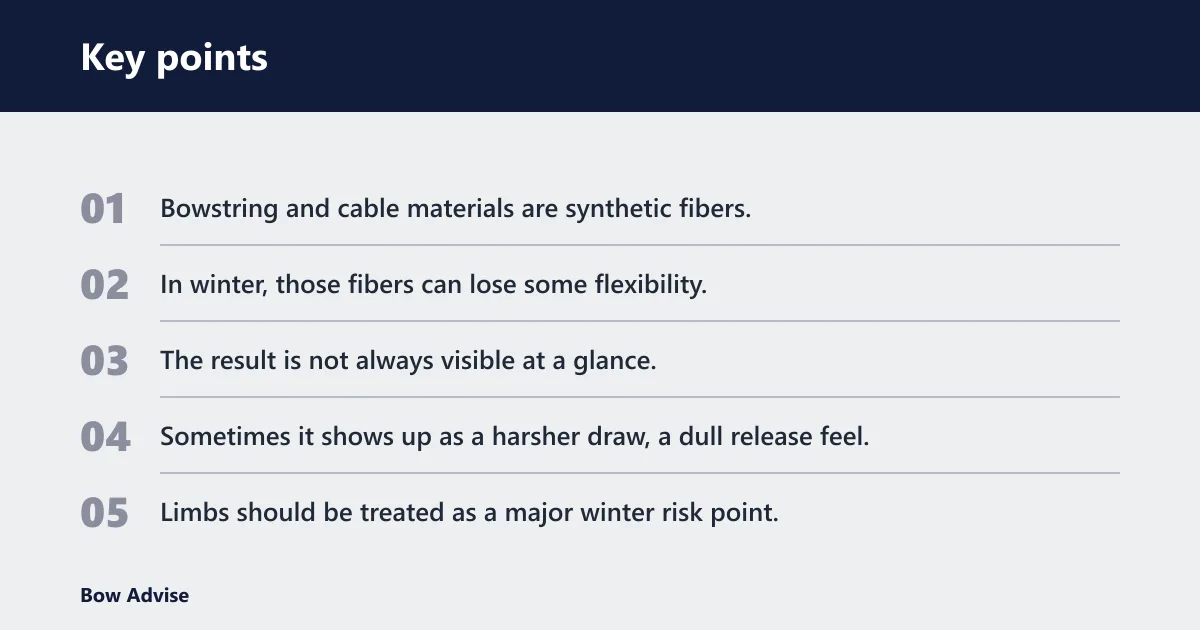
Bowstring and cable materials are synthetic fibers, so they respond to cold differently than aluminum or stainless hardware. In winter, those fibers can lose some flexibility, especially if the string is dry or underwaxed. The result is not always visible at a glance. Sometimes it shows up as a harsher draw, a dull release feel, or a slight change in brace height behavior.
Limb behavior in low temperatures
Limbs should be treated as a major winter risk point. Cold makes bow limbs tend to stiffen, and that stiffness can increase break risk. Store the bow indoors, preferably in a room-temperature location, between sessions. A limb that is already chipped, twisted, or heavily stressed should not be trusted in subfreezing air.
Cam timing, grip feel, and release consistency
The cam system is a compound-bow pulley system component, so it matters when temperature and moisture change. Wet or snowy conditions can make string slip issues more likely, and that can affect draw cycle and release consistency. If the cam track, cable alignment, or serving looks off, postpone shooting rather than trying to tune through a winter problem.
Why metal parts are less likely to fail than string materials
Risers, axles, and most hardware are less vulnerable than string materials because they do not absorb wax, dry out, or crack the same way. That does not make them immune. A frozen rest arm, a brittle sight tape adhesive, or a corroded fastener can still matter. But the first winter inspection should focus on the string path, limbs, and peep tubing first.
What parts of a compound bow are most vulnerable in winter?
The most vulnerable winter parts are the bowstring, serving, cables, peep sight tubing, limbs, cams, and any moving contact point near the rest or nock area. Those parts carry load, flex under tension, or use rubber and synthetic materials that react badly to cold, dryness, and moisture. The riser itself is usually lower on the list.
Bowstring and serving
Bowstring fibers need frequent waxing in winter. Wax the string before every session below freezing. A string that looks fluffy, dry, or cracked should not be shot until it is corrected or replaced. Serving separation near the center serving or loop area is also a reason to stop.
Cables and cam system
Cables should be checked with the same care as the main string. Look for serving wear, strand separation, and any change in cable tension that alters cam rotation. If a cam tracks unevenly or appears out of sync, do not keep shooting. Winter makes small timing issues more noticeable, not less.
Peep sight tubing
Peep sight tubing on a compound bow can break in cold weather. That risk is easy to miss because the tube may look fine until it is bent or twisted under draw. Inspect it for whitening, stiffness, or surface cracking before every cold session. If the tube feels brittle, replace it before hunting or target work.
Limbs, rest, and nock area
Limbs need the closest attention because cold can make them stiffer and more break-prone. The rest and nock area deserve checks too, since a frozen rest arm, a cracked nock, or a damaged arrow interface can cause odd launch behavior. If the arrow does not sit, nock, or leave cleanly, stop the session.
Compound bow winter checklist
Use this as a text-only go/no-go checklist for winter shooting. It is built for a bow that may move from a warm vehicle, blind, or house into subfreezing air. If any item fails, do not treat the bow as ready until the problem is fixed or the session is postponed.
| Stage | Check point | Go | No-go |
|---|---|---|---|
| Pre-shot | String looks fully waxed, not dry or fluffy | Even shine, no loose fibers | Dry, fuzzy, or cracked fibers |
| Pre-shot | Peep tubing is flexible and intact | No whitening or splits | Brittle, cracked, or kinked tube |
| Pre-shot | Limbs show no chips, splinters, or unusual twist | Clean limb surface | Any splinter, chip, or visible damage |
| Pre-shot | Cams rotate cleanly and track evenly | Normal timing and stop positions | Uneven track, slip, or noise |
| Pre-shot | Rest, nock area, and cable guard are clear of ice or slush | Dry and moving normally | Frozen, sticky, or misaligned parts |
| Pre-shot | Arrow fit and nock fit feel normal | Clean nock-on, clean release | Tight, loose, or inconsistent fit |
| Between-shot | String, peep, and cams stay free of snow and moisture | Dry after each shot | Ice, wet strands, or packed snow |
| Between-shot | Shot feel stays consistent | Same draw and release | Heavier draw, rough release, or strange noise |
| Between-shot | Impact point stays within expected winter shift | Small, explainable change | Large or random shift |
| Post-shot | Inspect serving, limbs, and peep tube again | No new wear | New fuzz, crack, or separation |
| Post-shot | Dry the bow before storage | All moisture removed | Wet string, wet cam, or frozen residue |
| Post-shot | Store indoors in a warm, dry place | Room-temperature storage | Left in cold vehicle or damp case |
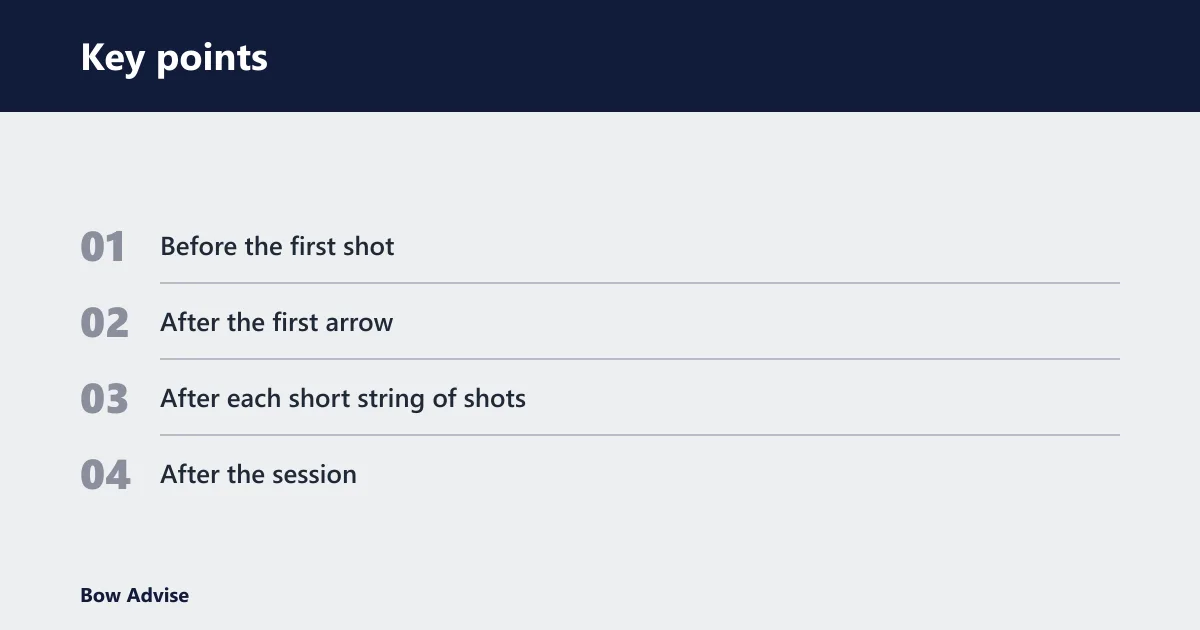
- Before the first shot: inspect string wax, peep tubing, limb surfaces, cam tracking, rest movement, and nock fit.
- After the first arrow: check for change in draw feel, release quality, and any new noise or vibration.
- After each short string of shots: clear snow or moisture, then recheck the string, peep, and cams.
- After the session: dry the bow, inspect again, and move it indoors before condensation can set in.
Say your bow comes out of a warm truck into 20°F air and the string immediately feels dry. Wax it before the first shot, then check the peep tube and limb surface once the bow has cooled. If the next arrow lands lower and the draw feels rougher, stop and inspect before shooting again.
Does cold weather change arrow impact?
Yes, it can. Cold air is denser than warm air, so it increases air resistance on the arrow. That often pushes impacts lower than normal, though the exact shift depends on arrow type, speed, and setup. Carbon, aluminum, wood, fiberglass, and composite arrows can all react differently to winter air and temperature.
Material differences in winter
Cold can slightly affect arrow spine and make arrows stiffer. That matters because a stiffer arrow may react differently at launch, especially if the bow is already colder and acting differently. Carbon arrows may show one kind of shift, aluminum another, and wood or fiberglass another. Do not assume every shaft will move the same way.
Why point of impact can shift lower
A lower impact is common enough that it should be expected, not guessed. Denser air slows the arrow sooner, and the bow itself may send the shaft a little differently as string tension and limb behavior change. That is why winter zero should be checked again after the bow has cooled to the field temperature.
Picture a 60-yard sight mark that is solid in mild weather. On a 0°F morning, the same setup may print lower, not because the sight suddenly failed, but because the air, the arrow, and the bow all changed together. That is a tuning issue, not a reason to force shots through bad flight.
When is it too cold to shoot?
There is no universal stop temperature, but the risk climbs fast once temperatures move below freezing. 32°F/0°C is a reference point where careful shooting is still reasonable if the bow is dry and sound. Around 20°F/-7°C, the caution level rises. At 0°F/-18°C and below, stopping is usually the better call unless conditions are exceptionally controlled.
32°F/0°C reference point
At this level, many bows will still shoot well if they have been stored indoors, waxed properly, and kept dry. This is the easiest temperature range for winter practice because the components are cold but not yet deeply stressed. Keep an eye on the string, peep tube, and cam behavior anyway.
20°F/-7°C and below
This is the practical caution line. Low temperatures are still shootable with care, but not if the bow shows stiffness, icing, or any visible damage. Short sessions are better than long ones, and between-shot checks matter more here. If consistency drops, do not keep forcing the session.
0°F/-18°C and subzero handling risks
At 0°F/-18°C, the chance of brittle materials and stiff operation rises enough that winter handling becomes a major part of the decision. Limbs are more likely to be stressed, peep tubing is more likely to crack, and wax can feel less protective on a dry string. Keep the bow dry and limit exposure as much as possible.
Below 0°F stop conditions
Below 0°F, a cautious rule is to stop if the bow was not already cold-soaked and inspected before going outside. If the bow came from a warm space, condensation may form on the string, cams, and sight as soon as it meets the cold. That is a poor setup for shooting, especially in a hunting blind or a damp field edge.
How to protect the bow before, during, and after shooting
Protecting a compound bow in winter is mostly about controlling moisture and temperature changes. Store it indoors between sessions, preferably in a room-temperature location. Wax the string before every session below freezing, keep snow off the string path, and dry the bow after use before putting it back in a case or vehicle.
Indoor storage between sessions
Do not leave the bow in a cold vehicle for long periods if you can avoid it. Repeated temperature cycling can create condensation on the string and peep tube, then freeze it later. A dry, room-temperature storage spot is the safer choice for limbs, cables, and the rest of the bow.
Warm-to-cold temperature transitions
A warm bow moving into subfreezing air needs a slow, careful first check. If condensation forms, wipe it off before the first shot. If the bow goes from a blind heater or warm truck cab into snow, inspect the cams, peep tubing, and string again after a few minutes outside. The first shot should never be a blind guess.
Drying and inspection after the session
After shooting, remove any snow between shots and dry the bow before storage. That includes the string, serving, cams, rest, and cable guard area. If you skip drying, hidden moisture can sit in the serving or around the peep tube and create a problem at the next session.
Does winter clothing change how you shoot?
Yes. Winter clothing can protect hands and face without ruining shooting form, but only if the fit stays trim enough for anchor, string clearance, and release control. Gloves can reduce dexterity, thick sleeves can catch the string, and loose layers can change anchor points enough to affect consistency.
Gloves and finger dexterity
Gloves should keep the hand warm while still allowing a clean release and stable grip. If a glove changes how the release sits or makes the trigger feel vague, it is too bulky for accurate shooting. Hand warmth matters, but so does feeling the same release every time.
Layers that affect anchor and string clearance
Choose clothing that does not interfere with the bowstring path or the draw elbow. A thick sleeve can contact the string, especially on a compound bow with a tight string path near the forearm. Keep layers close enough to the body that anchor points do not drift when the draw cycle starts.
Clothing fit for bowhunting and target shooting
Winter archery attire should balance warmth and form. The best setup keeps the chest and shoulders warm, the drawing arm free, and the release hand able to move without delay. If the clothing changes your anchor or string clearance, it is part of the problem, not just part of the weather.
Frequently asked questions
Can you shoot a compound bow in freezing temperatures?
Yes, but only if the bow is dry, sound, and consistent after it cools down. Treat 20°F/-6°C as the caution line, and stop if the string looks dry, the peep tube gets brittle, the limbs stiffen badly, or the first arrows show an unexplained shift in impact.
Does cold weather affect a compound bow’s draw weight?
Cold weather can change how the bow feels at full draw because colder bow materials can reduce draw weight slightly and change stiffness. The exact change depends on the model and setup, so do not rely on feel alone. Recheck the shot cycle after the bow has been outside for a while.
Will my bow string or cables be damaged by cold weather?
They can be. Synthetic fibers can dry out, fluff, or crack if they are not protected well, and winter makes that more likely when the string is underwaxed. Cables should be checked for the same wear, because a small issue in the serving or strands can become a larger failure in cold.
Do I need to wax my string more often in winter?
Yes. The safest winter habit is to wax the string before every session below freezing. That does not fix old damage, but it helps keep the fibers from drying out and fluffing. If the string already looks cracked or fuzzy, wax is not enough and the bow should be inspected more closely.
Can I leave my compound bow in the cold between shots?
For a short period, yes, but keep it dry and protected from snow, slush, and freezing moisture. A bow left in a vehicle, blind, or case can pick up condensation when moving between warm and cold environments. Indoor storage between sessions is still the better long-term choice.
How cold is too cold for archery practice?
32°F/0°C is a workable reference point, 20°F/-7°C is the caution zone, and 0°F/-18°C is where many archers should stop unless conditions are tightly controlled. Below 0°F, the risk from brittle tubing, stiff limbs, and inconsistent shooting rises enough to favor postponing practice.