Does Bow String Wax Work in Winter?
Yes, bow string wax still works in winter, but only if the string is dry, clean, and structurally sound; wax is maintenance, not a fix for fraying or broken strands. Ignoring string care can mean more noise, poorer arrow speed, and a higher risk of serving wear or strand failure in cold conditions. This guide explains when to wax, how much to use, and how to tell normal dryness from real damage.
Cold weather does not stop wax from working. The wax still coats the bare strands between servings, helps slow drying, and keeps the bundle from fuzzing as fast. What changes in winter is the string itself: dry air, freezing storage, and packed dirt can make a string feel rough even when wax is still present.
Cold weather bow string inspection and care


The point is simple. If the bare strands are intact, wax can help. If the string is frayed, the serving is separating, or the peep is rotating because the system is worn, wax is no longer the answer.
What winter changes
Cold weather often exposes problems that were already there. A string kept in a garage, truck, or frozen range bag can dry out faster, while grit from snow, mud, and road salt can cling to over-waxed fibers. That means winter care is less about changing the wax itself and more about inspecting the string more carefully.
Wax works best as a thin layer worked into the fibers. If the coating sits on the surface, it can stiffen in cold conditions and trap dirt instead of protecting the string. That is why a winter check should start with feel and sight, not with automatic re-waxing.
What you’ll need
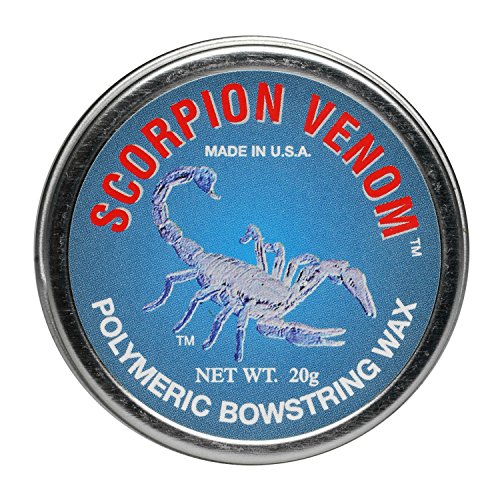
- Dedicated archery bow string wax such as Bohning Tex-Tite, Saro, or BCY
- Clean, dry cloth
- Fingernail for checking tackiness and roughness
- A dry storage place away from a garage, vehicle, or frozen range bag
Winter string-care decision table
Use this table to decide whether to wax now, clean and re-wax, or replace the string. The right call depends on the symptom, the likely cause, and whether the damage is only surface-level or already structural.
| Symptom | Likely cause | Action |
|---|---|---|
| Dry-but-intact string | Wax has thinned from shooting, cold air, or storage | Wax now |
| Fuzzing strands | Bare strands are drying out or rubbing on grit | Clean and re-wax; replace if fuzzing turns into fraying |
| Serving wear | Serving separation, abrasion, or repeated contact | Inspect closely; replace if the serving is opening or the bundle is exposed |
| Peep rotation | Wax on the wrong place, serving wear, or cable issue on a compound bow | Check peep serving and cable serving; clean wax off the serving and inspect alignment |
| Sticky over-waxed string | Too much wax on the surface | Clean off excess, then re-wax lightly if the strands still need protection |
| Cold-storage exposure | String sat in a garage, vehicle, or frozen bag | Bring it to room temperature, inspect, then wax or replace based on condition |
Decision rule: wax now if the bare strands are dry but intact; clean and re-wax if there is fuzzing or sticky residue without structural damage; replace the string if you see fraying, serving separation, or broken strands.
If a compound bow spent about three nights in a truck at around 10 degrees and the string feels rough, but the strands still lie flat, treat it as a likely wax-now case after inspection. That is a wax-now case after inspection. Suppose the same bow shows one section of serving separation and a peep that has started turning. That is not a wax-only problem; the serving and alignment need attention first.
Waxing in winter follows the same method as any other season, but the inspection matters more. Start with the bare strands between servings. Keep wax off the center serving, loop servings, and peep sight serving, because wax on serving can contribute to nock rotation and peep rotation.
- Inspect the bare strands and servings under good light.
- Run a fingernail lightly along the exposed strands to check for tackiness, roughness, fuzzing, or fraying.
- Apply a thin coat of wax only to the bare strands between servings.
- Use a light, even stroke and work the wax into the fibers with your fingers.
- Add another light pass only where the strands still look dry, then recheck after wiping off excess.
- Wipe away any visible buildup from the surface and check that the serving stays clean and tight.
A thin coat is enough. If the string still looks dry after one pass, add a second light pass rather than a thick layer. Too much wax attracts dirt and debris, and that problem gets worse when cold residue stiffens and picks up grit.
A common first-timer mistake is coating the string until it looks glossy. That usually leaves wax on the surface instead of in the fibers. The better finish is slightly matte, with the strands feeling smoother but not tacky.
How often should you wax your bow string in cold weather?
Waxing frequency depends on shooting volume, climate, and storage conditions. For occasional shooters, a guide interval of every 4–6 weeks is a reasonable starting point. For frequent shooters, freezing weather can justify weekly waxing, especially if the bow lives in dry air or cold storage between sessions.
Use condition, not the calendar, to make the final call. If the string feels dry to the fingernail, looks fuzzy, or has lost its smooth feel after a few sessions, wax sooner. If it still feels supple and the strands remain dark and tidy, you do not need to add wax just because the temperature dropped.
When winter shortens the interval
Freezing weather can dry exposed strands faster, and dry heat indoors can do the same. That means the interval may shorten in both extremes. Storage matters too: a bow stored in a truck, garage, or range bag that freezes and thaws repeatedly should be checked more often than one kept indoors.
How to wax a bow string in cold weather is less about extra product and more about closer inspection. If the string is still sound, a light top-up is enough. If the surface is already dirty or worn, clean it before adding more wax.
Common mistakes
Most winter wax problems come from putting product in the wrong place or using too much of it. The fix is usually a cleaner application, not more wax.
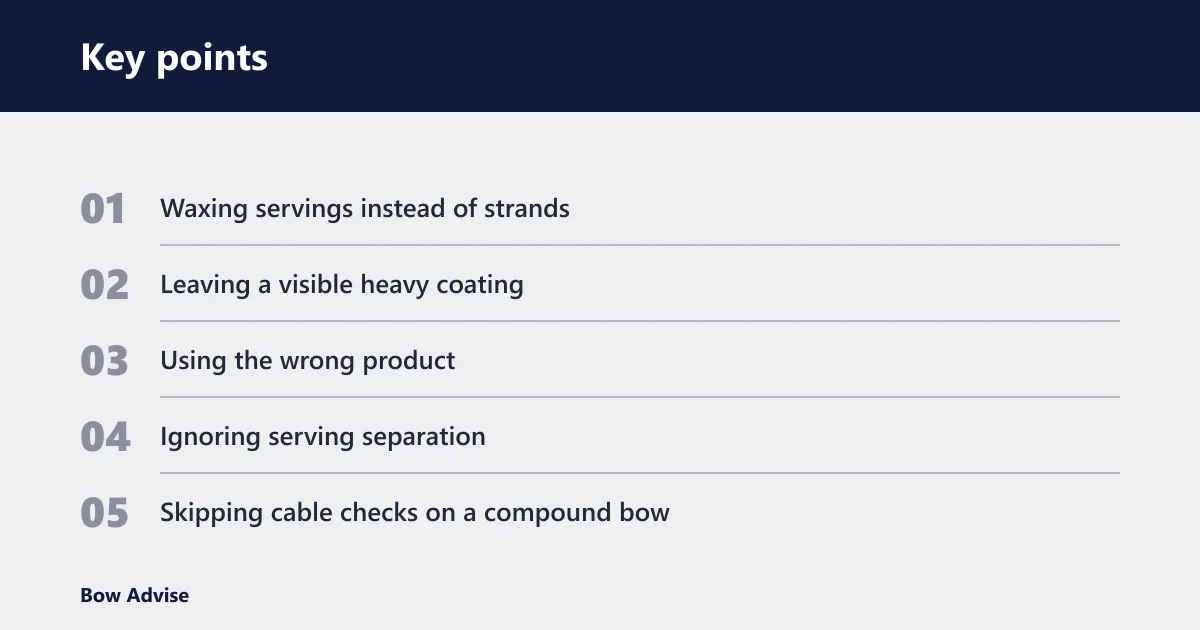
- Waxing servings instead of strands: keep wax off the center serving, loop servings, and peep serving.
- Leaving a visible heavy coating: use a thin layer and wipe excess off the surface.
- Using the wrong product: choose dedicated archery wax, not petroleum or silicone products.
- Ignoring serving separation: if the serving is opening, wax will not repair it.
- Skipping cable checks on a compound bow: inspect cables and cable serving, not just the main string.
The failure mode of over-waxing is easy to miss in winter. The string can feel stiff, collect dirt faster, and look shiny in a way that hides grit. That does not make the string healthier. It usually means the surface needs cleaning before any more wax goes on.
Should you wax bow cables as well as the string? On a compound bow, yes. Compound bows also have cables that should be waxed, and the cable serving should be inspected at the same time. If the cable serving is worn, the bow needs more than a fresh coat on the main string.
What should you wax and what should you avoid on a bow string? Wax only the bare strands between servings. Avoid the center serving, loop servings, and peep sight serving. If wax has spread onto those parts already, wipe it off and check for nock rotation or peep rotation before adding more.
Frequently asked questions
What is bow string wax made of?
Most dedicated archery wax products are made to coat and protect bare string fibers without turning the string sticky. The important part is not a household ingredient list; it is whether the wax stays workable in cold weather, penetrates the strands, and leaves the surface free of heavy residue.
Can I use too much bow string wax?
Yes. Too much wax attracts dirt and debris, and in winter that buildup can stiffen on the string. If the coating is visible, wipe it down with a clean dry cloth and then inspect the bare strands again before adding any more wax.
How do you apply bow string wax correctly?
Use a light, even stroke on the exposed strands only, then work it into the fibers with your fingers. Wipe off excess after application. The goal is protection inside the bundle, not a thick layer sitting on the outside.
How do I tell if my bow string needs wax?
Check for dryness, roughness, fuzzing, and a tacky feel with your fingernail. Look closely for frayed strands or serving separation. If the strands look dull but still intact, wax now; if the damage is structural, replace the string instead.
Does freezing weather change how often I need to wax?
Yes. Freezing weather can make string care more frequent, especially for bows stored in cold places or shot often in winter. A practical rule is to inspect more often, then wax only when the exposed strands feel dry or rough, not on a fixed schedule alone.
What kind of wax should I use on a compound bow string?
Choose dedicated archery wax, and common suitable examples may include Bohning Tex-Tite, Saro, and BCY. On a compound bow, remember that both the string and cables need attention, while the peep sight serving should stay free of wax.