How to Practice Archery Indoors in Winter
Practice archery indoors in winter by matching the setup to your space: about 3–5 yards for blank bale or form drills, about 10–20 yards only if your room allows a full safe backstop, and use a low-poundage bow or trainer if space is tight. Poor indoor setup can damage walls, break arrows, and make shots unsafe. This guide shows how to choose an indoor winter practice plan by space, bow type, and training goal.
Indoor archery winter setup guide


Indoor winter practice works best when the space, bow, and goal all match. A garage lane for a compound bow is a different setup from a basement blank bale for recurve form work, and both differ from a club range with fixed lanes and range commands.
Most indoor spaces fall into one of three buckets: a short home lane for blank bale work, a club lane with range rules, or a full indoor range with a target wall and set distances. Indoor archery clubs often run year-round, with winter sessions moving indoors.
How bow type changes the setup
Compound bows and recurve bows can both be used indoors, but the risk profile is not the same. A compound bow usually sends arrows faster and can punish a weak target faster, while a recurve often gives cleaner feedback for release and alignment work at short range.
That difference matters more indoors because mistakes have less room to disappear. At short distance, a recurve shooter may be working on anchor and follow-through, while a compound shooter may need a target that stops arrows cleanly and a setup that avoids contact with rests, cables, or noise from a cramped lane.
Which training goal fits which setup?
If the goal is form maintenance, blank bale work is often the cleanest choice. If the goal is shot rhythm under range rules, a club lane is better. If the goal is full-distance indoor practice, a purpose-built indoor range with a permanent target wall is the safer fit.
That is the main winter decision: do not choose indoor archery by room alone. Choose it by the training target first, then confirm the space can support that target without pass-through risk, ricochet risk, or overhead contact.
How much space do you need indoors?
Space needs change by setup, not by the word “indoor” itself. An apartment corner may support no live shooting at all, a basement may support blank bale only, a garage may support a short lane with a real backstop, and a club lane may support longer practice under supervised rules.
Apartment, basement, garage, and club lane differences
An apartment is usually too constrained for live arrows unless a building has a purpose-made archery space, and you should check local laws, building rules, and lease terms before practicing at home. A basement can work for blank bale practice if the target stops arrows reliably and the overhead area is clear. A garage can sometimes support a short lane, but the door tracks, stored items, and wall surfaces increase ricochet and impact risk.
A club lane is the easiest way to avoid guessing. One indoor range page lists 20 indoor lanes with a permanent target wall, and that facility offers 9-meter and 18-meter shooting distances. It also describes itself as climate controlled for year-round shooting.
Ceiling clearance and shooter lane width
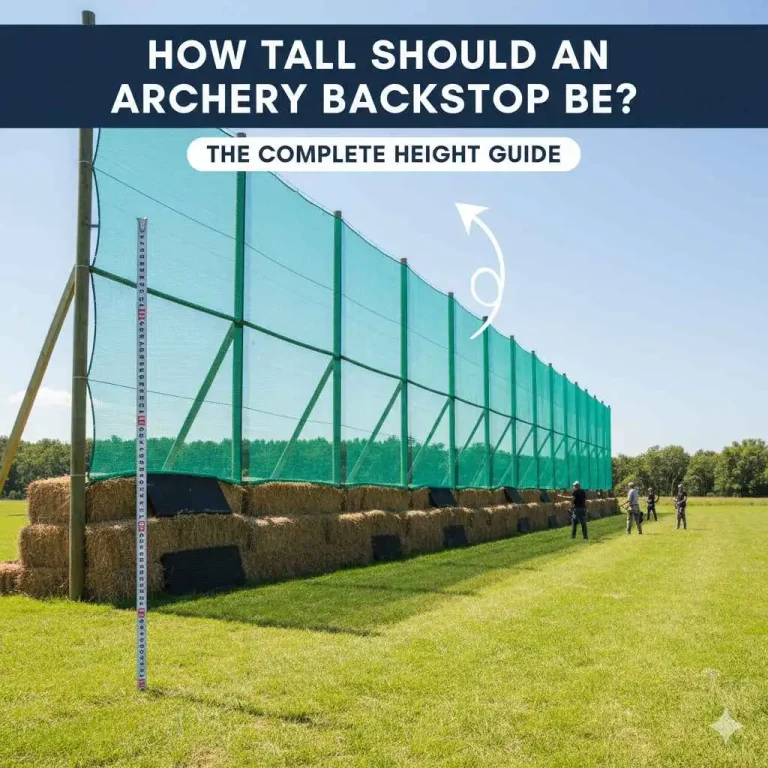
Ceiling height matters because low ceilings raise the chance of arrow deflection on release or during a high follow-through. A 12-foot ceiling height for an 18-meter range at that facility, but that should be read as facility guidance, not a universal rule for every room.
Shooter lane width matters for the same reason. The same guide says commercial lanes require a minimum of 32 inches per shooter, but facilities may set their own lane spacing and shooting rules. The practical test is simple: the archer must draw without bumping walls, shelves, lights, or another person.
When a room is too small to use
A room is too small when the shooter cannot hold full draw without touching anything, when the target area cannot stop every arrow, or when retrieval would force people to cross a firing line without a clear command. If the ceiling is low enough that the arrow path looks cramped, stop before shooting.
Say your basement has a 7-foot ceiling, a water heater on one side, and a drywall wall behind the target. That is not a safe live-arrow lane, even at short distance. Blank bale dry work or a club lane is the better choice.
Blank bale practice for winter form work
Blank bale practice is often done at about 5 yards as a short-distance option for release and execution work. It is especially useful when the goal is to calm target panic, clean up anchor consistency, or repeat the shot cycle without worrying about score.
This setup works best when the room, target, and bow all fit the same purpose. At close range, the shooter can focus on stance, draw path, anchor, expansion, and follow-through. The target face is irrelevant, and that is the point.
What to focus
The main blank bale goals are anchor consistency, clean release, and a repeatable shot cycle. Recurve shooters often benefit from watching bow hand position and string contact. Compound shooters usually get more value from release execution and keeping the bow arm quiet through the shot.
Because the target is close, the archer can notice habits that disappear at distance. A creeping anchor, a rushed release, or a collapsing bow shoulder becomes obvious very quickly.
Common mistakes
The biggest blank bale mistake is making it too casual. A short shot does not mean a sloppy shot. Another common error is using a target that is too soft or too shallow for the bow’s draw weight and arrow speed, which raises pass-through risk.
A common first-timer mistake is treating blank bale as a no-target shortcut and then shooting into thin foam in a room with a hard wall behind it. That is not form work. That is a setup problem.
When should you use a club lane?
Use a club lane when you want a controlled indoor environment without building your own range. Club lanes are the best fit for beginners, for archers who need supervised safety, and for anyone who wants to shoot longer distances without guessing about lane rules or target safety.
Indoor archery range rules are range-specific, but they usually control distance, lane use, and retrieval. One club guideline says everyone must stay on the line until the last shooter is done. Another says indoor practice is available year-round barring scheduled events. One indoor range requires field tips only for all shooting.
Why 9-meter and 18-meter shooting are common
Many indoor ranges use fixed distances to keep safety and lane flow consistent. A facility may offer 9-meter and 18-meter shooting distances, while another club uses a 25-yard indoor range with separate target butts for vertical bows and crossbows. Those are facility choices, not universal standards.
For winter practice, fixed-distance shooting keeps the session simple. All shooters can stay on the same line, use the same rules, and retrieve together when allowed. That makes club lanes a strong option for beginners who do better with structure.
Why lessons and memberships help beginners
Indoor archery lessons or club membership can remove a lot of guesswork. One beginner class at an indoor facility includes range safety, basic form, and first arrows, and the same facility says equipment is provided for beginner classes. That combination is useful when the archer does not yet own a complete setup.
Membership also helps when the shooter needs regular winter access. Indoor archery clubs often run year-round, with winter sessions moving indoors, so a membership can be the most reliable way to keep practice going until outdoor season returns.
Indoor archery decision table
This table compares the three most practical winter setups. Use it to match your space, bow, and training goal before you shoot.
| Setup type | Minimum safe space | Best bow type | Recommended drill | Main failure risk | When to stop using it |
|---|---|---|---|---|---|
| Blank bale | About 5 yards, plus a full stop behind the target | Recurve or low-poundage compound | Anchor, release, and shot cycle repetition | Pass-through into the wall or floor if the target is too light | Stop if arrows reach the backstop or the wall, or if the lane feels cramped at full draw |
| Club lane | Range-defined lane with clear separation; 9 meters or 18 meters are common indoor distances | Recurve or compound, depending on the range rules | Form under range commands and controlled scoring ends | Lane conflict, rule violation, or shooting an arrow type the range does not allow | Stop if the range commands, lane limits, or arrow rules do not match your setup |
| Home lane | Enough room for full draw, a reliable target boss, and a backstop system behind it | Usually recurve or a reduced-power compound | Short-range group control and execution work | Ricochet, pass-through, or overhead contact in a low-ceiling room | Stop if the target softens, arrows rebound, or ceiling and side clearances get tight |
Can you practice at home safely?
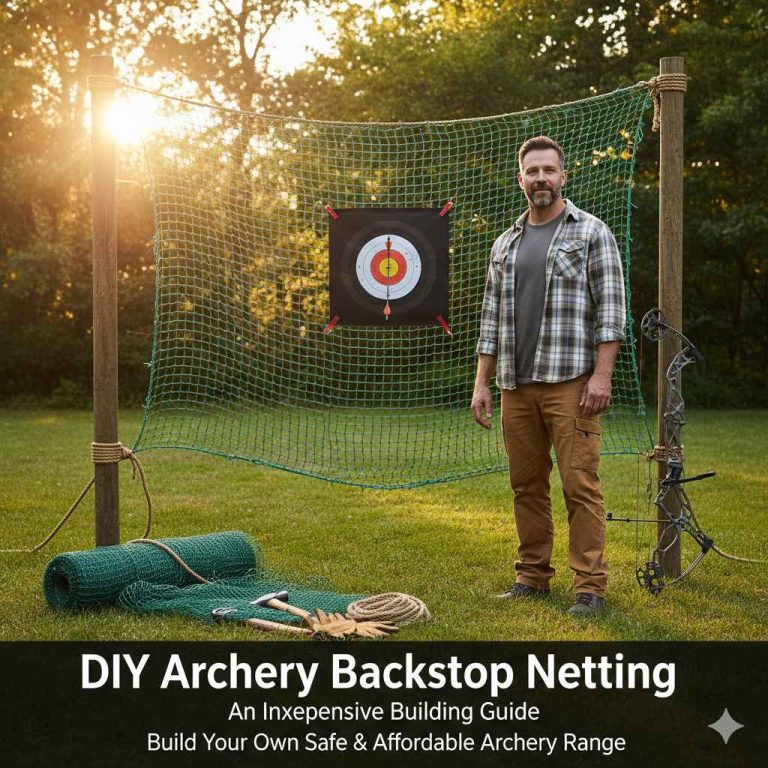
Yes, but only if the target, backstop, and room all match the bow. A home lane needs a target boss or target butt that stops arrows reliably, plus a backstop system behind the main target to reduce property damage risk if an arrow passes through or glances off.
At home, the safest option is usually the simplest one that fully contains the arrow. If the room cannot do that, the answer is not to improvise harder. It is to move practice to a club range.
Target boss and backstop choices
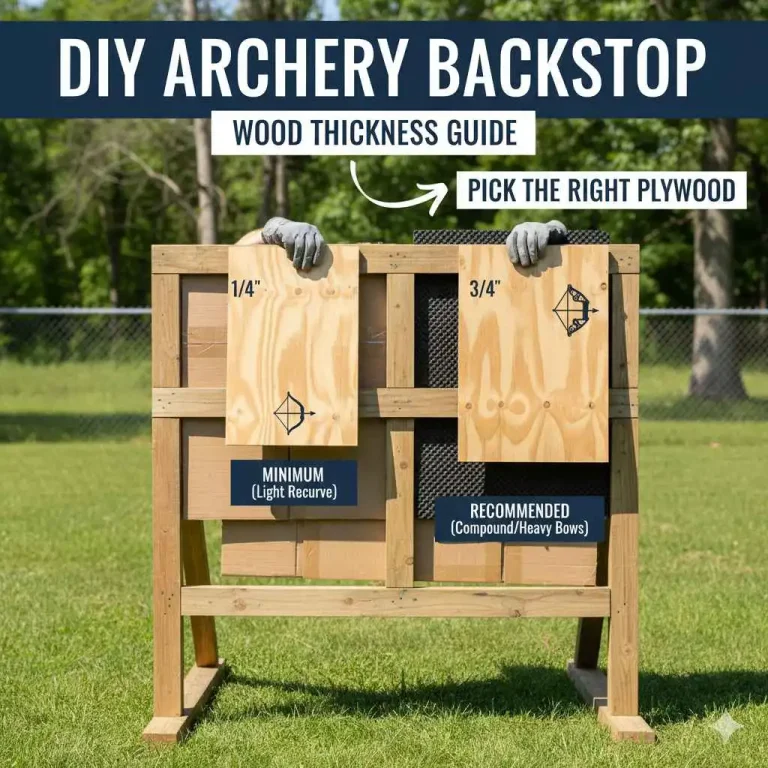
A target boss or target butt should stop arrows reliably. Bag, foam, or layered systems are common. The backstop system is secondary protection behind the main target. The target still has to do the first job.
The backstop system is secondary protection behind the main target. It can help when it is positioned behind the primary target and used as backup, not as the only stop. The target still has to do the first job.
Pass-through, ricochet, and ceiling risk
Pass-through risk rises when the target is too soft, too thin, or not rated for the bow and arrow setup. Ricochet risk rises when the arrow hits at an angle, especially in tight rooms with hard floors, hard walls, or side clutter. Low ceilings can also deflect the shot path before the arrow reaches the target.
Suppose a shooter sets a compound bow behind a foam block that works fine for a light recurve. The first few arrows may bury well enough, then a tighter group starts cutting through the block and clipping the back wall. That is the signal to stop and upgrade the target, not to keep shooting.
Compound versus recurve indoors
Recurve bows are often the better choice for short indoor form work because they are simple, quiet, and easy to read at close range. Compound bows can work indoors too, but they are less forgiving of a weak target and more likely to reveal setup problems through noise, contact, or deeper penetration.
Indoor tuning should stay conservative unless the manufacturer’s guidance says otherwise. Arrow choice, point weight, and rest setup vary by bow and arrow build, so check the owner’s manual or the range’s rule set before changing equipment for winter shooting.
- Measure the room from shooting line to target, then confirm there is a real stop behind the target face.
- Check ceiling height, side clearance, and whether full draw can happen without contact.
- Choose the setup type that fits the goal: blank bale, club lane, or home lane.
- Confirm the target boss matches the bow and arrow speed, then rotate the target to avoid soft spots.
- Use range rules, lane separation, and retrieval commands if you are shooting at a club or indoor range.
- Stop immediately if arrows begin to pass through, rebound, or strike the room structure.
Frequently asked questions
How to get started in archery indoors during winter
Start with the least complicated safe setup you can support. For many beginners, that means a club lane or a coached indoor class. A facility that includes range safety, basic form, and first arrows is ideal because the archer learns the line rules before trying to build a home lane.
What is the safest way to practice archery indoors?
The safest option is a purpose-built indoor range with a permanent target wall, lane separation, and clear retrieval rules. If you practice at home, the target boss must stop the arrows reliably, and the room must allow full draw without contact. If any of those pieces are missing, stop.
What equipment do I need for indoor archery practice?
At minimum, you need a bow, arrows that match the bow, a reliable target boss or target butt, and a backstop system if you are practicing at home. Beginners often do better with a club that provides equipment for the first sessions, since the bow setup and range rules can be learned together.
How much space do I need to practice archery indoors?
It depends on the setup. Blank bale work can fit in about 5 yards if the target is safe and the room is clear. Full indoor ranges commonly use 9 meters or 18 meters. At home, the real question is not just distance, but whether the lane supports full draw and a safe stop.
What are the rules for indoor archery ranges?
Rules vary by facility, but many ranges control arrow type, line discipline, and retrieval timing. One club says field tips only, and another says everyone must stay on the line until the last shooter is done. Some ranges also require all shooters to use the same distance on a given line.
Is archery in the winter olympics?
Archery is not typically a Winter Olympics sport. Indoor practice in winter is about keeping form, release quality, and shot rhythm ready for the next outdoor season, or for indoor competition on a club range. That makes winter a training season, not a separate version of the sport.