Winter Archery Layering: How to Dress Without Ruining Your Shot
Keep winter layers thin at the shoulders and string side. Stop adding bulk once your anchor, string path, and release hand stay in the same place every shot. Too much insulation shifts anchor points, changes face pressure, and can send arrows left or right through clearance problems. This guide covers cold-weather layering that preserves draw length, anchor repeatability, string clearance, and clean release mechanics.
Why winter clothing changes your shot
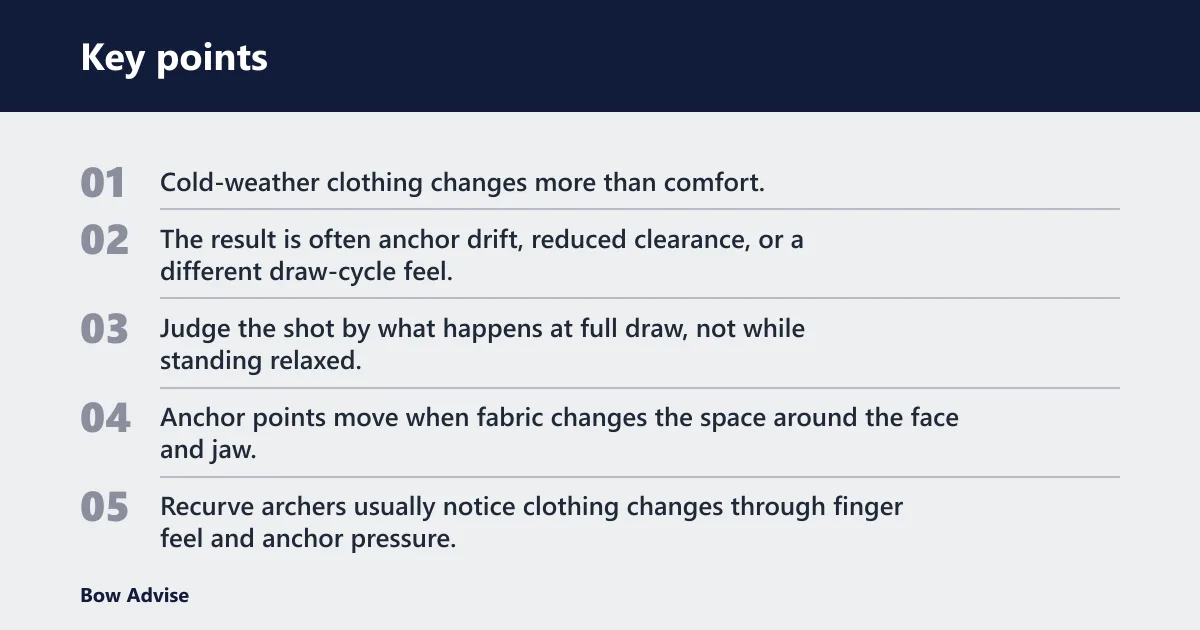


Cold-weather clothing changes more than comfort. A thick jacket can bind across shoulders and chest at full draw, which changes how far the bow comes back, where the string touches the face, and how cleanly the release hand settles. The result is often anchor drift, reduced clearance, or a different draw-cycle feel.
That matters in both target archery and bowhunting. A layer that feels fine while walking can still bunch when the bow arm rotates, the shoulders load, and the chest opens at full draw. Judge the shot by what happens at full draw, not while standing relaxed.
Anchor drift and draw-length feel
Anchor points move when fabric changes the space around the face and jaw. A thick collar, hood, or stacked base layers can push the chin, mouth corner, or jaw line into a slightly different position. Even a small change can alter string contact and sight picture, especially on a compound bow where peep alignment is sensitive to head position.
Recurve archers usually notice clothing changes through finger feel and anchor pressure. Compound archers usually notice them through release hand position and peep alignment. The clothing issue is similar, but the failure mode shows up differently.
String clearance and sleeve contact
Loose sleeves and bulky outerwear can brush the string path on the bow arm side or near the chest. That contact can slap fabric, disturb the shot, or change arrow flight. Winter clothing should stay out of the path at full draw, not merely feel comfortable before the shot.
One practical rule is simple: if the sleeve or chest fabric needs constant tugging before every arrow, the layer is too loose for shooting as worn. An arm guard can help control loose winter sleeves, but it is a backup, not a cure for poor fit.
Why recurve and compound react differently
Recurve bows are more sensitive to glove thickness and anchor feel because the fingers stay on the string. Compound bows are more sensitive to release-aid clearance, peep alignment, and head position because the anchor and sight picture depend on repeatable body alignment. Clothing can affect both, but the correction is not identical.
For recurves, finger placement and face contact matter most. For compounds, the jacket must not alter the draw cycle or crowd the release hand near the face and jaw. A sleeve that is harmless on a recurve may still interfere with a compound release aid.
Base, mid, and outer layers that move well
A slim three-layer system works better than one bulky coat. Start with a fitted base layer, add a thin mid layer, then finish with a close outer shell that helps block wind without trapping the bow arm or chest. That structure keeps warmth where it is needed and leaves the shoulders free.
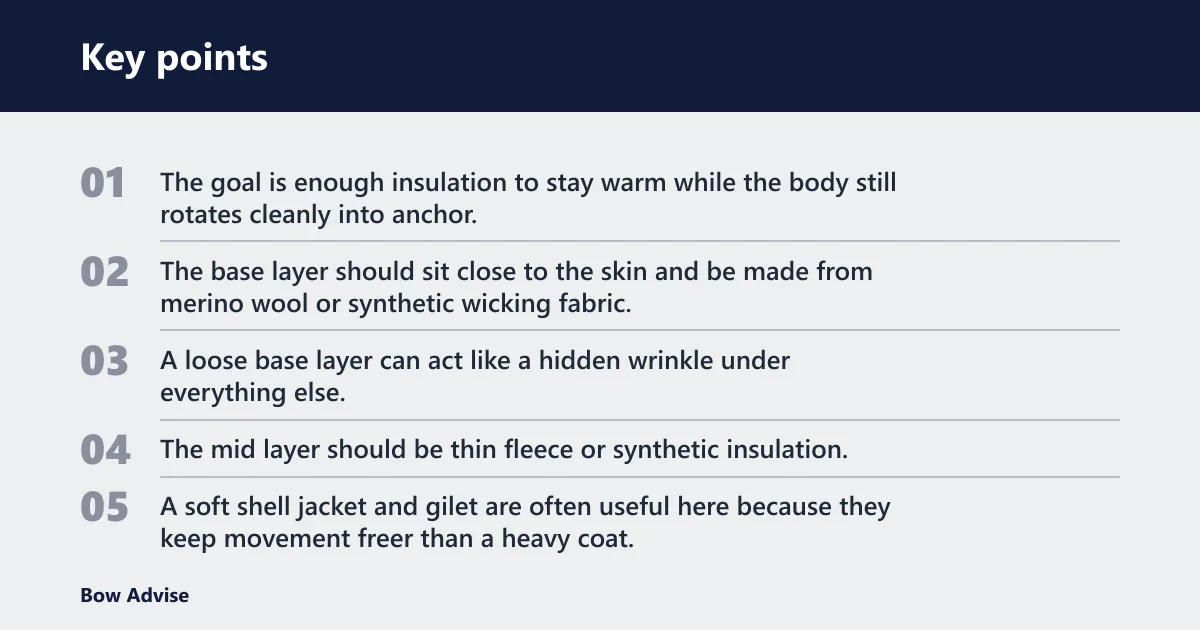
The goal is enough insulation to stay warm while the body still rotates cleanly into anchor. Fit matters more than thickness.
Base layer fit and moisture control
The base layer should sit close to the skin and be made from merino wool or synthetic wicking fabric. It should breathe, move sweat away from the body, and avoid bunching at the shoulder when the bow arm lifts. A loose base layer can act like a hidden wrinkle under everything else.
Check the underarm and upper back first. If the fabric folds when the arm goes overhead or across the chest, it can stack under the mid layer and create a bind at full draw.
Mid layer warmth without shoulder bind
The mid layer should be thin fleece or synthetic insulation. It adds most warmth in a layered system, but it still must allow shoulder rotation and should not restrict anchor contact. A soft shell jacket and gilet are often useful here because they keep movement freer than a heavy coat.
Suppose a bowhunter wears a fitted base layer, a thin fleece, and then a close shell. If the shoulder still feels trapped at full draw, the mid layer is probably too thick, not the shell. Trim the mid layer before adding anything else.
Outer shell fit for bow arm and chest
The outer shell should be windproof or water-resistant and sized to layer over the mid layer. It should fit close at the bow arm and chest and should not snag the string path. A shell that is roomy in the torso but tight at the upper arm often creates more problems than it solves.
One club advises lined walking trousers or thermal layers in cold weather, and says jeans are never a good idea in winter archery. The same logic applies above the waist: use clothing built for movement, not stiff fabric that blocks rotation.
How much layering is too much?
Layering is too much when the bow no longer reaches the same anchor without extra effort, the string path starts brushing fabric, or the release hand has to be forced into position. If any of those change, the clothing is affecting the shot. Stop adding layers before the shot changes shape.
A common test is a full-draw test rather than a mirror check. A jacket can look fine while standing still and still bind across shoulders and chest at full draw.
Signs a layer is too thick at full draw
Watch for shoulder pinching, chest compression, and a release or finger hand that lands farther forward than normal. If the bow arm cannot rotate freely, the draw cycle may feel shorter or heavier. If the face contact point shifts, anchor repeatability is already at risk.
- Anchor touches a different spot on the face.
- String or release line brushes the sleeve.
- Shoulders feel locked before settling at anchor.
- Peep alignment changes because the head sits differently.
When to trim layers instead of adding more
Trim layers when the base and mid pieces already keep the core warm but the shoulders feel crowded. Swap a bulky sweater for a thinner fleece instead of stacking more clothing and hoping the bow will forgive it. Warmth that ruins shot mechanics is the wrong kind of warmth.
Picture a cold morning with a 4 mph breeze and a jacket over a thick hoodie. If the hoodie collar pushes the jaw line higher, the anchor changes before the first arrow. Removing the hoodie often solves more than loosening the jacket ever will.
Winter sleeve and jacket control
Loose sleeves are a common winter problem because they move after the draw starts. Use an arm guard, a chest guard, and careful cuff control to keep fabric away from the string path. These pieces manage the clothing you already wear instead of forcing you into a heavier coat.
That approach is especially useful for bowhunters who hike in layered clothing and then shoot from stillness. The movement during the walk can be fine; the problem appears when the shot begins.
Arm guard use over loose sleeves
An arm guard helps control winter sleeves and reduces string contact with loose clothing. It is useful over thick layers and can keep a loose cuff from drifting into the bow string on the bow arm side. The guard should cover the area most likely to contact the string, not merely sit loosely over the forearm.
Use it any time the jacket sleeve has extra loft or insulation that stands away from the arm. If the sleeve still shifts after the guard is strapped on, the garment is too loose for clean clearance.
Chest guard use near the string path
A chest guard helps with loose layers and reduces clothing interference near the string path. It is especially useful with jackets or soft shells that puff outward across the torso. The chest area should stay close enough to keep the string path clear during the draw and release.
Use a chest guard when the front of the jacket hangs open, billows, or folds into the line where the string returns. If the guard cannot control the fabric, change the layer instead of trying to force the shot.
Cuff, seam, and hem checks
Before shooting, check cuffs, side seams, and the hem. The cuff should not catch on the bow arm. The hem should not ride up into the string track when the torso turns. Seams that sit bulky near the armpit can also change how the upper arm clears the chest.
- Lift the bow arm. Bring the bow arm to full shooting height and watch whether the sleeve rides into the forearm or elbow crease. This is where loose fabric first starts moving.
- Draw to anchor. Check whether the chest fabric tightens or folds across the string side. That tells you if the layer is still clear at full draw.
- Release and reset. Look for sleeve slap, hem movement, or seam shift during the shot cycle. If the fabric moves into the path once, it can do it again.
Gloves, hands, and release feel
Gloves matter because hand thickness changes contact points. Thin gloves are commonly preferred. Bulky gloves change hand position, alter release feel, and can shorten or lengthen the apparent draw if the fingers or release aid no longer sit the same way. Practice with the same gloves you will shoot in.
Cold fingers tempt archers to wear heavy winter gloves, but that usually costs control. Warmth helps only if the hand still sets in the same place every time.
Recurve glove thickness and finger placement
For recurves, glove thickness changes how the string settles across the fingers. A glove that is too thick can move the string slightly, soften the feel of the anchor, or make the release less clean. Thin gloves or a close-fitting shooting glove are safer choices for repeatability.
Check whether the tab or glove lets the fingers anchor in the same place at full draw. If the glove fills the space between the face and string, the anchor has already changed.
Compound release aid clearance and hand position
For compounds, the release aid should clear the jacket cuff, sleeve, and collar without forcing the wrist or elbow into a different line. Bulky gloves are a poor match because they change hand position and can interfere with the trigger or hook. The release hand should land naturally, not fight the clothing.
A common first-timer mistake is to wear a heavy glove on the bow hand and then wonder why the release feels different. The glove changes the grip, which changes how the arm settles, which can shift the sight picture.
Winter archery fit check table
Use this fit check before the first cold session. The table maps each clothing item to the most likely failure at full draw and the correction to test.
| Clothing item | Failure risk at full draw | Correction to test |
|---|---|---|
| Base layer | Bunching at the shoulder or under the bow arm | Choose a fitted merino wool or synthetic wicking top and draw to anchor twice |
| Mid layer | Shoulder bind that changes anchor contact | Swap to thin fleece or synthetic insulation and check shoulder rotation at full draw |
| Outer shell | String snag near the chest or sleeve drag on the bow arm | Use a windproof shell sized over the mid layer and verify string path clearance |
| Jacket sleeve | String slap or loose fabric movement | Shorten, tighten, or control the cuff and add an arm guard if needed |
| Gloves | Hand position shift and altered release feel | Use thin gloves and shoot several arrows with the same pair |
| Hood, hat brim, collar | Anchor change or peep sight interference | Draw fully and confirm the hood or brim stays clear of the face and sight line |
| Thermals or lined trousers | Restricted stance or kneeling movement | Choose lined walking trousers or thermal layers and test seated and kneeling positions |
| Boots or wellies | Unstable footing on frozen or muddy ground | Check traction and balance before drawing, especially on cold or uneven ground |
Frequently asked questions
What should I wear for winter archery without affecting my shot?
Wear a fitted base layer, a thin fleece or light insulation layer, and a windproof or water-resistant outer shell sized over the mid layer. Keep the shoulders thin, the chest close, and the sleeves controlled. That setup preserves anchor repeatability, string clearance, and enough warmth for cold sessions.
How many layers can I wear before a bowstring starts hitting my clothes?
There is no fixed number of layers that works for every case. The limit is set by full-draw fit, not by count. A slim three-layer system is a common starting point, but if the shoulder binds, the sleeve rides up, or the chest pushes into the string path, the setup may have too much bulk.
Should I wear gloves when shooting a bow in winter?
Yes, if they stay thin and do not change hand position. For recurves, thin shooting gloves help preserve finger feel and anchor consistency. For compounds, thin gloves on the bow hand are usually safer than bulky winter gloves, which can interfere with release feel and grip alignment.
Can a bulky jacket change my anchor point?
Yes. A thick jacket can bind across shoulders and chest at full draw, which can move the jaw, mouth corner, or release hand into a different position. Hood, collar, and sleeve bulk can all shift where the anchor lands, so the jacket must be checked at full draw, not just while standing still.
What is the best clothing for shooting a compound bow in cold weather?
A close-fitting base layer, thin mid layer, and windproof outer shell usually work best. Keep the collar low, the sleeves tidy, and the release side free of bulk. Compound bows are sensitive to peep alignment and release-aid clearance, so the clothing has to stay clear through the full draw cycle.
How do I keep warm while still getting proper string clearance?
Build warmth around the core, not around the shoulders and string side. Use a fitted base layer, a thin insulating mid layer, and a shell that is close at the chest and bow arm. Add an arm guard or chest guard if loose fabric still moves into the string path.
Do hooded jackets, hats, or neck gaiters interfere with bow shooting?
They can. A hood, hat brim, or face covering may change anchor point or block peep sight alignment. Test every headwear choice at full draw before you rely on it. If the brim or hood touches the string hand, jaw, or sight line, change the setup.
How should I layer for winter bowhunting practice?
Dress for the hike and the shot. Use layers that move well while walking, then still fit cleanly when standing, kneeling, or drawing from a cold, quiet position. Waterproof boots or wellies help on wet ground, and lined trousers or thermals are better than jeans for cold or damp practice.