How to Keep a Bow Sight From Fogging on Cold Mornings
Keep a bow sight clear on cold mornings by matching the sight, peep, and glasses to the same outdoor temperature before you step out, then keep your breath off the lens surfaces. If one stays warmer than the others, condensation can form fast and blur pins, peep alignment, and target details at the worst moment. This guide covers a fast pre-hunt routine, field fixes, and storage habits that help keep your sight picture clear.
Bow sight fog basics
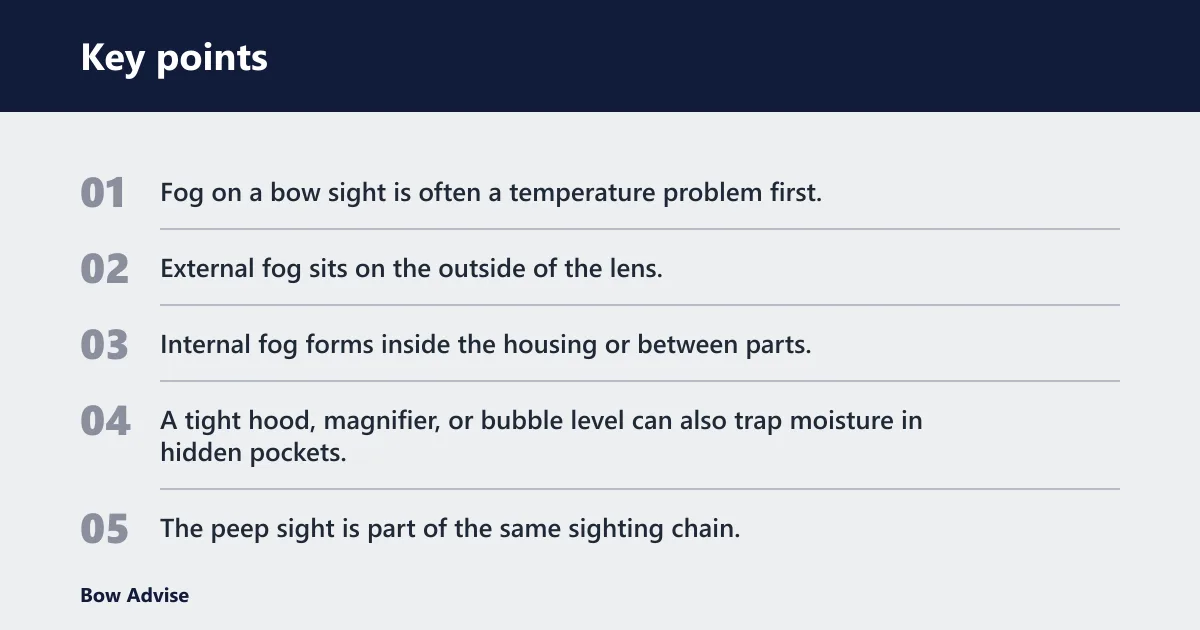


Fog on a bow sight is often a temperature problem first. A lens fogs when warm, moist air meets cold glass, and a warm vehicle can trigger that shift as soon as the bow hits colder air. A bow setup adds one more twist: the sight glass, peep sight, and eyewear all have to stay in step or the aim picture falls apart.
External fog sits on the outside of the lens. Internal fog forms inside the housing or between parts. That split matters because external fog is less serious than internal fog on optics. A tight hood, magnifier, or bubble level can also trap moisture in hidden pockets.
Why peep alignment matters
The peep sight is part of the same sighting chain. If the peep fogs, the sight glass may look clear but the full aiming picture still blurs. The peep is especially vulnerable because it is closest to your breath, and cold weather hunters are warned not to breathe on optics.
Picture a bowhunter stepping from a warm truck into 20-degree air. The sight clears on its own after a minute, but the peep still hazes when the bow comes to anchor. The result is a dim, off-center view that feels like a sight problem even when the issue is really whole-system condensation.
What you’ll need
- Clean microfiber cloth
- Anti-fog treatment made for coated optics
- Lens cover or flip-up hood, if your sight accepts one
- Dry pouch, pack pocket, or jacket pocket for the cloth
- Bow case or stand bag that is not packed with wet gear
- Warm-body carry position for short acclimatizing walks
How to keep your sight clear before the hunt
-
Prep the whole system.
Set the bow, peep, and glasses in the same outdoor temperature before the hunt. A sight should acclimate after leaving a warm car, and the same idea applies to a bow sight because a cold optic against warm breath fogs fast. -
Apply anti-fog correctly.
Use anti-fog treatment before exposure, while the lens is dry and at the temperature you will shoot in. For coated optics, put the treatment on a microfiber cloth first, then wipe the sight glass lightly and evenly. Check the manufacturer’s cleaning instructions before using any treatment, and reapply after wet weather or repeated exposure. -
Carry a clean cloth.
Store a microfiber cloth in a pack, pouch, or jacket pocket so it is more likely to stay lint-free and dry. Use it for quick touch-ups on external fog, dust, or light moisture. Do not use dirty gloves or rough fabric on the lens. -
Use a cover wisely.
Fit a lens cover or hood before walking out if rain, snow, or wind-driven moisture is part of the morning. Flip-up covers can help reduce fogging exposure, but they do not cure internal fog or frost inside the housing. -
Warm the bow, not the lens.
Keep the sight close to the outdoor temperature on the walk to the stand. Do not cup the lens with a bare hand for long, and do not breathe across the peep or sight glass while settling in, because body heat and sweat add moisture that turns to fog.
What to do when the sight fogs after a warm vehicle
A warm truck to cold air transition is the most common trigger. The fix is to let the bow acclimatize instead of rushing to wipe or heat the lens. If the fog is external, it often clears as the optic reaches outdoor temperature. If the fog is internal, waiting will not solve it.
Let the bow acclimatize
-
Stop in a sheltered spot.
Set the bow down outside the truck or in the blind entry area for a short acclimatizing pause. A few minutes can be enough for the outside of the sight to match the air, which reduces repeat fog after the first draw. -
Open the cover briefly.
Flip up the hood or lens cover only after the sight has had a moment to cool. This reduces direct exposure to rain and snow while still letting trapped warm air escape. -
Wipe only the outside.
If moisture remains on the exterior, use the microfiber cloth with light pressure. Wipe in one direction rather than scrubbing. If the lens shows frost, do not smear it; let it soften before clearing it.
For example, if a bow comes out of a warm truck into freezing air, the sight glass may cloud over. If the fog is outside the lens, a short wait and a clean cloth often fix it. If the clouding is inside the housing, the answer is service, not more wiping.
If that didn’t work, try this next
-
Check the peep and glasses.
If the sight still looks unclear, clean the peep sight and eyewear as well. Breath can fog the peep of binoculars or rangefinders, and the same breath haze can throw off the bow sight picture. -
Move to body carry.
Slip the bow into a protected carry position against the body for a short walk. The goal is to reduce the temperature swing so the sight, peep, and glasses settle together before the next shot. -
Service repeated internal fog.
If fog returns inside the sight after each cold start, treat that as a housing issue.
Bow sight fog checklist
| Symptom | Likely cause | Exact fix |
|---|---|---|
| Outer haze on the lens | Warm moist air hit cold glass | Wait 1 to 3 minutes, then wipe with a clean microfiber cloth |
| Fog inside the housing | Seal failure or moisture trapped inside | Do not keep wiping; dry the outside and send the sight for service |
| White crystals or a dull, icy film | Frost instead of liquid condensation | Let the lens warm naturally before wiping so the frost does not smear |
| Fog returns after leaving the truck | Temperature swing condensation | Leave the bow outside the vehicle for acclimatizing time before the first draw |
| Pin picture is clear but anchor feels off | Peep sight fog or eyewear haze | Clean the peep and glasses, then reset anchor and sight picture |
| Moisture after rain or snow | Weather exposure on the hood and lens | Use a hood or cover, then dry the exterior with a microfiber cloth |
Does a sight hood help with fogging?
A sight hood can help with rain, snow, and direct exposure, but it does not fix internal fog. It can slow new moisture from landing on the lens and may reduce how often you need to wipe the glass in wind-driven weather. That makes it useful, but not magical.
What a hood can prevent
-
Block direct exposure.
Use the hood or flip-up cover during walks, stand climbs, and snow flurries. A covered lens is less likely to collect fresh moisture before the shot. -
Shield hidden pockets.
Check for moisture trapped around a bubble level or magnifier. Tight housing parts can hold damp air, so open the cover only when you are ready to aim.
What a hood cannot fix
A hood cannot dry out an optic with internal fog. It also will not stop condensation from forming if the sight, peep, and glasses stay at different temperatures. If the housing is sealed badly, the lens may haze again no matter how many times the cover is flipped.
Common mistakes
- Breathing across the peep or sight glass while settling in.
- Wiping with dirty gloves, a shirt sleeve, or anything abrasive.
- Putting anti-fog on a cold, wet lens instead of a dry, warm one.
- Moving the bow from a warm truck to the stand bag without acclimatizing it.
- Assuming a hood fixes fog inside the sight housing.
- Ignoring frost and treating it like ordinary fog.
A common first-timer mistake is to wipe immediately after stepping out of a warm cab. If the haze is frost, that quick wipe just smears it and leaves streaks that are harder to clear before the shot.
Frequently asked questions
How do I stop my bow sight from fogging on cold mornings?
Match the sight, peep, and glasses to the same outdoor temperature before you step outside, then keep your breath off the lens surfaces. Use anti-fog on a dry lens at the temperature you will shoot in, carry a microfiber cloth, and give the bow a short acclimatizing pause after leaving a warm vehicle.
Why does my bow sight fog when I step outside in winter?
Fog forms when warm, moist air hits cold glass. The truck-to-stand transition is the usual trigger because the sight and peep cool faster than your breath and face. Body heat, sweat, rain, and wet weather can add more moisture to the problem.
Should I use anti-fog spray on my bow sight lenses?
Yes, if the product is meant for coated optics and the lens is dry and at the temperature you will shoot in. Apply it before exposure, and use a microfiber cloth for the final wipe. Reapply after wet weather or after repeated cold starts, because the protection is temporary.
Can I keep my sight clear by warming it before the hunt?
Yes, but the key is matching temperatures, not heating the lens itself. Keep the bow at the outdoor temperature before the hunt, then let it acclimatise after leaving a warm car. Do not use direct heat sources that can create another temperature swing.
Does a sight hood or lens cover help with fogging?
It helps with rain, snow, and direct exposure, and flip-up covers can reduce fogging exposure. It does not fix internal fog or frost inside the sight housing. Use it as protection, then still manage temperature and breath across the peep.
What should I do if my sight fogs after leaving a warm truck?
Stop, let the bow acclimatize, and check whether the fog is outside or inside the lens. External haze may clear in a few minutes and can be finished with a microfiber cloth. Internal fog, repeated haze, or wet fog inside the housing calls for service.
How do I prevent condensation on a peep sight and sight glass?
Keep the peep, sight, and glasses at the same temperature before shooting, and do not breathe on them during setup. Store a clean microfiber cloth in your pack for touch-ups, and avoid big temperature swings between the truck, stand, and first draw.
Is fog on the outside of the lens different from fog inside the sight?
Yes. External fog sits on the lens surface and is usually easier to fix. Internal fog is trapped inside the housing. If the inside clouds up again after drying the outside, the sight likely needs service.
What can I carry in my pack to clear fogged sight glass in the field?
Carry a clean microfiber cloth and, if your optic allows it, an anti-fog treatment for coated lenses. Keep the cloth in a dry pocket, not loose with muddy gear. A lens cover or hood also helps when rain, snow, or wind-driven moisture keeps returning.