How to Compare Budget vs Premium Finger Tabs
Buy How to Compare Budget if you are still sorting fit and anchor; choose Premium Finger Tabs when you need repeatable release, replaceable parts, and higher-volume durability. The wrong pick can leave you with inconsistent string feel, sore fingers, and more replacement cost. This guide compares budget and premium tabs by fit, materials, adjustability, release quality, and long-term value for recurve and barebow archers.
| Decision factor | How to Compare Budget | Premium Finger Tabs | Winner |
|---|---|---|---|
| Up-front cost | Usually $5–$15; the Black Widow Tab is a $15 beginner option. | Higher entry price; the Win & Win 360 Cordovan Finger Tab is $50 and the Fivics Tenfix Finger Tab is $105. | How to Compare Budget |
| Release consistency | Good enough when fit is correct, but simpler faces and fewer adjustment points limit fine control. | Usually more repeatable because cordovan, anchor shelves, spacers, and rigid backs reduce variation. | Premium Finger Tabs |
| Fit tolerance | More forgiving for first-time setup, but edge exposure and bunching can show up sooner. | More ways to dial in finger length, spacer position, and anchor contact, but also more parts to mis-set. | Premium Finger Tabs |
| Break-in time | Cowhide leather usually needs more break-in before it settles. | Cordovan is generally denser and smoother, so the tab may feel ready sooner and stay more consistent. | Premium Finger Tabs |
| Replaceable parts | Often limited or none. | Better odds of replacing worn faces, spacers, or small hardware instead of the whole tab. | Premium Finger Tabs |
| 12-month value | Lowest initial spend, but replacement faces can reduce the savings if practice volume is high. | Higher initial spend, but serviceable parts can make the cost per shot lower over time. | Tie |
| Best fit for beginner recurve | Strong choice while learning anchor, finger spacing, and draw weight tolerance. | Useful only if the beginner already knows the needed fit and wants a structured setup. | How to Compare Budget |
| Best fit for barebow and high-volume target use | Works, but simpler construction can limit repeatability under heavier practice loads. | Better suited to string walking, repeatable anchor reference, and higher shot counts. | Premium Finger Tabs |
What changes first: feel, fit, or durability
The first change is usually fit, then feel, then durability. A tab that matches finger length, handedness, and anchor style makes the biggest difference right away; better material matters later, when the shooter starts noticing small shifts in pressure, edge exposure, or anchor contact from shot to shot.
Budget tabs often feel fine on day one if the leather face sits flat and the spacer does not crowd the middle finger. Premium tabs earn their price when the archer needs the same hand position every session and wants parts that can be adjusted instead of replaced.
What matters before you buy?
Start with discipline, draw weight, anchor style, and shooting volume. A tab for a beginner recurve archer learning split-finger form does not need the same structure as a barebow archer who string walks or shoots many ends in a row.
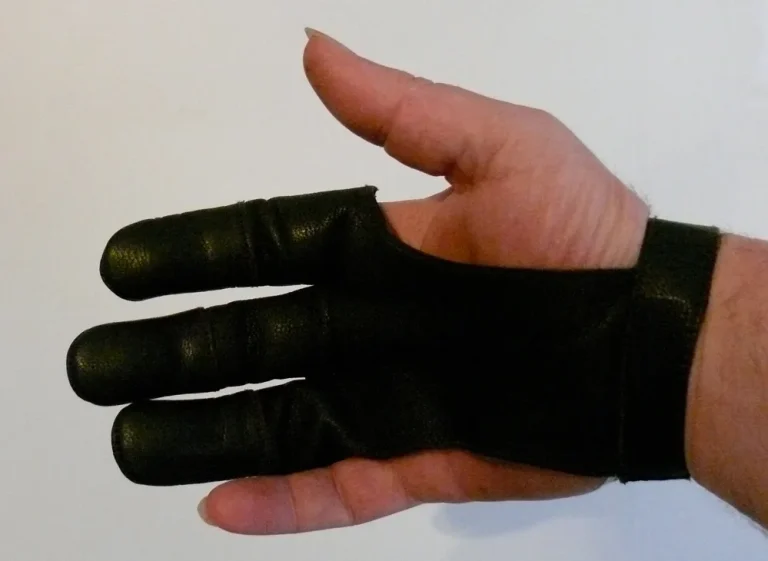
Handedness matters as well. A right-handed archer draws with the right hand and usually needs a right-hand tab; left-handed archers need the opposite. Using the wrong hand side changes where the face, spacer, and anchor shelf sit against the chin and jaw.
Recurve, barebow, and draw weight
Recurve archers often want a simple anchor shelf or lip to repeat the facial reference. Barebow archers usually benefit more from a stable shelf, a clean finger spacer, and a tab that does not twist when the anchor changes under different crawl positions.
Heavier draw weight raises the value of structure. More finger pressure means edge control matters more, so a tab that folds, bunches, or shifts under load will usually feel worse than a more rigid design.
Anchor style and finger placement
Split-finger shooting depends on a spacer that separates the index and middle finger and reduces pinching. Three-under shooters may still want a separator, but the best shelf position and face cut can differ because the string contact point changes.
Anchor shelves and lips give a repeatable facial reference. That helps more than brand name does, especially for archers still learning where the tab should sit under the jawbone or against the corner of the mouth.
Handedness, size, and finger length
Size should match finger length, not ego. Legend Archery notes that tabs come in small, medium, and large sizes, and that is worth using as a starting point rather than guessing from glove size.
Fit failure often shows up at the edges first. If the tab is too small, leather exposure at the fingertips can cause bunching or pressure points; if it is too large, the face can slide and the anchor contact changes from shot to shot.
Finger tab features that change the result
The main construction pieces are the face material, finger spacer, anchor shelf or lip, and the base plate or platform. The right mix depends on whether the archer wants simple protection or a more structured tab that resists twisting and keeps the hand in the same place.
Leather face material and break-in time
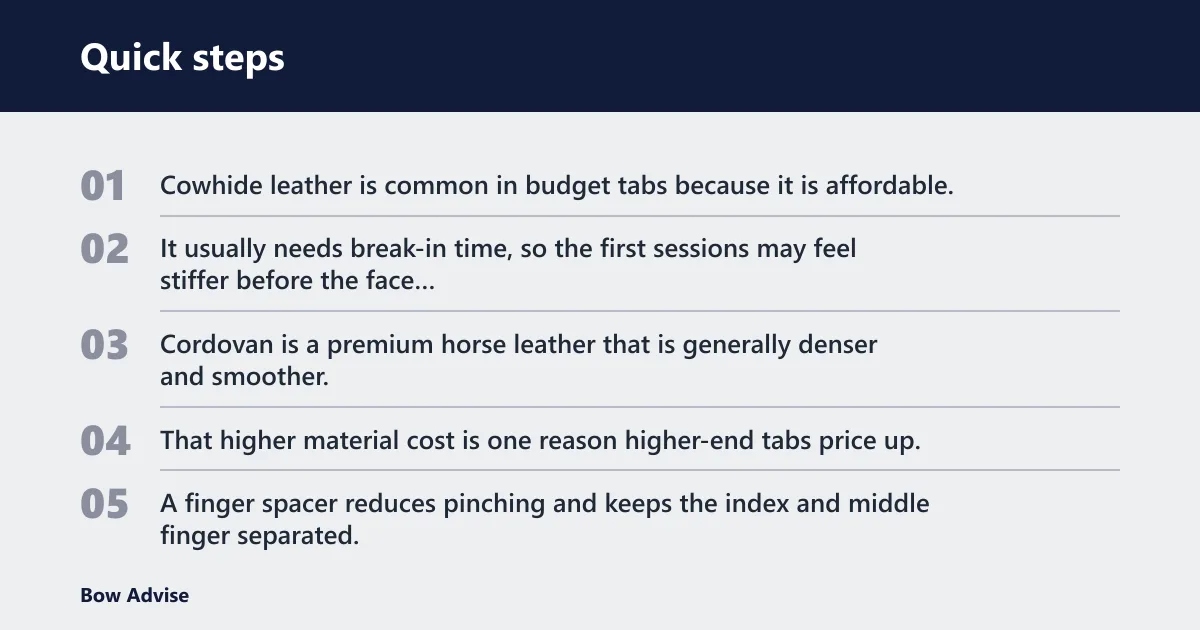
Cowhide leather is common in budget tabs because it is affordable, durable enough for casual use, and widely available. It usually needs break-in time, so the first sessions may feel stiffer before the face settles.
Cordovan is a premium horse leather that is generally denser and smoother. That higher material cost is one reason higher-end tabs price up, and it is one reason competition archers often prefer it when they want consistent finger contact across many ends.
Finger spacer and anchor shelf
A finger spacer reduces pinching and keeps the index and middle finger separated. That matters most for split-finger shooting, where pressure can stack badly if the fingers crowd each other under the tab.
An anchor shelf or lip gives a repeatable point under the jaw or along the face. Legend Archery’s guidance on tabs with a shelf or lip lines up with that practical use: a stable reference can help the same anchor happen again, which matters more as training volume rises.
Platform base plate and adjustability
A platform tab uses a rigid or semi-rigid backing plate, which can reduce twisting and folding. That structure usually costs more, but it also gives the tab a firmer hand feel and more predictable positioning under load.
Adjustability helps when the archer already knows what needs changing. It can slow setup for beginners, though, because more spacers, rests, and hooks create more ways to misplace the fingers or overcomplicate a simple anchor.
Single-layer vs multi-layer construction
Single-layer tabs are simpler and often cheaper. Multi-layer tabs usually add structure, protection, or tuning options, which can improve durability and consistency when the shooter practices often.
The right choice depends on whether the tab is a learning tool or a long-term setup. A new archer may value simplicity more than layered construction, while a high-volume target shooter often wants the extra structure.
Budget finger tabs: what you gain and lose
Budget tabs win on entry cost and simplicity. They are a practical choice when the archer is still figuring out fit, anchor, and finger placement, and they can be enough for casual recurve practice or short sessions with moderate draw weight.
Basic beginner tab strengths
A basic beginner tab often uses a simple leather or synthetic pad, a finger loop, and minimal features. That keeps the price low and the setup easy, which is useful when the main job is learning where the string should sit on the fingers.
The Black Widow Tab is a clear example of this category at $15, and it has no aluminum or metal plates. That simplicity can be a strength for a first tab because there is less hardware to adjust or misalign.
Common budget failure modes
The most common problems are edge exposure, leather bunching, spacer interference, and inconsistent anchor contact. Those issues usually show up when the size is off, the cut is too small for the fingers, or the tab flexes enough to move under load.
A common mistake is assuming the cheapest finger tab will still fit comfortably and release cleanly during your first practice session. Suppose a right-handed recurve archer with long fingers picks a small tab because it is cheap; the fingertips may hang over the edge, and the face can bunch as the string comes off the fingers.
Where cowhide leather still makes sense
Cowhide leather still makes sense for low to moderate shot counts, short practice blocks, and archers who are still learning whether they want split-finger or another finger placement. It is durable enough for casual use if the fit is correct.
It also makes sense when replacement cost matters more than long service life. If the archer is not yet sure about anchor style or hand position, it can be smarter to spend less now and change later.
Premium finger tabs: what you pay
Higher-end tabs are not automatically better for every archer. The real upgrade is usually repeatability, replaceable parts, and a cleaner hand feel under heavier training volume, not a magic improvement in accuracy.
Why cordovan costs more
Cordovan costs more because it is a premium material that is durable and pliable. That combination is valued by competition archers because the face can stay smooth while still handling repeated use.
The Win & Win 360 Cordovan Finger Tab is listed at $50 and includes an anchor shelf and finger spacer. The Fivics Tenfix Finger Tab is listed at $105 and adds a pinky finger spacer, thumb rest or anchor shelf, and pinky hook, which shows how quickly features and price can rise together.
Replaceable parts and longer service life
Replaceable parts change the value equation. If the face, spacer, or hardware can be replaced individually, the archer may spend more at first but less across a year of training.
That matters when shooting volume is high. A cheaper tab can lose its savings if the face wears out and the whole unit must be replaced, while a more expensive tab can stay in service longer if only one component wears first.
When adjustability helps, and when it slows setup
Adjustability helps barebow and target archers who already know the anchor point and want to fine-tune finger spacing, shelf position, or platform angle. It is useful when the shot process is stable and the tab is being tuned to match it.
It slows setup for beginners because more options mean more room for error. A high-end tab with a pinky spacer or extra hook can feel busy if the archer still needs to learn a clean draw and a steady anchor first.
Finger tab decision matrix
The table below scores the two options in plain terms. The intent is not to crown a universal winner, but to show where each option gives the better return per shot and where the higher price starts paying back.
| Criterion | How to Compare Budget | Premium Finger Tabs | Simple recommendation |
|---|---|---|---|
| Release consistency | Moderate; depends heavily on fit and face break-in. | High; better structure and smoother face help repeatability. | Premium Finger Tabs for high-volume target archers |
| Fit tolerance | Better for learning, but less forgiving when too small or too loose. | Better once the archer knows the exact finger length and anchor needs. | How to Compare Budget for beginners |
| Break-in time | Usually longer with cowhide or basic synthetic faces. | Usually shorter with cordovan and more refined construction. | Premium Finger Tabs for volume shooters |
| Replaceable parts | Often limited. | Common on more structured models. | Premium Finger Tabs for long-term use |
| Durability | Fine for casual use, but wear can force earlier replacement. | Better service life when maintained and fitted correctly. | Premium Finger Tabs for frequent practice |
| Adjustability | Low to moderate. | Moderate to high. | Premium Finger Tabs for tuned setups |
| Beginner friendliness | High because setup is simple. | Lower if the tab adds too many options. | How to Compare Budget for first tabs |
| Total cost over 12 months | Lowest at purchase, but replacement can narrow the gap. | Higher upfront, but may cost less per shot if parts are replaced instead of the whole tab. | Tie |
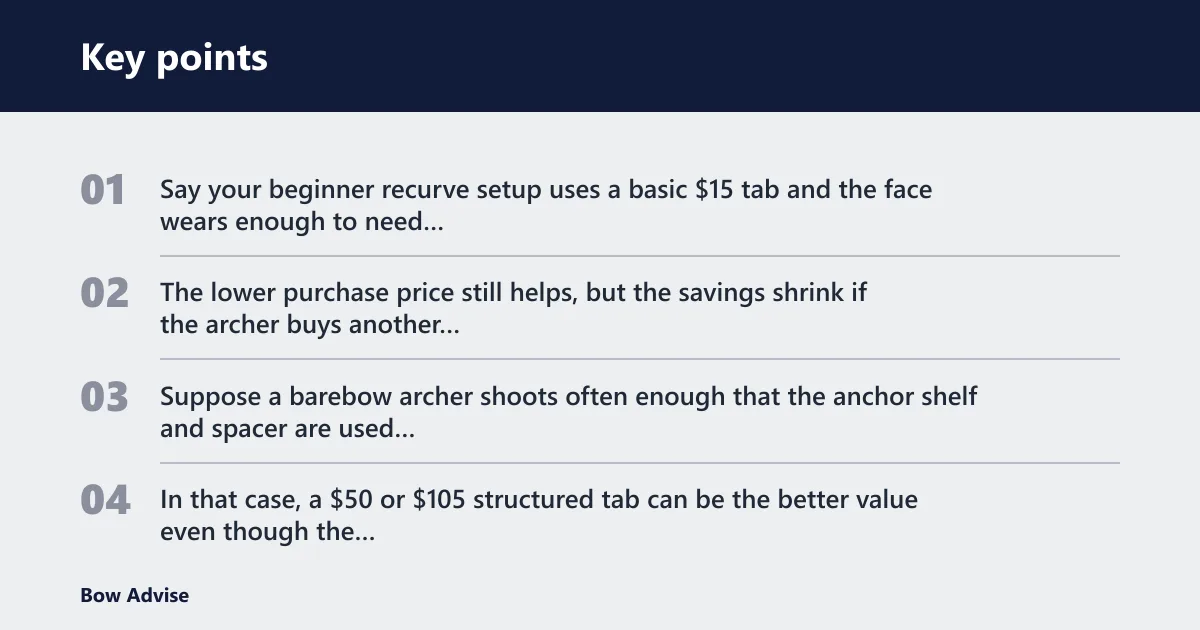
Say your beginner recurve setup uses a basic $15 tab and the face wears enough to need replacement within the year. The lower purchase price still helps, but the savings shrink if the archer buys another full tab instead of replacing one worn component.
Suppose a barebow archer shoots often enough that the anchor shelf and spacer are used every session. In that case, a $50 or $105 structured tab can be the better value even though the sticker price is higher, because the tab keeps the same contact points more reliably over time.
Choose How to Compare Budget if… / Choose Premium Finger Tabs if…
Choose How to Compare Budget if you are a beginner recurve archer, still learning your anchor, or unsure which finger placement will stick. It is also the better first buy if you want a simple tab, low initial cost, and a forgiving way to learn fit before spending more.
Choose Premium Finger Tabs if you shoot barebow with a repeatable anchor, practice in higher volume, or want replaceable parts and a more structured platform. It is also the better pick when the tab must keep its shape, resist twisting, and hold up under frequent use.


Frequently asked questions
Is a budget finger tab good enough for recurve archery?
Yes, if the fit is right and the archer is still learning anchor and finger placement. A budget tab can protect the draw fingers and support consistent form, but it may need more break-in time and may not hold up as well under heavy practice volume.
What does a premium finger tab do better than a cheap one?
It usually gives better repeatability, more structure, and more serviceable parts. Cordovan faces, anchor shelves, spacers, and rigid backing plates can make the hand feel more stable, but the upgrade matters most once the archer already knows what fit and anchor work best.
How much should I spend on my first finger tab?
For a first tab, the budget range of $5–$15 is often enough if the goal is learning. A beginner who already knows the right fit may move up sooner, but spending more before the anchor and finger placement are settled can waste money on features that are not yet needed.
Do cordovan finger tabs release better than leather tabs?
Cordovan does not guarantee a better release, but it is denser and smoother than common cowhide, so many archers prefer the feel. The real gain is usually consistency under repeated use, not an automatic accuracy boost from the material alone.
What features matter most in a budget vs premium tab?
Fit matters first in both tiers. After that, budget buyers should look at finger length match, handedness, and whether the tab keeps the fingers comfortable; premium buyers should also check the anchor shelf, spacer design, platform stiffness, and whether worn parts can be replaced.
When is a premium finger tab actually worth it?
It is worth it when shot count is high, the anchor must be very repeatable, or the tab needs replaceable parts to stay economical over time. Barebow and target archers usually reach that point sooner than casual beginners do.
Should beginners buy a simple tab or a high-end model?
Most beginners should start with a simple tab. A basic beginner tab is easier to size, easier to understand, and less likely to distract from learning a clean anchor and finger placement. High-end tabs make more sense after the setup is already known.
Do expensive finger tabs last longer than cheaper ones?
Usually, yes, especially when the premium tab uses cordovan and replaceable components. That said, durability still depends on fit, maintenance, and volume. A poorly fitted expensive tab can wear badly, while a well-fitted budget tab can last longer than expected for casual shooting.