How to Compare Budget vs Premium Archery Gloves
For most traditional and recurve archers, a budget glove is enough if the finger stalls fit cleanly and the leather stays even; spend more only when you need tighter seam control, better weather resistance, or longer service life. A poor choice can cause string pinch, finger shift, and early wear that changes release quality. This guide compares materials, fit stability, string feel, and durability so you can judge when a premium glove is worth the cost.
| Decision factor | How to Compare Budget | Premium Archery Gloves | Winner |
|---|---|---|---|
| Material quality | Usually basic leather, often cow leather with simpler backing | More consistent leather selection, often with better graded hides or mixed backings | Premium Archery Gloves |
| Fingertip reinforcement | Basic fingertip layers, sometimes thinner and less shaped | More deliberate reinforcement across wear zones and finger ends | Premium Archery Gloves |
| Wrist closure security | Simple closure, sometimes less stable under repeated shooting | More secure closure options, often with better adjustment range | Premium Archery Gloves |
| Stitch quality | Functional stitching, but seam finish can vary more | Cleaner seam placement and better control at stress points | Premium Archery Gloves |
| String feel | Can feel good at first if leather is thin and fit is close | Usually more consistent because shape and thickness are controlled better | Premium Archery Gloves |
| Weather performance | More likely to stiffen, absorb moisture, or feel inconsistent in cold or damp conditions | Better control of backing and finish can improve cold-weather consistency | Premium Archery Gloves |
| Likely lifespan | Shorter service life, especially with higher draw weight or frequent shooting | Longer life is more likely when seams and wear zones are built better | Premium Archery Gloves |
Why fingertips fail first and when to care
The difference is simple: budget gloves cost less at checkout, while premium gloves usually give you better fit stability, tougher fingertips, and less change in feel as the glove wears. Recurve and traditional archers who shoot often, or who use higher draw weights, notice that gap sooner than casual shooters.
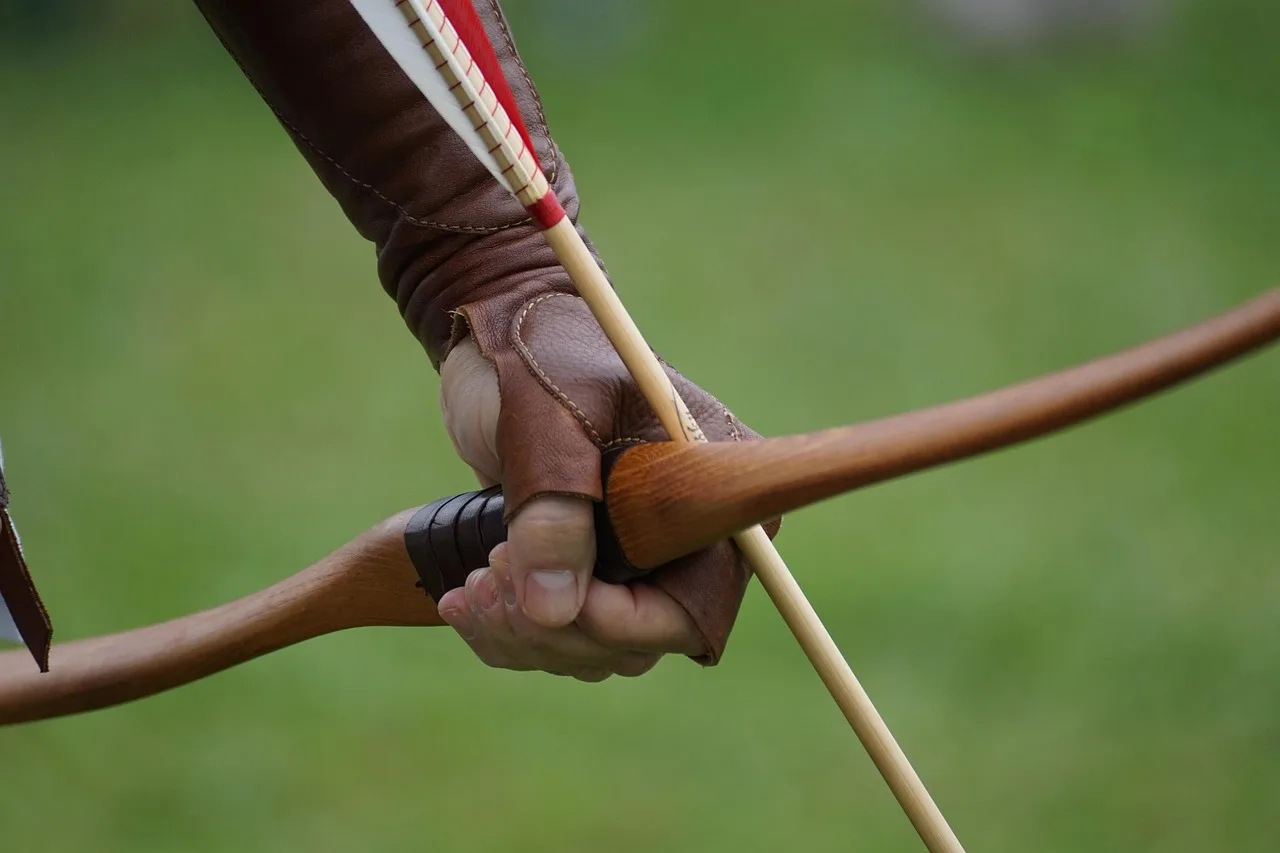
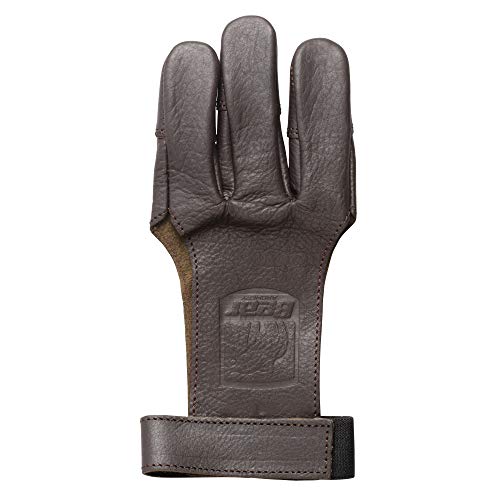
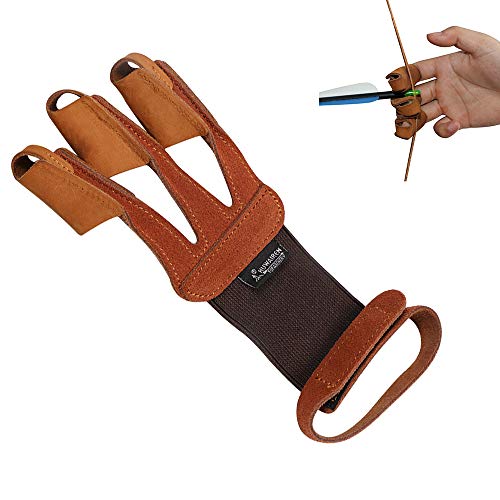
Archery shooting gloves cover three drawing fingers on the hand that pulls the string, so the weakest part of the glove is usually the fingertips, not the palm. That is why a glove can look fine on day one and still fail early if the finger stalls twist, stretch, or pinch after a few sessions.
Archery glove
Material quality by price tier
Budget gloves often use basic leather with a simple backing, which can be perfectly usable if the cut is clean and the leather thickness is even. Premium gloves more often use better selected cow leather, doeskin, or a mixed fabric backing that improves control without making the glove bulky.
Leather is still the most common standard because it gives natural string sensitivity, but the grade matters more than the label. A thin, uneven hide can feel lively at first and then deform quickly, while better leather keeps its shape longer and gives more repeatable contact on the string.
Fingertip reinforcement by price tier
Budget gloves often rely on basic fingertip layers that protect against bowstring friction but may compress faster under a higher bow draw weight. Premium gloves usually reinforce the exact wear zone more carefully, which matters when a shooter draws heavier recurve bows or practices for longer sessions.
That extra reinforcement does more than slow wear. It also helps the glove keep a steadier string interface, which reduces the “soft then suddenly thin” feeling that appears when a cheap fingertip breaks down unevenly.
Wrist closure security by price tier
A Velcro wrist strap is commonly used because it lets the shooter fine-tune fit and help keep the glove from shifting during the shot. Budget models may use a simpler closure that works, but if the glove rotates or loosens, finger placement becomes less repeatable.
Premium gloves are more likely to hold closure tension better over time. That matters less for a one-off round and more for archers who want the glove to sit in the same place every time they come to anchor.
Stitch quality and seam placement by price tier
Stitch quality is one of the clearest value drivers because poor seams fail before the leather itself does. Budget gloves can show early fraying, seam creep, or a seam line that lands right where the string pressure is highest.
Premium gloves usually cost more because the maker put more care into seam placement and stress points. That can keep the glove from pinching at the finger joints and can reduce the chance of a seam opening where the stall bends every shot.
String feel and finger sensitivity by price tier
String feel depends on thickness, fit, and how flat the fingertips sit on the string. A thin budget glove can feel good if it fits closely, but that advantage disappears if the glove stretches or twists.
Premium gloves tend to hold their shape better, so the release feel stays more consistent shot to shot. Competitive recurve archers often prefer finger tabs for an even cleaner release, but for glove users, stability is the real upgrade path.
Weather performance by price tier
Cold weather stiffens leather and can expose thin stitching, especially in a glove with little backing support. Budget gloves are more likely to feel hard, slow to conform, or slightly slippery when cold and moisture combine.
Premium gloves usually handle that better because the materials and backing are chosen with more control. If winter shooting is part of the plan, a glove that keeps its shape in the cold is worth more than one that feels good only in warm, dry conditions.
Likely lifespan by price tier
Likely lifespan is tied to shooting volume, draw weight, and seam quality, not price alone. A cheap glove may last long enough for occasional shooting, while a premium glove may justify its price by staying usable longer under similar conditions.
A practical way to think about lifespan is this: if the glove begins stretching, twisting, or showing early stitch wear before the leather itself is worn through, the design is the problem. That is where premium construction usually pays off.
How do budget archery gloves compare to premium ones?
Budget gloves can handle the core job: they protect the index, middle, and ring fingers from bowstring friction and help prevent blisters. Premium gloves usually justify their price when the shooter wants better seam control, a more stable wrist fit, and more predictable finger contact over time.
One common failure case is a cheap glove that feels fine for the first few sessions, then starts twisting so the string edge lands on a seam instead of the fingertip center. Another is a glove that stretches enough to create pinch points, which changes the release and makes the draw feel uneven.
What features justify paying more for archery gloves?
The best reasons to spend more are better leather selection, stronger fingertip reinforcement, and a closure that keeps the glove from moving. Those details matter most when a shooter draws a heavier bow, shoots often, or wants the glove to feel the same in different weather.
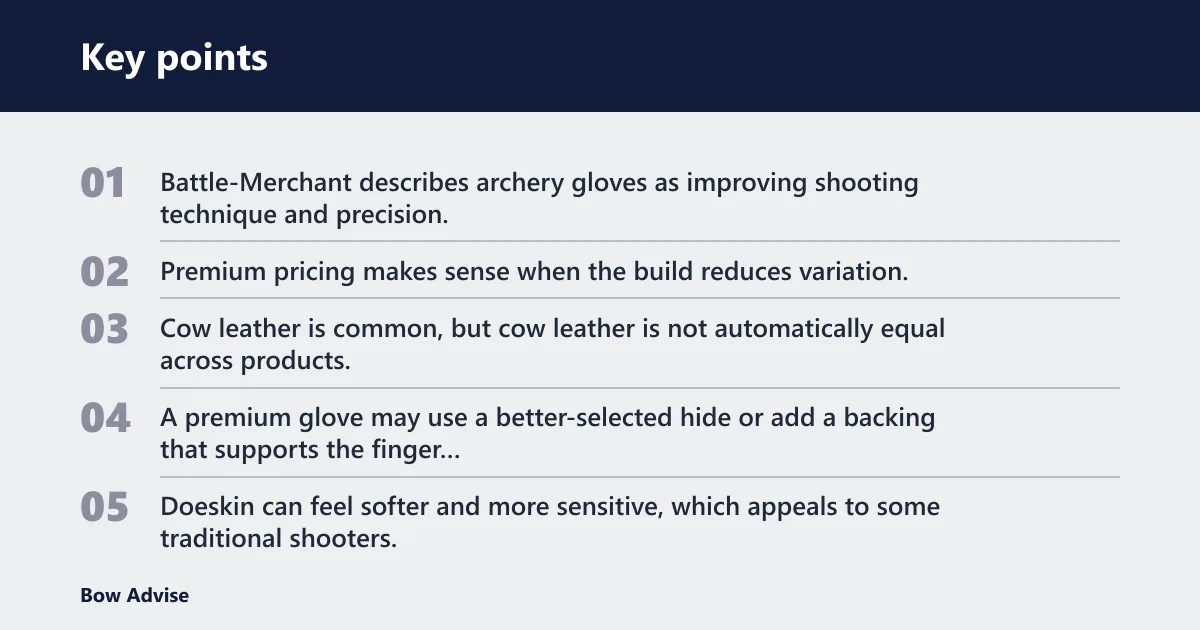
Battle-Merchant describes archery gloves as improving shooting technique and precision, and that claim makes sense only when the glove supports consistency instead of getting in the way. Premium pricing makes sense when the build reduces variation; it does not make sense when the extra cost is only cosmetic.
Leather grade and backing material
Cow leather is common, but cow leather is not automatically equal across products. A premium glove may use a better-selected hide or add a backing that supports the finger stalls without making them bulky.
Doeskin can feel softer and more sensitive, which appeals to some traditional shooters, but softness alone is not enough. If the backing is weak or the leather stretches fast, the glove may feel good briefly and then lose control.
Fingertip layers and wear zones
Fingertip reinforcement matters because that is where the string load concentrates. A premium glove usually spreads wear better across the fingertip and seams, so the contact patch stays usable longer.
For higher draw weights, that matters even more. Heavier poundage increases pressure and heat at the fingertips, so a glove with weak reinforcement will show wear sooner and often change feel before it fully fails.
Closure systems and fit stability
A secure wrist closure keeps the glove in place as the hand opens and relaxes during the shot cycle. A Velcro wrist strap gives useful adjustability, but the value is in how well it prevents shifting, not just in how easy it is to fasten.
If the glove moves after anchor, the shooter often notices it as a subtle change in finger pressure. That kind of movement is small, but it is enough to matter on a recurve setup where release repeatability is the goal.
Stitch density and seam finish
Stitch density and seam finish are usually invisible until something starts rubbing wrong. Premium gloves earn their price when the seams are placed away from the most sensitive contact points and the stitching resists early fray.
Cheap gloves often fail in a messy way: loose thread, seam twist, then a finger stall that changes shape. That sequence creates more disruption than simple leather wear, because the fit changes before the glove is obviously worn out.
Do expensive archery gloves improve string feel?
Yes, but only if the extra cost goes into controlled thickness, stable fit, and better fingertip shape. A premium glove does not magically improve release quality; it improves the odds that the same pressure, angle, and contact point repeat on each shot.
String feel comes from the whole interface. A thin budget glove can feel excellent if it fits tightly and stays flat, while a thicker premium glove can feel worse if it rides high or shifts under load.
Thickness versus sensitivity
Thinner leather usually feels more direct on the string, but thin material can wear out faster and protect less under higher draw weight. Premium gloves try to balance sensitivity with protection instead of choosing only one.
That balance matters because an overly thin fingertip can give sharp feedback at first and then soften or deform quickly. Once that happens, the feel changes more from session to session.
How fingertip reinforcement changes release feel
Reinforcement does not have to make the release dull. It can improve feel by keeping the fingertip from collapsing or folding under pressure, which keeps the contact surface flatter and more predictable.
That is especially useful for traditional shooting, where a consistent string path matters more than a purely soft touch. The best reinforcement supports the release without creating a hard, blocky sensation.
Why fit stability matters as much as material
Fit stability often matters more than leather type because a moving glove changes the contact point before the archer notices it. A glove that stays in place can make average materials shoot better than premium materials that shift.
Say your glove fits well on the first draw but slides after ten shots. The string then meets a slightly different spot on the fingertip, and the release starts to feel inconsistent even though the glove itself still looks new.
How do budget gloves perform in cold weather?
Budget gloves can work in cold weather, but they are more likely to stiffen, lose flexibility, or feel inconsistent when damp air and low temperature combine. That matters because cold can make both leather and closures less forgiving, especially on a recurve bow setup.
Backed gloves usually handle cold better than very thin unbacked leather because the extra support helps the finger stalls keep shape. When winter shooting is routine, that extra control often matters more than a small gain in fingertip softness.
Leather stiffness in low temperatures
Cold makes leather less supple, so a budget glove that already runs stiff can feel worse quickly. If the glove does not conform to the fingers, the shooter may feel pinch at the joints or uneven pressure at the string contact point.
Premium materials usually keep their shape more predictably under the same conditions. That does not mean they stay soft in the cold; it means they are more likely to stay usable.
Backed gloves versus unbacked leather
A fabric backing can help a glove resist twisting and keep the finger stalls aligned. That matters when the hand is cold and the leather is less elastic, because a bare leather stall can move more under load.
For cold-weather archers, this can be the difference between a glove that feels merely firm and one that starts to wander on the hand. Stability matters more than softness once the temperature drops.
When cold-weather shooting favors premium materials
Premium gloves may be worth the extra money in cold weather when the shooter practices regularly, uses moderate to higher draw weights, or shoots in damp conditions. Those factors increase the strain on seams, closure, and fingertip shape.
If winter sessions are occasional and short, a budget glove may still be enough. If winter shooting is part of the routine, the premium option usually protects consistency better.
Choose How to Compare Budget if… / Choose Premium Archery Gloves if…
Choose How to Compare Budget if you shoot occasionally, use moderate draw weight, want basic finger protection at the lowest practical cost, or are still learning whether you prefer a glove, tab, or finger savers. It is also the safer pick if you need a simple backup glove rather than a primary competition tool.
Choose Premium Archery Gloves if you shoot often, want a more secure wrist closure, need better seam control, shoot in cold or damp weather, or draw a bow hard enough that fingertip wear shows up early. Premium is also the better choice if the glove must stay consistent through long practice blocks.
A practical rule is this: if the glove only needs to block string friction, budget is usually enough. If the glove must also preserve release feel, resist twisting, and keep shape under repeated use, premium is the smarter buy.
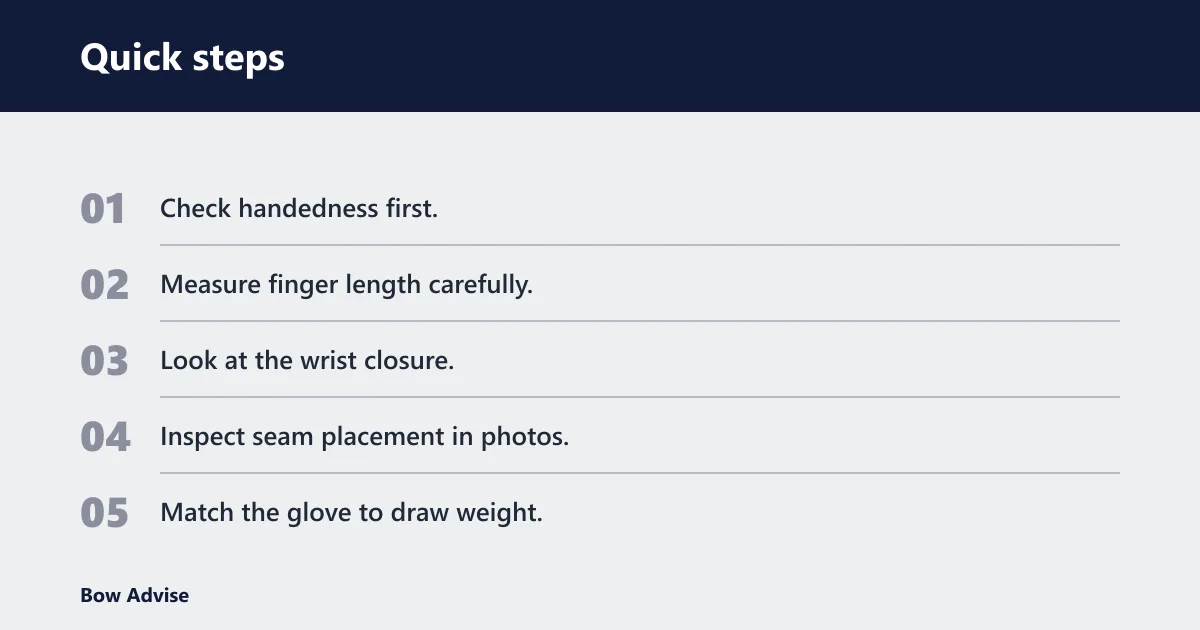
- Check handedness first. Three-finger gloves are left-hand or right-hand specific because the drawing hand must match the pattern.
- Measure finger length carefully. The stalls should cover the fingertips without excess slack at the ends.
- Look at the wrist closure. A Velcro wrist strap should hold without forcing the glove to twist when tightened.
- Inspect seam placement in photos. Seams that sit directly on the main string contact point are a warning sign.
- Match the glove to draw weight. Heavier poundages need more durable fingertip protection and better wear control.
- Decide whether a glove is even the right tool.
A common first-timer mistake is buying a glove because it looks soft in the listing, then finding that the finger stalls are too long and the wrist closes loosely. The glove may still cover the fingers, but the extra movement changes the contact point and makes the release feel sloppy.
Picture a recurve archer drawing a moderate bow in cold weather with a budget glove that fits well at the store but twists after twenty shots. The problem is not just comfort; the string now lands on a different part of the fingertip, and the shot feels different even though the bow has not changed.
Frequently asked questions
Are leather archery gloves better than synthetic ones?
Leather is still the most common choice because it gives natural string sensitivity and a familiar feel on recurve bows. Synthetic materials can work, especially when backed well, but leather remains the safer comparison point because most traditional and budget gloves are built around it.
How do I tell if a cheap archery glove will fit properly?
Look for close finger length, no slack at the fingertip ends, and a wrist closure that keeps the glove from sliding when the hand flexes. If the stalls twist or pinch before shooting begins, the fit is wrong even if the size label seems close.
Archery thumb rings vs glove
Thumb rings are for a different release style and are not a direct substitute for a three-finger glove. For recurve and traditional archers using split or three-under finger placement, a glove or tab is the relevant comparison; thumb rings matter only if the shooting method calls for thumb release.