Which Finger Tab Is Best for Split Finger Shooting?
The best split-finger finger tab is a rigid platform tab with an adjustable finger spacer and medium-thick face; for most recurve and barebow archers, that beats soft, floppy tabs for anchor repeatability. Bad tab fit changes finger pressure and anchor height, which shows up as string walking errors, crooked crawls, and a wider group. This guide compares split-finger, platform, and three-under tabs, then gives fit checks and buying rules tied to recurve setup and common failure points.
This guide is part of our Archery shooting handwear fit series.
Which finger tab is best for split finger shooting?


A good split-finger tab is one that gives consistent hand contact shot to shot, helps the string leave cleanly on release, and supports a repeatable anchor under the jaw. For most archers, that means a tab with enough structure to hold its shape, plus enough padding to prevent pressure points.
What split-finger shooting means at the string
Split-finger shooting places one finger above and two below the nocking point. That style is called Mediterranean draw. It is the normal finger position for many recurve bows, and it asks the tab to do more than protect skin. It must also control spacing, anchor, and release feel. (en.wikipedia.org)
A tab that is too soft can fold around the string and shift the hand position. A tab that is too thin can send string bite straight into the fingers. A tab that is too bulky can blur the face reference and make the anchor less exact.
How the best tab supports anchor repeatability
Anchor repeatability matters more than brand reputation. A good split-finger tab keeps the middle finger loop steady, preserves the same face reference, and gives a clean hook on the string. If the tab shape changes from shot to shot, the anchor usually changes too.
That matters because a small shift in hand contact can change crawl position, string angle, and the way the arrow leaves the string. The result is often inconsistent left-right impact, especially with barebow crawls or close-range crawl changes.
📊 Saunders offers split-finger and 3-under tab styles. Source: Sausa.
Split-finger tab vs three-under tab vs platform tab
Split-finger, three-under, and platform tabs are not interchangeable. Split-finger tabs can support a Mediterranean draw and an under-jaw anchor that feels familiar. Three-under tabs move all fingers below the nocking point. Platform tabs add a flat top that can give a stronger face reference, which many target archers prefer.
| Tab style | Finger position | Anchor feel | Best fit use | Common risk |
|---|---|---|---|---|
| Split-finger tab | One above, two below | Balanced under-jaw anchor | Recurve, many barebow setups | Pinch if the finger shelf is too narrow |
| Three-under tab | All fingers below | Different string angle and face contact | Barebow styles | Anchor shift if used like a split-finger tab |
| Platform tab | Usually split-finger or target use | Flatter under-chin reference | Recurve or Olympic-class target archery | Can feel bulky for archers who want a simple tab |
When a platform tab helps split-finger recurve shooters
A platform tab helps when the archer wants a hard face reference under the jaw or chin. It can make the anchor easier to repeat, especially when the shooter uses a consistent under-chin contact and wants the tab to stop in the same place every time.
It is not required for split-finger shooting. A simple split-finger tab can work very well if the face reference is already clear. But when anchor height varies, a platform can give the hand a more exact stop point.
Why three-under changes the feel at the face
Three-under tabs place the fingers below the nocking point. That changes the string angle and the way the tab sits against the face. It can feel more direct at the jaw, but it is a different setup, not a minor tab variation.
A common first-timer mistake is switching to three-under while keeping the same crawl and anchor habits. That often causes crawl changes and a false sense that the tab is at fault when the issue is actually the draw style.
What tab features matter most in the hand?
The best features are the ones that reduce motion in the fingers and repeat the same anchor shape. Finger separation, padding level, face reference, and a stable retention loop matter more than decorative stitching or brand claims. The tab should sit unnoticed in the hand, not demand attention.
Finger separation and finger spacer fit
A finger spacer can keep the index and middle fingers from crowding each other on the string. That helps some archers keep a clean split-finger hook and reduces string interference. Other archers find the spacer unnecessary if the tab shape already separates the fingers well.
Some tabs can be used with or without a finger spacer. That matters because hand width, draw weight, and finger length change how much space the string needs. Too much separation can make the hook feel loose. Too little can create pinch.
Padding level, face reference, and pressure relief
Padding should be thick enough to relieve pressure but not so thick that the string feel disappears. Many tabs use layered construction: a slick outer layer, a cushion layer for protection, and sometimes a felt layer for extra cushioning. That stack can help if the fingers are sensitive or the draw weight is higher.
Face reference depends on shape as much as thickness. A good tab gives the same contact point at the jaw, lip, or cheek line every time. If the face reference changes as the tab warms, bends, or shifts, anchor repeatability drops.
Retention loop and tab stability during the shot
The retaining loop usually sits on the back of the tab and fits over the middle finger. Its job is simple: keep the tab on the hand during the loose. If the loop is loose, the tab can rotate or slide. If it is too tight, the middle finger can feel cramped.
Tab stability matters most at full draw and in the release. A tab that shifts during expansion can change pressure on the string and make the shot feel inconsistent.
Should you choose leather or synthetic?
Leather and synthetic tabs can both work well. Leather usually feels more traditional and often gives a steadier break-in period. Synthetic tabs often feel slicker, hold shape differently, and handle wet conditions better. The better choice depends on string feel, weather, and how much hand sensitivity the archer has.
Leather feel, break-in, and string feedback
Leather often gives a direct, familiar string feel. It can soften with use and conform to the hand. That makes it attractive for archers who want a tab that settles into the fingers over time rather than feeling rigid from day one.
The trade-off is that leather can take more break-in time. If the tab is too stiff at first, anchor feel may seem uneven until it molds to the hand.
Synthetic layers, slick outer faces, and weather behavior
Synthetic construction often keeps its shape better in damp or hot weather. A slick outer layer can help the string slide cleanly, which may reduce finger drag on release. That can be useful for archers who want a consistent, low-maintenance tab.
Weather behavior matters in the field and on outdoor ranges. Leather can change feel more as humidity rises. Synthetic usually changes less, though fit still matters more than material alone.
When a felt layer helps
A felt layer can add cushion without making the tab thick everywhere. It can help archers who feel sting through the middle finger or who want a little more shock absorption near the string contact point.
Too much cushion can weaken string feedback. If the tab feels vague, the archery form may suffer because the anchor no longer gives a clear stop.
How do size and fit affect recurve shooting?
Size affects everything from finger comfort to crawl consistency. A tab that is too small can pinch the fingers or force the loop into the middle finger joint. A tab that is too large can slip, rotate, or hide the face reference. Fit is not cosmetic; it is functional.
Finger length, tab width, and clean hook shape
Finger length should let the tab cover the contact area without bunching. Tab width should support the string hand without folding over the edge of the fingers. The clean hook shape matters because a poor hook can cause pinch and string interference.
Saunders sells split-finger tabs in small, medium, and large. Size labels help, but the real check is whether the tab supports the hook without crowding the hand.
Right- and left-hand setup
Many tabs are reversible for right or left hand. That helps, but reversibility does not solve poor fit. The tab still needs the correct loop position, face orientation, and edge control on the shooting hand.
Hot-weather comfort compared with gloves
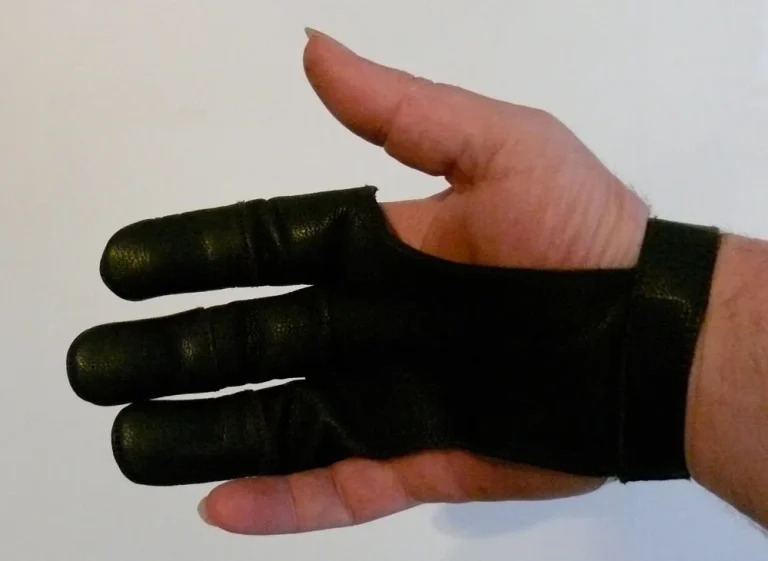
Tabs usually work better than gloves in hot weather because they are thinner and less insulating. They also give a clearer string feel. Gloves can trap heat and feel bulky, which makes the release less exact for many recurve archers.
That said, a tab that is too thin can still feel harsh in heat if the string contact area is small. Comfort and control need to be balanced.
Split-finger tab selection checklist and recommendation matrix
Use this checklist to evaluate a tab in the hand before buying. The best choice is the one that scores well across fit, anchor, and weather behavior, not the one with the loudest product description. Keep the scoring simple and repeatable.
- Finger separation: Does the tab or spacer keep the fingers apart without crowding?
- Anchor repeatability: Does the tab stop at the same jaw or face point each draw?
- Face reference: Is the contact surface easy to find without looking?
- Padding level: Is there enough cushion to remove pressure without dulling string feel?
- Weather performance: Does the tab keep its shape in heat, humidity, or damp conditions?
| Factor | Score 1 | Score 3 | Score 5 |
|---|---|---|---|
| Finger separation | Fingers crowd or pinch | Usable with minor adjustment | Clean spacing with no pinch |
| Anchor repeatability | Anchor shifts shot to shot | Mostly consistent | Same stop point every shot |
| Face reference | Hard to feel at full draw | Clear with attention | Instant and repeatable |
| Padding level | Too thin or too bulky | Acceptable compromise | Comfort and feedback both work |
| Weather performance | Changes too much in heat or damp | Fairly steady | Stable across conditions |
Beginner pick versus target recurve pick
Beginner pick: a medium-thick split-finger tab with a simple face reference, good loop stability, and optional spacer use. Beginners usually benefit from comfort and obvious anchor feedback before they worry about fine string feel.
Target recurve pick: a more rigid platform-style split-finger tab with a clear face stop and enough structure to repeat the anchor under pressure. Target archers often need the anchor to be more exact than soft tabs can provide.
When to add or skip a finger spacer
Add a finger spacer if the fingers crowd each other, the string rubs unpredictably, or the hook collapses under draw weight. Skip it if the spacer makes the hand feel cramped or moves the middle finger loop out of position.
Picture a 28-inch draw archer on a cool outdoor line who notices the tab shifting after every loose. A firmer platform tab with a modest spacer may solve the anchor drift faster than changing string walking or crawl marks.
Suppose a shorter-fingered archer in hot weather feels string bite through a thin leather tab. A medium-thick synthetic tab with a better cushion layer may solve the pressure issue while keeping the anchor stable.
Choose platform tabs if… / Choose split-finger tabs if…
Choose a platform tab if the main problem is anchor repeatability, face reference, or under-chin consistency. Choose a simpler split-finger tab if the setup already gives a clean anchor and the archer wants more string feel with less structure. The right choice depends on how exact the anchor must be.
Choose platform tabs if…
- The anchor moves from shot to shot.
- The face reference needs a flatter stop point.
- The archer shoots recurve or Olympic-class target archery and wants a more defined under-chin contact.
- The tab needs more structure than a soft leather patch can provide.
Choose split-finger tabs if…
- The archer wants Mediterranean draw with one finger above and two below.
- The anchor is already repeatable and only light protection is needed.
- The shooter prefers a simpler hand feel for recurve or barebow work.
- The tab must stay light and easy to manage in varying weather.
Frequently asked questions
What makes a split finger tab different from a three-under tab?
Split-finger tabs place one finger above and two below the nocking point. Three-under tabs place all fingers below it. That changes the string angle, the anchor feel, and often the crawl behavior. They are different shooting styles, not just different tab layouts.
Do I need a platform tab for split finger recurve shooting?
No, a platform tab is not required. It helps when the archer wants a stronger face reference or a more repeatable under-chin anchor. If the current split-finger tab already gives a clean, stable stop point, a platform may add bulk without solving a real problem.
Should a split finger tab be leather or synthetic?
Leather usually feels more traditional and often gives a softer break-in. Synthetic tabs often keep shape better in heat or damp weather and may feel slicker on release. The better choice depends on string feel, weather, and how much structure the archer wants in the hand.
What size finger tab should I buy for recurve archery?
Buy the size that covers the string contact area without pinching the fingers or forcing the loop tight on the middle finger. Small, medium, and large labels help, but the real test is whether the tab supports a clean hook and a repeatable anchor without crowding the hand.
Can a finger tab be used with or without a finger spacer?
Yes. Some split-finger tabs can be used with or without a finger spacer. A spacer can improve finger separation and reduce string interference, but it is not always needed. If it makes the hook feel loose or shifts the tab position, leaving it off may work better.
Do finger tabs work better than gloves in hot weather?
Usually yes. Tabs are thinner, less insulating, and give clearer string feel than gloves in hot weather. Gloves can trap heat and add bulk. A tab still has to fit well, though, because a thin tab with poor shape can become uncomfortable very quickly.
Can I use the same tab for target archery and bowhunting?
Sometimes, but only if the fit and padding suit both jobs. Target archery often benefits from a more exact face reference and repeatable anchor. Bowhunting may favor a compact tab with enough protection for cold or rough conditions. One tab can do both if the setup stays consistent.