Archery Competition Warm-Up Routine Before You Shoot
Use a roughly 12-minute archery warm-up before you shoot: about 4 minutes of mobility, about 4 minutes of band activation, and about 4 minutes of blank-bale or light-arrow shots, then stop before fatigue sets in. Skip it or do too much, and your shoulders tighten, your back turns unstable, and your first scoring ends up chasing form instead of good arrows. This guide gives a timed routine you can use before a tournament or scored round.
Why your warm-up affects score


An archery warm-up changes how the shoulder girdle, thoracic spine, forearms, and grip hold alignment under load. First raise body temperature, then prepare the joints and shot pattern without burning energy before the first scoring end.
Competition nerves matter too. When the line clock starts, archers often rush into the first full draw with cold shoulders and a tense hand. That is where the shot breaks down: shorter draw length, lifted bow shoulder, stiff release, or a collapse at anchor.
What changes in the shoulders and back when you warm up
Warm shoulders move with less resistance because the muscles and joints respond sooner. The rotator cuff engages earlier, the scapulae track more cleanly, and the upper back supports a stable draw without shrugging. Thoracic extension also helps the chest open so the anchor and sight picture feel less cramped.
How a bad warm-up can hurt the first end
A poor routine often shows up in the first three arrows. The bow shoulder rises, the string side forearm grips too hard, and the release or tab hand gets jerky. If the archer starts at full intensity before the body is ready, the first end becomes a form correction session.
Why competition nerves make a routine more important
A fixed routine cuts down on decision-making. Breathing, cue words, and a short rehearsal give the mind a task to follow. That matters on a crowded line, where time pressure can push an archer to skip setup checks or overdraw just to keep pace.
What to do in the first 12 minutes
The first 12 minutes should move from general warmth to archery-specific work. Start with light movement, then use dynamic mobility, then short activation drills. Save long static holds for after shooting or for later in the day.
Keep the pace easy. The warm-up should leave the body ready, not tired. A common rule of thumb is about 10 to 15 minutes total, which fits many tournament settings without taking too much strength from the first end.
Arrival and setup checks
Before any shooting, confirm basic equipment setup. Check brace height, nock fit, sight marks, stabilizer balance, and the release aid or finger tab. A problem found here is easier to fix than a problem found on the line.
Competition format changes the order slightly. Indoors usually means shorter movement space and shorter shots, while outdoor rounds may need more time to settle wind, footing, and sight confirmation.
Raise body temperature with light movement
Walk briskly, use arm circles, or add easy torso turns for a few minutes. The point is to warm tissue and prepare joints before any stronger stretching or bow loading. Begin with easy motion, then shift toward archery-specific movement.
Dynamic mobility before any shooting
Use dynamic movement, not long cold holds. Arm swings, thoracic rotations, band pull-aparts, and controlled shoulder circles fit this stage well. Static stretching before shooting can leave the shoulder less springy when the draw begins.
Shoulder and upper-back activation
The shoulder girdle needs both mobility and stability. That balance matters in recurve and compound work alike, because the bow arm and string side must stay organized through draw, anchor, aim, and release. The warm-up should wake the muscles without creating strain.
Rotator cuff activation
Use light resistance band work for external rotation and internal rotation. Keep the elbow close to the side and the motion controlled. The goal is not to build fatigue. The goal is to remind the cuff muscles how to support shoulder position under load.
Scapular control for draw and anchor
Scapular control helps the bow shoulder stay down and the drawing side back engage cleanly. Band rows, scapular retraction drills, and slow “set the shoulder blade” motions fit well here. If the shoulder blade floats upward, the bow arm usually follows.
Thoracic spine rotation and extension
Thoracic rotation and extension matter for full-draw alignment. A stiff upper back can force the archer to lean, twist, or overreach at anchor. Use standing rotations, open-book style turns, or wall-supported chest-open drills to make the upper back move before the first shot.
Forearms, wrists, and grip prep
Forearms and grip work should calm tension, not create more of it. Finger flexor activation, wrist mobility, and a clean grip pattern help the release hand or string fingers stay consistent when the pressure rises in competition.
Finger flexor activation
Open and close the hand against light resistance, then relax it fully. For recurve archers, this helps the string fingers settle without squeezing. For compound archers, it keeps the bow hand and release hand from tightening just because the round feels important.
Wrist mobility
Gentle wrist circles and flexion-extension motions can reduce stiffness before the first arrow. Keep them smooth. Fast or forceful wrist work can wake up the forearm too aggressively and make the grip feel harder than it should.
Grip tension and release control
On the bow hand, the aim is low pressure and repeatable placement. On the string side, the aim is a calm trigger or tab hand that follows the shot sequence. A tense grip often shows up as a punched release or a torqued bow hand.
Warm-up checklist table
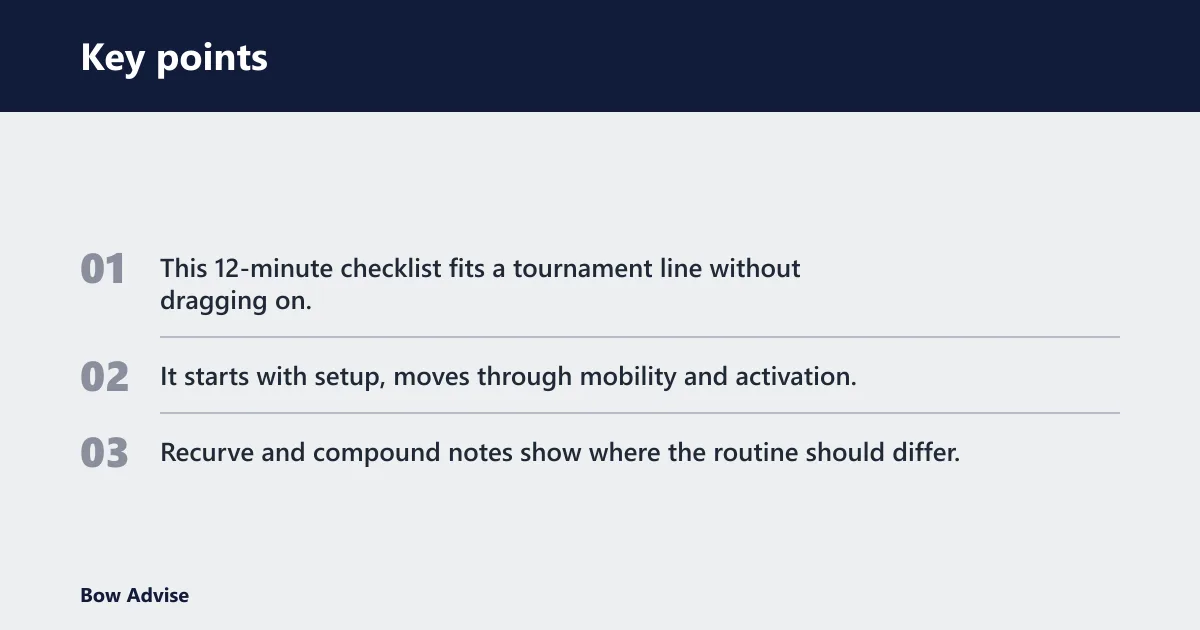
This 12-minute checklist fits a tournament line without dragging on. It starts with setup, moves through mobility and activation, then finishes with blank-bale shots and first-end cues. Recurve and compound notes show where the routine should differ.
| Minute | Action | Recurve variation | Compound variation |
|---|---|---|---|
| 0-1 | Arrive, set gear down, check lane and shooting order | Confirm finger tab, tab face, and string walking or face anchor setup | Check release aid hookup, d-loop, peep alignment, and sight picture |
| 1-2 | Walk briskly and start easy arm swings | Keep shoulders low and relaxed | Keep the draw side shoulder relaxed and square |
| 2-4 | Dynamic shoulder and thoracic mobility | Add slow torso turns and band rows | Add thoracic rotations plus controlled scapular sets |
| 4-6 | Rotator cuff and scapular activation | Light band external rotation and scap retraction | Light band external rotation and back tension pulls |
| 6-8 | Forearm and wrist prep, grip reset | Open the string hand and relax the bow hand | Set a calm bow hand and relaxed trigger hand |
| 8-10 | Blank-bale or close-range shots | Focus on anchor, clicker movement, and clean follow-through | Focus on sight picture, hinge or trigger movement, and back tension |
| 10-11 | Progress to normal shot rhythm | Use the same shot sequence with no score pressure | Confirm sight marks and settle into normal cadence |
| 11-12 | First scoring-end cues and breathing reset | One breath, one cue word, one clean execution plan | One breath, one anchor check, one clean execution plan |
How many warm-up arrows should you shoot?
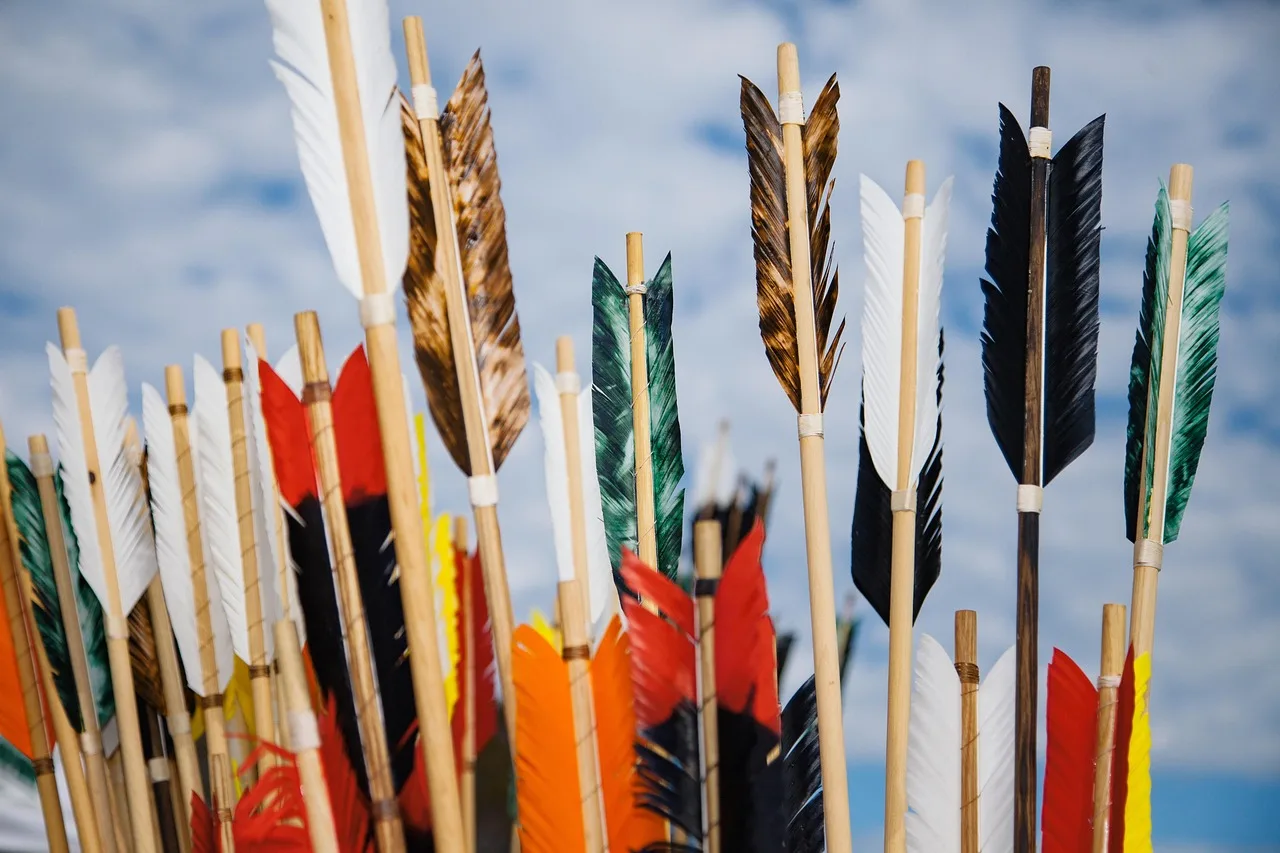
Most archers do best with a short arrow block rather than a long practice session. Four to six warm-up arrows at close range are often enough to rehearse the shot cycle, confirm anchor or sight picture, and settle into rhythm before scoring starts. More than that can start to feel like a practice round.
Start with blank bale or very short distance. Then move from easy shots to normal effort. If the shoulder starts to feel heavy, or the shot gets slower instead of cleaner, stop and save energy for the scored end.
Blank bale or close-range start
Blank bale work removes target pressure and lets the archer focus on body position. Close-range shots do the same thing while adding a small amount of aiming demand. Either option is useful as long as the archer stays relaxed and keeps the draw cycle short.
Progression from easy shots to full routine
Use the first arrows to feel the stance, set the bow shoulder, and confirm the anchor or release hand position. Then move to normal execution. Do not jump straight from band work into full-speed scoring shots. That is when the back and shoulders often lose control.
When to stop before fatigue starts
Stop while the shot still feels crisp. Fatigue usually shows up as a slower draw, rising shoulder, weaker back engagement, or a rushed release. The warm-up is complete when the body feels organized and the mind knows the shot order.
Say your first end is on an indoor 18-meter line and the bow shoulder feels tight after the first two arrows. The fix is not more arrows. It is a shorter reset: one minute of shoulder circles, one band set, then one or two quiet blank-bale shots before going back to the line.
What should recurve archers do differently?
Recurve archers should spend extra attention on finger tab setup, anchor consistency, and bow shoulder control. The goal is a smooth draw to anchor and a clean clicker or expansion rhythm before score arrows begin. That keeps the first end from turning into a timing fight.
Finger tab setup and release timing
Check tab fit, finger placement, and pressure across the string fingers. A poor tab setup can change crawl, anchor feel, and release quality. Rehearse the release through the back, not through the fingers, so the shot starts from the same place every time.
Bow shoulder and clicker-ready rhythm
Recurve warm-up should teach the bow shoulder to stay down while the drawing side expands through the clicker. Short-range rehearsal is useful here because it lets the archer feel back tension without scoring pressure. That rhythm should be in place before the first end starts.
Short range cues before the first end
Use a simple cue such as “set, draw, expand” or another short phrase that fits the archer’s routine. The cue should point to process, not score. If the mind jumps to points too early, recurve timing usually gets rushed.
What should compound archers do differently?
Compound archers should focus on release aid setup, anchor confirmation, and sight and stabilizer balance. Because the bow holds at let-off, the warm-up should prepare the back and release hand for controlled tension, not raw strength. The first arrows should confirm timing and aim stability.
Release aid check and anchor confirmation
Confirm hook depth, trigger feel, and wrist strap or handheld position before shooting. Then confirm the anchor point and peep alignment. If the anchor changes during the warm-up, the shot will wander even if the sight picture looks calm.
Sight and stabilizer balance check
Compound setups can feel very different with a hunting-style front bar, side rod, or bare bow configuration. Use the warm-up to notice whether the sight settles naturally or fights the bow hand. If balance feels off, fix it before the first scored end.
Let-off, back tension, and shot timing
At let-off, the danger is not brute force. It is lazy holding or a rushed trigger. The warm-up should remind the archer to pull through the wall with steady back tension and a calm trigger movement. That helps the shot break cleanly under line pressure.
Suppose a compound archer reaches the line after a long wait and feels the release hand shaking. A short breathing reset and two close-range arrows can settle the hand better than ten hurried shots. The goal is steadiness, not volume.
What should I do before shooting in an archery competition?
Before shooting, raise body temperature, open the shoulders and upper back, check the bow setup, and rehearse the shot at close range. Keep the work short and specific to archery mechanics. That sequence prepares the body and mind without draining energy before scoring begins.
Use the same order every time if possible. Consistency matters on a tournament line because it reduces nerves and keeps the first end from feeling unfamiliar. If time is tight, shorten the arrow block rather than skipping the mobility and setup checks.
Frequently asked questions
How long should an archery warm-up take before scoring starts?
A common archery warm-up usually takes about 10 to 15 minutes, and about 12 minutes is a practical target for many rounds. That gives enough time for mobility, activation, and a few close-range arrows without making the body tired before scoring begins.
What is the best warm-up routine for archery?
The best routine is short, archery-specific, and repeatable. Start by raising body temperature, then use dynamic mobility, then activate the shoulders and upper back, then finish with blank-bale or close-range shots. Add breathing and cue words before the first scoring end.
Should I stretch before an archery tournament?
Use dynamic stretching before the tournament and save long static holds for after shooting or later in the day. Cold static stretching can leave the shoulder less ready for a strong draw. Gentle mobility work is the better choice before the first arrow.
How do I warm up my shoulders for archery competition?
Use light band work for rotator cuff activation, scapular control drills, and controlled shoulder circles. Add thoracic rotation and extension so the upper back can help the draw. The shoulder should feel organized and mobile, not loose or overworked.
Can a bad warm-up affect my archery score?
Yes. A poor warm-up can tighten the shoulders, reduce scapular control, and throw off anchor or release timing. That often shows up in the first end as rushed shots, inconsistent sight picture, or weak back engagement. The score usually suffers before the archer notices why.
How many practice arrows should I shoot before a competition?
Four to six practice arrows is a sensible starting point for many archers, especially when those arrows are shot at close range and with a clear process focus. Enough to confirm the shot is usually enough. Too many arrows can create fatigue or drift into practice mode.