Best 3D Deer Target: Proven Crossbow Essential
Choosing the best 3D deer target for crossbow shooting is key for accurate practice. A good target mimics a real deer’s vital zone, helping you improve form and build confidence. We’ll break down what makes a great crossbow target and guide you to the perfect one for your practice sessions.
Why a 3D Deer Target is Crucial for Crossbow Hunters


As a beginner with a crossbow, you’re embarking on an exciting journey into the world of archery. One of the most consistent challenges for new archers is translating practice into real-world success. You might be hitting targets, but are you hitting the right spots? This is where a quality 3D deer target becomes your best friend.
Imagine stepping out into the field, your crossbow ready, only to confuse a small twig for a vital organ or simply not knowing where to aim. Frustrating, right? A 3D deer target removes this guesswork. It’s not just a stationary object; it’s a training tool designed to replicate the anatomy of a deer, specifically highlighting the vital areas.
Using a 3D target helps you visualize your shot placement. It teaches you to focus on the precise spot you need to hit, building muscle memory and the mental discipline required for ethical hunting. This kind of focused practice is what separates good shots from great ones. In the following sections, we’ll explore what makes a 3D deer target truly effective, especially for crossbow users, and how to pick the one that will best help you sharpen your skills.
Understanding Crossbows and Target Needs
Crossbows are powerful and accurate. They launch bolts at high speeds, and this power has implications for the type of target you should use. Unlike traditional bows, crossbow bolts often carry more kinetic energy. This means your target needs to be durable enough to withstand frequent impacts without excessive damage, and it needs to stop the bolt effectively and safely.
The “best 3D deer target for crossbow” shooting must have a few key features:
- Durability: Can it handle repeated, high-velocity impacts?
- Arrow Stopping Power: Will it stop your bolt without letting it pass through?
- Realistic Vital Zones: Are the vital areas clearly marked and appropriately sized?
- Ease of Bolt Removal: Can you pull your bolts out easily after each shot?
- Portability and Stability: Is it easy to set up and does it stay put during practice?
For crossbows, especially those with higher draw weights or faster speeds, the self-healing properties and density of the material are paramount. A target that tears easily or causes bolts to stick might not only be expensive in the long run but can also be dangerous.
Key Features to Look For in a 3D Deer Target
When you’re hunting for the best 3D deer target for crossbow enthusiasts, several features stand out. These aren’t just bells and whistles; they directly impact your practice session and skill development.
Material and Durability
The heart of any good 3D target is its material. Look for targets made from high-density, self-healing foam. This type of foam is designed to close up around the impact point, extending the target’s lifespan. Brands often use proprietary blends, but generally, the denser the foam, the better it will stop your bolt and the longer it will last.
Some targets feature different zones with varying densities. Often, the vital area might be made of a slightly tougher material to ensure it stops bolts effectively, while other areas are softer for easier arrow removal. Check reviews or product descriptions for indications of durability against modern high-speed crossbows.
Vital Zones and Scoring Rings
A true 3D deer target will have clearly marked vital areas – the heart and lungs. These are typically depicted as colored zones. The size and clarity of these zones are important. Some targets offer multiple scoring areas or even life-size silhouettes with layered vital zones, allowing for more advanced practice.
For crossbow hunters, understanding the vital area’s precise placement is non-negotiable. Good targets will show these areas with clear lines and color coding, often corresponding to official scoring systems used in archery competitions or hunting certifications. The National Deer Association (.org) provides excellent resources on deer anatomy and vital zone placement, which can help you appreciate the accuracy these targets help you train for.
Arrow Removal System
This is often overlooked by beginners but can be a real pain point. Some foams are so dense your bolts can be extremely difficult to remove, especially with the power of a crossbow. Look for targets that are advertised as easy to shoot and easy to pull. Features like layered foam or specific internal constructions can significantly aid in smooth bolt removal.
Portability and Stability
While you want a sturdy target, you also need one you can easily move to your shooting range. Many 3D targets come with carrying handles. For stability, especially in breezy conditions or with powerful crossbows, a wider base or the ability to stake the target to the ground is highly beneficial. Some larger targets might have built-in stakes, while others offer separate mounting options.
Weather Resistance
If you plan to practice outdoors frequently, consider how well the target will hold up to the elements. Most quality targets are designed for outdoor use, but continuous exposure to sun and rain can degrade even the best foam over time. Keeping your target covered or storing it indoors when not in use will prolong its life considerably.
Top 3D Deer Targets for Crossbow Shooters
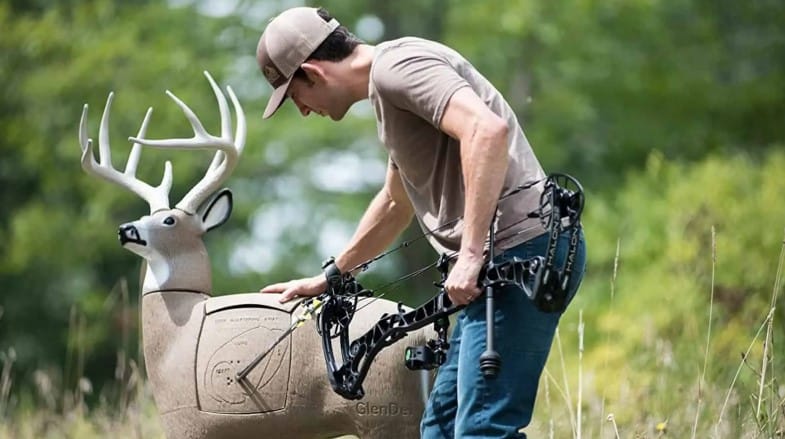
Based on common recommendations and features beneficial for crossbow use, here are a few types of 3D deer targets that often stand out. While specific model availability can change, understanding these categories will help you make an informed choice when looking for the best 3D deer target for crossbow users.
High-Density Foam Targets
These are the workhorses of 3D archery. Made from dense, self-healing polyurethane or similar foams, they are designed to absorb the energy of high-speed projectiles. They are typically the most durable and offer excellent stopping power.
Pros
- Excellent durability and longevity.
- Great stopping power for high-speed crossbows.
- Self-healing properties allow for many shots.
Cons
- Can be heavier and more expensive.
- Bolt removal can sometimes be challenging if the foam is very dense.
Layered Foam Targets
These targets consist of multiple layers of foam, often with varying densities. The idea is that the outer layers absorb initial impact, and subsequent layers slow the bolt down more gradually. This design can make bolt removal easier while still providing good stopping power.
Pros
- Generally easier bolt removal.
- Good durability and stopping power.
- Can be more forgiving on your bolts.
Cons
- May not be as durable as solid high-density foam targets over the very long term.
- Can be bulkier.
“Easy Pull” Targets
Many manufacturers specifically market targets as “easy pull.” These often incorporate special foam formulations or internal construction designed to reduce friction and make bolt extraction simple, even for powerful crossbows.
Pros
- Significantly easier bolt removal.
- Reduces fatigue and potential damage to bolts or your arms.
Cons
- May compromise slightly on extreme durability compared to the densest solid foam.
- Can be pricier.
Field Point vs. Broadhead Targets
It’s crucial to know what type of broadhead or field point you’ll be using once hunting season arrives. While most 3D targets are designed for field points (practice tips), some are specifically engineered to handle broadheads (hunting tips). Broadheads have multiple cutting edges and can cause significantly more damage to a target. Never shoot broadheads into a target not designed for them, as it can damage the target and the broadhead.
Example Product Feature Comparison:
| Feature | Target Type A (High-Density Foam) | Target Type B (Layered Foam) | Target Type C (Easy Pull) |
|---|---|---|---|
| Durability | Very High | High | High |
| Bolt Stopping Power | Excellent | Very Good | Very Good |
| Bolt Removal Ease | Good (can vary) | Excellent | Exceptional |
| Price | Mid-High | Mid | High |
| Ideal For | Long-term practice, high-speed crossbows | Balanced practice, general use | Beginners, users wanting quick shot-to-shot recovery |
Setting Up Your 3D Deer Target for Practice
Proper setup ensures safety and maximizes the effectiveness of your practice. Here’s how to get your 3D deer target ready for some serious training:
Choosing a Safe Location
Safety is paramount. Always set up your target in an area where there is ample space behind it. You need a robust backstop, such as a thick bank of earth, straw bales, or a specialized archery backstop netting. Never shoot towards buildings, roads, or areas where people or animals might unexpectedly enter.
The Bureau of Alcohol, Tobacco, Firearms and Explosives (ATF) provides guidance on safe firearm handling and public safety that applies to archery safety as well – always be aware of your backdrop and ensure no stray projectiles can cause harm.
Target Positioning
Position your target so it stands upright and is stable. Larger targets will often have legs or stakes. If your target doesn’t come with a stand, you’ll need to find a way to support it – a simple wooden frame or even positioning it against a sturdy backdrop can work, as long as it doesn’t compromise the shot or the safety of the area.
Angle the target slightly away from you, pointing its broadside towards your shooting position. This helps simulate a broadside deer, which is the most common hunting shot. A slight downward angle, mimicking a deer that is slightly quartering away, can also be beneficial for practicing different angles, but always ensure this doesn’t compromise the backstop.
Distance Considerations
Start at a comfortable distance. For beginners, 10-20 yards is a great starting point. As you improve, gradually increase the distance in 5- or 10-yard increments. Note that crossbows maintain their accuracy over longer distances than many people realize, but it’s essential to build up to those distances.
When practicing, using a rangefinder can be helpful to confirm your distances, especially as you move further away. Accurate distance estimation is a skill in itself for hunters.
Beginner Drills with Your 3D Deer Target
Now that your target is set up, let’s talk about how to use it effectively. These drills are designed to build fundamental skills for crossbow hunting.
1. The Vital Zone Focus Drill
Goal: To consistently hit the vital area of the target.
How to do it:
- Stand at a comfortable distance (e.g., 15 yards).
- Take a few practice shots to get a feel for your crossbow’s performance.
- Focus intently on the heart/lung area of the 3D deer target.
- Execute your shot.
- Analyze your shot placement. Is it consistently in the vital zone?
- Adjust your aim or form as needed.
- Repeat for 5-10 shots, focusing on consistency rather than speed.
This drill helps develop the precision needed for ethical hunting. Even the most powerful crossbow is useless if it can’t put a bolt precisely where it needs to go.
2. The Cold to Warm Transition Drill
Goal: To maintain accuracy when shooting after not shooting for a while (simulating a hunt).
How to do it:
- Shoot a few practice shots (3-5) to get “warmed up.”
- Take a break for 5-10 minutes.
- After the break, take another shot, focusing on the vital zone.
- Repeat this process several times throughout your practice session.
This drill prepares you for the scenario where you’ve been waiting patiently, and then you have one critical shot opportunity. You need to be able to perform accurately even when you haven’t been actively shooting.
3. The Distance Progression Drill
Goal: To build confidence and accuracy as your shooting distance increases.
How to do it:
- Start at your shortest comfortable distance (e.g., 10 yards). Shoot a group of arrows aiming for the vitals.
- Move back to 20 yards and repeat, focusing on accuracy.
- Continue moving back in 10-yard increments (30, 40, 50 yards, etc.) as long as you can maintain good shot placement.
- If your groups start to open up significantly or you’re consistently missing the vital zone, stay at that distance and practice more before advancing.
This method ensures you’re not just developing a “close-range game” but are capable of making ethical shots at varied distances. According to the Archery Trade Association, effective practice involves mastering different ranges.
4. The Broadhead Tuning Practice (If Applicable)
Goal: To ensure your crossbow shoots accurately with hunting broadheads.
How to do it:
- Ensure your target is specifically rated for broadhead use.
- Using the same crossbow and bolts, swap your field points for your hunting broadheads.
- Follow the “Vital Zone Focus Drill” at a known distance (e.g., 20 yards).
- Compare the point of impact of your broadheads to your field points. They should ideally be printing very close to each other.
- If there’s a significant difference, you may need to tune your crossbow (adjustments to rest, nocks, or broadhead alignment). This is a critical step for ethical hunting.
Many bow shops offer broadhead tuning services if you’re unsure about doing it yourself. Proper tuning is essential for humane harvesting.
Maintaining Your 3D Deer Target
To get the most out of your investment and ensure it remains effective, proper maintenance is important. This will extend the life of your 3D deer target and save you money in the long run.
Bolt Removal Techniques
When removing bolts, try to pull them straight out. Wiggling the bolt excessively can cause more stress on the foam and potentially damage the target’s internal structure. Some archers find using a broadhead wrench or a dedicated arrow puller makes the job easier and protects their hands and the bolt shafts.
Protecting from the Elements
If possible, store your 3D target out of direct sunlight and moisture. A simple tarp, a target cover, or bringing it into a shed or garage can significantly slow down the degradation of the foam due to UV rays and water damage. Even targets designed for outdoor use will last much longer with proper protection.
Dealing with Minor Damage
Small puncture holes will naturally “heal” themselves. However, if you notice larger tears, especially around the vital areas, or if the foam starts to break down, this might indicate the target is nearing the end of its useful life or that your crossbow is simply too powerful for it.
Checking for Wear and Tear
Periodically inspect your target for any significant damage. If vital zones become too degraded, they won’t provide a clear aiming point. Look for areas where bolts are consistently passing through or excessively flattening. This is a sign that the target might need to be replaced.

FAQs About Crossbow 3D Deer Targets
Here are some common questions beginners have about 3D deer targets for crossbows:
Q1: How do I know if a 3D deer target is suitable for my crossbow?
A: Look for targets specifically advertised as being suitable for high-speed crossbows or compound bows. Check product specifications for advertised compatibility and reviews from other crossbow users. Pay attention to the material’s density and self-healing capabilities.
Q2: Can I use broadheads on any 3D deer target?
A: No, absolutely not. Only use broadheads on targets specifically designed for them. Most standard 3D deer targets are made for field points only. Shooting broadheads into the wrong target will likely damage the target and the broadhead, and could be unsafe.