Different Form of Archery: Essential Guide Now
The different forms of archery include Olympic Recurve, Compound, Traditional (Longbow/Selfbow), and Field Archery. Choosing the right style depends on your goals, ranging from competitive accuracy to recreational enjoyment in nature. This guide breaks down each main type simply so you can start your journey confidently.
Welcome to the world of archery! It is easy to feel overwhelmed when you first look at all the different bows and shooting styles available. You might wonder, “Which one is right for me?” Knowing the different forms of archery is the first big step toward finding your true shooting passion.
Many beginners love the idea of archery but get stuck trying to decide between high-tech bows or classic wooden ones. Don’t worry! This guide, written by a fellow archer, cuts through the confusing terms. We will explore the main types of archery clearly and simply.
We will cover everything from the sleek bows seen in the Olympics to the rugged setups used in competitive hunting simulations. By the end of this guide, you will know exactly which style fits your goals, setting you up for safe and enjoyable shooting sessions. Let’s explore the fascinating branches of this ancient sport.
Understanding the Core Styles of Archery


When people talk about archery, they are usually talking about equipment that falls into three main categories, which then branch out into specific disciplines. We focus on the four styles most accessible to modern beginners:
- Recurve Archery (Often seen in the Olympics)
- Compound Archery (Known for speed and precise mechanics)
- Traditional Archery (The classic, simple bows)
- Field/Target Archery (Disciplines of shooting)
Each form uses a different type of bow and offers a unique shooting experience. Let’s look closely at what makes each one different and who it suits best.
1. Recurve Archery: The Olympic Standard
Recurve bows are perhaps the most recognized form of modern archery, partly because they are the style used in the Olympic Games. They are named for the way the tips curve away from the archer when the bow is unstrung—a curve that gives these bows extra power relative to their size.
Key Characteristics of a Recurve Bow
- Simplicity: They consist mainly of the riser (handle) and two limbs (arms).
- Versatility: They can be taken apart easily (takedown design), which is great for travel and basic maintenance.
- Sights and Accessories: Olympic recurves use stabilizers, clickers, and adjustable sights, but barebow (a simpler version) uses none of these.
- Draw Weight Build-up: The draw weight increases steadily as you pull the string back toward your face or anchor point.
Who Should Choose Recurve?
Recurve is fantastic for beginners because it teaches fundamental form perfectly. Because there is less mechanical assistance, you learn proper muscle control. It’s the ideal first step if you think you might want to compete in international target events one day.
For more detailed understanding on the physics of draw weight and efficiency, resources from organizations like the World Archery Federation often provide excellent baseline information, even for non-competitive shooters.
2. Compound Archery: Speed and Mechanical Advantage
If you see a bow that looks complex, with cables, cams (wheels), and often a sight with multiple pins, you are likely looking at a compound bow. Invented in the 1960s, the compound bow revolutionized the sport by introducing mechanical efficiency.
The Magic of the Cams (Let-Off)
The most important feature of a compound bow is its eccentric wheel system, known as cams or wheels. When you pull the string back, these cams roll over, creating a strong mechanical advantage.
- Peak Draw Weight: You pull the string until the cams reach their apex.
- Let-Off: At full draw, the cams roll further and reduce the holding weight (a feature called “let-off”). This means if your bow has a 60 lb peak weight, holding it steady at full draw might only require 15 lbs of force.
- Accuracy: The let-off allows archers to hold steady longer, aim more precisely, and release the string cleanly.
Compound vs. Recurve: At a Glance
This table highlights the key differences beginners notice immediately:
| Feature | Recurve Bow | Compound Bow |
|---|---|---|
| Mechanism | Simple limbs and string | Cables, wheels (cams), and mechanical assistance |
| Holding Weight (Let-Off) | No let-off—holding weight equals full draw weight | Significant let-off (often 70%-90%) |
| Speed & Power | Good power, but generally slower arrows | Very fast arrow speeds |
| Difficulty to Learn | Requires more precise form development | Easier to hold steady once aimed |
3. Traditional Archery: The Longbow and Selfbow
Traditional archery is about going back to the roots of the sport. This style emphasizes connection to the equipment and deep focus, often excluding modern sights, stabilizers, or release aids.
The Longbow Experience
The classic longbow, famously associated with English archers, is a simple piece of wood (or laminated wood/fiberglass) that forms a D-shape when strung. They are elegant and demand perfect technique.
When shooting a longbow:
- You rely entirely on your body.
- There are no sights, so you “instinct shoot” or use fixed reference points.
- The draw weight often feels heavier throughout the process because there is no let-off.
The Selfbow
A significant subset of traditional archery, the selfbow is made from a single piece of wood (like Osage Orange or Yew). Making and successfully shooting a selfbow is a deeply rewarding craft, tying the archer directly to the raw material.
Who Should Choose Traditional?
This form is perfect for archers drawn to history, simplicity, and the mental challenge of pure form. If you find modern technology distracting and prefer an honest one-on-one contest between you and the target, start here—but be ready for a steeper initial learning curve!
4. Archery Disciplines: Where You Shoot
Once you choose your bow style (Recurve, Compound, or Traditional), you decide how and where you want to apply those skills. These are the specific disciplines:
Target Archery (Indoor and Outdoor Ranges)
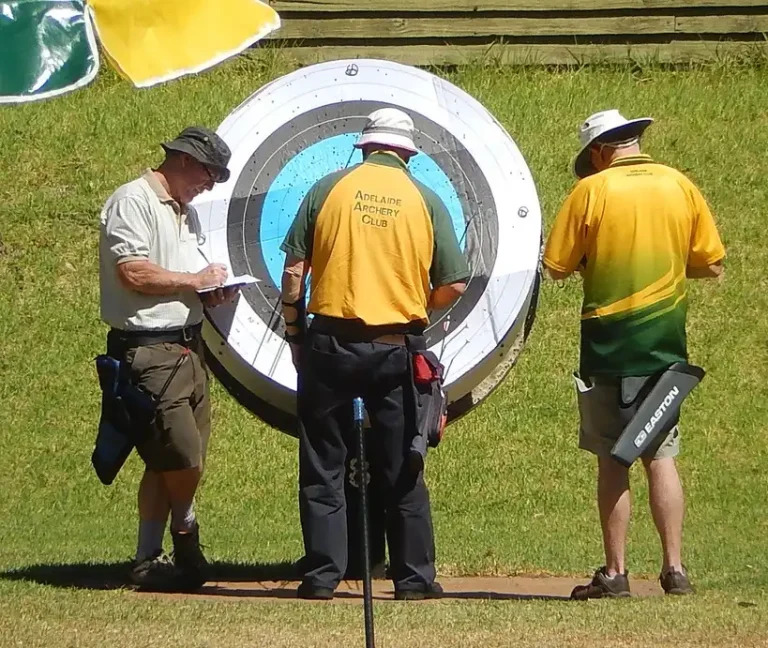
This is the most structured form, seen at the Olympics and local club days. The goal is extreme accuracy on flat ground.
- Target Faces: Large, circular targets marked with concentric rings (usually 10, 9, 8…).
- Distances: Distances are fixed and usually measured in meters (e.g., 70 meters for elite outdoor competition).
- Equipment Focus: Usually features advanced sights, specialized releases (for compounds), and precise scoring.
Field Archery
Field archery is often described as “golf with a bow.” It takes place outdoors, often in wooded areas or across hillsides.
The challenge here is adaptability. You walk a course, and the targets change:
- Distances Vary: Targets can be close (20 meters) or very far (80 meters).
- Slopes Matter: You might shoot uphill or downhill, requiring you to adjust your aim dramatically based on the incline.
- Target Size: Target faces are generally smaller than those used in pure target archery to compensate for the distance variance.
3D Archery
This is a favorite among bowhunters and recreational shooters who enjoy a hunting simulation without the hunting itself. This discipline uses life-sized foam targets shaped exactly like various animals (deer, boar, turkey, etc.).
The fun of 3D archery lies entirely in range estimation. You must physically judge the distance to the foam animal before selecting the correct sight pin (if using a compound) or holding point (if using a recurve or traditional bow).
Bowhunting
This is the application of archery skills for harvesting game. It requires significant skill development beyond simply hitting a target, including ethical shot placement, tracking, and extensive knowledge of local wildlife regulations. In many regions, bowhunting requires specialized certifications.
If you are considering bowhunting, always check with official sources like your state’s Department of Natural Resources or Fish and Wildlife Service for up-to-date regulations and required education. For instance, the Iowa Hunting Regulations offer a clear example of the legal requirements.

Getting Started Safely: Essential First Steps
No matter which form of archery sparks your interest, your journey must start with safety and proper instruction. Rushing into buying expensive gear without knowing the basics is a common beginner mistake.
Step 1: Find a Local Club or Range
The single best resource you have when starting is an experienced coach or instructor. A local archery pro shop or club often offers beginner lessons.
Why take lessons first?
- Safety Protocols: You learn the unbreakable safety rules (e.g., never dry-firing, never pointing the bow at anything you don’t intend to shoot).
- Equipment Fitting: An instructor helps you determine your correct draw length and starting draw weight, preventing injury.
- Basic Form: You get immediate feedback on stance, grip, and anchor point—the foundation of all archery styles.
Step 2: Rent, Don’t Buy (Initially)
Resist the urge to buy a full setup immediately. Renting equipment for your first few lessons allows you to test different bow types without a large financial commitment. You might find that the complex compound bow feels awkward, but the simple longbow feels natural.
Step 3: Understanding Draw Weight
Draw weight is how much force it takes to pull the string back to your anchor point. Beginners often choose a bow that is too powerful.
A common mistake is choosing a weight based on strength, not consistency.
It is infinitely better to shoot a lighter bow (say, 18 lbs) accurately 50 times than to struggle with a heavy bow (say, 35 lbs) and developing bad habits like “peeking” or dropping your bow arm.
For most adult beginners, a supervised starting weight in the 15–25 lb range is recommended for learning form.
Choosing Your First Bow: A Simple Breakdown
After trying out the different forms, you might narrow it down to one or two. Here is a quick guide on what to look for in your first purchase, assuming you’ve had a few introductory lessons:
Recurve Focus: Takedown Riser
If you choose recurve, get a “takedown” model. This means the limbs unbolt from the riser. As you get stronger, you can buy heavier limbs for the same handle, saving money.
- Riser Material: Aluminum is robust and common for beginners. Wood is classic but less forgiving.
- Limbs: Fiberglass/wood laminate limbs are durable and common.
Compound Focus: Let-Off and Draw Length Adjustability
Compound bows are typically bought as “kits.” Look for a model with high adjustability, as you will be fine-tuning the draw length significantly when you start.
- Cams: Look for hybrid cams over single cams for a smoother transition from peak weight to full draw.
- Sight System: Start with a single-pin sight if the bow allows, as multi-pin sights can be complex initially.
Traditional Focus: Proper Tillering
If buying a traditional bow, buy from a reputable bowyer (bow maker) or a trusted archery shop rather than a completely generic online source. Traditional bows require careful “tillering” (shaping the limbs) to ensure they bend evenly.
Your first traditional bow should be low to medium poundage (under 35 lbs) to allow you to practice hundreds of shots without fatigue.
The Mental Game: Focus Across All Disciplines
Whether you shoot in a field simulation or aim for the gold center in target archery, the mental process is crucial. The different forms of archery require slightly different mental tuning.
Mental Focus for Target Archery
Target archery is about robotic consistency. You repeat the exact same physical process for every single shot, regardless of whether the last shot drifted left or right.
Focus Points:
- Routines are everything (pre-shot checklist).
- Ignoring the previous shot’s result.
- Concentration on the anchor point and release.
Mental Focus for Field and 3D Archery
Field and 3D archery require rapid assessment and environmental buffering.
The archer must quickly:
- Estimate the yardage accurately.
- Adjust for slope (a downhill shot needs a higher aim point).
- Fight distractions like wind or uneven footing.
This requires a flexible mental state that accepts minor variations in the target distance while maintaining rigid form.
Psychological preparation is vital in shooting sports. Many top coaches recommend practicing mental imagery when away from the range, visualizing the perfect shot sequence based on the requirements of the specific archery form you are training for.
Safety Regulations Across Different Archery Forms
Safety is non-negotiable. While the basic rules apply universally (e.g., know your backstop), specific disciplines have unique safety checkpoints.
Range Safety Requirements
| Discipline | Primary Range Hazard | Key Safety Rule Addition |
|---|---|---|
| Indoor/Outdoor Target | Inattentive archers downrange | Never step across the shooting line until the Range Officer calls “Cease Fire” and all arrows are retrieved. |
| Field/3D Archery | Unseen archers around corners or up hills | Always shout “Last Arrow!” or “All Clear!” before retrieving arrows, confirming all other shooters are done. |
| Bowhunting (Practice) | Accidental discharge/mistaken target | Always have a clear understanding of 360-degree safety zones; never point a nocked arrow where you are not prepared to stop instantly. |
Always consult the safety rules published by the range or organizing body (like USA Archery or the National Field Archery Association [NFAA]) before participating in a new style of shooting. These groups maintain standards for safety that protect every participant.

Frequently Asked Questions (FAQ) for New Archers
Q1: Which form of archery is the easiest to learn first?
The Recurve bow, especially a modern Olympic style with basic accessories, is often considered the easiest starting point. It requires simple equipment and emphasizes learning correct muscle memory without relying on complex mechanical aids.
Q2: Can I switch between Compound and Recurve later?
Yes, many archers fluidly switch between styles! However, the shooting mechanics are quite different. Compound shooters often struggle with the required precision of a recurve anchor point, and recurve shooters must learn to manage the let-off on a compound. Practice helps bridge the gap.
Q3: Is Traditional Archery dangerous for beginners?
Any bow requires respect and safety training. Traditional bows (longbows) can be more mentally challenging initially because you cannot use sights, which can lead to frustration. However, if you start with a very low draw weight (under 20 lbs) and receive coaching, they are perfectly safe.
Q4: How much does it cost to start in each form of archery?
Traditional and basic Recurve are the least expensive entry points, sometimes requiring only a few hundred dollars for a starter kit. Compound archery systems tend to have a higher initial setup cost due to the complexity of the sights, stabilizers, and accessories.
Q5: Does Field Archery require a special bow?
No single bow type is strictly required, but most Field and 3D archers use highly customized Recurve (often Barebow class) or Compound bows.