Best 3 Pin Slider Bow Sight: Proven Guide
Quick Summary: The best 3-pin slider bow sight offers adjustable pins for various yardages, allowing for precise shots at different distances. It balances simple setup with advanced capability, crucial for beginner archers seeking to expand their shooting range confidently and accurately.
For a closely related bow or archery topic, How to Get to Bow Case Destiny 2: The gives readers a useful next step.
For a related aiming question, How Does a Peep Sight Work? Stunning to Accurate Shooting helps readers compare the next accuracy detail.
Are you a beginner archer, eager to hit your target with more consistency? Many newcomers to archery find themselves frustrated by compound bow sights. Perhaps you’re aiming for that distant target, but your standard sight just isn’t cutting it. It’s a common hurdle, but one with a straightforward solution. A 3-pin slider bow sight can be your secret weapon, helping you bridge the gap between simply shooting and truly hitting your mark, no matter the distance. We’ll walk through everything you need to know to choose, set up, and use one effectively, making your archery journey more rewarding and accurate. Get ready to unlock your potential!
Why Choose a 3-Pin Slider Bow Sight?


As you progress in archery, you’ll quickly realize that different distances require different aiming points. A fixed-pin sight is great when you’re starting out and focusing on one primary range. However, once you want to explore shooting at a variety of ranges – say, 20 yards, 30 yards, and 40 yards – you need a sight that can adapt. This is where the genius of a slider sight comes into play.
A 3-pin slider sight typically features three individual pins, each set to a specific yardage. The “slider” aspect means you can move the entire bracket holding these pins up or down. This allows you to fine-tune your aim at any distance. For a beginner, this means you don’t need to buy a new sight or re-sight your bow every time you want to practice at a new range. It’s an investment that grows with you, offering flexibility without overwhelming complexity.
Key Benefits for Beginners
- Adaptability: Easily adjust for different shooting distances without re-sighting your bow.
- Simplicity: Offers a manageable number of pins (three) which is less complex than sights with many pins.
- Accuracy at Range: Helps you maintain accuracy as targets get further away.
- Cost-Effective: Provides a broader range of capabilities than a basic fixed-pin sight for a similar price point.
- Learning Tool: Encourages understanding of trajectory and distance estimation.

Understanding the Anatomy of a 3-Pin Slider Bow Sight
Before we dive into choosing and setting up, let’s break down the essential parts of a 3-pin slider bow sight. Knowing these components will make the entire process much clearer.
Essential Components
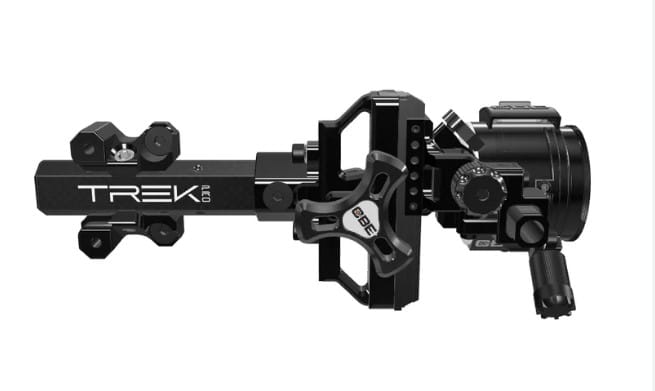
- The Sight Block/Frame: This is the main body of the sight, usually made of aluminum or a strong composite. It holds all the other parts together.
- Pins: These are the small, illuminated dots or fibers that you aim with. Most slider sights come with three pins, and you’ll set each one to a specific yardage.
- Slider Mechanism: This is the core feature. It’s a track or system that allows the entire pin bracket to move up and down. This movement changes the sight’s position relative to your eye and the arrow’s trajectory.
- Yardage AdjustmentKnob/Wheel: Used to precisely move the slider mechanism up or down. Some use a knob, others a wheel with markings.
- Second and Third Axis Adjustments: These allow for fine-tuning your sight’s alignment when your bow is tilted left or right (second axis) or angled horizontally (third axis). While crucial for advanced shooters, beginners might focus on their primary yardage settings first.
- Mounting Bracket: This is the part that attaches the sight to your bow’s riser.
Choosing the Right 3-Pin Slider Bow Sight for You
With so many options available, picking the best 3-pin slider bow sight can feel like a lot. Here’s a simple guide to focus on what matters most for a beginner.
Factors to Consider
- Pin Size and Brightness: Look for pins that are bright enough to see in various lighting conditions but not so large that they obscure your target. Fiber optic pins are very common and effective. Consider the diameter of the pin head – .019” is a popular size for general use. Some sights offer adjustable brightness for the pins.
- Construction and Durability: Your sight will be exposed to the elements. Opt for sights made from solid materials like aluminum. While plastic or composite sights can be lighter and cheaper, they might not hold up as well over time.
- Ease of Adjustment: For a slider sight, the smoothness and precision of the yardage adjustment are key. It should move easily, but also have a locking mechanism to prevent accidental changes while you’re in the field.
- Mounting System: Most sights mount to a bracket on your bow. Ensure the sight you choose is compatible with your bow’s riser mounting holes.
- Brand Reputation and Reviews: Stick with well-known archery brands. Look at reviews from other beginners or experienced archers to get a sense of reliability and performance.
- Price: Slider sights can range from budget-friendly to premium. Set a budget, but try not to compromise too much on durability and ease of use. Investing a little more upfront can save you hassle later.
Top Features to Look For
- Micro-Adjustments: While a slider moves the whole unit, some higher-end sights also offer micro-adjustments for each individual pin. This is great for fine-tuning later on.
- Built-in Level: A bubble level can help you ensure your bow is held perfectly vertical, which is crucial for accurate shooting.
- Lightweight Design: A lighter sight won’t add unnecessary weight to your bow, helping with balance and fatigue.
- Robust Pin Guard: This is the housing that surrounds your pins. A good pin guard makes it easy to quickly acquire your target and frame your peep sight.
Setting Up Your 3-Pin Slider Bow Sight: A Step-by-Step Guide
This is where the real fun begins! Setting up your slider sight can seem daunting, but if you follow these steps, you’ll have it ready for the range in no time.
Step 1: Mount the Sight to Your Bow
- With your bow held securely (a bow vise is ideal, but a stable surface works), locate the mounting holes on your bow’s riser.
- Attach the sight’s mounting bracket to the riser using the provided screws. Most sights come with mounting hardware.
- Ensure the sight is mounted straight and snug, but don’t overtighten the screws.
Step 2: Initial Pin Setting (The “Rough Sight-In”)
We’ll start at your closest target distance, usually 20 yards.
- Anchor and Aim: Nock an arrow and draw your bow to full draw, holding it steady. Aim at the center of your target at 20 yards.
- Shoot Three Arrows: Fire three arrows from a stable shooting rest.
- Analyze the Group: Look at where your arrows are hitting. If they are grouped together but not in the center, you need to move your pins.
- Adjust the Pins:
- If your arrows are hitting low, move the entire sight bracket UP (or follow your sight’s specific instructions for raising the point of impact).
- If your arrows are hitting high, move the entire sight bracket DOWN.
- If arrows are hitting left or right, fine-tune by adjusting the entire sight horizontally.
- Repeat: Shoot another group of three arrows and adjust your sight until your arrows are consistently hitting the bullseye at 20 yards. This is your first pinned position.
Step 3: Setting Your Slider Position for Longer Distances
Now, you’ll set your other pins. Let’s assume you want pins for 30 and 40 yards.
- Move to the Next Distance: Go to your 30-yard target.
- Find the Slider Position: Draw your bow and aim at the 30-yard bullseye. This time, you’ll use the slider mechanism to bring one of your other pins (let’s say your second pin) to that aiming point.
- Mark the Slider: Once that second pin is aligned with the bullseye, you need to mark this position on your slider. Many sights come with a system of markings or tape for this. You might need to “zero” your sight at 20 yards and then mark the slider position for 30 yards.
- Practice Shooting at 30 Yards: Shoot your arrows. If they are hitting consistently, great! If not, you might need to make minor adjustments by nudging the slider slightly.
- Set the Third Pin: Repeat the process for your third pin at your desired longer distance, such as 40 yards. You’ll move the slider until the third pin aligns with the bullseye at 40 yards and then mark that position.
Step 4: Fine-Tuning and Practice
This is an ongoing process!
- Test at All Ranges: Shoot at 20, 30, and 40 yards, using the corresponding pin and slider position.
- Make Micro-Adjustments: If your group is slightly off at a particular distance, you can make very small adjustments to the slider mechanism.
- Practice Regularly: The more you shoot and adjust, the more intuitive it becomes. You’ll learn how far to move the slider for different distances.
- Consider a Sight Tape: Many archers create custom sight tapes. Once you have your primary yardages dialed in, you can shoot at every 5 or 10 yards, mark the exact position of the slider, and create a tape to stick onto your sight for quick reference. Resources from organizations like the USA Archery can offer more detailed guidance on sight tape creation and advanced tuning.
Troubleshooting Common Issues
Even with a great sight, you might run into a few hitches. Here’s how to fix them.
Issue: Arrows Hitting Consistently Off-Target
Cause: Improper initial sight-in, inconsistent shooting form, or bow tuning issues.
Solution:
- Re-verify your sight-in at your closest distance (20 yards).
- Ensure you are holding your bow the same way each time. Focus on a consistent anchor point.
- Check your bow’s arrow rest and any tiller adjustments. Minor bow tuning might be needed. Consult your local archery shop if you suspect bow issues.
Issue: Pins Aren’t Bright Enough or Too Bright
Cause: Ambient light conditions, or pin brightness setting (if adjustable).
Solution:
- If your sight has a rheostat or brightness adjustment, use it.
- For fiber-optic pins, you can often add a small battery-powered light (built-in or separate) to increase brightness in low light.
- If pins are too bright, you might need a neutral density filter for the pin-enclosing housing or to reduce the output of an external light.
Issue: Slider Mechanism is Stiff or Sticky
Cause: Dirt, debris, or lack of lubricant.
Solution:
- Gently clean the slider track with a soft cloth.
- Apply a small amount of silicone-based lubricant (never WD-40, as it can attract dirt) to the track.
- Work the slider back and forth to distribute.
Issue: Difficulty Aligning Pins with Peep Sight
Cause: Incorrect peep sight size or placement, or incorrect sight housing size.
Solution:
This is often related to your bow’s setup rather than the sight itself. Ensure your peep sight is correctly sized and positioned so that when you draw your bow and anchor, the peep sight perfectly frames your sight’s pin housing. This is a critical aspect of bow tuning, and you might need assistance from an experienced archer or pro shop to get this right.
Tips for Accurate Shooting with Your Slider Sight
Having the right equipment is only half the battle. Here’s how to use your 3-pin slider sight effectively.
Focus on Form First
Your shooting form – stance, grip, draw, anchor, and release – is paramount. A slider sight won’t fix bad form, but it will highlight good form by improving accuracy. Always prioritize a solid foundation in your technique.
Understand Trajectory
Each pin represents a specific trajectory. Your arrow leaves the bow on an arc. The first pin is set for the closest distance where the arrow’s arc is still rising to meet your line of sight. As the distance increases, the arrow’s arc drops, so you need to adjust your sight down to compensate. Your slider makes this adjustment physical.
Use Your Level
If your sight has a bubble level, make sure it’s centered when you aim. This helps ensure you’re holding your bow vertically. If your bow is tilted left or right, your arrow will drift in that direction.
Practice in Varying Conditions
Take your bow to the range at different times of day to experience varying light conditions. This will help you understand how bright your pins need to be and how they perform in real-world scenarios.
Know Your Pins
Before you go hunting or into a competition, be absolutely sure which pin is set for which yardage. You don’t want to be fumbling for the right pin when it counts. The system of marking your slider or using sight tapes is invaluable here.

Popular 3-Pin Slider Bow Sight Brands and Models
While I can’t recommend a single “best” without knowing your specific needs, here are some highly regarded brands and types of 3-pin slider sights that are popular among archers, including beginners, for their quality, adjustability, and value.
| Brand | Typical Features | Beginner Friendliness | Considerations |
|---|---|---|---|
| Trophy Ridge | Often feature lightweight aluminum, bright fiber optics, and smooth slider adjustments. Some models have integrated levels. | Excellent. Known for user-friendly designs and reliable performance. | Can be mid-range in price. Ensure the model suits your budget. |
| HHA Optimizer | Renowned for their single-pin slider sights, but they also offer multi-pin versions with innovative “wheel” style adjustment for yardage. | Very good, especially their simpler slider models. The wheel offers precise yardage marks. | The wheel adjustment is a unique feature that may take a little getting used to, but it’s highly praised for accuracy. Often a premium choice. |
| Black Gold | Premium quality sights, often with micro-adjustments and robust construction. While they offer many pin configurations, their slider models are excellent. | Good. While premium, their slider mechanisms are intuitive once set up. | Higher price point. Excellent for those looking for long-term investment in quality. |
| Apex Gear | Offer a range of sights including slider models, balancing features and price. Often focus on lightweight designs and bright pins. | Very good. Offer solid performance for the price. | Durability can vary by specific model; check reviews for the one you’re considering. |
| QAD (Quiet Tune Archery) | Primarily known for their arrow rests, QAD also produces high-quality sights, including slider options known for their precision. | Good. Built with performance in mind. | Can be on the higher end of the price spectrum. |
When looking at these, remember to check specifications for pin size, weight, and whether it includes features like a light or level. Reading reviews on retailer sites or archery forums can give you real-world insights.
Frequently Asked Questions (FAQs)
Q1: How do I choose the yardages for my three pins?
A1: For beginners, a good starting point is your closest comfortable shooting distance (e.g., 20 yards) for the first pin. Then set your second pin for a common medium distance (e.g., 30 yards) and your third for a longer distance you practice at (e.g., 40 or 50 yards). You can always adjust these later.