Best Budget Hunting Gear for Archers (2026): we compared
Buy a fixed-blade broadhead, a release aid, and a decent rest before expensive camo; those three change safety, arrow flight, and kill odds fastest. Skip that order, and money goes into gear that looks ready but still groups poorly or leaves wounded-trail problems. This guide ranks the first budget buys in dollar order, explains why each matters, and tells you what to leave for later.
This guide is part of our Hunting gear comparisons for archers series.
Quick comparison
| Product | Badge | Best for | Price | ||
|---|---|---|---|---|---|
 | CVLIFE 62" Recurve Bow and Arrow Set for Adults andCVLIFE | Budget pick | 62 in recurve · 30 lb · RH | $114.99 Price as of 11 Oct 2026 | View |
 | Easton FMJ Max 5mm Carbon Arrows with 50 Grain SteelEaston | Pair with it | 5mm carbon · 400 spine · 6-pack | $101.05 Price as of 11 Oct 2026 | View |
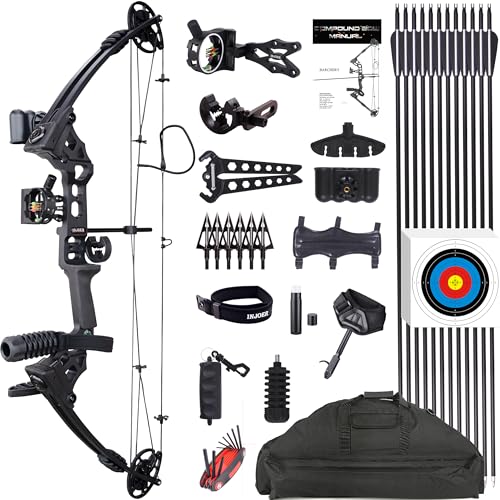 | Archery Compound Bow Set 20-70 LBS, Draw Length 24"-30", upINJOER | Upgrade pick | 20-70 lb compound · 320 fps IBO | $169.99 Price as of 11 Oct 2026 | View |
 | Centr x HYROX Competition Rig Target – Wall Ball TrainingCENTR | Also great | Steel frame wall ball rig target | $109.00 Price as of 11 Oct 2026 | View |
 | SOPOGER Archery Bow Sight for Compound Bows Target HuntingSOPOGER | Pair with it | 6X scope lens · fiber optic pin | $69.99 Price as of 11 Oct 2026 | View |
Use this as the fast filter. The right first purchase depends on whether your bow already tunes, whether your arrows match your draw length, and whether you hunt from close cover or a tree stand.
The strongest value often comes from fixing arrow flight before buying more accessories. That is where cheap gear causes the biggest miss.
How we chose
We compared each buy by hunt impact per dollar, failure risk if skipped, and fit with common beginner setups. We also weighed tuning sensitivity, since bad spine or mismatched parts can erase the value of better sights and camo.
This order favors gear that makes first-hit accuracy more repeatable. It also keeps a beginner from spending on accessories before the bow can launch a clean arrow.
CVLIFE 62" recurve bow set: best for a bare-bones setup
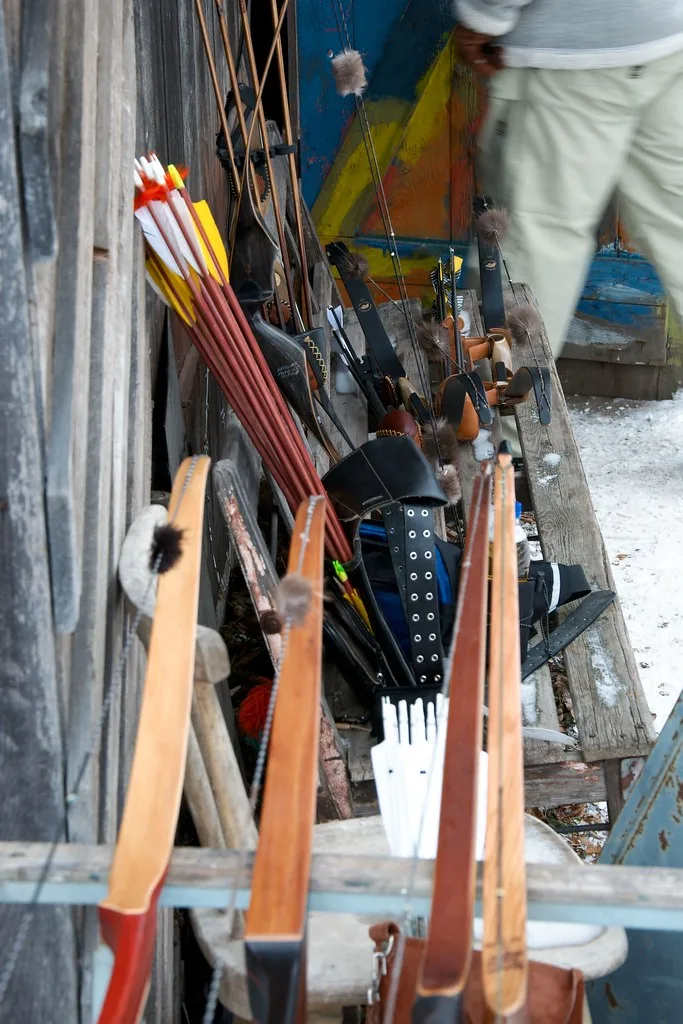
This is the simplest path if the goal is a low-cost starting point that keeps the setup compact. The 62 in takedown format, 30 lb draw, and right-hand layout make it a straightforward entry bow for learning form, fitting a case, and storing parts without much hassle.
What stands out is the adjustable draw weight and the ergonomic wooden grip. The drawback is clear: a recurve does not give the same let-off or aiming forgiveness as a compound, so it rewards clean anchor, clean release, and disciplined practice more than add-ons do.
For hunting, a recurve also puts more weight on arrow choice and broadhead tuning. If the shaft spine is off by even a step, the arrow can show tail kick and weak forgiveness at the shot.
Easton FMJ Max 5mm carbon arrows: best for the first season setup
This is the strongest pick for a hunter who wants one arrow purchase to do a lot of work. The 400 spine, 5mm carbon build, 50 grain steel half-outs, and Blazer vanes give a ready-made hunting shaft aimed at cleaner flight and better energy transfer.
The standout feature is the component package. A matched shaft, vanes, and half-out system reduces the number of variables that can go wrong when broadheads are added. The drawback is cost: this is not the cheapest way to get arrows on the string, and 400 spine is not automatically correct for every bow setup.
Arrow selection matters more than most new bowhunters expect. For a hunting setup, spine should match draw weight and arrow length, not just the label on the box. Common hunting spines span a fairly wide range, and the wrong match can hurt accuracy, penetration, or both.
INJOER compound bow set: best for a first hunting-ready package
This fits the beginner who wants one budget package that already includes several hunting basics. The 20-70 lb range, 24"-30" draw length range, and 80% let-off make it easier to grow into than a fixed low-poundage bow. The included sight, stabilizers, and brush rest also reduce the number of separate purchases.
The main advantage is convenience. The main drawback is quality control risk in all-in-one packages, because a bow can be usable while the included accessories still need replacement for quiet hunting or finer tuning. Budget packages often save money up front, then ask for a better rest or sight later.
For a beginner who is archer-first and hunter-second, this sort of package can make sense if the priority is getting to a tuned, shootable bow quickly. It still needs proper arrow matching, safe release use, and broadhead tuning before a hunt.
SOPOGER single-pin bow sight: best for repeatable shots
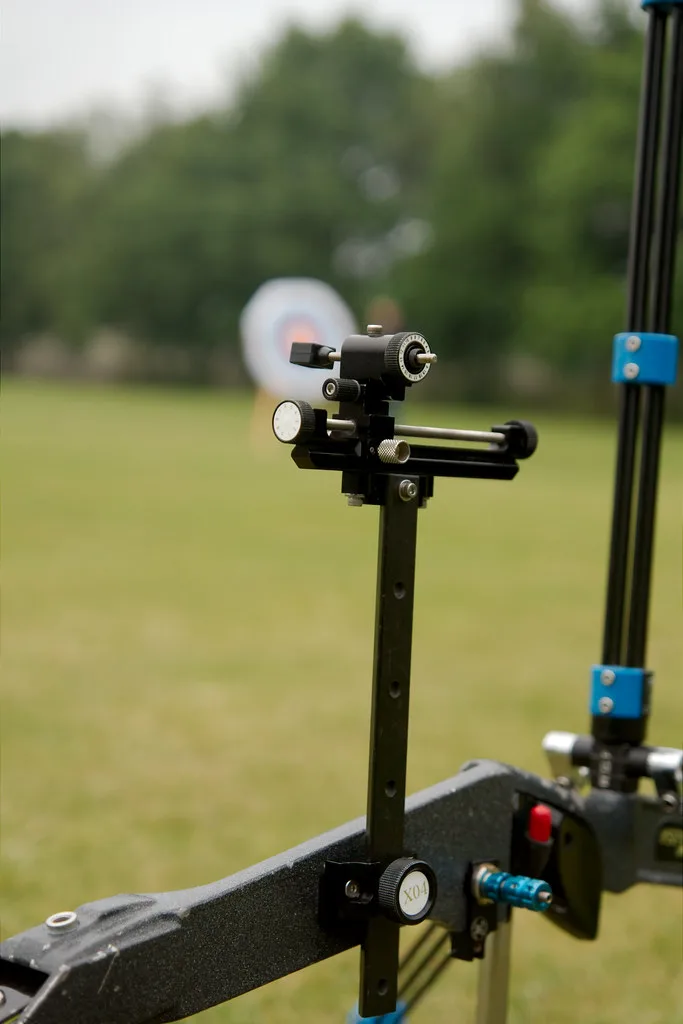
This is the best fit for a bowhunter who wants simple aiming on a budget. The single-pin layout, tool-free windage and elevation adjustment, and included LED light make it easier to set a known distance without cluttering the sight picture.
The 6X scope lens may help some shooters see the pin clearly, but it also adds bulk and can feel like too much for fast, close shots. The drawback is that a single-pin sight demands yardage dialing, so it works best for hunters who range first and do not mind moving the pin between distances.
For low light, fiber optics and a lighted sight housing matter more than fancy branding. In a tree stand, a single pin can be excellent. For spot-and-stalk, it works best when the shooter is disciplined enough to range before drawing.
Buy-first priority table by budget level
Use the table below as a spending ladder, not a wish list. The left side shows what to buy first; the right side shows what usually fails if that item is skipped.
| Budget level | Buy first | Typical cost band | Hunt impact | Failure risk if skipped | Tuning-first checklist |
|---|---|---|---|---|---|
| Level 1: bare essentials | Matched hunting arrows, release aid, and a basic sight | $40-$120 per item | Very high | Bad arrow flight, unsafe trigger control, poor aiming |
|
| Level 2: accuracy upgrades | Fixed-blade broadheads, insert choice, and a rangefinder | $30-$170 per item | High | Broadhead planing, poor penetration balance, range mistakes |
|
| Level 3: hunt-readiness add-ons | Quiver, gloves or finger protection, scent control basics | $10-$80 per item | Moderate | Noise, cold-hand mistakes, scent spread, loose arrows |
|
What should you buy first on a tight budget?
Buy matched hunting arrows first, then a safe release aid, then a sight that holds zero. Those three shape arrow flight and first-hit accuracy more than camo, packs, or other add-ons. If the shaft spine is wrong, the rest of the setup cannot fully save the shot.
Hunting arrows and spine match
Start with arrows that match your draw weight and arrow length. Common hunting spines run from 200 to 500, and the wrong spine can make the arrow kick left or right on release, lose penetration, or group inconsistently once a broadhead is added.
Carbon shafts are common because they are durable and lighter for the same diameter, while aluminum can be straighter and easier to tune in some setups but is usually heavier and more bend-prone in hunting use. Micro diameter shafts can help with wind drift and penetration, while standard diameter shafts are often simpler and cheaper.
Release aid fit and safety
A release aid is a safety purchase as much as an accuracy purchase. A wrist strap model is usually the easiest first step because it is simple to wear, hard to drop, and easy to activate under stress. Thumb triggers can feel cleaner, but they reward good finger discipline and correct sear tension.
Fit matters. The release should sit in the hand without forcing a reach for the trigger, and it should fire with a controlled pull rather than a panic jab. A poor fit can cause punching, creeping, or uneven anchor pressure.
Bow sight basics
A basic sight gets the bow hunting-ready only if it is simple to read under low light and easy to adjust. Single pin sights are clean and precise, while multi-pin sights can help if the shooter wants preset distances and less movement in the tree stand.
Budget sights in that general price range can be enough if they hold zero, but the main thing is consistent performance. The key is repeatable adjustment, a visible pin, and a housing that does not wander after a bump.
How do I prioritize bowhunting gear on a tight budget?
Put money into anything that affects arrow flight, trigger control, and distance judgment before buying comfort items. That means arrows, release, sight, broadheads, and a rangefinder come ahead of expensive camo, packs, or specialty accessories. The order changes only if the bow itself is not tuned.
How we rank dollar value
First is failure risk. If the item is wrong, the shot can fail. Second is repeatability. Third is fit with the rest of the setup. A cheap item that tunes well is more valuable than a pricier accessory that forces constant correction.
That is also why used gear can make sense. A used sight, leftover shop arrows, or closeout broadheads may be a smarter buy than a fresh accessory that does not fit the bow or the hunter’s style.
Common first-timer mistakes
Say your draw weight is around that level and your arrows are cut a bit too short or are the wrong spine. The bow can still launch them, but broadheads may plane and the group can open at 20 yards. The fix is not a fancier sight; it is a correct shaft match.
Suppose a hunter buys a rangefinder last and estimates every shot from a tree stand. A 28-yard shot at a steep angle can land high if angle compensation is missing or ignored. Budget gear helps only when the hunter uses it correctly.
Hunting arrows: best for the first setup
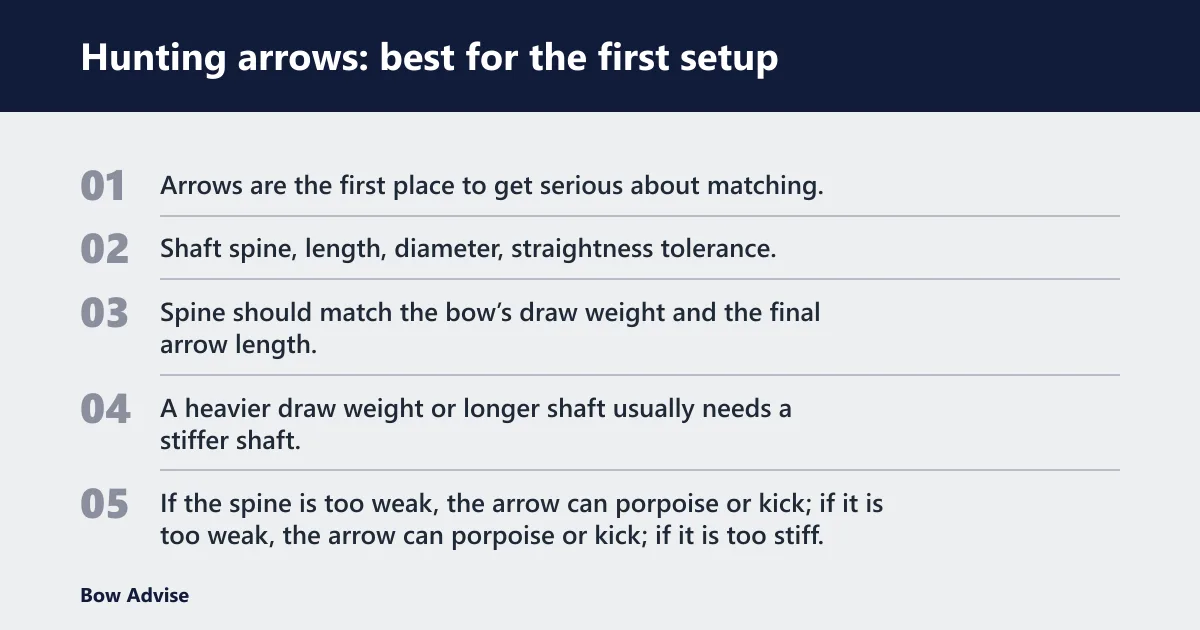
Arrows are the first place to get serious about matching, because they affect almost everything after the shot breaks. Shaft spine, length, diameter, straightness tolerance, and component weight all change how the arrow leaves the bow and how a broadhead behaves downrange.
Spine, length, and draw weight
Spine should match the bow’s draw weight and the final arrow length. A heavier draw weight or longer shaft usually needs a stiffer shaft. If the spine is too weak, the arrow can porpoise or kick; if it is too stiff, it can struggle to tune cleanly.
For many beginner hunting bows, common spines in the 300 to 500 range cover a lot of ground, but the exact choice depends on draw length, point weight, and whether the bow is a compound or recurve. That is why a shaft chart from the arrow maker is worth using before buying a dozen.
Carbon vs aluminum
Carbon is the safer budget default for many hunters because it is light, durable, and widely available. Aluminum can tune well and often feels predictable, but it dents more easily and can be less forgiving in rough hunting use.
Some older hunters still like aluminum hunting shafts. Easton’s XX75 Gamegetters remain a familiar reference point from the 1990s, and they show how long aluminum has been part of hunting setups. Still, modern carbon options give more choice in spine, diameter, and component systems.
Straightness, GPI, and diameter
Straightness tolerance matters, but not as much as good spine match. A .001 shaft is tighter on paper than a .003 shaft, and that can help confidence and consistency, but a poorly matched .001 arrow can still fly worse than a well-matched .003 arrow.
Grains per inch also matter because they affect total arrow weight and front balance. The Easton 5.0 line gives a useful example: it comes in .001 and .003 straightness versions, in 200, 250, 300, 340, 400, and 500 spines, uses a .204-inch inside diameter, and the 340-spine version weighs 7.4 grains per inch. Easton also lists a .003 version at $110 for six fletched arrows and $170 for a dozen shafts.
Diameter is part of the hunting decision too. Micro diameter shafts can cut wind drift and improve penetration, while standard diameter shafts are easier to source and often cheaper. There is no free lunch here; component fit and broadhead fit still decide the final result.
Fletched vs bare shafts
Fletched arrows are ready for hunting use. Bare shafts are useful for tuning, because they show how the arrow behaves without vane correction. A bare shaft that hits far from a fletched shaft often points to spine or rest issues, not just bad shooting.
For a budget hunter, a small pack of bare shafts for tuning and a hunting pack of fletched arrows can be smarter than buying the wrong premium shaft in bulk.
Sight and release aid: best for repeatable shots
Once the arrow matches the bow, the next gains come from a sight and release aid that repeat cleanly. These two parts do not fix a weak tune, but they make a tuned bow easier to shoot well under pressure.
Single pin vs multi pin
A single-pin sight is easy to aim with and keeps the sight picture clean. A multi-pin sight lets the shooter preset several common distances, which can be useful if the hunt is likely to produce quick shots without much time to dial.
For a beginner, a single pin often teaches better distance discipline. For someone who hunts mixed ranges or wants a simple tree-stand setup, a 3-pin or 5-pin sight can be the better value.
Low-light visibility and adjustment
Low-light visibility matters because legal shooting light is often when deer move. Fiber optic pins, a lighted housing, and clear yardage markings help. Budget sights should still lock down firmly; a sight that drifts after a few shots costs more than its price tag suggests.
Adjustability should be simple enough to use without tools whenever possible. Micro-adjust windage and elevation are nice, but only if they hold position and do not add slop to the setup.
Wrist strap vs thumb trigger
Wrist strap releases are safer for most beginners because they are easy to keep on, easier to activate with cold hands, and less likely to be dropped from a stand. Thumb triggers can feel more controlled, but they demand correct grip and safer handling habits.
Trigger feel matters more than brand class. A release that surprises the shooter can cause punching. One that is too heavy can cause flinching. The best budget choice is the one that fits the hand and lets the shooter pull through the shot.
Broadheads, inserts, and components: best for getting arrow flight right
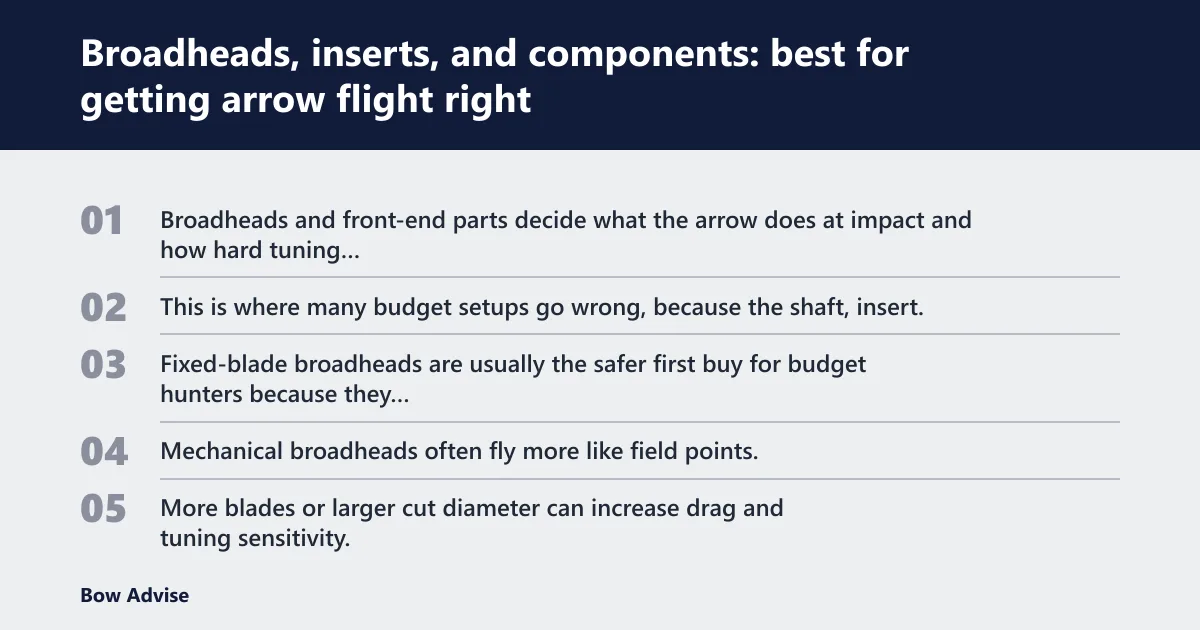
Broadheads and front-end parts decide what the arrow does at impact and how hard tuning becomes. This is where many budget setups go wrong, because the shaft, insert, and head are bought separately and never checked as one system.
Fixed blade vs mechanical
Fixed-blade broadheads are usually the safer first buy for budget hunters because they are simple and dependable, though they can be more sensitive to tune. Mechanical broadheads often fly more like field points, but they add moving parts and can depend on impact conditions and legal hunting rules.
Blade count and cut diameter matter too. More blades or larger cut diameter can increase drag and tuning sensitivity. A broadhead that flies well at 20 yards but planes at 40 is not a bargain.
Insert weight and front-of-center
Insert weight changes front-of-center, often called FOC, and that affects stability and penetration balance. A heavier insert shifts more mass forward, which can help some hunting setups track better, but too much front weight can force a different spine choice.
Easton’s 5.0 line is a good example of part flexibility. Easton uses aluminum HIT inserts in some builds, offers insert weights of 16, 25, 50, and 75 grains for the 5.0, and the line can be built with 15 percent FOC. That range shows why component fit matters before broadheads are bought in bulk.
What happens when parts are mixed poorly
A shaft with the wrong insert weight can act stiffer or weaker than expected. A broadhead that does not match the shaft diameter can snag or steer the arrow. A mismatched combination may group fine with field points and then open up badly with fixed blades.
A common budget error is buying arrows first, then adding whatever insert and broadhead happen to be on sale. That can work, but only if the shaft system, point weight, and rest setup are checked together.
Rangefinder, quiver, and scent control: best for hunt readiness
These items come after the core tune, but they still matter. They improve shot decisions, keep the bow quiet, and reduce easy mistakes in the field.
Angle compensation and when it matters
A rangefinder with angle compensation is important for tree-stand shots and steep uphill or downhill shots. Horizontal distance, not the straight-line yardage, is what matters for aiming. On flat ground, the feature is less important, but it still helps avoid second-guessing.
For spot-and-stalk hunting, fast and accurate ranging matters because the shot window is shorter. For a tree stand, angle compensation can prevent high hits on close deer below the shooter.
2-arrow vs 5-arrow quivers
A 2-arrow quiver is lighter and can be quieter, but it limits follow-up capacity. A 5-arrow quiver carries more insurance for practice and hunting, though it can add noise or balance issues if the bow-mounted brackets are loose.
Bow-mounted quivers are common because they keep arrows close to the bow. Hip carry quivers are less common for bowhunting but can be useful when quiet movement and access matter more than keeping everything attached.
Quiet storage, wash, and clothing basics
Scent control starts with simple habits: wash hunting clothing with unscented soap, store it away from kitchen smoke and garage odors, and keep boots and gloves in a clean container. The goal is not magic scent proofing. The goal is reducing obvious human odor.
That means scent control clothing matters less than clean handling. A budget hunter who stores a shirt beside fuel cans can undo expensive fabric treatments very quickly.
Which one should you buy?
If the bow already hits draw weight and tunes well, buy the sight and a decent fixed-blade broadhead next. If the arrows group badly, buy matched shafts before anything else. If the hunt is from a stand, add a rangefinder sooner; if it is spot-and-stalk, prioritize arrows and ranging accuracy first.
For archers who want the cheapest useful setup, the order is clear: matched arrows, safe release, basic sight, fixed broadheads, then a rangefinder. A quiver, gloves, and scent control can wait until the bow itself is dependable.
What budget hunting accessories make the biggest difference first?
Arrows with the correct spine, a safe release, and a sight that holds zero give the biggest first-step value. Those parts directly affect whether the arrow leaves cleanly and lands where aimed. Accessories that only add comfort usually come later.
What can you skip for now?
Skip expensive camo patterns, decorative stabilizers, extra quiver styles, and specialty clothing until the bow is shooting cleanly. Skip premium broadheads if the shaft spine is still wrong. Skip extra add-ons that do not solve a real field problem.
When used gear makes sense
Used sights, leftover shop inventory, and closeout arrows can save real money if the parts fit the bow and show no damage. This is especially smart for beginners who may change draw weight or hunting style after the first season. Used gear is not a shortcut around tuning.
When to spend more later
Spend more after the setup proves itself in practice. That usually means once the arrows are matched, the sight holds zero, and the release feels natural. Then a better rangefinder, quieter quiver, or lighter broadhead system may make sense.
What should you buy first on a tight budget?
Start with matched arrows, then a release aid, then a basic sight. That order gives the best return because it solves the biggest problems first: bad spine, unsafe trigger control, and poor aiming. Everything else matters less until those three are right.
Frequently asked questions
What budget hunting gear should I buy first for bowhunting?
Buy matched hunting arrows first, then a release aid, then a sight that holds zero. Those three items have the biggest effect on safety and first-hit accuracy. After that, add fixed-blade broadheads and a rangefinder if your hunting setup needs them.
What archery gear do I actually need for hunting?
You need a tuned bow, correctly spined arrows, a safe release, a usable sight, hunting broadheads, and a way to judge distance. A quiver, gloves, and scent control basics are useful next steps, but they do not matter as much as arrow flight and safe shot execution.
What is the most important hunting gear for a beginner archer?
The most important items are arrows that match the bow and a release that fits the hand safely. If the arrow spine is wrong or the release causes poor trigger control, the rest of the setup cannot fully fix the shot. Good fit and tune come before extras.
How do I prioritize bowhunting gear on a tight budget?
Spend first on items that can fail the hunt if they are wrong: arrows, release, sight, and broadheads. Next, add a rangefinder and quiver. Last, buy comfort items such as gloves, clothing upgrades, and extra accessories. The bow must shoot cleanly before anything else earns money.
Do I need expensive arrows, sights, and releases to start hunting?
No. You need gear that matches your bow and works reliably. A mid-priced arrow with the right spine is better than a premium arrow with the wrong tune. The same goes for sights and releases. Consistency matters more than the highest sticker price.
What is the cheapest way to get ready for a deer hunt with a bow?
The cheapest sensible path is a tuned bow, correctly spined arrows, a basic release, a simple sight, and fixed-blade broadheads. Used gear or shop leftover stock can cut costs further if the parts fit. Camo, specialty accessories, and extras can wait.
What budget bowhunting gear gives the most value per dollar?
Matched arrows usually give the most value per dollar, followed by a safe release and a solid sight. Those items directly improve flight, trigger control, and aiming. Broadheads and rangefinders matter too, but they work best after the arrow setup is already correct.