Hunting Gear Comparisons for Archers: What Matters
For hunting gear comparisons for archers, buy by shot sequence: spend first on arrows, sight, and rangefinder, then release or rest, because those four most often tighten groups and clean up misses in the field. Get the order wrong and you pay with bad yardage, weak blood trails, and upgrades that barely move your hit rate. I compare bows, arrows, sights, rests, releases, rangefinders, broadheads, and lights by draw, range, hold, release, and recovery so you can upgrade the right piece first.
The tradeoff is direct. Bowhunting gear has to stay quiet and easy to reach without hurting ranging, aiming, or release execution when the animal is close and your body position is poor.
Beginners often make the same mistake every season: they shop by category instead of by failure point. That hides the real problem. A jacket can ruin a draw. A glove can change trigger feel. A chest strap can block anchor. A fast rangefinder return means little if it will not read cleanly at bow ranges or give compensated distance from a stand.
Compound and recurve hunters also need different answers. A first compound bow set about 10 lb too heavy often leads to flinching, a common issue that persists until the limb bolts are backed out. That lesson made me hard on gear that changes execution under strain. Compound hunters usually gain more from release, rest, peep, and rangefinder integration. Recurve hunters usually gain more from clothing clearance, tab or glove consistency, quieter carry, and range practice tied to instinctive or gap references.
What’s the difference between archery-specific and general hunting gear?
Archery-specific gear earns its keep when it protects the shot sequence at close range: quiet draw, clean anchor, accurate compensated yardage, and fast access without body movement. General hunting gear is good enough when it stays silent, clears the string and release, and gives dependable data inside normal bow distances.
Rangefinders: bow mode versus rifle-first features
This is where I see hunters burn cash. Rifle-oriented units often sell on max range and broad target modes, while a bowhunter needs close-range precision, angle-adjusted ranging, and a display that stays readable in mixed shadows.
Most bowhunters zero their sights for around 20 yards. Arrow drop out to 50 yards can be about 50 inches. That is why close reads matter more than giant distance claims in archery shopping. A bow zeroed at 200 yards drops about 15 feet by 500 yards, but that rifle-style comparison only matters here as a reminder that bullet-first thinking does not map cleanly to arrow flight.
For concrete examples, the Leupold RX-FullDraw 5 ranges from 6 to 1,200 yards, includes customizable arrow ballistics, and uses Flightpath technology. The Sig Sauer KILO4K has a 5.3-yard minimum range, has archery mode, and is tripod mountable. Those details matter because minimum range, archery mode, and ballistics inputs affect real bow shots. Maximum range barely enters my decision unless I also use the unit for other seasons.
Clothing and gloves: warmth versus string and release clearance
General hunting jackets are often cut for rifle shoulders, seated glassing, and hand pockets. Bowhunting outerwear has a narrower job: stay quiet during the draw, avoid sleeve contact, and keep the chest from bunching into the string path.
I care less about insulation claims than I do about fabric noise on a cold morning. Some fleece stays dead quiet but drinks water. Some weatherproof shells survive brush and drizzle yet rasp at full draw. Gloves are worse. A warm glove can flatten trigger feel on an index release or change how a tab sits under a recurve string.
Packs and carry systems: storage capacity versus access during the shot
Big packs win on capacity and lose at the shot. Daypacks with tall side pockets, stiff shoulder straps, or thick chest hardware often interfere with anchor and elbow path.
For treestand whitetail hunting, I want one-handed access to rangefinder, wind checker, and headlamp without swinging a pack around my torso. For spot-and-stalk, I will accept more capacity if the chest rig rides flat and I can range from odd kneeling positions.
When general hunting gear is good enough and when it costs you
General gear is good enough if it passes the test I use on my own bows. Draw in your late-season layers. Sit, lean, kneel, and twist. Range with one hand. Nock an arrow with gloves on. If the kit stays quiet and repeatable, keep it.
It starts costing you when a hood brushes the string, a cuff touches the release jaw, or your pack forces extra movement before the shot. Those misses never look dramatic on a product page, but I see them on real hunts every fall.
What gear comparisons matter most for bow hunting?
The comparisons that matter most are the ones that change arrow placement or stop the shot from happening at all: rangefinder performance at close and steep angles, clothing noise and clearance at draw, release and glove interaction at execution, and pack access during the few seconds before the animal steps clear.
Gear that changes yardage decisions
Bowhunting rangefinders should be judged by close-range precision, fraction-of-a-yard readings if the unit provides them, minimum range, angle compensation, archery mode, and how quickly they return a number in brush. First, last, and best target modes all have a place. In light cover, first target can grab a twig. In heavy brush, best target logic can help, but only if you know how the unit behaves before season.
Angle-adjusted ranging matters from a tree stand, on cliff country mule deer hunts, and anywhere line-of-sight distance is longer than the distance gravity really sees. The number you need for the pin is the compensated one, not simply line of sight. That matters more with arrows because flight is slow, arc is obvious, and small yardage mistakes show up fast.
Gear that changes hold stability and anchor consistency
Sights, rests, release aids, tabs, slings, and bino harness straps all affect hold. A heavy front bar can help settle a compound, but it can make still-hunting harder. A thick collar can push your jawline off anchor. A glove seam can change where your release finger lands.
Gear that changes noise, movement, and access at the moment of truth
Noise and access are often tied together. If you need two hands and a shoulder shrug to reach your rangefinder, you will move more. If your jacket cuffs snag the release, you will rush. If your broadhead quiver rattles, you will change how you carry the bow and likely how you shoot it.
Essential first-season equipment for new bowhunters
A minimal first-season kit keeps your budget intact and prevents unnecessary weight in the field. The core setup includes a forgiving compound bow, matched arrows, broadheads, a release or finger tab, quiver, arm guard, binoculars, rangefinder, hunting license, and basic safety essentials.
Buying everything at once often leads to carrying gear you do not yet know how to use effectively. Our guide on beginner bowhunting gear breaks down exactly what to purchase immediately, what to postpone until your second season, and what to skip entirely so your first hunts remain practical and affordable.
Camo pattern selection by bowhunting setup
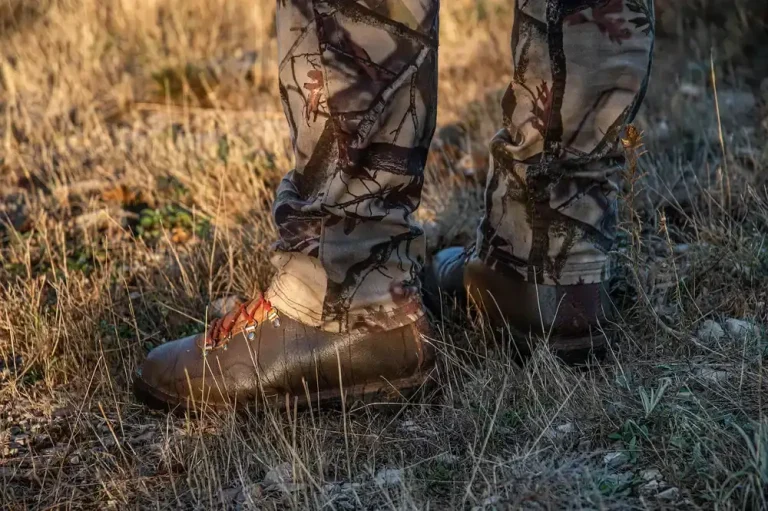
Realtree patterns generally suit mixed timber and open edges, while Mossy Oak excels in denser woodland cover. Choosing the wrong brand for your specific background can compromise concealment at close bow range, where deer detect movement and contrast faster than color.
The full camo pattern comparison ranks both brands across treestand, ground blind, open-country, and late-season scenarios. It also explains why stillness and face concealment matter more than the printed pattern itself during late season hunts. Matching your camo family to your actual hunting setup—rather than defaulting to a favorite logo—prevents costly visibility mistakes when a buck is inside twenty yards.
Matching Carbon Arrow Spine to Your Whitetail Setup
Correct spine selection is the single most important factor in building a whitetail arrow. A 250–300 spine shaft paired with a total arrow weight of 400–550 grains serves as a reliable baseline for many draw weights, but mismatching spine to your broadhead causes planing and lost penetration on broadside shots.
The guide to carbon arrows for whitetail breaks down specific shaft recommendations by draw weight, shooting distance, and whether you run fixed-blade or mechanical broadheads. It includes a setup matrix that removes guesswork, comparing options like the Gold Tip Hunter XT for budget builds and the Easton 6.5 Bowhunter for fixed-blade users so you can buy the right shaft the first time.
Bow Sling vs Wrist Sling for Hunting Applications
Wrist slings primarily aid shot execution by preventing the bow from falling after release, while bow slings facilitate hands-free carrying during long hikes. Selecting the incorrect type can lead to excessive noise, dropped equipment, or compromised form when an animal appears. Understanding this functional distinction ensures your gear supports your specific hunting style rather than hindering it.
The choice depends heavily on whether you prioritize shooting stability or transport convenience in the field. This detailed bow sling comparison breaks down noise levels, accuracy impacts, and suitability for tree stands versus spot-and-stalk scenarios to help you match the right sling to your hunt.
Soft bow case vs hard case by transport method
A soft bow case protects your setup during truck rides, ATV hauls, walk-ins, and camp storage, while a hard case is necessary only for airline travel or situations where crushing impacts are likely. Choosing the wrong style bends sights, shifts cams, or breaks arrow rests before you reach your stand.
Matching the right protection to each transport scenario prevents costly damage and keeps your compound tuned for opening day. The guide on bow case selection maps every hunting transport method to the correct case type and details exactly what to pack or remove before closing the lid.
Rangefinder comparisons that actually affect arrow placement
Close-range precision, minimum range, and arrow-flight match
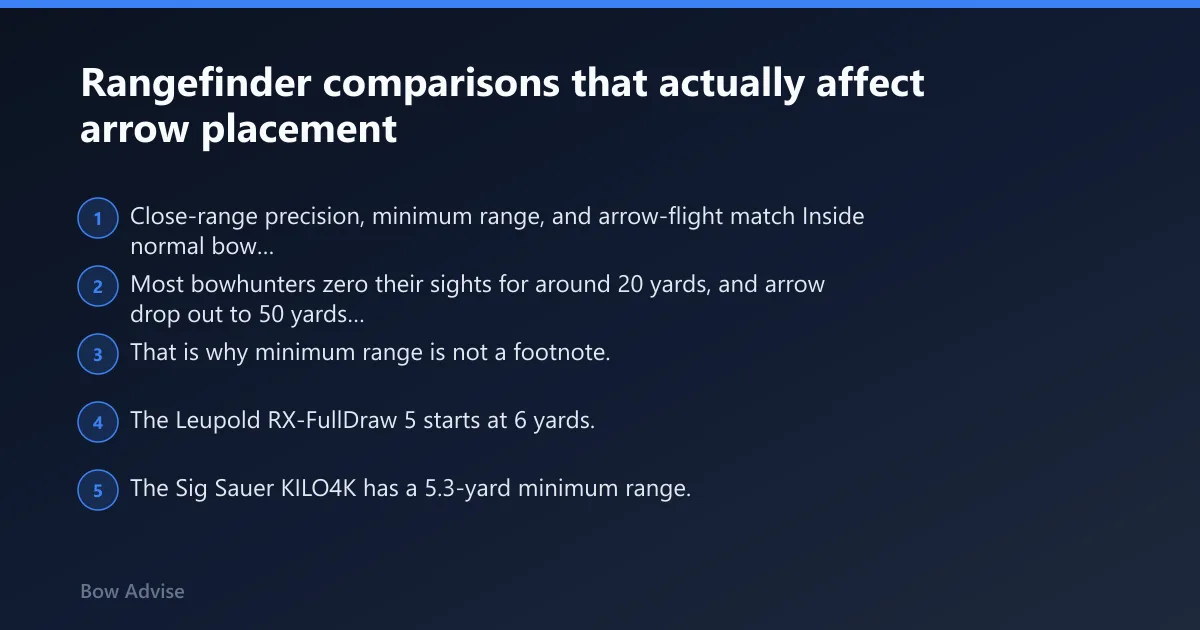
Inside normal bow distances, I care about minimum range and how the reading aligns with arrow flight more than advertised long-distance reach. Most bowhunters zero their sights for around 20 yards, and arrow drop out to 50 yards can be about 50 inches, so small ranging mistakes show up quickly.
That is why minimum range is not a footnote. The Leupold RX-FullDraw 5 starts at 6 yards. The Sig Sauer KILO4K has a 5.3-yard minimum range. Both fit real stand and blind use. If I am testing a unit, I want to know whether it reads reliably on a deer trail at close distance, not only whether it pings a far treeline.
Angle compensation, archery mode, and line of sight versus compensated distance
Steep-angle shots change the number you should hold for. From a treestand, line-of-sight distance can tempt you into using the wrong pin, especially on a deer close to the base of the tree.
Archery mode matters here because the device should give bow-relevant output, not rifle-first thinking. The Sig Sauer KILO4K has archery mode. The Leupold RX-FullDraw 5 goes further with customizable arrow ballistics and Flightpath technology, which can help match yardage output to the way your arrow actually travels.
For low-velocity arrow compatibility, I prefer units or software workflows that accept customizable arrow inputs rather than generic speed assumptions. That matters more for heavy hunting arrows, traditional setups, and compact compounds turned down for draw weight or draw length.
First, last, and best target modes in brush and mixed cover
These modes are not marketing fluff when you hunt edges, creek bottoms, or cedar pockets. First target mode can help on an open bean field. Last target mode can help you punch through foreground brush. Best target mode can be useful in mixed cover when you need the unit to sort clutter fast.
The mistake is assuming one mode wins everywhere. I test target modes from the stand I actually hunt, in mixed shadows and twilight, because display behavior changes when the background is dark and the target is moving through brush gaps.
Image-stabilized units and selectable reticles in low light and steep country
Image-stabilized rangefinders cost more and weigh more, but a settled view can cut acquisition time when your heart rate is up or you are ranging one-handed from a bad stance. In mountain country or cliff hunting, that steadier image often matters more than extra maximum range.
Selectable reticle options matter too. I like comparisons that mention a simple circle-plus reticle versus a finer milling grid because field visibility changes with timber shade, snow glare, and twilight backgrounds. A precise reticle can look great on paper and vanish in mixed light. A bolder reticle can be easier to pick up fast, even if it covers a bit more target.
How do I choose gear for tree stand vs spot-and-stalk hunting?
Choose treestand gear around steep-angle ranging, seated access, low-light visibility, and silence at full draw. Choose spot-and-stalk gear around carry comfort, one-hand use, scan speed, and weight that does not punish miles. The right answer changes because the shot problems are different long before the arrow leaves the string.
Treestand setups: steep angles, seated access, mixed shadows, and twilight reads
Treestands expose bad gear fast. You are seated, twisted, layered up, and often ranging in the last light that legal shooting allows. That means compensated distance, bright but not blown-out display visibility, and controls you can work with one hand.
Chest straps are a common failure point. I have watched hunters reach anchor and realize the chest rig buckle is exactly where their string hand wants to land. In stand setups, low-profile carry systems and quiet jacket faces matter more than extra pockets.
Spot-and-stalk setups: weight, carry comfort, scan speed, and one-hand use
Spot-and-stalk hunts punish bulk. I still want archery mode and decent low-light readability, but I value fast scan and return speed, one-hand ergonomics, and a carry setup that does not swing while I belly into range.
Tripod mountable can matter here if you glass and range from a fixed point. The Sig Sauer KILO4K is tripod mountable, which gives it extra utility for western hunts where steadier optics save time before the stalk starts.
Cliff and mountain shots: when compensated distance and steadier optics matter more
In steep country, angle-adjusted ranging stops being a nice extra. It becomes part of the shooting solution. A steadier viewing system, whether from image stabilization or tripod mounting, can also prevent false reads off brush, rock edges, or moving body parts.
Choosing Between a Tree Stand Harness and a Climbing Stand
Understanding the safety system behind a full‑body tree stand harness versus the simplicity of a climbing stand is crucial for archers who need both stability and stealth. The article breaks down the components—safety gear, tether, lineman’s belt, and platform contact points—explaining how each affects shot accuracy, noise level, and fall risk, especially when using a tree stand harness. It also offers a decision matrix that matches tree shape, hunting style, and height preferences to the right setup, plus guidance on TMA certification and weight limits. By following this comparison, hunters can select a rig that maximizes safety without sacrificing shooting room.
Choosing the Right Stabilizer: Hunting vs. Target
Understanding whether a hunting stabilizer or a target stabilizer best fits your setup can prevent wasted weight, poor balance, and missed shots. The article breaks down the functional differences, recommends short‑to‑moderate lengths for most hunters, and explains when a longer or hybrid rig makes sense—especially for heavy bows, slow shot cycles, or blind hunting. It also covers side and rear bar considerations, optimal weight addition, and a decision‑matrix tool to match stabilizer length to tree‑stand or ground‑level scenarios. This guidance helps archers select a compact, balanced rig that improves accuracy without unnecessary bulk. See the detailed comparison in the hunting vs target stabilizer guide.
How to Pick the Right Bow Stabilizer for Tree‑Stand Hunting
Tree‑stand hunting demands a stabilizer that adds steadiness without snagging on rails or creating noise. The guide walks through the key factors—length, weight range, and removable inserts—that determine how well a stabilizer fits tight stands while keeping the bow quiet.
It then ranks the top models, highlighting the Bee Stinger Sport Hunter Xtreme as the most versatile all‑around option, the Trophy Ridge Static for budget flexibility, and the NAP Black Apache for compact tuning. Reviewing these choices helps you avoid over‑long or under‑weighted units that can ruin a shot, making the best bow stabilizer guide essential for any archer planning tree‑stand hunts.
Which bowhunting accessories improve accuracy the most?
The accessories that improve accuracy most are the ones that clean up release execution, stabilize sight picture, and keep your anchor unchanged under field clothing. For most compound hunters that means release, rest, sight, and rangefinder. For many recurve hunters it starts with arrows, tab or glove consistency, and clothing clearance.
Release aids and tabs: clean execution versus glove compatibility
An index release that feels crisp barehanded can feel vague inside a glove. A thumb button can be easier with light gloves and worse with bulky ones. Recurve tabs and gloves create the same problem in a different form: change finger thickness and you change string feel.
When I compare releases, I ask one question first: can I execute it cleanly in the exact gloves I hunt in? If the answer is no, I do not care how good the trigger feels in the shop.
Gloves, sleeves, and outerwear: what changes anchor and string clearance
Outerwear can move your anchor more than a new sight ever will. Puffy forearms, stiff cuffs, or a high collar can all change head position and string clearance. Recurve hunters usually notice this first because finger release and string path are less forgiving of bulky layers.
Packs, bino harnesses, and chest straps: what blocks the draw or slows the shot
I want chest gear that sits low enough to avoid the string and flat enough to avoid pushing my bow arm out of line. Speed matters, but so does silence. A zipper pull tapping a rangefinder body is enough to make me strip hardware off before season.
Arrow ballistics software and cut charts: when data beats guesswork
Arrow ballistics software is worth it when your hunting setup falls outside generic assumptions. Customizable arrow inputs help heavy-arrow compounds, low-velocity setups, and many traditional bows. I also like workflows that reduce cut-chart guesswork and make sight tapes more believable in the field.
The Leupold RX-FullDraw 5 includes customizable arrow ballistics and uses Flightpath technology. If you already use software such as Archer’s Advantage, that kind of comparison matters because it can reduce duplicate work and tighten the match between your real arrow arc and your ranging solution.
Choosing Your First Bow Release to Prevent Bad Habits
An adjustable wrist-strap index release with a single trigger is the most stable and affordable option for beginners. Starting with the wrong release often causes new archers to punch the trigger or torque the string, building bad habits that delay accuracy for months.
This guide breaks down wrist-strap caliper, thumb, and back-tension releases by learning style, fit, and adjustability. It includes a decision matrix to match your preferred shooting method and highlights common beginner mistakes to avoid. Selecting the right beginner bow release ensures your anchor point stays consistent from day one, giving you a reliable foundation before you invest in advanced shot-training tools.
The shot-sequence comparison table and buy-first score
How I rate the categories
I score each category by five field criteria: draw noise, aiming stability, weather protection, pack access, and shot execution. Then, a buy-first priority from 1 to 5 is assigned based on how often that category fixes misses or failed shots during gear testing and typical hunting conditions.
| Gear category | Draw noise impact | Aiming stability impact | Weather protection impact | Pack access impact | Shot execution impact | Buy-first priority score |
|---|---|---|---|---|---|---|
| Arrows | Low | Medium | Low | Low | High | 5 |
| Sight | Low | High | Low | Low | High | 5 |
| Rangefinder | Low | Medium | Low | High | High | 5 |
| Release aid or tab | Low | Medium | Low | Low | High | 4 |
| Arrow rest | Medium | Medium | Low | Low | High | 4 |
| Clothing and gloves | High | Medium | High | Low | High | 4 |
| Pack or bino harness | Medium | Low | Medium | High | Medium | 3 |
| Broadheads | Low | Medium | Low | Low | High | 3 |
| Bow-mounted or handheld light | Low | Low | Medium | Medium | Low | 2 |
Buy first: the categories with the biggest effect on clean arrow delivery
- Arrows: tune spine, weight, and broadhead match before chasing accessories.
- Sight: clear pins or a trustworthy tape fix more misses than cosmetic upgrades.
- Rangefinder: get close-range and steep-angle yardage right.
- Release aid or tab: fix execution once arrows, sight, and range are sorted.
- Rest: solve launch problems before buying comfort items.
Buy later: useful upgrades after the basics are solved
After the basics, I look at clothing systems, packs, and optics refinement. Image stabilization, reticle selection, and software integration are real advantages, but only after the arrow, bow tune, and ranging process are reliable. That is why I resist shiny upgrades that do not fix a known failure point.
What features should archers look for in hunting comparisons?
Archers should look for features that survive field conditions, not just store-counter demos: readable reticles in mixed light, fast scan and return speed, one-hand controls, close minimum range, angle-adjusted output, and ballistics inputs that match a 20-yard zero and slower arrow flight rather than rifle assumptions.
Field visibility: reticle choice, display brightness, and mixed-light use
Selectable reticles deserve more attention in hunting gear comparisons. A milling grid can be useful for deliberate ranging from a stable position. A circle-plus reticle can be faster in timber or twilight. Neither is automatically better. I choose the one I can pick up fastest against brush, bark, and patchy snow.
Speed and ergonomics: scan and return speed, button layout, and one-hand operation
Fast return speed matters because bow shots happen in windows, not in ideal testing lanes. Button layout also matters. If I must shift grip to activate a second function, I may lose the animal behind cover or move enough to get caught.
Arrow-flight match: 20-yard zero, low-velocity compatibility, and custom ballistics inputs
If a device or software tool cannot model your arrow well enough, the rest of the feature sheet does not help much. I want compatibility with slower setups, sensible custom inputs, and a clear path to reduce cut-chart errors before season.
Choose archery-specific gear if… / Choose general hunting gear if…
Choose archery-specific gear if…
- Your shots are commonly close, steep, and time-limited from a treestand.
- Your current jacket, gloves, or chest rig changes anchor or touches the string.
- You need archery mode, compensated distance, and ballistics inputs that match arrow flight.
- You hunt mixed cover where target modes and low-light reticle visibility decide whether you get a usable read.
Choose general hunting gear if…
- Your current clothing draws silently and clears the bow every time.
- Your pack and chest system let you range and nock with minimal movement.
- Your rangefinder gives reliable close-range numbers and useful compensated distance for bow shots.
- You have already tested the full kit from seated, kneeling, and twisted positions on your own range.
Best upgrade paths by hunter type
For beginners, I would fix arrows, sight setup, and rangefinder first. For budget hunters, I would keep general hunting clothing until it proves noisy or bulky, then replace only the problem layer. For seasoned bowhunters, I would compare software integration, reticle choice, and access speed because those are often the last weak links.
One note for whitetail hunters: the Bushnell Broadhead is positioned as best for whitetail hunters. That kind of label only matters if the unit also fits your stand height, lighting, and close-range needs. I never buy off the deer picture on the box.
If you ended up here looking for the Modern Marvels episode called Hunting Gear, that is a different use of the phrase. This article is about gear comparisons for archers in the field, not the TV episode entity.
Cold Weather Gear Systems for Late Season Archery
Maintaining draw control and silence in freezing temperatures requires a specialized layering system rather than generic winter wear. Effective late-season setups prioritize thin shooting gloves, silent base layers, and strategic insulation to prevent finger numbness and noisy fabric movement during the shot sequence.
This guide details specific gear combinations that balance warmth with mechanical precision, covering heated vests, jacket shells, and hand warmers tailored for stationary stands and cold-move hunts. Selecting the right cold weather archery gear ensures you retain full range of motion and avoid cutting hunts short due to inadequate thermal protection or compromised release mechanics.
Essential First Purchases for Budget‑Conscious Archers
For archers on a tight budget, the guide budget hunting gear outlines the three items that instantly boost safety, arrow consistency, and kill probability: a fixed‑blade broadhead, a reliable release aid, and a solid rest. It ranks these buys by price, explains the performance impact of each, and shows what can wait until you have extra cash. By following the priority table, newcomers avoid splurging on flashy camo or accessories that won’t improve grouping, ensuring every dollar spent directly enhances hunting success.
Frequently asked questions
Which hunting gear is actually worth upgrading first for archers?
Upgrade arrows, sight, and rangefinder first, then release or rest. Those items change impact point and execution most often. Clothing and packs matter too, but I move them up the list only when they create a known problem such as sleeve contact, chest-strap interference, or slow access before the shot.
What gear should beginners compare before buying hunting equipment?
Beginners should compare arrows, sight clarity, rangefinder minimum range and archery mode, release feel with gloves, and outerwear noise at full draw. I also want them to test pack and chest-rig fit while seated and twisted, because bad access and blocked anchor show up early in real hunts.
Is specialized gear for bow hunting worth the cost?
Specialized bowhunting gear is worth the cost when it fixes a close-range problem general gear cannot: steep-angle yardage, mixed-light visibility, silent draw, string clearance, or release consistency in gloves. If your general hunting kit already does those jobs cleanly, keep using it and spend elsewhere first.