Bow hunting backpack vs pack system: which works better?
I tend to choose a hunting backpack for day hunts and tree stands, and a backcountry pack system for spot-and-stalk hunts or when the load gets heavier; the cutoff usually comes down to load and how much bow-carry support I want. Pick the wrong one, and you burn energy, fight noisy bow access, and miss shot windows. I’ll compare both setups by hunt style, weight, and how they carry a bow so you can pick the one that fits your hunt.
Bow hunting backpack vs pack system: the real trade-off
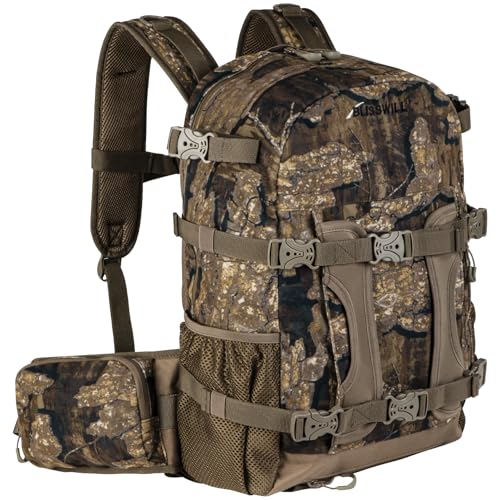


A hunting backpack is usually faster, simpler, and easier to live with on short hunts. A pack system is built for heavier loads, better frame transfer, and meat-hauling after the shot. I treat them as different tools, not competing versions of the same thing.
| Decision factor | Bow hunting backpack | pack system: which works better | Winner |
|---|---|---|---|
| Comfort under load | Good for light to moderate carry | Better when weight climbs and the frame can transfer load to the hips | pack system |
| Meat-haul ability | Limited | Built for external meat carry and heavier loads | pack system |
| Bow access speed | Usually faster | Often slower because of frame, bag, and attachment complexity | bow hunting backpack |
| Noise and snag risk | Lower when the layout is simple | Can be quiet, but more parts mean more chances to rattle or snag | bow hunting backpack |
| Modularity | Limited | Interchangeable bags and a load shelf give more setup options | pack system |
| Day-hunt efficiency | Better for quick, short hunts | Overbuilt for many day hunts | bow hunting backpack |
| Multiday efficiency | Can work, but runs out of space and carry support sooner | Built for longer trips | pack system |
| Cost-to-value | Usually better for average day hunters | Better only if you use the frame, shelf, and modular setup hard | bow hunting backpack |
Comfort under load
Once I get past light day gear, the frame matters more than pocket count. A pack system spreads weight better because the frame and hipbelt do the work instead of hanging everything on your shoulders.
Meat-haul ability
This is where the pack system pulls away. The load shelf sits between the frame and bag, so meat rides more securely and the frame can move that weight without collapsing the pack’s shape.
A regular hunting backpack can carry meat in a pinch, but it is not built around that job. If you expect an exit with blood weight on your back, the frame system earns its keep.
Bow access speed
The simpler bag usually wins when you need the bow off your back fast. Less hardware means fewer steps, and fewer steps matter when you are side-hilling, ducking brush, or stepping into a lane.
Pack systems can still work, but the extra structure can slow the grab. If your shot window is likely to open and close fast, I favor the cleaner setup.
Noise and snag risk
A quiet pack is not about marketing claims. It is about how many loose parts you have, how much hardware hangs off the outside, and whether the bow carrier catches on brush or blinds you to the sound of your own gear.
I have seen hunters lose opportunities because a zipper or buckle clicked at the wrong moment. That is a failure case people skip when they sell packs by feature list.
According to exomtngear.com — Exo says the K4 is built for backcountry and mountain hunting.
How each setup handles weight, fit, and carry comfort
Fit comes first. A bad torso fit, sloppy hipbelt, or weak shoulder support ruins both systems, but it hurts the pack system more because that frame only works when it sits correctly on your body.
Backcountry hunting pack fit: torso fit, hipbelt comfort, shoulder support
Backcountry hunting pack fit starts with torso length, then hipbelt shape, then shoulder load balance. If the belt floats or the shoulders take the load, the frame is just dead weight.
I see this with beginners at the club too: gear gets blamed when the real problem is fit. On a pack system, you need the belt snug and the frame aligned before you ever worry about bag size.
Carbon fiber frame, rigidity, and load transfer
K4 pack systems feature an ultralight and ultratough carbon fiber frame, and that matters because rigidity controls load transfer. A stiffer frame keeps the pack from folding when weight shifts, especially on side slopes and when you are stepping over blowdowns.
That kind of frame is not mandatory for every hunt. It helps when the carry gets ugly, the haul gets heavy, and the trail gets rough.
When a load shelf matters more than extra pockets
An integrated load shelf is a real advantage when you come out with meat or bulky gear. The shelf carries external meat between the frame and bag, which is more stable than stuffing odd-shaped weight into a soft pack body.
Extra pockets feel useful in the shop. In the field, a stable carry beats a deep pocket you cannot reach without making noise.
Can you carry a bow hands-free without slowing down?
Yes, but the carry method changes the whole system. A bow hunting backpack can work with a bow-carry attachment, and a pack system can do the same, but the attachment has to fit the pack, your body, and the way you move through brush.
Bow carrying attachment options: backpack mount, belt mount, tree mount, stabilizer mount compatibility
Some bow packing systems are designed to fit compound bows, allow hands-free carry, and mount in a few different places, like a backpack, tree, wall, hip, headrest, or side-by-side vehicle. That kind of flexibility matters because bow carry should match the hunt, not force one carry style everywhere.
For field use, I care most about backpack mount and belt mount compatibility. If the attachment shifts too much, the bow starts to swing, and swing becomes noise.
How bow access changes on steep climbs and brushy trails
On steep climbs, I want the bow secure enough that it does not pull me off balance. On brushy trails, I want it tight enough that limbs and cams do not snag on every branch I pass.
That is why hands-free carry is useful but not free. You gain both hands, but you have to pay attention to angle, height, and how quickly the bow can come off the mount.
Noise, snagging, and quick-draw access in the field
Noise is often the real test. A system may carry beautifully in the parking lot and still fail when a limb clips the riser or the attachment rattles against the frame.
If I expect a close shot, I prefer the setup that lets me draw with the fewest steps. Speed matters, and so does not announcing yourself before the arrow leaves the bow.
Which setup fits your hunt style best?
Match the pack to the hunt, not the other way around. The best system for a short climb can be the wrong system for a long stalk, and the best meat-hauling rig is often too much pack for a sit in a tree stand.
Day hunt and saddle hunt
For day hunts, I lean toward a hunting backpack. It is easier to organize, faster to open, and less likely to feel like overkill when I only need water, layers, food, and a small kit.
For saddle hunting, a compact setup usually wins again because you are climbing, adjusting, and moving gear often. If the pack hangs up on platform straps or gets in the way of your tether routine, it is working against you.
Spot-and-stalk and mountain hunts
Spot-and-stalk favors a pack system when the hike gets long or the exit may include meat. The frame, load shelf, and modular bags help when you need to move from light carry to heavy carry in the same day.
Exo says the K4 is built for backcountry and mountain hunting, and that is exactly the use case where a frame system starts to make more sense than a simple day pack.
Tree-stand hunting and short hikes
For tree stand hunting, the simple backpack usually wins. You want quiet access, enough capacity for layers and lunch, and a bow carry option that does not catch on stand steps or platform edges.
I do not want to pay for a heavy frame just to haul it three miles and set it under a tree all morning.
Multiday backcountry and meat-hauling trips
For multiday trips, the pack system is the better tool. Exo sells K4 2200, K4 3600, and K4 5000 pack systems, and that spread matters because volume should match the hunt instead of trying to make one bag fit everything.
When the trip is long and the odds of hauling meat are real, the extra structure stops being luxury and starts being practical.
Decision matrix: 8 field factors that decide the winner
This is the part most product pages skip. I score the systems by what I actually notice in the field: how they carry, how they sound, how fast I can get the bow in hand, and whether they justify the money I spent.
| Field factor | Bow hunting backpack | pack system: which works better | Winner |
|---|---|---|---|
| Comfort under load | Best for lighter carries | Best for heavier carries and rough terrain | pack system |
| Meat-haul ability | Limited | Strong because of frame, shelf, and load transfer | pack system |
| Bow access speed | Fast | Slower | bow hunting backpack |
| Noise level | Usually quieter | Can be quiet, but more hardware increases risk | bow hunting backpack |
| Modularity | Low to moderate | High because of interchangeable bag options | pack system |
| Day-hunt efficiency | High | Moderate | bow hunting backpack |
| Multiday efficiency | Moderate at best | High | pack system |
| Cost-to-value | Better for most day hunters | Better only when you use the system for heavy or extended hunts | bow hunting backpack |
My read on the matrix
The backpack wins when speed, silence, and simplicity matter more than hauling power. The pack system wins when the hunt is long enough, steep enough, or heavy enough that a frame and load shelf change how you hunt.
If you hunt mostly whitetails close to access and carry little, the backpack is the better value. If you hunt mountains or expect a pack-out, the system earns its price by doing real work.
What pack capacity and layout should you buy?
Capacity should follow hunt length and gear volume, not ego. A 2200-style setup is usually easier to keep organized for day use, while 3600 and 5000 class options make more sense when layers, food, optics, and emergency gear start stacking up.
2200 vs 3600 vs 5000 cubic inches
I think of the low-2,000 range as day-hunt territory, the mid-3,000 range as the middle ground, and around 5,000 as the home for longer trips or heavier gear loads. The wrong move is buying the biggest option just because it sounds ready for everything.
Exo sells K4 2200, K4 3600, and K4 5000 pack systems. That spread is useful because capacity should reflect how far you hike and how often you expect to haul meat.
Interchangeable bag setups for day hunts and longer trips
Interchangeable bags make more sense than they sound on paper. A day bag can stay compact for short sits, then expand when you need more room for layers or a longer stay.
That modular setup is one of the few real reasons to pay for a system instead of a plain backpack.
Organization pockets, access speed, and gear protection
Organization pockets help only when they do not slow you down. I want a pack that secures a rangefinder, release, headlamp, kill kit, and layers without turning every grab into a scavenger hunt.
What gear does a bowhunting pack need to secure and protect? Your bow-carry attachment, release aid, spare gloves, water, layers, broadheads, and anything hard enough to clack should all ride quiet and fixed.
Choose a hunting backpack if… / choose a pack system if…
Choose a hunting backpack if your hunts are mostly day-long, your load stays light, and you want faster bow access with less noise. Choose a pack system if you hike farther, carry more, or expect to haul meat, because the frame, load shelf, and modular bags matter once the load gets real.
Choose a hunting backpack if…
- You hunt day stands, short access trails, or quick after-work sits.
- You want lighter carry, simpler organization, and faster bow access.
- You value lower noise and fewer parts over heavy-load support.
- You do not expect repeated meat-hauling trips.
Choose a pack system if…
- You hunt spot-and-stalk or mountain ground with a real chance of packing meat out.
- You need a better frame, hipbelt support, and load transfer for heavier weight.
- You want interchangeable bags and a modular layout for different trips.
- You are willing to pay more only if the system will be used hard enough to justify it.
Frequently asked questions
Is a bow hunting backpack better than a pack system for spot-and-stalk hunts?
For most spot-and-stalk hunts, I lean toward a pack system once the hike gets long or the shot may turn into a pack-out. A hunting backpack can work if the load stays light, but the frame, load shelf, and carry support of a system usually handle terrain and meat better.
When does a pack system carry weight better than a regular hunting backpack?
A pack system carries weight better when the load gets heavy enough that shoulder carry starts to wear you down. If you are hauling meat, carrying extra water, or moving through uneven ground for hours, the frame and hipbelt transfer weight more efficiently than a simple backpack.
How do you carry a bow hands-free with a pack or pack system?
You use a bow carrying attachment that mounts to the pack, belt, tree, or another stable point. Bow Spider says its system can mount to a backpack, tree, wall, hip, headrest, or side by side, which shows why attachment choice matters as much as the bow carrier itself.
What pack features matter most for backcountry bowhunting?
Backcountry bowhunting starts with fit, then frame rigidity, then load transfer. I care most about torso fit, hipbelt comfort, shoulder support, and whether the frame stays stable when the load shifts. Exo’s K4 carbon fiber frame and integrated load shelf line up with those needs.
Can one pack work for both day hunts and multiday hunts?
Yes, but only if the pack has interchangeable bags or a layout that compresses well for day use and expands for longer trips. A 2200-sized setup may feel right for day hunts, while 3600 or 5000 makes more sense when you need more storage and better carry support.
Do pack systems add enough comfort to justify the extra cost?
They do when you use the frame for what it was built to do. If your hunts are short and light, the extra cost often goes unused. If you regularly carry heavy gear, hike far, or haul meat, the comfort and stability can justify paying more.
What gear does a bowhunting pack need to secure and protect?
It needs to secure the bow-carry attachment, release aid, broadheads, layers, water, and small tools without rattling. I also want the pack to protect hard items from noise and keep sharp gear from digging into the bag or snagging when I move fast through brush.