Best Gear for New Bowhunters (2026): research shows
The best beginner hunting gear for new bowhunters is a minimal first-season kit: bow, arrows, release or finger tab, broadheads, quiver, arm guard, binoculars, rangefinder, license, and simple safety essentials, with extras bought later. Buying too much too soon adds weight and drains budget, while missing basics can wreck shot quality and recovery. This guide breaks down what to buy now, what to postpone, and what to skip so your first bowhunting season stays practical and affordable.
Quick comparison
| Product | Badge | Best for | Price | ||
|---|---|---|---|---|---|
 | CVLIFE 62" Recurve Bow and Arrow Set for Adults andCVLIFE | Budget pick | 62 in · 30 lb · Wooden Takedown | $114.99 Price as of 9 Oct 2026 | View |
 | B3 ARCHERY Exact Hunter Archery Compound Bow HuntingB3 Archery | Also great | 4-Pin Steel Sight · 4 oz Lightweight | $135.59 Price as of 9 Oct 2026 | View |
 | Gravoptics 10×42 Laser Rangefinder Binoculars for Hunting,gravoptics | Upgrade pick | 10×42 · 2624 Yard Laser Rangefinder | $277.00 Price as of 9 Oct 2026 | View |
 | sanlida Dragon 10 100% Pure Carbon Hunting Arrows forsanlida | Pair with it | 32 in · 350 Spine · 24 Pack | $99.99 Price as of 9 Oct 2026 | View |
 | SAS Hunting Crossbow Light Weight Steel Body 4-Arrow QuickSAS | Also great | 4-Arrow · 8 oz Aluminum Quiver | $29.99 Price as of 9 Oct 2026 | View |
The top first buy is a properly fitted compound bow setup, because adjustable draw weight and draw length remove most guesswork for a new bowhunter. The smartest add-ons after that are a release aid, basic sight, and arrows matched to the bow, not a pile of accessories.
How we chose
This roundup weighs beginner fit, safety, field reliability, noise, and pack weight first. It also separates what a hunter needs on day one from what can wait until the first few hunts.
We favored gear that cuts setup errors, especially for draw length, arrow spine, and elevated-hunt safety. Cost matters too, but low price only helps if the item still fits the hunt style.
Hunt style changes the order. A tree-stand hunter needs a safety tether sooner than a ground-blind hunter, while public-land hunters may value quiet carry and pack organization earlier than a heavy accessory load.
Compound bow: best for a forgiving first setup
A compound bow is the best first buy for most new bowhunters because adjustable draw weight and draw length let the setup fit the shooter before hunting begins. A beginner-friendly bow also gives room for cleaner form work, steadier aiming, and safer practice at lower weight.
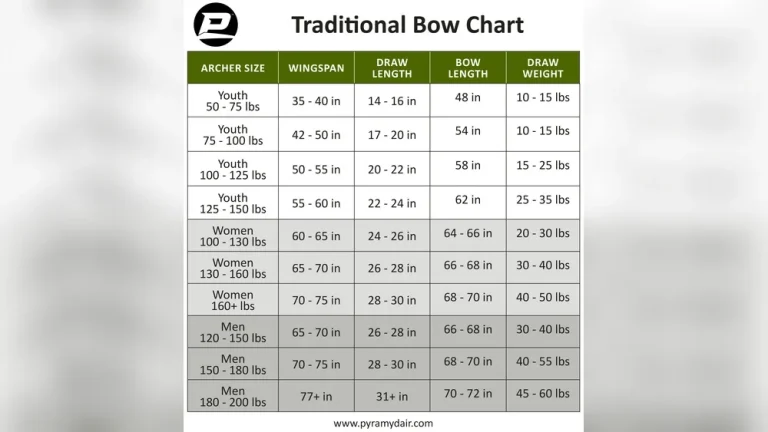
Look for a setup that can be fitted correctly, not just one with a low sticker price. The bow should allow a proper draw length, a comfortable anchor, and a manageable holding weight, because a poor fit can create torque, pin float, and fatigue fast.
The B3 Archery Exact Hunter is a simple starter-friendly option because it keeps the sight package light and includes a sight light for low-light use. The drawback is that a barebones package still depends on correct tuning, and a new hunter should not assume an out-of-box setup is ready for the woods.
Arrows and broadheads: best for clean first-season tuning
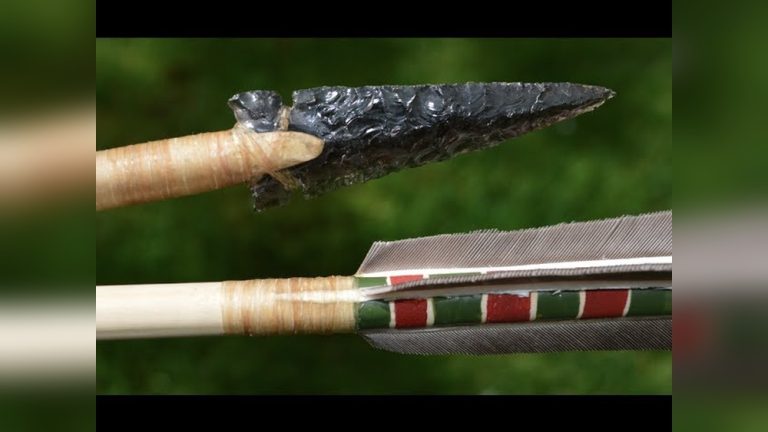
Arrows and broadheads matter because the wrong spine or head type can hurt accuracy and penetration. For beginners, carbon arrows are usually easier to standardize, while broadheads should stay simple and reliable until the bow is tuned and the shooter is consistent.
Carbon vs aluminum is a fit question. Carbon is common for hunting because it is light and widely available in many spine choices, while aluminum can offer straightness and consistency but is less common for modern hunting kits and can dent more easily.
Arrow spine must match draw weight and arrow length. A shaft that is too weak or too stiff can fly poorly, especially once hunting points replace field tips. Practice points are for tuning and repetition; hunting broadheads are for the actual season.
For broadheads, fixed-blade heads are usually the simpler beginner choice because they are straightforward and dependable. Mechanical heads can fly well, but they add moving parts and more variables, so they are often better after the bow is tuned and the archer is more settled.
The Sanlida Dragon 10 carbon arrows fit the beginner hunting brief well on paper because they offer 32-inch shafts, 350 spine, and a large pack count for practice and setup work. The honest drawback is that spine still must match the bow and draw length, so “ready to shoot” depends on the whole setup.
Tree stand safety gear: best for elevated hunts
A tree stand safety harness is strongly recommended for elevated hunting. It prevents a simple slip from becoming a fall, and it should be worn from the moment the hunter leaves the ground until the hunt is over.
The safety system must match the climbing method. Ladder stands, climbing stands, and hang-on setups all create different attachment needs, so the tether and connection points should fit the stand system before opening day.
Safety mistakes are often boring and fatal in the same way: a safety system left in the truck, a tether clipped wrong, or a cheap system that does not fit the stand. For any treestand hunt, this belongs in the must-buy pile before camo upgrades or extra gadgets.
Carry and clothing: best for quiet movement and weather control
Carry gear and clothing affect noise, comfort, and how quickly a hunter can stay organized. A quiet backpack, weather-fit boots, and camo that matches the woods or blind matter more than extra pouches stuffed with accessories that never get used.
A backpack should carry gear quietly and let the hunter reach water, a rangefinder, tags, and field tools without digging. If the bag is overpacked, it becomes bulky, noisy, and hard to move with in brush or on a ladder stand.
Camo clothing should match the environment and the season, but it also must not interfere with the string path or anchor point. Loose sleeves, noisy fabric, and layers that shift can all create shot problems.
Boots belong in the core kit because feet carry the whole hunt. Support, traction, and weather fit matter more than style, especially on wet leaves, frost, or a long walk to public ground.
What gear do I need first for bowhunting?
Start with the smallest legal and safe kit that can complete a hunt: fitted bow, arrows, release, sight, peep and D-loop, quiver, broadheads, boots, weather-fit clothing, a pack, and a safety system for any elevated setup. Add a rangefinder early if the hunt involves uneven ground or a tree stand.
That list stays small on purpose. Buying binoculars, scent sprays, extra pouches, and specialty holders before the bow is fitted and the arrow setup is correct is a common mistake.
Minimum gear by hunt style
- Ground blind: fitted compound bow, arrows, release, sight, quiver, boots, weather layers, pack, tags.
- Treestand: all of the above plus a safety harness and a rangefinder if distance calls are unclear.
- Public land: add quiet carry, lighter pack weight, and simple organization so movement stays clean.
- Spot-and-stalk: prioritize arrows, boots, rangefinder, and pack comfort before extra accessories.
What is the most important beginner bowhunting gear?
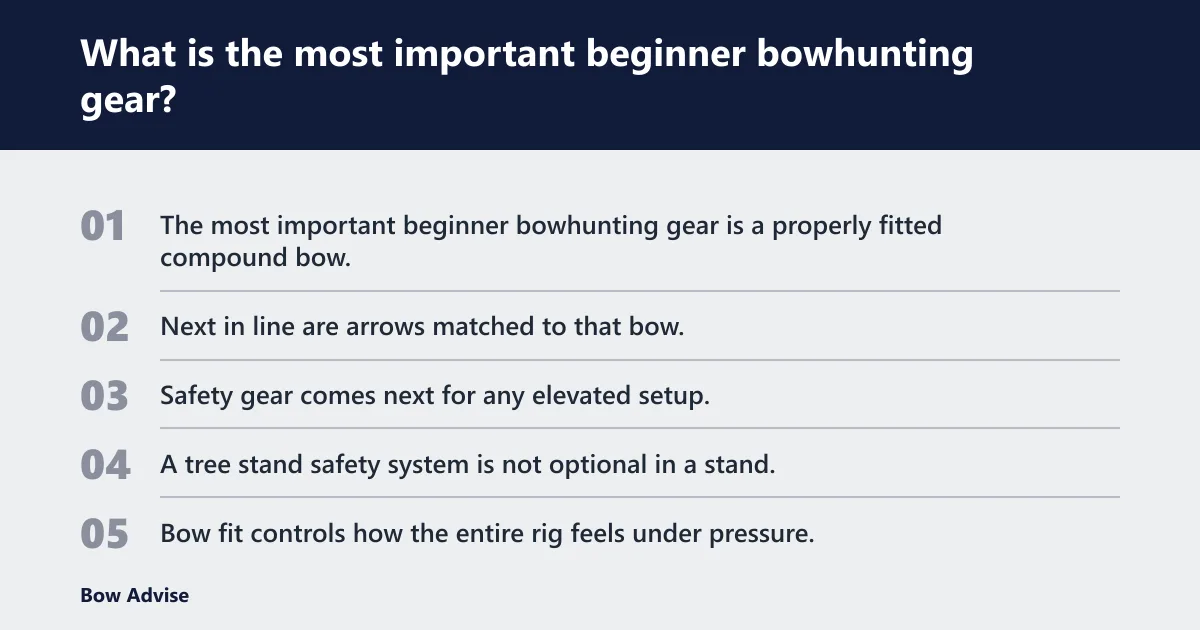
The most important beginner bowhunting gear is a properly fitted compound bow, because the wrong draw length or draw weight can cause bad form before the hunt even starts. Next in line are arrows matched to that bow, since a poor arrow setup can ruin accuracy and confidence fast.
Safety gear comes next for any elevated setup. A tree stand safety system is not optional in a stand, and a good release aid helps a new shooter build a repeatable shot without finger strain or string pinch.
Why fit beats accessories
Bow fit controls how the entire rig feels under pressure. If the draw is too long, anchor points drift. If the draw is too heavy, practice volume drops. If the bow is not tuned to the archer, every other accessory is working around the wrong base.
Do beginners need a rangefinder for bowhunting?
Beginners may not need a rangefinder right away, but many hunters find it useful for tree stands and spot-and-stalk hunting. It helps confirm distance, which reduces guessed holds and gives a new hunter a better read on effective range.
If the hunt is from a fixed blind at known distances, the rangefinder can wait. If the terrain is sloped, brushy, or likely to hide exact yardage, it moves up the shopping list quickly.
When a rangefinder is worth the money
Buy it early if shots may happen from a stand, across a draw, or in open ground where distance changes fast. Skip it for the first trip only if the setup is close-range, controlled, and the budget is tight.
Should I start with carbon or aluminum arrows for hunting?
Many beginners start with carbon arrows for hunting because carbon shafts are common, easy to source in hunting spines, and widely used in modern setups. Aluminum can work, but carbon is usually the simpler first-season choice for a new bowhunter building a loadout.
The real issue is spine match, not material alone. Arrow length, draw weight, and point weight all affect how a shaft reacts at release, and a mismatched arrow can fly poorly even if the material is excellent.
Arrow choice rules that prevent bad flights
Use field points for practice and tuning. Move to hunting broadheads only after the bow is shooting well enough that the arrow flight stays stable at the distances that matter. If a broadhead group opens up, the setup needs more work, not a more expensive arrow.
What broadheads are best for beginner bowhunters?
Fixed-blade broadheads are often a good starting point for beginner bowhunters because they are simple and reliable, with fewer moving parts to fail. Mechanical heads can work, but they are more tuning-sensitive and often make more sense once the bow is already dialed in.
The better beginner rule is to choose a head that tolerates field use and does not demand perfect conditions just to fly straight. Reliability beats hype, especially in the first season.
Fixed-blade vs mechanical for a first season
Fixed-blade broadheads usually need a cleaner tune, but they are predictable once matched well. Mechanical broadheads may fly closer to field points in some setups, yet they add deployment variables that a new hunter does not need early on.
Do I need a tree stand harness for bowhunting?
Yes. A tree stand harness is required for any elevated bowhunt because a fall from a stand can happen with no warning. It should be treated as core safety gear, not an accessory to buy later when the budget improves.
The safety system should also match the climbing method, whether that means a ladder stand, climber, or hang-on system. That fit matters because the wrong tether setup can be awkward, noisy, or unsafe.
Common stand-hunt failure case
A common first-timer mistake is climbing with the safety system unbuckled until after the seat is reached. That leaves the hunter exposed during the most dangerous part of the climb, when a boot slips on wet bark or a metal rung gets slick.
What clothing should a new bowhunter wear?
A new bowhunter should wear weather-appropriate layers, quiet fabric, and camo that matches the hunting area rather than a catalog photo. The clothing must not snag the string or block a clean anchor, and it should keep the hunter comfortable through the actual weather.
Rain gear matters when the forecast calls for it, and so do breathable layers when the day warms up. Clothing that is too heavy, too loud, or too loose can make a first hunt feel harder than it needs to be.
Boots, weather, and movement
Boots should fit the terrain and temperature. Wet ground, cold mornings, and long walks all demand support and traction more than style. If the boots pinch, rub, or slip, focus drops quickly and the hunt gets longer than it should.
What hunting accessories can I skip as a beginner?
Beginners can skip most premium extras at first, including binocular upgrades, scent-control gadgets, specialty bow cases, and bulky add-ons that do not improve the first few hunts. Focus on fit, safety, arrow tuning, and quiet carry before buying convenience items.
That does not mean these items have no value. It means they should come after the bow is fitted, the arrow setup is working, and the hunter knows whether the season will be ground blind, stand, or public-land focused.
Arrows and broadheads: best for clean first-season tuning
A release aid belongs early because it helps a beginner learn consistent shot execution without fighting finger pressure on the string. A wrist-strap model is usually the easiest place to start since it stays attached, is simple to activate, and reduces the chance of a rushed shot.
The drawback is that release comfort varies by hand size and trigger feel, so the first one should be simple, not fancy. A bad trigger or poor fit can create jerky release habits fast.
The sight is the next useful piece because basic fiber-optic pins are easier to see in low light, especially at dawn and dusk. A peep sight and D-loop pairing matters because the shot anchor becomes more repeatable, which helps a beginner keep the sight picture steady.
Tree stand safety gear: best for elevated hunts
A quiver should hold arrows quietly and keep them secure during movement in the field. That matters for stand hunters and spot-and-stalk hunters alike, because loose arrows make noise and can catch on brush or railings.
This SAS quiver is a practical example of the category because it keeps four arrows ready and uses a light aluminum body. The drawback is that it is not a universal fix for every setup, so mount compatibility should be checked before buying.
A quiet quiver is not about looks. It is about preventing arrow rattle, keeping broadheads covered, and giving the hunter a cleaner draw path without extra movement.
Carry and clothing: best for quiet movement and weather control
A backpack is more than storage. It carries water, tags, gloves, a release pouch, field tools, and an extra layer while keeping hands free and movement organized. The best pack for a beginner is quiet, simple, and sized to the actual hunt style.
Use a smaller, tighter pack for short walks and treestand sits. Use a more organized pack when public land or spot-and-stalk movement requires quick access and less noise.
Decision rule for a bow case, sling, or pack
Choose a bow case when the bow must travel in a vehicle or be protected during transport. Choose a sling only when the walk is short and the terrain is simple. Choose a backpack when the hunter needs quiet storage, weather layers, and field tools in one place.
Starter kit table: buy now, buy later, skip for now
| Must-buy now | Buy after your first 3 hunts | Skip for now |
|---|---|---|
| Compound bow with proper fit, arrows matched to spine, release aid, basic sight with peep and D-loop, quiver, boots, weather-fit clothing, backpack, license and local compliance items | Rangefinder, improved binocular setup, extra layers for cold weather, better pack organization, spare field accessories | Premium scent-control systems, extra arrow tubes, specialty bow holders, large accessory kits, duplicate gadgets, non-essential electronics |
| Estimated cost range: about $400 to $1,200 depending on bow package and basic gear | Estimated cost range: about $120 to $500 depending on optics, layers, and carry upgrades | Estimated cost range: $0 now |
| Main failure avoided: poor fit, bad arrow flight, missed shots, unsafe stand use, noisy movement | Main failure avoided: guessing distance, cold-weather discomfort, cluttered carry, slow field setup | Main failure avoided: overpacking and wasting money on gear not tied to the first season |
What belongs in the first loadout
Use the smallest kit that still covers shooting, safety, and recovery. If an item does not make the bow safer, the arrow flight better, or the hunter quieter, it probably belongs in the later tier.
Which one should you buy first?
Buy the compound bow first if the budget is tight, because fit drives everything else. If the first hunts are from a tree stand or blind, move the safety system and quiet backpack higher. If the plan is public land or spot-and-stalk, prioritize boots, pack organization, and a rangefinder sooner.
For a low-budget first season, start with a fitted bow, matched arrows, release, basic sight, quiver, and weather-ready boots. For a mid-budget tree-stand setup, add the safety system and rangefinder next. For public land, spend on quiet carry and clothing that fits the forecast before premium extras.
Budget-first decision rules
- Lowest budget: bow fit, arrows, release, sight, broadheads, boots.
- Tree-stand focus: add safety system before extra optics or specialty accessories.
- Ground blind: prioritize quiet pack, clothing, and simple carry over a heavy gadget load.
- Public land or spot-and-stalk: prioritize boots, pack comfort, and rangefinder before premium extras.
What to add after the first hunts
After the first few hunts, the gaps become obvious. Some hunters need a better light for pins at dusk, others need a rangefinder to remove guesswork, and others need a better backpack layout because their first bag is too loud or too small.
Frequently asked questions
What gear do I need first for bowhunting?
Start with a fitted compound bow, matched arrows, a release, basic sight setup, quiver, broadheads, boots, weather-fit clothing, and a pack. Add a safety system for any stand hunt and a rangefinder if the terrain makes distance calls hard. Keep the first kit small and legal.
What is the most important beginner bowhunting gear?
The most important gear is the bow fitted to the shooter. If draw length or draw weight is wrong, the rest of the kit cannot fix poor posture, bad anchor points, or tired form. After that, arrows and a release matter most for repeatable shooting.
Do beginners need a rangefinder for bowhunting?
Not always on day one. A rangefinder is optional early, but it becomes very useful for tree stands, uneven ground, and spot-and-stalk hunts. If the hunt happens at known distances from a blind, it can wait until the first few trips reveal a real need.
Should I start with carbon or aluminum arrows for hunting?
Carbon is usually the better first-season choice because it is common, easy to source in hunting spines, and well suited to modern compound setups. Aluminum can work too, but spine match and total arrow setup matter more than the shaft material alone.
What broadheads are best for beginner bowhunters?
Fixed-blade broadheads are the simpler beginner choice because they are straightforward and reliable. Mechanical heads can fly well, but they tend to be more tuning-sensitive. New bowhunters usually do better starting with a head that stays predictable and does not add extra moving parts.
Do I need a tree stand harness for bowhunting?
Yes. A tree stand safety system is non-negotiable for elevated hunting because a single slip can turn into a serious fall. The system should fit the stand setup and climbing method, and it should be worn before leaving the ground, not after reaching the seat.
What clothing should a new bowhunter wear?
Wear weather-appropriate layers, quiet fabric, and camo that suits the environment. Boots should match the ground and season. Clothing that is too noisy, too loose, or wrong for the weather can distract the hunter and interfere with the string or anchor.
What hunting accessories can I skip as a beginner?
Skip premium scent-control systems, extra arrow accessories, specialty holders, and non-essential electronics until the first hunts show what is actually missing. A beginner gets more value from fit, safety, arrow tuning, and quiet carry than from a shelf full of add-ons.