Best Carbon Arrows for Whitetail Hunting (2026): We Compared
For whitetail hunting, choose a carbon arrow that tunes cleanly and lands around 8 to 10 grains per pound of draw weight, with a total finished weight near 400 to 500 grains for most 60 to 70 pound bows. The wrong arrow cuts penetration, ruins broadhead flight, and can cost you a recoverable deer. This guide compares shaft stiffness, weight, and front-of-center setup so you can pick a carbon arrow that flies straight and drives broadheads well.
This guide is part of our Hunting gear comparisons for archers series.
Quick comparison
| Product | Badge | Best for | Price | ||
|---|---|---|---|---|---|
 | Easton Axis 5mm Carbon Arrows with 50-Grain Steel Half-OutEaston | Our pick | 340 spine · 5mm micro profile · 6-pack | $93.17 Price as of 17 Oct 2026 | View |
 | Gold Tip Hunter XT Carbon Hunting Arrows for Compound Bow,Gold Tip | Also great | 300 spine · 12 pack · Raptor vanes | $139.99 Price as of 17 Oct 2026 | View |
 | Carbon Express 50751 Maxima RED Carbon Arrow Shaft withCarbon Express | Upgrade pick | 400 spine · 12-count · Dynamic spine | $189.99 Price as of 17 Oct 2026 | View |
 | Black Eagle New Carnivore Carbon Arrow Shafts 250 SpineBlack Eagle | Also great | 250 spine · .003 tolerance · 1 dozen | $124.99 Price as of 17 Oct 2026 | View |
Carbon arrows are lighter and faster than aluminum, but speed alone does not kill deer. The better choice is the shaft that matches your draw weight, arrow length, broadhead style, and tuning tolerance.
How we chose
These picks focus on hunting fit, not marketing speed. The main filters were spine availability, straightness tolerance, broadhead friendliness, and whether the shaft can be built into a practical whitetail setup.
We also weighed front-end durability, because a damaged insert or collar hurts consistency fast. Finished weight matters too, since a good whitetail arrow must penetrate well without becoming so heavy that trajectory turns sloppy at normal deer ranges.
Easton 6.5 Bowhunter: best for all-around whitetail setups
- Micro profile concentrates kinetic energy and reduces friction
- Includes 50-grain steel half-out inserts for strength
- Built with uniform Acu-Carbon construction and fibers
Easton’s Axis 5mm Carbon Arrows with 50-Grain Steel Half-Out Inserts fit the kind of whitetail setup that needs reliable broadhead flight, moderate finished weight, and a small diameter shaft. The 340 spine and 5mm micro profile make it a strong fit for many 55 to 70 pound hunting bows, especially when the arrow is cut to a sensible hunting length.
What stands out is the mix of micro-diameter efficiency and a stout front end. The included 50-grain steel half-out inserts help with front-end durability, which matters when an arrow hits shoulder bone, brush, or a hard target angle on a quartering deer.
The drawback is price, and a 340 spine is not the answer for every bow. A lighter draw weight or a long arrow can push this shaft out of range, so the setup still needs a real spine match.
Gold Tip Hunter XT: best for budget builds
- Offers a balance of performance, accuracy, and value
- Straightness tolerance of plus or minus .003 inches
- Weight tolerance of plus or minus 2 grains
Gold Tip Hunter XT is a practical value choice for hunters who want a widely used 300 spine shaft with a published straightness tolerance of plus or minus .003 inches. It is a sensible option for compound bows that land in the middle of the whitetail range and need a straightforward build with common components.
Its main strength is balance. The arrow is not built for flash; it is built to give a useful mix of performance, accuracy, and value. The published weight tolerance of plus or minus 2 grains also helps keep a dozen-arrow set closer together.
The drawback is simple: this is a standard all-around hunting shaft, not a fixed-blade specialist by itself. Broadhead tune still depends on the bow, insert choice, vane setup, and how cleanly the shaft matches the draw weight and arrow length.
Black Eagle Rampage: best for fixed-blade tuning
- High spine rating suitable for heavy-duty setups
- Packaged in a convenient dozen quantity
- Built with strict straightness tolerances
Black Eagle New Carnivore Carbon Arrow Shafts in 250 spine are aimed at heavy-duty setups that need a stronger shaft and tight straightness control. The published .003 inch tolerance and high spine rating make it a serious candidate for hunters building around heavier bows, heavier inserts, or a fixed-blade head that demands stable flight.
This arrow makes sense when the bow setup is already on the stout side. A 250 spine gives room for stronger setups, but that strength can become a liability on lighter bows or shorter draw weights if the shaft ends up too stiff for clean bare-shaft and broadhead tune.
The drawback is simple: a 250 spine is not forgiving for everyone. It is a poor fit if the bow does not need that much stiffness, so this is a setup-first arrow, not a universal pick.
Carbon Express Maxima RED: best for premium broadhead control
- Features Launchpad Precision Nocks for a controlled release
- Patented carbon material manages dynamic spine for broadheads
- Laser checked for straightness to 1/10,000 of an inch
Carbon Express Maxima RED is the premium-leaning choice here for hunters who want dynamic spine control and a 400 spine option that can be built into a refined whitetail setup. The published laser-checked straightness to 1/10,000 of an inch is far tighter than the standard hunting class, and the Launchpad Precision Nocks are part of the release-control story.
This shaft is aimed at broadhead performance first. That matters because fixed blades expose tuning flaws fast, especially at longer hunting distances or on quartering shots where a deer may force a less-than-perfect angle.
The drawback is cost. This is the most expensive pick in the group, so it makes the most sense when the bow is already tuned carefully and the shooter wants a higher-end shaft rather than a value build.
What is the best arrow for deer hunting?

The best arrow for deer hunting is the one that matches your bow, tunes cleanly with your broadhead, and carries enough finished weight for penetration. For most compound whitetail setups, that usually means a carbon shaft cut correctly, matched to the right spine, and built to land near 400 to 500 grains finished weight.
That answer changes with draw weight and arrow length. A 29-inch arrow from a 70-pound bow is a different animal from a 27-inch arrow on a 55-pound bow, even if both are used for whitetail deer.
Carbon shaft basics that matter
Carbon arrow shafts are popular because they are light, durable, and fast compared with aluminum. The straightness tolerance printed on the shaft or package is a quality indicator, and tighter tolerances generally cost more. Premium hunting shafts commonly sit in the 0.001 to 0.002 inch range, while standard carbon arrows are typically 0.005 to 0.006 inch.
That does not mean every tighter shaft shoots better in every bow. It means the shaft was made to a tighter consistency target, which can help with repeatable point of impact and better broadhead behavior when the rest of the setup is correct.
What are the best carbon arrows for whitetail hunting?
The best carbon arrows for whitetail hunting are the ones that balance spine, total mass, and broadhead control for the specific bow. A shaft such as the Easton Axis 5mm, Gold Tip Hunter XT, Black Eagle Carnivore, or Carbon Express Maxima RED can all work well, but only when the setup matches the shooter’s draw weight and arrow length.
For whitetail, the better question is not which brand is universally best. It is which shaft gives the cleanest tune with the safest finished weight and the broadhead style you actually plan to hunt with.
Quick picks
- Best overall: Easton Axis 5mm Carbon Arrows with 50-Grain Steel Half-Out Inserts
- Best budget pick: Gold Tip Hunter XT Carbon Hunting Arrows
- Best for heavy setups: Black Eagle New Carnivore Carbon Arrow Shafts
- Best premium tune option: Carbon Express Maxima RED Carbon Arrow Shaft
How do I choose spine for whitetail hunting arrows?
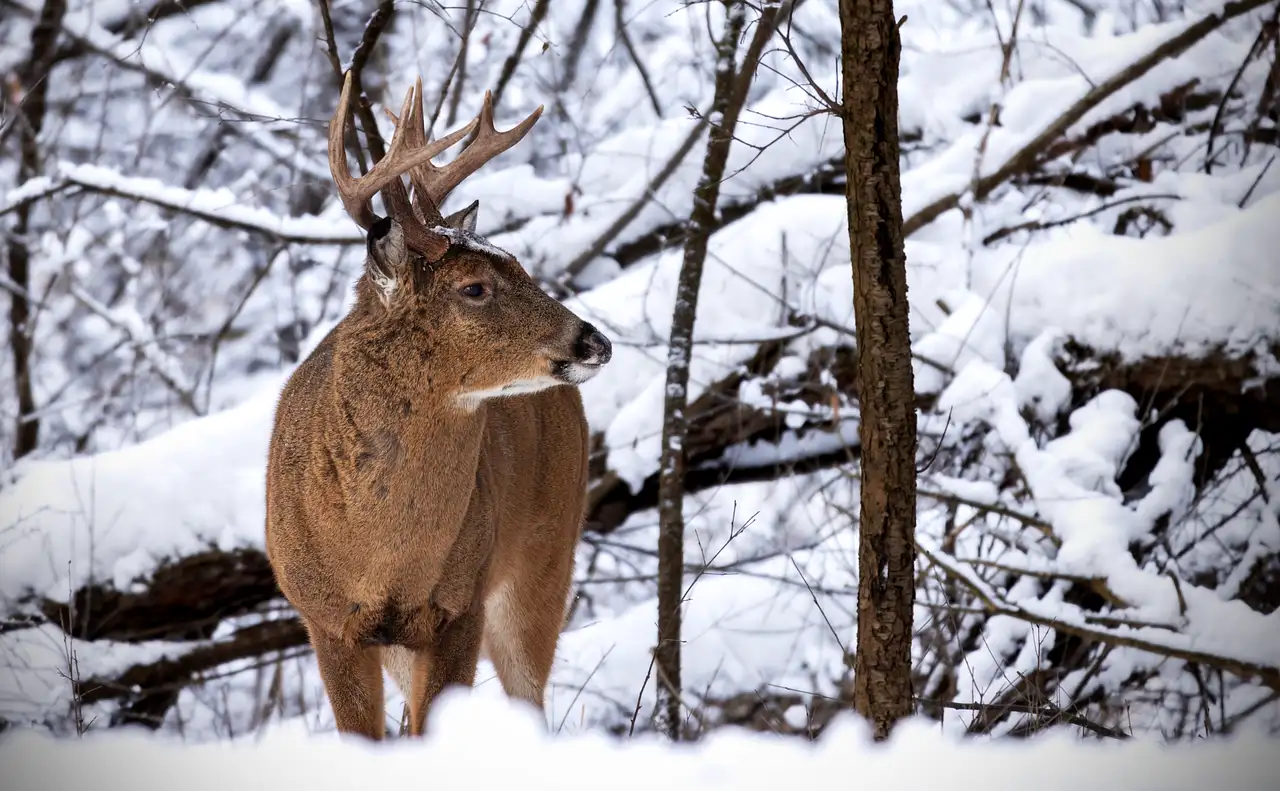
Choose spine by matching the shaft stiffness to your actual draw weight, arrow length, point weight, and whether you are shooting fixed blades. A 250 or 300 spine suits stronger setups, 340 and 350 spines fit many medium whitetail bows, 400 spine covers a broad middle band, and 500 spine is for lighter setups that need a softer shaft.
Arrow length matters before final selection. If the shaft is too long, it weakens dynamic spine. If it is cut shorter, it stiffens the arrow. That is why spine charts only work after the real arrow length is known or cut correctly.
Spine ranges for common draw weights
- 250 spine: best for heavy setups, often on high poundage bows or very point-heavy builds
- 300 spine: a common choice for medium to heavier compound setups
- 340 spine: useful for many whitetail bows in the middle range
- 350 spine: close to 340, often used when the bow and point weight need a touch more stiffness
- 400 spine: one of the most useful all-around hunting spines
- 500 spine: better for lighter draw weights or softer tuning needs
A common first-timer mistake is choosing a carbon arrow based only on broadhead marketing instead of matching the spine to the bow and draw weight. A 400 spine sounds “weaker” than a 340 spine, but the real answer depends on draw length, insert weight, and point weight. A 70-pound bow with a heavy broadhead can need a stiffer shaft than a 60-pound bow with a light point.
Whitetail arrow setup matrix
| Draw weight and hunting style | Recommended spine range | Target finished weight | Approximate FOC band | Broadhead-tuning risk note |
|---|---|---|---|---|
| 50 to 55 lb, treestand, short shots | 500 to 400 | 375 to 425 grains | 10% to 12% | Fixed blades are sensitive if the shaft is too stiff. |
| 55 to 60 lb, mixed cover | 400 to 350 | 400 to 450 grains | 11% to 13% | Light vanes can struggle in wind if tune is sloppy. |
| 60 to 65 lb, general whitetail | 400 to 340 | 420 to 475 grains | 10% to 14% | Good broadhead tune is needed before hunting field use. |
| 65 to 70 lb, fixed-blade focus | 340 to 300 | 450 to 500 grains | 12% to 15% | Too much point weight can make paper tune lie. |
| 70 lb+, heavy arrow build | 300 to 250 | 475 to 550 grains | 13% to 16% | High FOC helps stability, but poor tune shows fast. |
| Light draw, low-poundage bow | 500 | 350 to 400 grains | 9% to 11% | Over-spined shafts lose broadhead forgiveness. |
| Brushy edge, quartering-shot concern | 400 to 340 | 425 to 475 grains | 11% to 14% | Durable front-end parts matter more than raw speed. |
Finished arrow weight and FOC targets
Finished hunting arrow weight is the total in grains after shaft, insert, nock, vane, wrap if used, and point or broadhead are all installed. That total matters because penetration usually improves as mass goes up, while speed and flatter trajectory usually improve as mass goes down.
For whitetail hunting, a 10% to 15% FOC range is a practical target, and this article recommends 10% to 15% for the setups above. FOC helps the arrow settle in flight and can improve broadhead stability, especially with fixed blades.
Broadhead-tuning risk by setup
Fixed-blade broadheads demand the most from arrow choice. They are less forgiving of bad spine, weak nock indexing, and poor vane setup than mechanical heads, so the arrow must be matched carefully before deer season starts.
Suppose a hunter runs a 60-pound bow with a long arrow, a heavy insert, and a 125-grain fixed blade. If the shaft is under-spined, the broadhead may plane left or right no matter how clean the paper tune looks at one distance. The fix is not a different rest setting alone; it often starts with the correct spine.
Are carbon arrows better than aluminum arrows for hunting?
Carbon arrows are usually better for modern whitetail hunting because they are lighter, faster, and more durable against bending than aluminum. They also come in many spine choices and straightness tolerances, which gives a hunter more control over setup.
Aluminum still has a place for some target or budget use, but carbon is the more common hunting choice today. The tradeoff is cost: tighter tolerances and better front-end components usually cost more.
Why carbon helps in real whitetail conditions
Whitetail hunting is not done in a lab. Brush, saplings, quartering angles, and deer that rarely stand square all make arrow choice matter. A carbon shaft with the right spine and enough front-end integrity is better suited to that than a weak or bent aluminum shaft.
The shaft still needs to fly cleanly at typical deer ranges, which often means 20 to 40 yards. At those distances, broadhead stability and repeatability matter more than chasing the fastest shaft on the shelf.
What straightness tolerance should hunting arrows have?
For hunting arrows, straightness tolerance should be viewed as a quality indicator, not a magic accuracy number. Premium arrows commonly fall in the 0.001 to 0.002 inch range, while standard carbon hunting arrows are typically 0.005 to 0.006 inch. Tighter tolerances generally cost more.
That said, a straight shaft with the wrong spine still shoots poorly. Straightness helps consistency, but spine and tune decide whether a broadhead flies cleanly from your bow.
Premium versus standard classes
Premium arrows usually cost more because they are sorted more tightly. Standard arrows can still hunt well, but a wider tolerance band means more variation from shaft to shaft, which can show up in broadhead impact and group consistency.
For whitetail hunting, premium is most useful when the bow is already tuned well and the hunter wants the smallest possible tuning variables. Standard arrows make more sense when the goal is solid performance at a lower price per shaft.
What FOC is best for whitetail hunting?
For whitetail hunting, a 10% to 15% FOC range is a practical target. That band gives enough forward weight to support broadhead stability and penetration without making the arrow overly nose-heavy for general hunting ranges.
Higher FOC can help a fixed-blade broadhead recover from small steering errors, but it also raises the importance of tune. Too much front weight on the wrong spine can create weak-flight problems that show up fast.
Broadhead compatibility, vanes, and nock hardware
Fixed-blade broadheads are the most demanding hunting heads, so insert and collar protection matter. A strong front end helps protect the shaft at impact and keeps the broadhead aligned after the shot.
Vanes matter too. A weather-resistant vane setup helps in damp grass, rain, and cold mornings, and it gives more steering authority to keep a fixed blade stable. Nocks should match the shaft and allow proper alignment; lighted nocks must be compatible with the shaft and the diameter of the nock system, or they become a bad fit instead of a visibility aid.
Which carbon arrows are best for broadhead tuning?
The best carbon arrows for broadhead tuning are shafts that match spine closely, hold consistent straightness, and can be built with enough front-end protection for fixed blades. In this group, Carbon Express Maxima RED and Black Eagle Carnivore stand out for setup-sensitive hunters, while Easton Axis and Gold Tip Hunter XT are more versatile all-around choices.
If the goal is fixed-blade confidence, the shaft must be part of the tuning plan from the start. Broadhead choice, insert weight, vane style, and nock orientation all matter, and the arrow should be selected with those pieces already in mind.
Worked setup example
Suppose a 68-pound compound bow is cut to a 29-inch arrow length, and the hunter wants a fixed-blade broadhead for whitetail. A 340 or 300 spine class is usually the place to start, with a finished arrow weight near 450 to 500 grains and FOC near 12% to 15%.
That is the kind of setup where Easton Axis 5mm or Carbon Express Maxima RED makes sense. The first priority is not the fastest speed number; it is a shaft that lets the broadhead tune cleanly at hunting distance and still carries enough mass for penetration.
Failure cases to avoid
If the spine is too stiff, the arrow can group poorly with fixed blades and fail to correct through tuning. If it is too weak, the shaft can flex too much and broadheads may plane off line.
If finished weight is too light, penetration can suffer on angled shots or through the front side of a deer. If it is too heavy for the bow’s tune, trajectory may become steep enough to complicate practical whitetail shooting at normal ranges.
Which one should you buy?
Pick the Gold Tip Hunter XT if the build needs value first and the bow sits in a common 300 spine hunting window. Pick the Easton Axis 5mm if the goal is a stronger front end and a compact micro-diameter shaft that suits many whitetail setups. Pick the Black Eagle Carnivore if the bow is heavy enough to justify a 250 spine shaft. Pick the Carbon Express Maxima RED if premium broadhead control matters more than price.
For budget builds, Gold Tip Hunter XT is the most balanced starter choice because it combines a familiar spine with published straightness and weight tolerances. For middleweight hunting setups, Easton Axis 5mm is the cleaner all-around pick because the 340 spine and micro-diameter format fit many whitetail bows well.
For fixed-blade broadheads, Carbon Express Maxima RED is the best match when the setup is tuned and the hunter wants a premium shaft with tighter straightness control. For high-FOC builds, Black Eagle Carnivore is the stronger play if the bow actually needs a 250 spine and the shooter wants room for a heavier front end.
Say your bow is a 60-pound compound with a 28.5-inch draw and a 100-grain broadhead. A 400 or 340 spine shaft with a finished weight around 425 to 475 grains is usually a safer starting point than chasing a lighter, faster shaft that looks good on paper but fights the broadhead at 30 yards.
Frequently asked questions
What is the best arrow for deer hunting: the best arrow?
The best arrow for deer hunting is a carbon shaft that matches draw weight, arrow length, and broadhead style, then finishes in the practical 400 to 500 grain range for many compound bows. Accuracy, penetration, and durability matter more than raw speed. A clean-tuning shaft always beats a fast shaft that will not group broadheads.
What are the best carbon arrows for whitetail hunting: for most whitetail hunters, Easton?
For most whitetail hunters, Easton Axis 5mm, Gold Tip Hunter XT, Black Eagle Carnivore, and Carbon Express Maxima RED are strong candidates.
How do I choose spine for whitetail hunting arrows: choose spine?
Choose spine from the full setup, not the bow weight alone. Draw weight, arrow length, point weight, insert weight, and broadhead type all affect dynamic spine.
What arrow weight is best for deer hunting
Heavier arrows usually penetrate better and handle broadheads well, while lighter arrows give flatter flight. The right balance depends on draw weight and shooting distance.
What straightness tolerance should hunting arrows have: hunting arrows
Hunting arrows with tighter straightness tolerances generally cost more and are usually sorted more carefully. Premium hunting shafts commonly fall in the 0.001 to 0.002 inch range, while standard carbon arrows are typically 0.005 to 0.006 inch. Straightness helps consistency, but it does not replace correct spine and a proper tune.
What FOC is best for whitetail hunting: a practical whitetail FOC target
A practical whitetail FOC target is 10% to 15%. That range gives enough forward balance for broadhead stability and good penetration without making the arrow overly nose-heavy. Fixed-blade broadheads usually benefit most from that band, but the bow still needs clean spine match and good vane control.