Bowfishing Reel Cost
Bowfishing reels usually cost $20 to $250: simple hand wraps and retrievers sit near $20 to $60, while higher-end spincast, bottle, or retriever setups reach $100 to $250. Paying for features you will not use can push setup cost higher without improving fish retrieval or durability. This guide breaks down reel prices by use case, total setup cost, and which features are worth extra money.
Typical cost range


A fair bowfishing reel budget starts around $20 for the simplest hand-wrapped options and reaches $250 for premium setups with better hardware, smoother retrieval, or added corrosion resistance. For most beginners, the useful middle is usually $40 to $120, because that range covers a retriever-style reel with enough line control for fish retrieval and routine practice.
What changes the price is not the label alone. The main cost drivers are spool capacity, retrieve mechanism, mounting hardware, line quality, and whether the reel uses parts built to tolerate water exposure and repeated shock loading.
Bowfishing reel types and price tradeoffs
Retriever-style reels are the common starting point because they are simple, mount to the bow, and retrieve both the arrow and fish with a direct mechanism. They usually cost less than more complex setups and are easier for a beginner to understand while learning line control.
Bottle reels often cost more than basic retrievers because the enclosed design stores line differently and can add convenience. Drum and spincast options can climb higher in price when they offer smoother retrieval, better line management, or stronger corrosion resistance. Those upgrades matter more for heavy use than for a casual first setup.
Picture a first-time bowfisher with a 30 lb bow and a shallow pond full of carp. A simple retriever-style reel with solid line is usually a better buy than a high-priced bottle reel, because the setup needs control and reliability more than extra housing or specialty parts.
Bowfishing reel cost breakdown table
| Setup tier | Typical reel price | Line add-on | Mount add-on | Replacement-part reserve | Worth paying for |
|---|---|---|---|---|---|
| Low | $20 to $60 | $10 to $25 | $10 to $25 | $10 to $20 | Beginner retriever-style control, simple mounting, basic line capacity |
| Mid | $60 to $120 | $15 to $35 | $15 to $40 | $15 to $30 | Better line handling, sturdier hardware, smoother retrieval for freshwater use |
| Premium | $120 to $250 | $20 to $45 | $20 to $60 | $25 to $50 | Corrosion-resistant parts, frequent-use durability, saltwater-friendly hardware |
For beginner, freshwater, and saltwater setups, the money is best spent on reliable retrieval and solid mounting. Extra styling, oversized housings, and brand prestige do little if the reel cannot keep line organized or survive repeated wet use.
What should a bowfishing reel include?
A bowfishing reel should include a retriever-style retrieval method, mounting hardware that fits the bow, and enough line capacity for the shot distance and target water. It also needs to work with the arrow and the bow setup, because a mismatch can cause poor control even if the reel itself seems sturdy.
Line capacity and retrieval method
The reel must be able to retrieve both the arrow and fish, not just store line. That means line capacity and retrieve speed matter more than cosmetic design. A compact reel with poor capacity can be a false economy if it forces frequent re-spooling or loses control during a fight.
Bowfishing arrows are usually fiberglass and use barbed tips for retention. The line must match that arrow system, because a weak or badly matched line can slip, abrade, or fail during retrieval.
Mounting hardware and arrow compatibility
The reel is mounted to the bow, so the mount should fit securely and leave the arrow path clear. An arrow rest is an essential accessory because it supports fast shots and helps the arrow clear cleanly. Poor clearance can slow follow-up shots and create avoidable wear on the setup.
Say a bow setup uses a 40 lb draw weight and a fiberglass arrow with a barbed tip. If the reel mount crowds the rest, the arrow may ride awkwardly and the line can snag. The fix is not a bigger reel; it is the right mount and a cleaner layout.
Parts that matter more than brand names
Buy for part quality before logo size. Smooth line payout, durable screws, corrosion resistance, and a mount that stays tight matter more than a flashy shell. For casual use, a solid midrange reel often beats a cheap premium-looking one that hides weak fasteners or poor line handling.
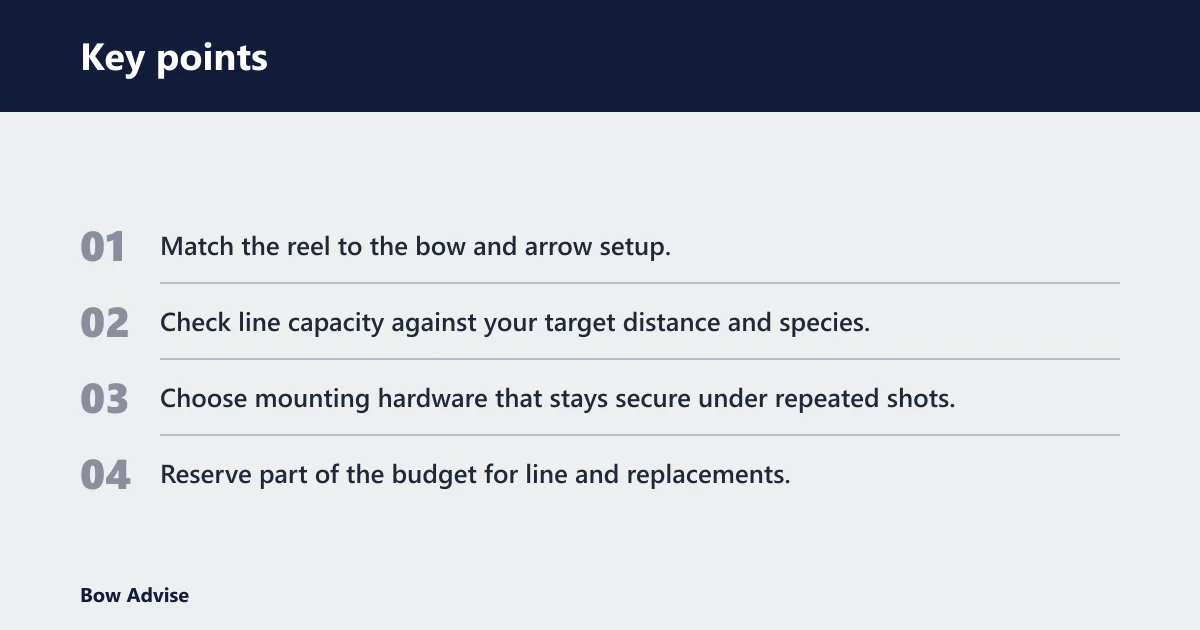
- Match the reel to the bow and arrow setup.
- Check line capacity against your target distance and species.
- Choose mounting hardware that stays secure under repeated shots.
- Reserve part of the budget for line and replacements.
How much should you budget for a complete setup?
A complete bowfishing setup usually costs more than the reel alone because it needs a bow, reel, arrow, line, and mounting parts. A realistic beginner budget is often about $120 to $350, while a more durable freshwater or saltwater setup can run higher once corrosion-resistant parts and spare components are added.
Bow, reel, arrow, and line costs
Beginner-friendly bow draw weight is usually 25 to 50 lb, which keeps the setup manageable while learning shot timing and line handling. The bow itself is a separate cost from the reel, and the reel choice should match that bow rather than push the budget into unnecessary hardware.
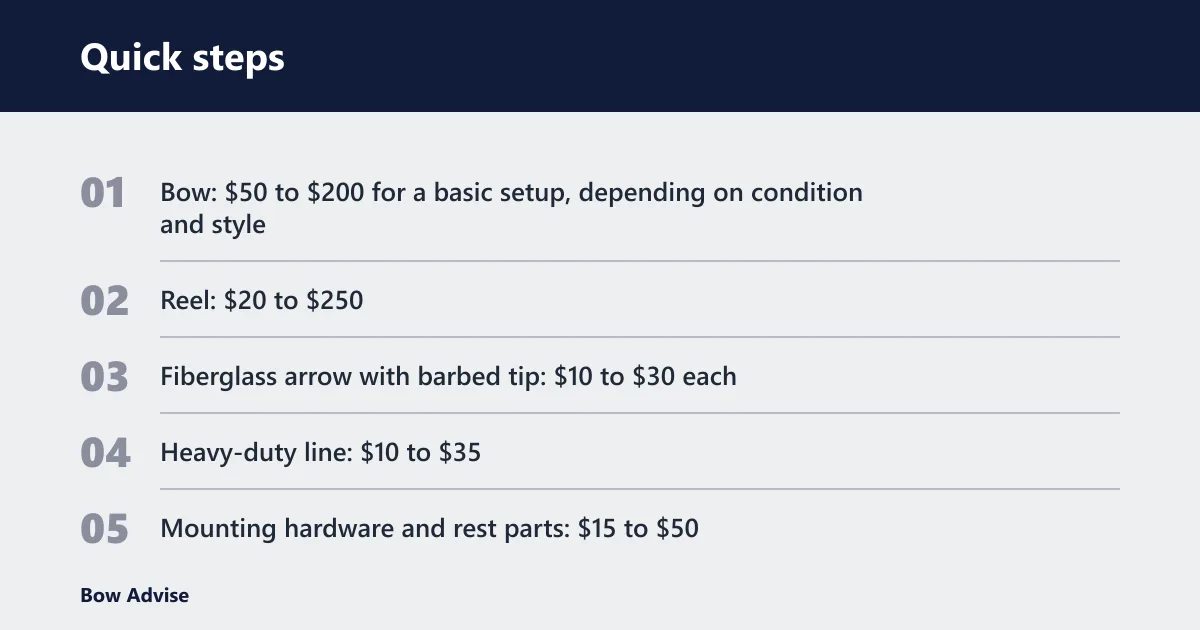
Itemized planning helps keep costs controlled:
- Bow: $50 to $200 for a basic setup, depending on condition and style
- Reel: $20 to $250
- Fiberglass arrow with barbed tip: $10 to $30 each
- Heavy-duty line: $10 to $35
- Mounting hardware and rest parts: $15 to $50
Hidden add-ons that raise the total
Hidden costs usually come from spare line, extra tips, replacement screws, and a second arrow. Heavy-duty line is an essential accessory, and the guide allows line up to 200 lb test. A practical buying range is broader than that ceiling; the right choice depends on target size, abrasion risk, and how much abuse the line will take during retrieval.
Common target species include carp, gar, freshwater drum, buffalo, and shad. Larger or rougher fish increase stress on the line and tips, so the setup should be planned with those loads in mind.
Beginner, freshwater, and saltwater budgets
A beginner freshwater setup can stay near the lower end if it uses a retriever-style reel, one or two fiberglass arrows, and basic mounting parts. For saltwater use, corrosion-resistant parts usually justify a higher spend because repeated exposure to salt increases wear and can shorten the life of cheaper hardware.
Bowfishing is often most effective at night, so a boat or stable platform and visibility support matter as part of the real budget. Lights and platform gear are not reel costs, but they often change the total more than people expect.
Freshwater vs. saltwater reel costs
Freshwater reels can stay cheaper because the hardware faces less corrosion risk, while saltwater setups often cost more due to better finishes, sealed parts, and more durable fasteners. If the reel will see saltwater often, paying extra for corrosion resistance is usually more sensible than replacing a cheaper reel early.
Corrosion resistance and sealed parts
For freshwater use, a standard retriever-style reel is often enough if it matches the bow and line. For saltwater, sealed or corrosion-resistant parts are worth the premium because exposed springs, screws, and spools wear faster around salt. That difference can make a midrange reel a better buy than a low-cost one that needs replacement sooner.
Suppose the plan is occasional carp shooting in a local pond. A basic reel may fit the job. If the plan is frequent tidal or brackish water use, the extra cost for corrosion resistance is easier to justify because the reel will see harsher conditions more often.
When saltwater parts are worth the premium
Pay more when the reel will be rinsed, stored, and used repeatedly in saltwater. Skip the premium if the setup is mostly freshwater and occasional use. In that case, a strong mount, good line, and spare parts usually return more value than a full jump to the top price tier.
Bowfishing reel mistakes that waste money
The biggest money mistakes are paying for features that do not improve retrieval, buying a reel that does not fit the bow, and ignoring line or mount quality. A reel that looks advanced but cannot manage line cleanly is more expensive in practice because it creates extra replacement and setup costs.
Paying for features you will not use
Many beginners pay extra for specialty housing, oversized line capacity, or premium finishes before they need them. For a simple retriever-style setup, those extras often add cost without making the reel better at shooting fish, retrieving arrows, or keeping line controlled.
Buying a reel that does not match the bow or line
Bow draw weight affects how the setup handles, but it should not be treated as a reel luxury factor. A beginner bow in the 25 to 50 lb range pairs well with a simple retriever-style reel if the line and arrow are matched correctly. The wrong reel can feel awkward even on a proper bow.
Skipping spare parts and proper mounting hardware
Do not spend all of the budget on the reel and leave no room for spare line, replacement tips, or secure mounting hardware. Those items are not optional extras when shots are fast and repeated. A weak mount can turn a good reel into a poor setup fast.
A common first-timer mistake is buying a low-cost reel and then running it with weak line and a loose mount. The result is usually poor retrieval control, more snagging, and higher replacement cost than if the buyer had spent a little more on the parts that actually carry the load.
Frequently asked questions
How much does a bowfishing reel cost?
Bowfishing reels commonly cost about $20 to $250. Lower-cost retriever-style and hand-wrap options sit near the bottom of that range, while better-built bottle, spincast, or premium retriever setups cost more because of stronger hardware, smoother retrieval, or better corrosion resistance.
What is a bowfishing reel kit and is it worth it?
A reel kit usually bundles the reel with mounting parts, line, and sometimes small accessories. It is worth it when the included parts match the bow and save separate purchase costs. It is less useful if the kit includes weak line, poor hardware, or parts that do not fit the setup.
Are expensive bowfishing reels better than cheap ones?
Sometimes, but only when the extra cost buys features that matter: better line handling, stronger mounts, smoother retrieval, or corrosion resistance. A high price does not automatically mean better fish retrieval. For casual freshwater use, a midrange retriever-style reel often covers the important jobs without overspending.
What line strength should I pair with a bowfishing reel?
Heavy-duty line is essential, and the guide allows line up to 200 lb test. The best choice depends on fish size, abrasion risk, and the reel’s capacity. A line that is too light can fail under load, while one that is too heavy can be bulky if the reel cannot manage it well.
Are old fishing reels worth anything for bowfishing?
Usually not much, unless the reel can handle heavy line, resist corrosion, and mount cleanly to a bow. Many old fishing reels are poor bowfishing choices because they were not built for direct arrow retrieval or fast line control. A purpose-built retriever-style reel is usually the safer buy.
What does a bowfishing reel need to include?
At minimum, it needs a reliable retrieval mechanism, mounting hardware, and line capacity that matches the bowfishing setup. It should work with a fiberglass arrow and barbed tip, and it should be compatible with the rest of the bow. Those fit and function points matter more than the badge on the side.