Best Arrow Rests for Hunting Accuracy (2026): We Compared
The best arrow rest for hunting accuracy is a containment drop-away rest with a simple launcher and dependable activation, chosen for repeatable arrow clearance instead of extra features. Poor rest timing or contact can throw broadheads, add noise, and cost shots on live game. This guide covers which rest types suit hunting, what to check for clearance and tuning, and how to choose one for a compound bow setup.
Quick comparison
| Product | Badge | Best for | Price | ||
|---|---|---|---|---|---|
 | sanlida Archery Drop Away Arrow Rest for Hunting Compoundsanlida | Our pick | Aircraft alloy · Micro adjustable · Drop away | $49.99 Price as of 21 Oct 2026 | View |
 | THREE ARCHERS Archery Arrow Rest Brush Capture Arrow RestTHREE ARCHERS | Budget pick | Enclosed brush · Universal fit · Replacement heads | $12.99 Price as of 21 Oct 2026 | View |
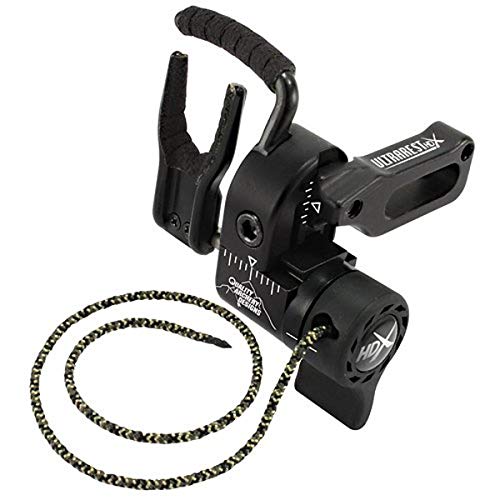 | Quality Archery Designs Quality Archery Products UHXBK-RQAD | Upgrade pick | HDX model · Stainless steel · Right hand | $139.99 Price as of 21 Oct 2026 | View |
A drop-away leads when the goal is clean clearance and steadier broadhead flight on a compound bow. A full-containment rest still has a strong place when a hunter wants simple loading, quiet carry, and fewer moving parts more than the last bit of speed.
How we chose
The ranking logic focuses on arrow clearance, noise and vibration, tuning and install effort, failure risk, and broadhead forgiveness. Those are the points that change hunting accuracy in the field, especially when the shot angle, draw cycle, or broadhead setup is less than perfect.
Outdoor Life tested both drop away and fixed arrow rests for bowhunting, then split picks into categories instead of naming one overall winner. That approach fits real hunting better than a single best label, because beginner tolerance, tuning skill, and field conditions are not the same.
Drop-away rest: best for hunting accuracy
A drop-away rest is the safest general pick for hunters who want the best mix of arrow clearance and broadhead consistency. The launcher falls away at release, so it gives fletching more room and usually reduces the chance of vane contact on the way out.
This Sanlida model fits hunters who want micro-adjust windage and elevation without paying for a top-tier rest. That matters for broadhead tuning, where small rest changes can correct left-right tears and clean up flight at 20 to 40 yards.
The drawback is setup sensitivity. A drop-away can shoot well only when timing, cord routing, and lock-down are correct, and a poorly timed rest can creep or leave the launcher in the path of the fletching.
What makes it strong for hunting
Drop-away rests are popular because the arrow leaves the bow with less contact than most fixed designs. That usually means less drag, cleaner flight, and better broadhead behavior when the rest is set correctly.
Micro-adjust windage and elevation are worth paying for on this style. They make rest position changes smaller and more repeatable, which helps when the bow needs tiny corrections after paper tuning or broadhead tuning.
Whisker biscuit: best for beginners
A Whisker Biscuit or similar full-containment rest is the easiest option for a new hunter who wants the arrow held in place from the time it is nocked until the shot breaks. That full containment makes loading simple and reduces the chance of the arrow bouncing free in a stand or on a stalk.
The THREE ARCHERS brush-capture design is a budget-friendly way to get that security. Based on the published details, the removable brush head also helps stretch service life, which matters when a rest is used heavily through a season.
The tradeoff is shaft contact. Brush or full-containment rests can add drag and can be less forgiving of perfect speed and launch than a clean drop-away, especially with larger vane setups or when the shaft is not centered well.
Why beginners often do well with it
Beginners usually benefit from a rest that stays simple under pressure. A full-containment rest reduces arrow flop at full draw, makes loading safer in low light, and gives a consistent hold for still-hunting or tree-stand use.
A common first-timer mistake is chasing gear complexity before the bow is tuned. A simpler rest can make the setup more forgiving while the archer learns anchor, release, and sight picture.
Limb-driven rest: best for reliability
A limb-driven rest is a strong choice for hunters who want dependable clearance without depending on the cable cycle. Because it is activated by limb movement, it avoids some of the timing issues that can show up with cable-driven setups.
Outdoor Life named the Hamskea R7 as best limb-driven rest, which lines up with the core appeal of this category: fewer timing cord headaches and strong field reliability. The catch is that cord routing and tension still matter, so it is not truly install-and-forget.
What to check during setup
Route the activation cord so it moves cleanly through the draw cycle and does not rub where it should not. Then check tension with the bow at full draw, because too much or too little cord tension can change when the launcher falls away.
Suppose a rest drops too early and the arrow loses support before release. That can create poor launch consistency and a broadhead tune that never settles down, even if the rest looked centered at brace height.
Cable-driven rest: best for tuned setups
A cable-driven rest works well on a bow that is already being set up carefully, because it ties rest timing to the bow cable and the shot cycle. When the timing is correct, the launcher can clear the shaft cleanly and shoot very well.
Outdoor Life named the QAD Integrate MX2 as best cable-driven rest, and RangerExpert ranked the QAD HDX Arrow Rest as best overall in its 2024 review. That points to a simple truth: a cable-driven rest can be excellent, but only when synchronization is right.
Where timing matters most
Cable-driven rests can create timing cord setup as a failure point. If the cord is tied off, tensioned, or routed wrong, the launcher may rise or fall at the wrong point in the draw cycle.
Outdoor Empire said the QAD HDX rest uses Velocity Drop-Away technology, and also listed the Ultra-Rest HDX with Harmonic Dampener Technology. Those details matter because hunters often want a rest that settles quickly, keeps noise down, and avoids random movement on the shot.
Noise, vibration, and durability considerations
Hunting noise control is not a side issue. Felt or dampened contact points, a quiet loading feel, and reduced vibration all matter when the bow is drawn in a tree-stand or on a spot-and-stalk approach where sound can spook game.
Containment cages and launcher arms affect both noise and clearance. A more enclosed design can hold the arrow securely at full draw, but extra contact can create drag or a sharper sound if the parts are not dampened well.
What to look
- Felt or dampened contact points where the arrow or launcher may touch.
- A launcher arm that locks down cleanly instead of creeping.
- A containment cage that holds the shaft without bouncing or rattling.
- Solid mounting hardware that stays put after repeated shots.
Cost of ownership matters too. Replacement brushes, worn felt, timing cord changes, and damaged launchers can turn a cheap rest into an annoying one if parts are hard to find or replace.
Micro-adjusts and broadhead tuning
Micro-adjust windage and elevation are most useful when broadhead flight needs fine correction. They let the hunter move the rest in small steps, which is better than forcing a big change and losing the paper tune that was already close.
For broadheads, the main goal is repeatable launch. If the arrow starts straight, the sight can usually be refined afterward; if the launcher position is off, the bow may group field points one way and broadheads another.
Simple tuning steps
- Set the rest at the manufacturer’s starting point and confirm arrow centerline.
- Check that the launcher or brush supports the arrow evenly at full draw.
- Paper tune first, then move to broadhead tuning at a short distance.
- Make one small change at a time to windage or elevation.
- Recheck clearance marks on vanes, launcher, and containment points.
That process is slower than guessing, but it avoids chasing one problem with three changes. A rest that is close and repeatable usually beats a more advanced rest that is never fully synced.
Arrow rest decision matrix
This table scores each rest type on the hunting factors that matter most. Higher is better on every line, except tuning complexity and failure risk, where lower effort and lower risk are better for most hunters.
| Rest type | Arrow clearance | Noise | Tuning complexity | Failure risk | Containment | Broadhead forgiveness | Best fit |
|---|---|---|---|---|---|---|---|
| Drop-away | High | High | Medium to high | Medium | Medium | High | Precision-minded compound hunter |
| Whisker Biscuit / full-containment | Medium | Medium to high | Low | Low | High | Medium | Beginner or close-range hunter |
| Limb-driven | High | High | Medium | Low to medium | Medium | High | Hunter who values reliability |
| Cable-driven | High | High | High | Medium to high | Medium | High | Tuned setup with careful timing |
For a beginner, the full-containment rest scores best because it is forgiving and simple. For a budget hunter, the same category often wins on total ownership cost. For a tree-stand hunter, quiet loading and secure hold matter most. For a precision-minded hunter, a well-timed drop-away usually gives the best broadhead ceiling.
Which one should you buy?
If the budget is tight, the Trophy Ridge Whisker Biscuit Pro is the category Outdoor Life named best fixed rest, and it fits hunters who want a simple, dependable setup. If the goal is the most accurate hunting rig, a quality drop-away with micro-adjusts is the better starting point.
If the bow is already tuned and the hunter wants a stronger reliability bias, a limb-driven rest is a sound pick. If the bow is set up carefully and the shooter will confirm timing, a cable-driven rest can deliver excellent clearance and broadhead flight.
Best for budget buyers
Choose a full-containment rest or a lower-cost drop-away with a simple build. The lower price helps if replacement parts, tuning time, or a backup rest matter more than advanced adjustability.
Best for simple setup
Choose a full-containment rest. It usually has the fewest moving parts, the least setup stress, and the easiest loading process under hunting pressure.
Best for broadhead tuning
Choose a drop-away with micro-adjust windage and elevation. That combination gives the cleanest path to small corrections when broadheads do not match field points.
Best for the quietest carry and load
Choose the rest with the best dampening and the least loose movement in the containment parts. A quieter rest is easier to live with on stand, especially if the arrow is loaded early and held for a while.
Frequently asked questions
What is an arrow rest?
An arrow rest is the part of a bow that supports the shaft during the draw and shot cycle. For hunting, its job is to hold the arrow securely, release it cleanly, and avoid contact that can disturb flight or add noise.
What is the best arrow rest for hunting accuracy?
A containment drop-away is usually the best all-around choice for hunting accuracy because it offers strong clearance and good broadhead potential. It is best when the timing is correct and the bow is tuned well, not when it is installed loosely and left alone.
Should I choose a drop-away or whisker biscuit rest for hunting?
Choose a drop-away if you want the best chance at clean clearance and tighter broadhead behavior on a tuned compound bow. Choose a Whisker Biscuit if you want simple loading, full containment, and fewer setup concerns, especially for a newer hunter or a close-range setup.
Which arrow rest is best for a compound bow hunting setup?
For most compound bow hunting setups, a well-made drop-away with micro-adjusts is the strongest accuracy choice. If the bow or shooter needs more simplicity, a full-containment rest can still perform well, especially when the goal is dependable carry and easy handling in the field.
How do I tune an arrow rest for better broadhead flight?
Use small rest moves, not big ones. Confirm center shot, paper tune first, then shoot broadheads at a short distance and adjust in tiny steps until impact matches field points. Timing, lock-down, and launcher consistency matter as much as the rest model itself.
What arrow rest is most reliable for hunting
Limb-driven rests are often the reliability favorite because they avoid some cable timing issues, while full-containment rests are also very dependable because they have fewer moving parts. The most reliable choice depends on whether the hunter values mechanical simplicity or drop-away clearance more.
What arrow rest is best for beginners hunting with a compound bow
A full-containment rest is usually best for beginners because it keeps the arrow secure and is less demanding to tune. It reduces the chance of arrow flop, makes loading easier, and gives a new hunter a simpler path while learning form, anchor, and release control.