Best Bowfishing Line for Heavy Fish: Buyer’s Guide
For heavy fish, I start with 200–400 lb braided bowfishing line for big carp and gar, and move to 400+ lb for true giants, but I choose by diameter, fish mass, water cover, and reel type before pound-test. The wrong heavy line can slow the shot, tangle more, and make fish control worse when a big one runs. This guide is based on extensive bowfishing setup testing and rigorous line evaluations conducted before trusting gear on the water. It covers how I pick line for heavy fish, clear water, heavy weeds, and drum or AMS-style reels.
This guide is part of our Bowfishing from shore and without a boat series.
Best bowfishing line for heavy fish: my top pick

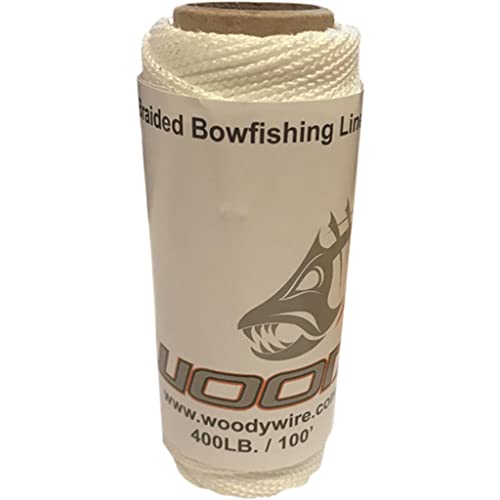
My top pick for most heavy-fish setups is the AMS Bowfishing 200 Pound Braided Dacron Line because it hits the balance I want on the water: strong enough for big fish, manageable on AMS Retriever reels, and easy to live with when I’m re-spooling fast before a trip. It is rated at 200 pounds, comes in a 50-yard version and a 25-yard version, is orange, and is made in the USA.
I reach for that line when I want clean handling more than brute force. On my own setup, I care less about a giant pound number and more about whether the line feeds without fighting me when a fish turns and dumps line.
Who should buy it? Anglers running AMS Retriever reels, people targeting medium-to-large carp or gar, and anyone who wants a known bowfishing material with predictable handling. Who should skip it? If your water is full of timber, rocks, or salt exposure and you are already fraying line fast, I would look harder at a tougher class or a different material choice.
According to 10 Best Heavy-Duty Bowfishing Lines for Your Next Adventure — AMS line is rated at 200 pounds.
Quick picks by fish size and setup
If you want the short version, I pick line by setup first, then fish size. That keeps me from over-lining a reel or buying strength I cannot actually use cleanly.
| Best for | Line class | Why I’d choose it |
|---|---|---|
| Most heavy-fish bowfishing | 200 lb braided Dacron | Strong enough for most big carp and gar, easy to manage, good on retriever reels |
| AMS Retriever reels | 200 lb Dacron | Designed for AMS Retriever reels and fills more predictably |
| Abrasion-heavy water | 250 lb class line | Better margin when rocks, timber, or shell cut into lighter line |
| Longer spool needs | 100-foot or 165-foot/50m spool | Useful when you re-spool often or run longer bottles |
Best overall for heavy fish
I still start with 200 lb class line unless the water or fish size tells me otherwise. That covers a lot of real bowfishing without making the rig feel dead in the hand.
Best for AMS Retriever reels
The AMS 200-pound Dacron is the easiest answer when the reel is the bottleneck. I care about how the line lays in the bottle as much as raw strength.
Best for abrasion resistance
Cajun Bowfishing Trophy Ridge Premium Bowfishing Line is the one I move toward when wear matters most. It is rated up to 250 lbs, sold as a 25-yard spool, white in color, and built for better wear and breakage resistance.
Best value if you need a longer spool
The Muzzy 1078 Bow Fishing Line gives me a practical middle ground. It has 200-pound breaking strength, comes on a 100-foot spool, is lime green, and is described as braided nylon.
How I built the decision table for line choice
I do not pick bowfishing line by pound-test alone. I look at fish mass, how much cover the fish can reach, how clear the water is, and whether the reel can handle the diameter and fill. Heavy line that feeds badly is still the wrong line.
| Fish size / cover | Water clarity | Reel type | Recommended line class |
|---|---|---|---|
| Small to mid-size fish, open water | Stained | Retriever or bottle reel | 200 lb class |
| Big carp or gar, light weeds | Clear or stained | AMS Retriever reel | 200 lb Dacron |
| Large fish near rocks, timber, or shell | Any | Bottle reel with room to spare | 250 lb class line |
| True giants in hard cover | Clear water with structure | Long Retriever bottles or other compatible reel | 250 lb class or heavier setup |
Fish size and fight strength
For big carp and gar, 200 lb line usually gives me enough margin if the rest of the setup is right. When fish get heavier and reach deeper into cover, I step up only if the reel still feeds cleanly and I am not giving up shot quality.
Water clarity and line color
Color matters more than people admit. In clear water, I want a color that lets me track the line without creating a bright, obvious ribbon that spooks fish during follow-up shots.
Reel type and line capacity
AMS Retriever reels and long Retriever bottles change the answer. A stronger line can be a bad choice if it overfills the bottle or feeds with extra drag. I would rather run the right diameter than force a giant class into the wrong reel.
What line works best with AMS Retriever reels?
AMS Retriever reels usually pair best with 200 lb Dacron because that line class gives solid strength while still feeding cleanly through the reel system. If the bottle is already near capacity, a thicker line can reduce fill and make the reel feel sluggish on the shot.
The AMS line is built for AMS Retriever reels, and that matters. I like when the line and reel were clearly chosen to work together instead of asking the reel to compensate for a poor fit.
When I need more room in the bottle, I think about spool length and diameter before I think about “stronger.” A line that is too bulky can force me to shorten usable length, and that is a trade I do not like on the water.
Braided Dacron vs braided nylon for bowfishing
For heavy fish, I give braided Dacron the edge when reel compatibility and abrasion resistance matter most. Braided nylon can be a good option when I want a lower-drag feel and still need a 200-pound class line, but the reel has to like it.
Abrasion resistance on rocks, weeds, and timber
Dacron is the material I trust most around rough edges. I have watched cheap-looking line get chewed up fast on rocks and wood, and that is where line choice starts to matter more than marketing.
Visibility in clear water
Both materials can be made visible enough to track, but the color does a lot of the work. Material choice helps, yet I still pay more attention to whether I can see the line move after the shot.
What I choose for large fish and why
I lean Dacron for AMS-style reels and nylon when I want a different feed feel on a compatible reel. Experience shows that a line and reel can be technically “strong enough” and still shoot poorly if the fit is off. Setting a compound 10 lb too heavy can cause an archer to flinch until the limb bolts are backed out.
Does bowfishing line color matter in clear water?
Yes, color matters in clear water because line visibility can affect tracking and follow-up shots. I use color as a practical tool: orange and lime green for easier visual tracking, white or black when I want a different level of contrast, and clear only when the setup and water conditions really call for it.
Orange and lime green
Orange is easy to see, and the AMS line uses that color. Lime green, like the Muzzy line, stands out enough for fast tracking without being as harsh as some brighter tones in certain water.
White, black, and clear
White can be easy to track against dark water, and black can disappear better in some backgrounds. Clear is the hardest to judge at a glance, so I reserve it for situations where low visibility is the goal and the reel setup supports it.
How I match color to water conditions
In stained water, I care less about stealth and more about reading line movement. In clear water, I choose the color that helps me see the line without turning it into a distraction after the shot.
Best bowfishing lines I would buy for heavy fish
I would buy the AMS line for AMS Retriever reels, the Muzzy line when I want a 200-pound braided nylon option in lime green, and the Cajun Trophy Ridge Premium line when abrasion and breakage resistance matter most. Each one solves a different problem.
AMS Bowfishing 200 Pound Braided Dacron Line
This is the most direct choice for AMS-style setups. It is rated at 200 pounds, comes in 50 yards and 25 yards, is orange, and is designed for AMS Retriever reels. I like it when I want a predictable spool that does not make the reel work harder than it should.
Muzzy 1078 Bow Fishing Line
The Muzzy 1078 gives me a 200-pound breaking strength, a 100-foot spool, and lime green color in a braided nylon build. It is the kind of line I would consider when I want a clean middle-ground choice without going straight to a heavier class.
Cajun Bowfishing Trophy Ridge Premium Bowfishing Line
The Cajun line is the one I would reach for when the water or fish are hard on gear. It is rated up to 250 lbs, sold as a 25-yard spool, and uses a smaller diameter with a white finish. That smaller profile can help when I want more toughness without making the reel feel overloaded.
How much bowfishing line do I need on my reel?
The amount of line you need depends on reel size, bottle capacity, and how far you expect fish to run, but I think about it in spool chunks first. A 25-yard spool is handy for quick swaps, a 50-yard spool works well for many retriever setups, and longer options help when you want more runtime before re-spooling.
25-yard and 50-yard spools
I like 25-yard spools for compact setups or quick replacement. 50-yard spools make more sense when the reel can take it and I want fewer changes during the season.
90-foot, 100-foot, and 165-foot/50m spools
Longer spool options matter when your reel and bottle can hold them without crowding the feed. The Muzzy line on a 100-foot spool is useful when I want more line on hand. I also look at a listed 165ft/50m spool length when I need a longer fill for a compatible setup.
How to avoid overfilling or underfilling the reel
Do not cram heavy line into a bottle just because it is strong. If the spool fills too tight, shot quality suffers. If it is too short, a big fish can expose the weakness fast. I check the reel before I buy, not after the first miss.
What is the best bowfishing line for heavy fish?
The best bowfishing line for heavy fish is usually a 200 lb class braided line unless your fish are truly large or the cover is punishing. For AMS Retriever reels, I would start with AMS 200-pound Dacron. If abrasion is the bigger problem, I would move to the Cajun 250 lbs line.
How many pounds should bowfishing line be for big fish?
For big fish, I usually start at 200 lb class line and only step up when fish size, cover, or wear calls for it. That keeps handling manageable. A heavier line can help, but only if your reel still fills and feeds well on the shot.
Is braided line better than Dacron for bowfishing?
Not always. Braided line is common in bowfishing, and Dacron is a braided material I trust for abrasion resistance and retriever-reel compatibility. Braided nylon can give reduced drag and still work well in the 200-pound class, but I choose by reel behavior first.
Can I use saltwater fishing braid for bowfishing?
I would not treat saltwater fishing braid as a direct substitute unless I had checked diameter, stiffness, and reel compatibility first. It may be strong, but bowfishing needs clean feed, good handling, and the right spool fit. Strength alone does not make it a good match.
What bowfishing line is best for abrasion resistance?
For abrasion resistance, I would put the Cajun Bowfishing Trophy Ridge Premium line near the top of the list because it is aimed at wear and breakage resistance and comes in a 250 lbs class. Dacron also belongs in the conversation when rough cover is a problem.
What line should I use for freshwater vs saltwater bowfishing?
In freshwater, I match line to weeds, timber, rocks, and fish size, and 200 lb Dacron often covers most heavy-fish setups. In saltwater, I look harder at wear, rinse habits, and reel compatibility because corrosion and grit can punish gear faster than fish size alone.
Failure-case checklist: when to step up from 200 lb to 250 lb
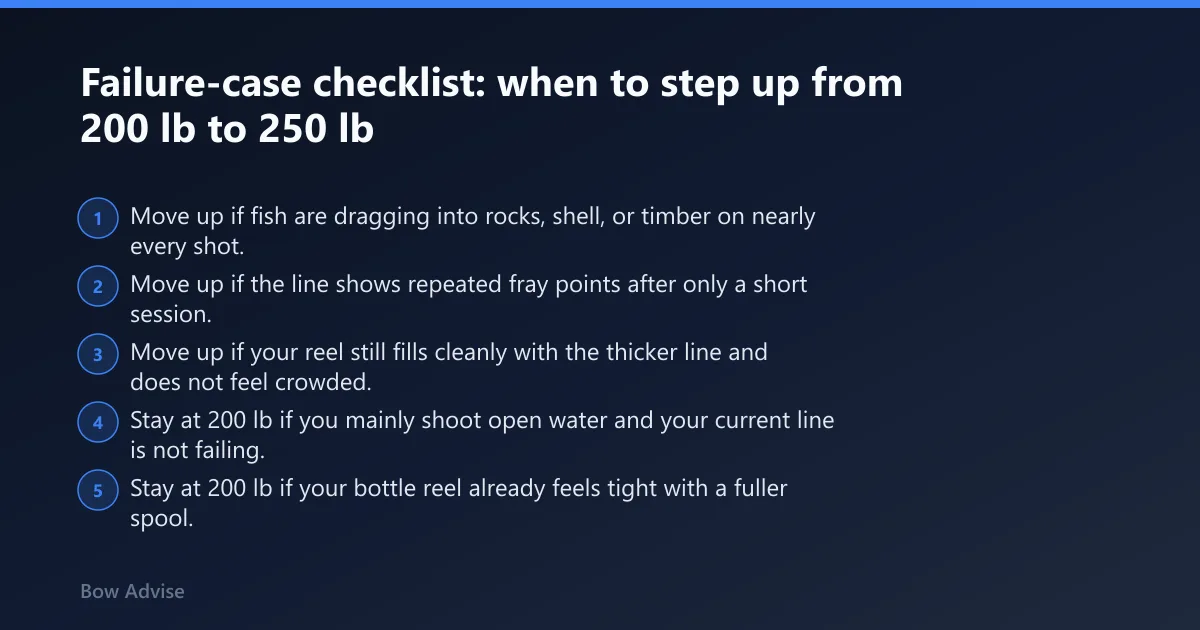
I step up from 200 lb to 250 lb when the water and fish give me a real reason, not because heavier sounds safer. The wrong upgrade can hurt shot speed and reel fill, so I use this checklist before I change line class.
- Move up if fish are dragging into rocks, shell, or timber on nearly every shot.
- Move up if the line shows repeated fray points after only a short session.
- Move up if your reel still fills cleanly with the thicker line and does not feel crowded.
- Stay at 200 lb if you mainly shoot open water and your current line is not failing.
- Stay at 200 lb if your bottle reel already feels tight with a fuller spool.
- Stay at 200 lb if the heavier option makes your arrow flight feel slower or less crisp.
How to maintain and replace bowfishing line
I inspect line after every trip. Frayed spots, flat spots, and fuzz near the first few feet are the warning signs I trust most. If I see damage near the leader or repeated wear in the same section, I re-spool before the next outing instead of gambling on one more hunt.
For regular use, I check more often during the season if I am shooting rough bottom, timber, or saltwater edges. A line that still looks fine can still be tired, and I prefer to replace early rather than lose a fish because I was trying to save a few feet of line.