Rangefinder Cost: What Bowhunters Should Pay
For bowhunting, a solid rangefinder usually costs $150–$300; buy $100–$150 for close-range practice and basic hunting, $250+ if you need angle compensation, better low-light readout, and faster target lock. Buy too cheap, and you risk slow readings, missed yardages, and bad pin choices at ethical shooting distances. This guide breaks down what each price tier buys and which features matter most inside typical archery ranges.
Rangefinder cost matrix

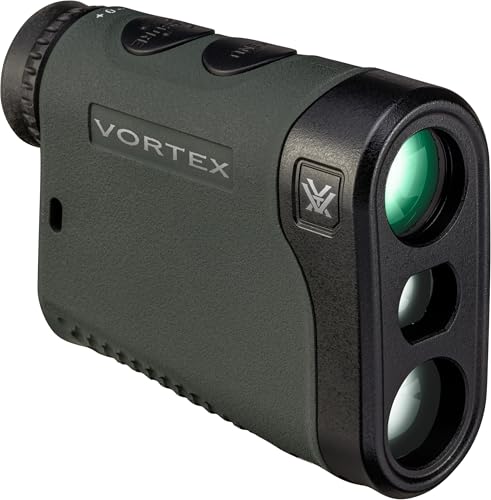

The right rangefinder cost depends less on maximum yardage and more on how fast it gives a clean reading inside bowhunting distance. For archery, the main price jump is usually from bare-bones units to models with target lock, slope mode, and a readable display. Beyond that, pay only for features that solve a real field problem.
Budget tier by hunting scenario
| Scenario | Typical price range | Must-have features | Features to skip | Expected limitations | Best-fit user type |
|---|---|---|---|---|---|
| Tree stand | $100-$150 | Target lock or pin lock, 6x magnification, clear daylight display, basic water resistance, replaceable battery, 1-year or limited warranty | Slope mode, long-range claims, magnetic mount, premium OLED display | Slower target acquisition in brush, weaker low-light readability, fewer angle features | Fixed-position hunters who range lanes, trails, and known pinches from one setup |
| Spot-and-stalk | $120-$170 | Fast target lock, 6x to 7x magnification, weather resistance, compact body, bright display, replaceable battery | High-end ballistic functions, large display menus, magnetic mount | More time on small targets and more reading errors on cluttered backgrounds | New hunters keeping shots short and moving through timber or broken country |
| Western/open-country | $140-$180 | Target lock, slope mode, 6x or 7x magnification, good glare control, water resistance, battery with easy replacement | Premium OLED display, magnetic mount, extra-long range ratings beyond bow use | Less speed and contrast than mid-range units, especially in bright sun | Hunters who need quick holds across varied terrain but still shoot with a bow |
| Low-light late season | $140-$180 | Strong display visibility, target lock, water resistance, simple controls with gloves, reliable battery access | Long-distance emphasis, fancy menus, vehicle mount | Readable display helps, but entry-level optics may still struggle at dawn or dusk | Hunters sitting longer in dim timber, frosty fields, or gray winter light |
Mid-range tier by hunting scenario
| Scenario | Typical price range | Must-have features | Features to skip | Expected limitations | Best-fit user type |
|---|---|---|---|---|---|
| Tree stand | $180-$260 | Slope mode, target lock, 6x to 7x magnification, strong display visibility, water resistance or waterproofing, replaceable battery, warranty | Premium glass claims that do not help at 20 to 40 yards | Costs more than needed for a simple fixed setup | Bowhunters who want faster readings and fewer do-overs from a stand |
| Spot-and-stalk | $200-$280 | Fast lock speed, slope mode, compact body, 7x magnification if available, clear reticle or display, water resistance | Magnetic mount, oversized housing, long-range feature sets for rifle use | Higher price does not erase shaky-hands problems in steep cover | Hunters moving a lot and ranging rocks, brush, and odd angles |
| Western/open-country | $220-$300 | Slope mode, better optics, 7x magnification, target or pin lock, bright display, water resistance or waterproofing, 2-year warranty if offered | Unused golf functions, long-distance ratings far past archery needs | Better reading at distance, but still no reason to pay for extreme range specs | Hunters who need cleaner angle reads on ridges, draws, and open cuts |
| Low-light late season | $200-$300 | Bright display, strong optics, slope mode, target lock, weather sealing, battery type that is easy to replace in the cold | Bulky models, extra features with menus that slow use in gloves | Still depends on ambient light; optics matter more than range rating | Hunters who sit through dim mornings and evenings in cold weather |
Premium tier by hunting scenario
| Scenario | Typical price range | Must-have features | Features to skip | Expected limitations | Best-fit user type |
|---|---|---|---|---|---|
| Tree stand | $300-$500 | Fast target lock, slope mode, red or dual-color OLED display, water resistance or waterproofing, strong warranty, quality optics, glove-friendly controls | Extra range capability that bows never need | More money spent than most stand setups require | Hunters who want the clearest display and quickest read every time |
| Spot-and-stalk | $300-$500 | Very fast lock, high-visibility display, 7x magnification, slope mode, compact body, water resistance, premium warranty terms | Accessory-heavy bundles that add cost without improving ranging | Premium optics help, but careful fieldcraft still matters more | Hunters who move hard and value speed in mixed light |
| Western/open-country | $350-$500 | Best available display clarity, slope mode, pin lock or target lock, 7x magnification, waterproofing, battery access, 2-year warranty when listed | Anything meant mainly for long-range rifle or golf use | Cost climbs fast, while archery gains flatten after a point | Hunters who want the cleanest optics and quickest yardage confirmation |
| Low-light late season | $350-$500 | Red or dual-color OLED, strong low-light visibility, water resistance, slope mode, target lock, premium glass, durable battery solution | Bright-sun display tricks that do little at dawn or dusk | Premium displays help most in dim conditions, but are still not magic | Hunters who sit long hours and need a readable screen in poor light |
What to buy, skip, and expect at each tier
Budget units can work well if the shot window is short and the target is close. The main trade-off is slower lock speed and a display that may be harder to read in gray light. Mid-range models usually hit the sweet spot for bowhunting because they add slope mode, better optics, and more dependable target lock without paying for specs that matter more to rifle use.
Premium models make sense when display clarity and speed are worth the extra money every single hunt. They are also the tier where red or dual-color OLED displays and stronger warranty terms show up more often. A magnetic mount is a convenience feature, not a bowhunting need, but it may matter if the same unit rides in a cart or vehicle between hunts.
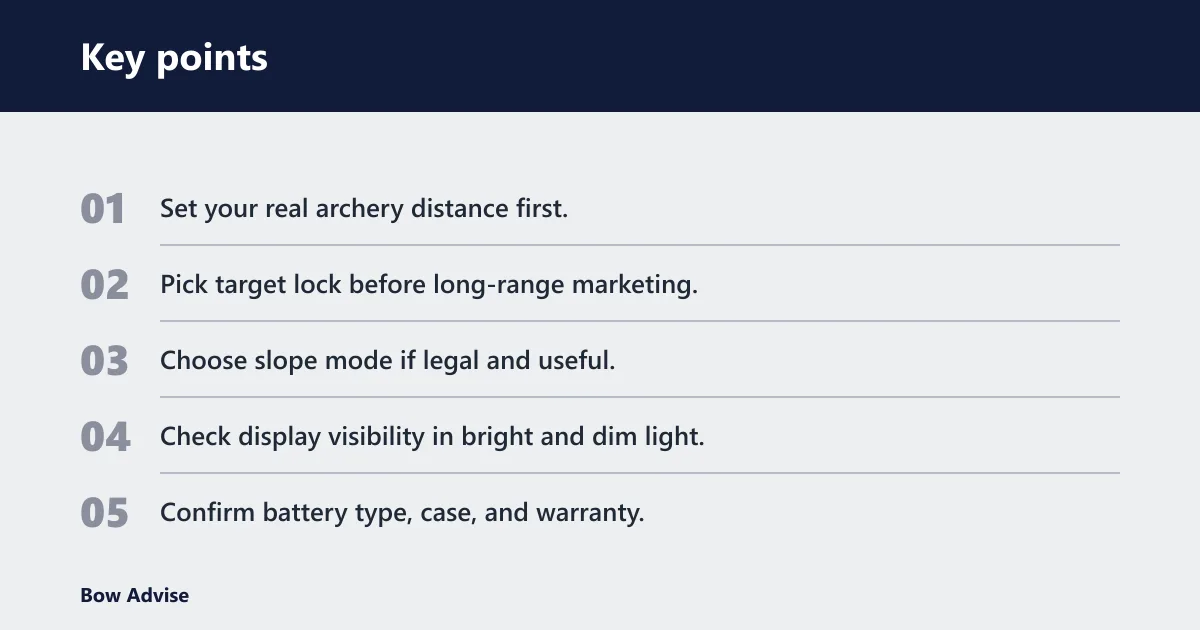
- Set your real archery distance first.
- Pick target lock before long-range marketing.
- Choose slope mode if legal and useful.
- Check display visibility in bright and dim light.
- Confirm battery type, case, and warranty.
How much do rangefinders cost?
A rangefinder can cost between $100-$500, and the price depends on make, model, specifications, and features. For bowhunters, the middle of that band usually offers the best fit because it covers target lock, slope mode, and better optics without paying for distance capability that archery shots rarely need. Brand name and reputation also move price.
Typical price bands from budget to premium
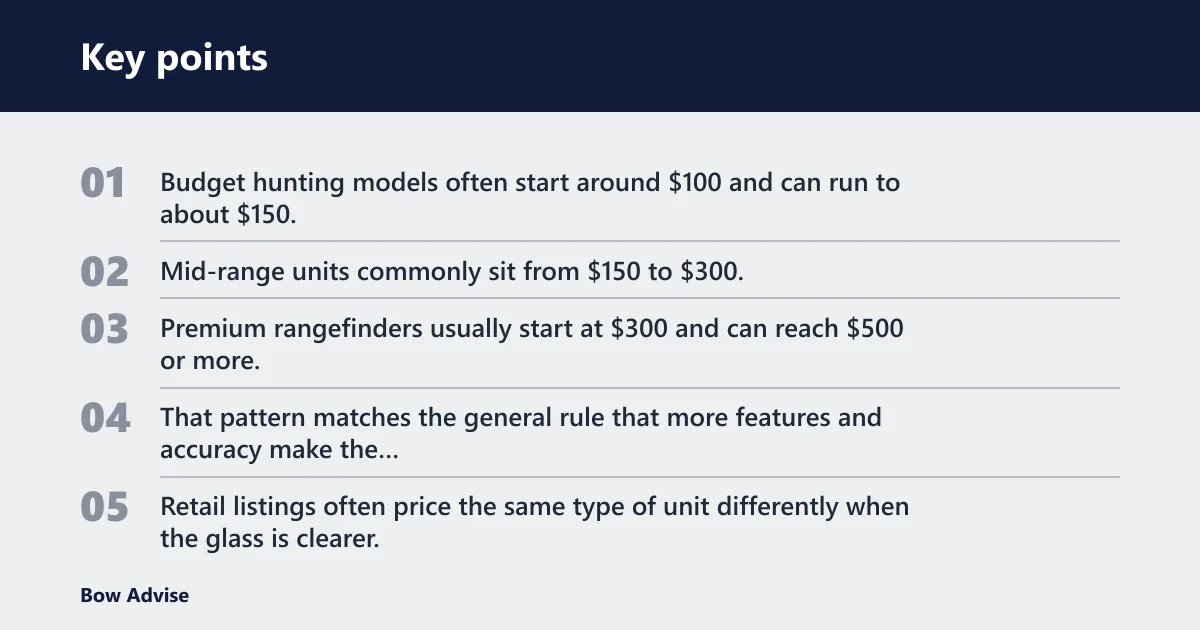
Budget hunting models often start around $100 and can run to about $150. Mid-range units commonly sit from $150 to $300. Premium rangefinders usually start at $300 and can reach $500 or more, especially when the display, optics, or warranty package is stronger. That pattern matches the general rule that more features and accuracy make the rangefinder expensive.
Why prices change by brand and feature set
Retail listings often price the same type of unit differently when the glass is clearer, the lock is faster, or the screen is easier to read in changing light. Slope mode, waterproofing, and a better warranty can also lift the price. For bowhunters, those are useful only when they improve a real shot decision.
When a higher price is worth it for bowhunters
A higher price is worth it when it buys fast target lock, a readable display, and dependable angle compensation for hilly ground. It is also worth it if the lower-tier model forces repeated readings or makes small targets hard to isolate. Paying more for extreme range is usually wasted money inside archery distance.
Say your shots are usually 18 to 32 yards from a treestand with a 20-foot drop to the deer trail. A budget unit may range that just fine, but a mid-range model with slope mode and quicker lock can cut down on second readings and awkward pin choices when the animal is alert.
What features change the price?
The biggest price drivers are target lock, slope mode, magnification, display quality, weather sealing, battery design, and warranty. In archery use, target lock and display visibility usually matter more than maximum range. Magnification commonly runs from 6x to 7x in published models, which helps with target acquisition and clarity without turning the unit into a long-range tool.
Target lock, pin lock, and slope mode
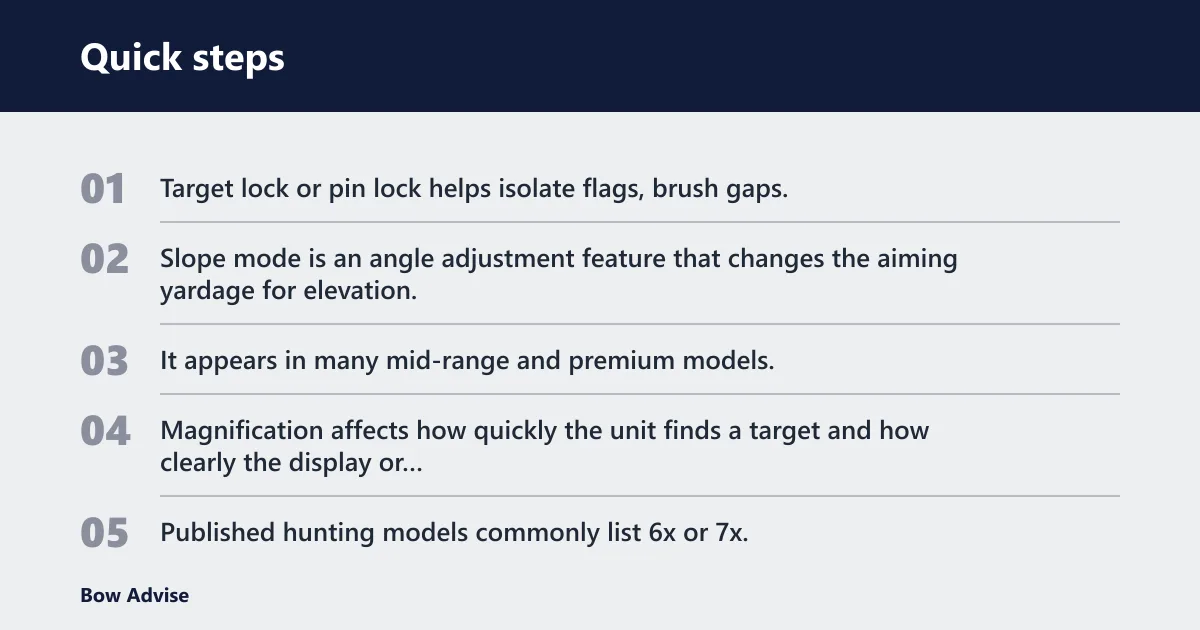
Target lock or pin lock helps isolate flags, brush gaps, or small vitals and is often a core value feature in sub-$300 models. Slope mode is an angle adjustment feature that changes the aiming yardage for elevation. It appears in many mid-range and premium models, but it should be disabled for tournament legality and used only when hunting rules allow it.
Magnification and display visibility
Magnification affects how quickly the unit finds a target and how clearly the display or reticle resolves the scene. Published hunting models commonly list 6x or 7x. Higher display visibility matters in bright light and at dawn or dusk. Premium units often use red or dual-color OLED displays because those screens are easier to read in changing light.
Picture a late-season setup in fading timber where a buck steps into a 27-yard opening for only a few seconds. A screen that washes out in dim light can slow the shot decision, while a cleaner display makes the yardage easier to confirm without hunting for the number twice.
Water resistance, battery type, and warranty
Water resistance or waterproofing is often listed in retail filters, and it matters because bowhunters carry gear through rain, snow, and wet brush. Battery type also affects total ownership cost. A replaceable coin cell is cheap to keep on hand; a rechargeable unit may cost more up front but reduces repeat battery purchases. Some retailer listings advertise 2-year warranties, which can tilt value at the same price tier.
Best rangefinder price by hunt type
The best rangefinder price is the one that covers your hunting style without paying for features you will not use. For most bowhunters, that means spending enough for fast target lock and a readable display, then stopping before long-range extras start adding cost without improving shot placement at 20 to 60 yards.
Tree stand buyers
Tree stand buyers usually do well in the $100-$250 range, with mid-range units offering the best balance. Stand hunting often means predictable lanes, short distance, and time to range before the shot. The smartest spend is on a clear screen and a dependable lock, not extreme distance or heavy optics.
Spot-and-stalk buyers
Spot-and-stalk buyers often benefit from the $150-$300 band because the unit must be quick, compact, and easy to use on the move. Here, target lock and weather resistance matter more than a luxury display. A faster reading can matter more than a longer maximum yardage when the animal is already moving.
Western and open-country buyers
Western and open-country hunters can justify the upper end of the mid-range or the lower end of premium pricing because angle changes are more common and visibility can swing fast. Slope mode becomes more useful here, but it should still be thought of as a bowhunting aid, not a reason to buy the priciest unit on the shelf.
Low-light late-season buyers
Low-light late-season buyers should favor display visibility, optics, and simple controls over maximum distance. A premium screen can be worth it if the hunt regularly happens in dim timber or on overcast evenings. If the unit is hard to read, a lower sticker price can become a poor value very quickly.
Is a rangefinder worth it for bowhunting?
Yes, a rangefinder is worth it for bowhunting if it helps you judge real yardage, angle, and pin choice faster than guessing can. Inside typical archery range, the best value comes from quick, reliable readings rather than long-distance capability. That is why many bowhunters are best served by a mid-range model.
When a cheap unit is enough
A cheap unit is enough for close-range practice, fixed blinds, and simple setups where target distance is usually known. If the display is readable, the target lock is dependable, and the battery is easy to manage, a budget model can do the job. The risk is that slow readings and weak optics can cost time when an animal is close.
When mid-range adds real value
Mid-range adds real value when you need slope mode, faster lock speed, and better display visibility without paying for premium branding. For many bowhunters, this is the best rangefinder price because it solves the main field problems without padding the bill with features built for golf or long-range shooting.
When premium optics make sense
Premium optics make sense when you regularly hunt in dim light, steep country, or shifting weather and want the cleanest possible read. The extra money is harder to justify if your shots stay short and your current unit already locks quickly. For many archery hunters, premium is a comfort buy, not a necessity.
What to skip to save money
Skip long-range specs that do not change an archery shot. A bowhunter rarely needs a maximum yardage rating that sounds impressive on a shelf tag. Also skip convenience extras that do not improve ranging, unless you know you will use them every season. Real savings come from matching the unit to the hunt.
Long-range specs you will not use
Do not pay extra for maximum distance that far exceeds bow use. The published hunting example with 1200-yard range and 6x magnification shows how much range can be bundled into a unit, but bowhunters usually do not need that much reach. Inside 100 yards, speed and clarity matter more than headline range.
Convenience features that do not affect shot placement
Magnetic mounts are convenient for carts or vehicles, but they do not improve arrow flight. The same goes for some oversized display extras and golf-oriented modes. If the feature does not help you range a deer, pin a shot, or read the screen faster, it is likely a cost add-on rather than a field need.
Accessory costs that can raise ownership cost
Total ownership cost includes battery replacement or charging, an included case, and likely accessory purchases. A unit with a rechargeable battery may save on replacements, while a model that comes with a useful case can save a separate purchase. Over time, those small costs can matter as much as the sticker price.
A common first-timer mistake is buying the cheapest unit on the shelf, then adding a case, spare battery, and extra mounting gear later. That can leave the buyer paying near mid-range money anyway, but with weaker optics and a slower lock speed than a better chosen model would have offered from the start.
Frequently asked questions
Is a rangefinder worth it?
Yes, for most bowhunters it is worth it because it removes guesswork from yardage and angle decisions. The value is highest when shots are close, fast, or made from awkward positions. A unit with reliable target lock and a readable display can matter more than a higher maximum range number.
What is the best budget rangefinder?
The best budget rangefinder for bowhunting is a simple unit around $100 to $150 with target lock, basic weather resistance, and a clear display. It should be easy to use one-handed and fast enough for short archery windows. Skip premium distance claims if the hunting distance stays under 60 yards.
What is the best rangefinder price?
The best rangefinder price for bowhunting is usually the lowest price that still gives fast lock, a readable display, and the features you actually need. For many hunters, that means mid-range pricing. If you never need slope mode or premium OLED visibility, spending above that point may not return much value.
Best low cost rangefinder
The best low cost rangefinder is one that keeps the core bowhunting features intact: target lock, usable magnification, and water resistance. A low price only helps if it does not slow down ranging or make the display hard to read. Cheap is fine; slow and unclear is where the savings disappear.
Rangefinder price
Rangefinder price changes with make, model, feature set, and intended use. Hunting models cost differently than golf models because the display, lock speed, and weather protection are aimed at different tasks. For bowhunting, the right price is the one that supports fast, ethical ranging inside your normal shot distance.
Best rangefinder for cost
The best rangefinder for cost is usually a mid-range hunting model with slope mode, target lock, and a clear display. It gives the most useful bowhunting features without drifting into premium pricing. If the unit also offers water resistance and a fair warranty, that often makes the overall value better.