Trophy Ridge React Pro Bow Sight Review
The Trophy Ridge React Pro is worth buying if you want a 5-pin hunting sight that sets up quickly, tracks cleanly at common bowhunting distances, and matches your bow’s arrow speed closely enough for React Technology to work as designed. Miss the speed mark or ignore pin brightness needs, and your gaps, yardages, and low-light aim points can shift.
Verdict
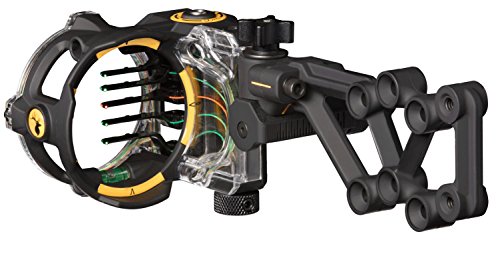
Based on the manufacturer specs and buyer feedback, this is a strong fixed-pin hunting sight for archers whose bows sit inside the React speed window and who want less sight-in time than a standard multi-pin setup. It fits poorly on very slow bows, on setups that need true slider-style adjustment, or on rigs likely to run out of windage and elevation travel during setup.
Pros
- React Technology uses two reference pins to set the remaining gaps.
- Micro-click windage and elevation make fine tuning easier.
- 2nd and 3rd axis leveling helps on steep-angle and elevated shots.
- Rheostat-controlled light helps when legal low-light hunting matters.
- Right-hand and left-hand versions are available.
Cons
- Speed mismatch can leave the remaining pins less predictable.
- .019 pins are not ideal for every low-light hunter.
- Some owners report bubble-level adhesive issues or adjustment movement.
- Very slow bows may push the sight toward its setup limits.
Specs at a glance
| Spec | React Pro details |
|---|---|
| Type | Multi-pin hunting sight |
| Construction | 6061 aluminum |
| Weight | 9.5 oz |
| Pin count | 5 pins |
| Pin size | .019 |
| Adjustment style | Micro-click windage and elevation |
| Axis leveling | 2nd and 3rd axis leveling |
| Light | Rheostat-controlled sight light |
| Handedness | Right-hand and left-hand variants |
| React setup | Uses two pins for setup |
Who it
The React Pro fits bowhunters who want a fixed-pin sight with a faster setup process than a standard multi-pin layout. It makes sense for whitetail hunters in treestands, and for hunters on medium to faster bows that land in the speed range where React Technology can map pin gaps correctly.
It is a weaker choice for archers who want true slider-style flexibility, or for very slow bows where the sight may need extreme correction to make the remaining pins line up well. Hunters who already know they want a single movable yardage dial will usually be happier with a slider sight.
Best use cases
For treestand whitetail hunting, a 5-pin layout can keep common yardages ready without changing settings in the field. For many western hunting setups, a 7-pin option from the same lineup may be more practical if the shooter wants more fixed references across longer gaps.
Say your bow is tuned for short-range whitetail work and you rarely shoot past 40 yards in the woods. A 5-pin React-style setup can keep the sight picture uncluttered, while still giving enough reference points for close and mid-range shots.
Who should look elsewhere?
If the bow is very slow, if the shooter often changes arrows or broadheads, or if the hunt calls for frequent distance changes that extend beyond fixed pins, a slider may be the better answer. React Technology is built around a specific bow speed, not around constant adjustment.
How does react Technology work on the trophy ridge react pro?
React Technology uses two reference pins during setup, then calculates the remaining pin gaps automatically. In plain terms, the sight maps the rest of the pin spacing from those two starting points, which can cut sight-in time when the bow speed matches the system well.
That is the main appeal. The system is not trying to act like a full slider sight, and it does not assume every bow shoots the same. It depends on the bow’s actual arrow speed, so the setup stays predictable only when the bow falls in the intended window.
Two-pin sighting process
The setup starts with two pins, then the sight uses those references to place the rest of the gaps. The promise is predictable pin placement, and that helps only when the bow’s speed is close enough to the intended range. A speed mismatch can shift the rest of the yardages.
Suppose a hunter builds a setup around a fast bow, then later changes to a heavier arrow that slows the setup down. The first two pins may still sight in, but the remaining gaps can stop matching the real trajectory closely enough for clean field use.
Where the system can lose accuracy
The weak point is not the React idea itself. It is setup mismatch. If the bow speed is off, if draw length changes, or if let-off and arrow choice alter actual speed more than expected, the remaining pin spacing may no longer fit the shot arc cleanly.
One buyer reported the sight could not be repeatably sighted in for an elk hunt. That kind of report is exactly why the speed window matters. The system can be very convenient, but only when the bow, arrow, and tune work together.
What works on the React Pro
The best parts of this sight are the micro-click windage and elevation, the 2nd and 3rd axis leveling, and the rheostat light. Those features make it easier to fine-tune the sight, keep the pins aligned on angled shots, and see the pins in dim conditions.
Durability also looks solid on paper. The 6061 aluminum body and 9.5 oz weight point to a hunting-oriented build, and buyer feedback includes at least one report of the sight holding zero after a four-foot drop onto concrete. That does not make it indestructible, but it does support the hunting-use case.
Micro-click windage and elevation
Micro-click adjustments matter because they let the shooter move the sight in smaller steps than rougher adjustment systems. That is useful when a bow is close to tuned and only needs fine correction. It also helps when chasing a left-right drift that shows up at distance.
For bowhunters, that matters more than it sounds. A sight that can be dialed in cleanly usually saves time and cuts frustration during the last stage of setup.
2nd and 3rd axis leveling
The included 2nd and 3rd axis leveling helps on steep-angle shots, elevated hunting positions, and uneven terrain. That matters for treestand shots and western terrain alike, because an angled shot can make a sight look true while the arrow still lands off line if the axes are not set correctly.
A common first-timer mistake is leveling only for flat ground, then moving to a treestand and finding the bubble reads differently at full draw. That is how a sight can look fine at the bench and still miss at a steep angle.
Rheostat light and pin visibility
The rheostat-controlled sight light gives the hunter brightness adjustment instead of a fixed glow. It is battery-powered, so low-light visibility depends on keeping the battery fresh and the brightness set where it helps without washing out the pins.
That said, light quality complaints do show up in buyer feedback across sights like this. The common issue is not whether the light works at all; it is whether it stays useful in real dawn or dusk conditions without becoming too harsh or too dim.
What does not work as well?
The biggest drawback is fit dependence. The React Pro is not equally forgiving on every bow speed, and the sight can run into trouble when the bow is too slow or the setup is too far outside the intended window. That is where maxed-out windage or elevation becomes a warning sign, not a minor inconvenience.
Pin-size choice also matters more than many buyers expect. The .010 option can be easier to hold precisely in bright shooting conditions, while the .019 option is usually easier to find in low light. Neither is universally better, and the wrong choice can make the sight harder to use where it matters most.
Pin-size tradeoffs
The lineup offers .010 and .019 pin sizes, and the choice should follow the hunt more than the spec sheet. For low-light whitetail hunting, .019 pins are easier to see. For longer-range target reference or brighter conditions, .010 pins can look cleaner and less crowded.
Because the published sight in this review is listed with .019 pins, hunters who already struggle with bright dots covering too much of the target should think carefully before buying. The smaller pin can help precision, but only if the eye can still find it fast enough at legal shooting light.
Reported failure points
Owners have reported bubble-level adhesive issues, adjustment-lock movement, and light complaints. Those are not universal failures, but they matter because they affect the exact things a hunter depends on after setup: level retention, repeatable adjustments, and visibility at first or last light.
If the level shifts or the adjustment lock creeps, the sight may still look accurate on paper while becoming less trustworthy in the field. That is why these complaints should be treated as setup risks, not isolated annoyances.
Why very slow bows can be a problem
Very slow bows can place the sight outside the speed window where React Technology is most predictable. When that happens, the rest of the pin gaps may not land where the shooter expects, and the sight can run short on travel to correct the issue.
That is the scenario where a fixed-pin sight can stop being convenient and start being limiting. If a bow already needs extreme sight travel just to center the pins, the React system may not be the best match.
Trophy Ridge React Pro compatibility checklist
The key question is not whether the sight is good in the abstract. It is whether your bow setup is close enough to the speed and travel conditions the React system expects. Use the checklist below before buying.
| Draw weight | Draw length | Estimated IBO gap risk | Pin-size recommendation | Warning signs |
|---|---|---|---|---|
| 50 to 60 lb | 27 to 30 in. | Low to moderate | .019 for hunting; .010 if you want a finer pin | Normal setup if windage and elevation stay centered |
| 60 to 70 lb | 27 to 30 in. | Low | .019 for most whitetail and treestand use | Good sign if the bubble level stays stable after tuning |
| 40 to 50 lb | 26 to 28 in. | Moderate to high | .019 for visibility, unless the shooter wants tighter aiming | Maxed-out windage/elevation, weak pin-gap match, or repeated re-sighting |
| Below 40 lb | Any common hunting length | High | .019 for visibility, but only if the bow still falls in the right speed window | Travel limits, poor repeatability, or a sight that will not hold a clean zero |
What to verify before buying
- Confirm the bow’s actual arrow speed, not just the advertised number.
- Check that draw length and let-off match the setup you plan to hunt with.
- Make sure windage and elevation do not end up near the end of travel.
- Confirm whether .010 or .019 pins fit your light conditions better.
- Inspect the bubble level and lock points after setup.
Alternatives and buying decision
The React Pro makes the most sense for hunters who want a fixed-pin hunting sight with faster setup and less guessing between pins. If the goal is true yardage flexibility, a slider sight is still the better tool. If the goal is simple short-range hunting, a basic fixed-pin sight may be enough.
5-pin versus 7-pin choice should follow the hunt. A 5-pin setup is commonly described as cleaner for whitetail and treestand use. A 7-pin setup makes more sense for hunters who want more fixed reference points, especially when the distance spread is wider and the shot opportunities vary more.
When a slider sight is better
A slider sight is the better choice when the shooter wants one movable pin or a very flexible yardage dial. It gives more room to adapt when speeds change, arrows change, or the hunting scenario demands a wider distance range than fixed pins can cover comfortably.
When a simpler fixed-pin sight is enough
If the bow is already dialed in, the hunter shoots mostly inside common whitetail ranges, and the appeal of React is simply easier sight-in, then a standard fixed-pin sight may be enough. In that case, the buyer should ask whether React Technology is solving a real problem or only adding complexity.
5-pin versus 7-pin use cases
The 5-pin version fits treestand whitetail hunting better, where fast reference at common yardages matters more than an extended range ladder. The 7-pin version is better when the hunter wants more separation across a wider distance spread and expects to use the sight in more varied terrain.
One practical difference is clutter. More pins can help when gaps matter, but they can also make the sight picture busier in low light. The right choice depends on whether the hunter values simpler aiming or broader fixed coverage.
Should you buy it?
Buy the React Pro if your bow speed is close to the system’s intended window, you want a fixed-pin hunting sight, and you value micro-click adjustments plus axis leveling over slider-style flexibility. Skip it if your bow is very slow, your tune changes often, or you already know you want a true dialed sight.
The cleanest buy case is a whitetail hunter on a medium to faster bow who wants quick setup, dependable close-to-midrange pins, and a manageable sight picture. The weakest buy case is a bowhunter who needs the widest possible adjustment range and expects the sight to compensate for a poor match.
Frequently asked questions
Is the Trophy Ridge React Pro worth it for hunting?
Yes, for the right bow and hunting style. It is most worth it when the bow speed matches the React system, the hunter wants a fixed-pin sight, and the setup benefits from quick gap calculation instead of constant slider adjustments. It is less compelling for very slow bows or highly variable setups.
What pin size should I choose:.010 or.019?
Choose .019 if you want easier low-light visibility and faster pin pickup in the woods. Choose .010 if you want a finer aiming point and are confident the pins will still be easy to see in the light you hunt in. The best choice depends on brightness, distance, and target size.
Does the React Pro work better than a slider sight?
Not universally. It works better than a slider sight when the hunter wants a fixed-pin setup, faster sight-in, and fewer field adjustments. A slider is better when true range flexibility matters more than convenience. The right answer depends on how much the bow and hunt vary.
Is the Trophy Ridge React Pro accurate at 60 yards?
One review says it can be accurate from 20 to 60 yards, but that depends on the bow setup being correct. Accuracy at 60 yards is not automatic. The bow speed, draw length, arrow choice, and sight travel all need to fit the React system well for that range to hold up.
What problems do owners report with the React Pro?
Reported issues include bubble-level adhesive problems, adjustment-lock movement, light complaints, and at least one account of a sight that would not repeatably sight in for an elk hunt. Those problems do not affect every unit, but they matter because they affect repeatability, visibility, and confidence under hunting conditions.
Will the React Pro work for left-handed archers?
Yes. The lineup includes both right-hand and left-hand variants. Left-handed buyers should make sure they choose the correct version before ordering, because handedness affects mounting orientation and sight usability just as much as pin count or pin size.
How heavy is the Trophy Ridge React Pro sight?
The sight weighs 9.5 oz. That places it in a hunting-focused weight range rather than an ultralight category. It is substantial enough to feel solid on the bow, but not so heavy that it should surprise most hunters who already carry a multi-pin sight.
Does the React Pro need a battery for the sight light?
Yes. The rheostat-controlled sight light is battery-powered, so it needs a battery to operate. That matters for low-light hunting, because the light’s usefulness depends on both battery condition and brightness setting.