Bowfishing Light Kit Price: What to Expect by Setup
A usable bowfishing light kit usually costs about $120-$350, while better full systems for bigger boats or rough water often run about $400-$800; spend for your boat, water clarity, and power needs, not just the lowest sticker price. Cheap kits fail with dim output, weak mounts, dead batteries, and glare that eats shots and fish. This guide breaks down what each price tier buys, what fails cheaply, and which setup fits your boat and water.

Must-have
Every workable bowfishing light kit needs three things: a light with enough flood coverage, a 12V-compatible power path, and a mount that stays put under vibration and spray. The beam, wiring, and bracket matter as much as brightness. If one of those is weak, the whole system feels cheap.
 As an Amazon Associate we earn from qualifying purchases. Prices and availability are accurate as of the date shown and are subject to change

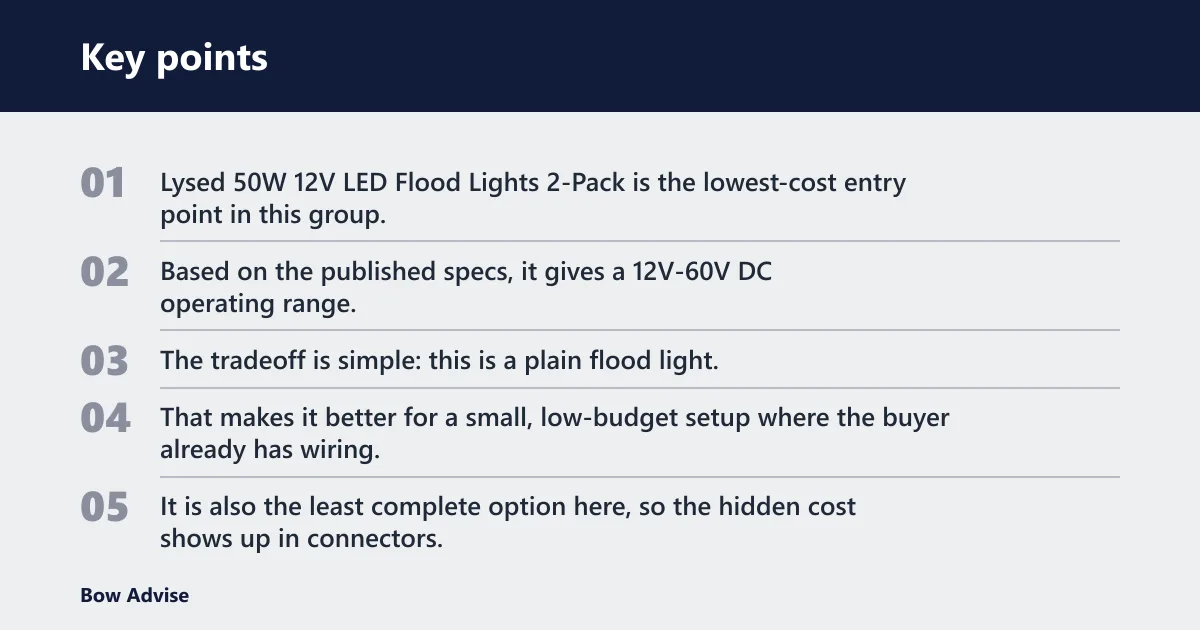
Lysed 50W 12V LED Flood Lights 2-Pack is the lowest-cost entry point in this group. Based on the published specs, it gives a 12V-60V DC operating range, an IP66 waterproof design, and daylight white output. The tradeoff is simple: this is a plain flood light, not a bowfishing-specific system with dedicated control, cable parts, or a purpose-built marine mount.
That makes it better for a small, low-budget setup where the buyer already has wiring, switches, and a stable mounting point. It is also the least complete option here, so the hidden cost shows up in connectors, fuse protection, and hardware for the boat.
12V power, wiring, and switch basics
A bowfishing light should fit the boat’s 12V system unless the product clearly states another setup. A battery-powered boat, a generator-supported boat, or a hybrid boat still usually runs the light itself on standard marine DC wiring. The real question is whether the wiring, fuse, relay, and switch are sized correctly for the load and the cable run.
Cheap kits often leave out the parts that make the system reliable. A weak cable set can cause voltage drop, flicker, or a light that looks bright at the stern and dull at the bow. That is where a low sticker price turns into a higher total cost.
Wide flood beam and mounting fit
Bowfishing needs broad water coverage, not a tight spotlight. Outrigger Outdoors says its systems use a 120-degree beam for wide coverage, and that is the kind of spread that helps light the water around the boat instead of only a small patch ahead of it. Wide flood coverage matters more in stained water and around a moving hull.
Mounting style should match the boat layout. A front-bow light helps when the shooter wants the water lit in front of the deck. A side or bar mount helps when the goal is even coverage around the boat. On a small boat, too much brightness from a tight beam can create glare without improving visibility.
Nice-to-have
Once the core system works, price starts moving with control, color options, sealing, and support. Those upgrades do not matter equally on every boat, but they matter when the water changes, the boat gets bigger, or the light has to survive wet, rough use for more than one season.
As an Amazon Associate we earn from qualifying purchases. Prices and availability are accurate as of the date shown and are subject to change

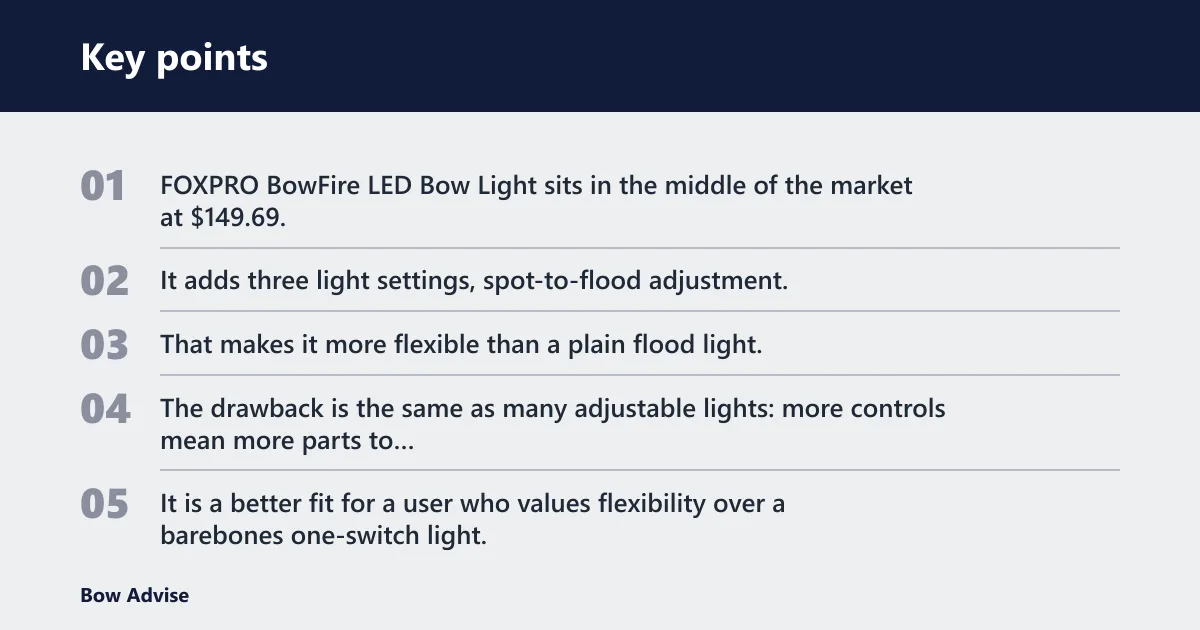
FOXPRO BowFire LED Bow Light sits in the middle of the market at $149.69. It adds three light settings, spot-to-flood adjustment, and constant or momentary switching. That makes it more flexible than a plain flood light, especially for bow-mounted use where the field of view changes with the boat angle.
The drawback is the same as many adjustable lights: more controls mean more parts to manage, and the buyer still has to think about how it mounts to the bow and how the battery setup handles the run time. It is a better fit for a user who values flexibility over a barebones one-switch light.
Bowfishing light controller
A controller can be a simple dimmer, a wireless remote, or a rheostat. Dimming matters when full output creates glare in shallow water or on a small boat. Color adjustment matters when the water color changes from clear to stained to muddy. A good controller lets the user tune the light instead of living with one fixed setting.
For a bow-mounted light, control is more than convenience. It can prevent over-lighting the water close to the boat, which often causes eye fatigue and washed-out visibility. That is a real value jump, and it explains part of the higher bowfishing light kit price.
Housing rating and marine durability
Housing quality is one of the clearest places where premium pricing shows up. Black Oak LED says its bowfishing lights use IP69K sealed housings, which is the kind of sealing buyers look for when spray, rain, and frequent wash-downs are part of the routine. Better sealing does not make a light brighter, but it can make it last longer.
Lower-priced lights often cut cost in the housing, gasket quality, or connector protection. That is where moisture gets in, corrosion starts, and the light ages early. A sealed housing is one of the few upgrades that can save money over time.
Color temperature and water matching
The same source says its systems offer adjustable color output from 2000K to 6000K. That range matters because water clarity changes what the shooter sees. White can help with general visibility. Green or mixed tones can be useful in some stained-water situations. RGB-style control adds flexibility, but only if the user actually changes settings based on conditions.
Color is not a novelty feature when the water is muddy or reflective. It can change how much glare bounces back off the surface and how clearly fish edges show up. That is why some buyers pay more for adjustability instead of chasing the highest raw brightness number.
Bar, clamp-on, and pod formats
Bar lights usually make the most sense when the buyer wants broad, even coverage from a fixed mount. Clamp-on kits suit buyers who want no-drill installation and fast removal. Pod mounts sit between the two, often giving more placement flexibility than a rigid bar without committing to a large permanent install.
The same source says its clamp-on GoPOD mounting needs no drilling. That matters on boats where the owner wants to keep deck hardware reversible. Bar systems are often better for a cleaner, more permanent installation, but they usually demand more planning for wiring and placement.
FOXPRO Mudcutter bowfishing light
FOXPRO Mudcutter Bowfishing Lights is listed at $269.95 and is the clearest example here of a step-up control package. It offers adjustable color and brightness, wireless remote control, and hard-wired rheostat control. That combination points to a more complete system for buyers who want on-the-fly tuning from the deck.
The downside is price and complexity. More control usually means more to wire, more to protect, and more to troubleshoot if a connector or remote fails. It is a stronger value for larger boats or changing water than for a simple weekend setup.
Consumables and spares
The hidden cost of a bowfishing light kit is rarely the lamp itself. It is the wiring bundle, fuses, relays, switch gear, connectors, and replacement parts that keep the system running after a failure. Buyers who skip those pieces usually pay later in downtime or improvised wiring.
Wiring bundle, fuse, relay, and switch parts
The same source says its bars include a wiring bundle with fuse, relay and switch. That is one reason some higher-priced kits look expensive on paper but cheaper in the boat. A complete wiring bundle reduces the chance of poor wiring, voltage mismatch, and loose connections.
Fuses and relays also protect the system when a cable rubs, a connector loosens, or a switch is left in the wrong position. Those are small parts with an outsized effect on reliability.
Replacement accessories and wear items
FOXPRO lists a replacement AC power supply for $44.95, a replacement battery cable for $9.95, and a replacement remote control for $19.95. Those prices show how support parts can add to total ownership cost, even when the light itself seems affordable. A missing cable or remote can sideline the whole system.
One caution: replacement parts are not universal. Buyers should not assume every kit uses the same connector, cable length, or control style. Matching the exact model matters.
Mounts, fasteners, and wire protection
A clamp-on setup may need periodic tightening. A bar mount may need better brackets or vibration control. Wire protection matters too, especially where the cable crosses a gunwale or rub rail. Heat shrink, loom, grommets, and strain relief are small expenses, but they help prevent failure from spray and vibration.
Say your 16-foot aluminum boat has a front deck and a low bow rail. A clamp-on light may fit the rail without drilling, but it still needs a clean cable route and a fuse near the power source. Otherwise, the “cheap” kit becomes a loose, flickering system before the season ends.
Budget setups
Budget kits usually make sense for a small boat, a shore setup, or a buyer who already has power and mounting parts. They are fine when the goal is to get on the water cheaply, but they tend to leave out control, sealing, and a complete wiring bundle. That is where the bargain turns thin.
| Tier | Expected bundle | Likely power need | Mounting style | Feature set | Common failure risks | Best fit |
|---|---|---|---|---|---|---|
| Budget | Single light or 2-pack, basic bracket, simple switch | 12V battery system; basic fuse and wiring usually separate | Clamp-on or simple fixed mount | White flood output, limited or no color control | Glare, weak spread, thin wiring, loose mounts | Small boats, shore use, first-time buyers on tight budget |
| Midrange | Purpose-built light, better wiring bundle, dimming or color control | 12V battery or hybrid boat setup | Bar, pod, or bow mount | Wide flood, adjustable brightness, better weather sealing | Voltage drop, control failure, moderate mounting flex | Most bass boats and mid-size boats in stained water |
| Premium | Complete system with sealed housing, wiring bundle, controller, support parts | 12V marine system with clean wiring and protected switches | Fixed bar or purpose-built clamp-on with strong hardware | Wide beam, dimming, remote or rheostat control, color tuning | Overbuying brightness for a small hull, extra complexity, higher repair cost | Bigger boats, rougher water, frequent night runs |
A common first-timer mistake is choosing the cheapest bowfishing light kit and forgetting that mounting hardware, wiring, and switches can quickly raise the total price. Picture a bass boat with a cramped front deck and a light that throws a tight beam. The water looks bright dead ahead, but the edges go dark, and the shooter loses visibility where the fish actually move.
How much does a bowfishing light kit cost?
For most buyers, the real answer is the total system, not the sticker on the lamp. A basic setup can start near $40 for the light alone, but a usable bowfishing package more often lands around $120-$350 once mounts, wiring, and power parts are added. Bigger, sealed, feature-rich systems can run $400-$800.
What drives the price up is not brightness by itself. Better sealing, a wider beam, a stronger wiring bundle, color control, and a cleaner mount all add cost. So does support, because replacement parts and matched accessories matter when something breaks.
What a fair price buys in each tier
At the budget end, buyers usually get light output and little else. Midrange pricing buys better control and a more complete install. Premium pricing is where sealing, wiring quality, and control hardware start to justify the jump. That is the difference between a light and a system.
Using the listings here, the Lysed light at $39.99 is the entry signal, FOXPRO’s BowFire at $149.69 sits in the middle, and FOXPRO’s Mudcutter at $269.95 marks a more advanced control package. Those are product prices, not full-system totals, so mounts and wiring can still move the final cost upward.
Are bar lights better than clamp-on kits?
Neither is better in every case. Bar lights are usually stronger for wide, even coverage and a more permanent installation, while clamp-on kits are better when the buyer wants no-drill mounting and quick removal. The right choice depends on boat size, deck layout, and how permanent the setup should be.
Bar lights for wider coverage
Bar lights fit buyers who want a fixed, broad beam across a larger work area. They tend to pair well with a dedicated wiring bundle and switch layout, which is why they often appear in the higher-priced tier. A bar also helps keep the light position consistent from trip to trip.
The tradeoff is size and installation effort. On a smaller hull, a long bar can feel oversized and may light more water than the crew needs.
Clamp-on kits for no-drill installation
Clamp-on bowfishing kits suit owners who do not want to drill the boat. Black Oak LED’s GoPOD clamp-on option is a good example of that approach. The main appeal is speed: mount it, tighten it, and remove it later if needed.
The downside is that clamp-on systems can be more sensitive to vibration or rail shape. A poor clamp fit often shows up as wobble, which hurts aim and reduces confidence in the setup.
When pod mounts make more sense
Pod mounts make sense when the buyer wants flexibility without committing to a full bar. They can be useful on boats with limited deck space or awkward mounting surfaces. They are a practical middle ground when bar coverage is too much and a clamp-on light is too basic.
That choice also affects cost. Pods often cost more than a simple clamp but less than a complete premium bar system. For many buyers, that middle path is the best value.
Can I use a bowfishing light on a bass boat?
Yes, a bass boat can work well with a bowfishing light, but the front deck, railing, and power layout have to fit the mount. A bass boat often benefits from a front-bow light or a compact bar that covers the water ahead without blocking casting space or blinding the deck.
Deck space matters because the shooter needs room to draw and track fish. A light that sits too high, too low, or too far aft can create shadows and glare. On a small bass boat, a controlled flood is usually better than raw output.
Bowfishing itself typically uses a reel and specially designed arrows, and bowfishing bows are typically set between 30-50 lbs. That lighter draw weight pairs well with a clean front-view lighting setup, since the shooter needs visibility more than extreme long-range brightness.
For a bass boat, the best match is often a compact 12V system with a decent wiring bundle and a mount that stays out of the shooting lane. A front-bow light can be enough for calmer water; a wider bar makes more sense when the boat needs broader coverage around the hull.
Frequently asked questions
What is included in a bowfishing light kit?
Basic kits may include only the light and a simple mount. Better kits add a wiring bundle, switch, fuse protection, and sometimes a controller or remote. Buyers should check whether wiring, brackets, and battery leads are included, because those parts often decide the real total cost.
Are bowfishing light bars better than clamp-on kits?
Bars are better for wide, fixed coverage and a more permanent setup. Clamp-on kits are better when the buyer wants no drilling and quick removal. The better choice depends on the boat, not the price tag alone. Small boats often favor clamp-on simplicity.
What price range should I expect for a quality LED bowfishing light?
A quality LED bowfishing light often starts around the midrange and rises from there as sealing, control, and wiring quality improve. The best value is usually not the cheapest light, but the one that matches boat size, beam spread, and the water you fish most often.
Do bowfishing light kits work on battery power or generator power?
Many systems work on standard 12V battery setups, and some are built for generator, battery, or hybrid boats. The key is the light’s DC compatibility and the quality of the wiring path. Buyers should match the system to the boat’s actual power layout, not guess from the label.
What features justify a higher bowfishing light kit price?
Higher prices usually buy better sealing, wider beam control, dimming or remote adjustment, stronger wiring bundles, and support parts that keep the system running. Adjustable color can also matter in changing water. Those features are about usable performance and durability, not just a bigger brightness number.
What is the difference between a bowfishing light and an underwater fishing light?
A bowfishing light is aimed to flood the surface and the water around the boat so the shooter can see fish movement and shot angle. An underwater fishing light is built to attract fish below the surface. The goals are different, so the beam pattern and mounting style are different too.