Bowfishing Light vs Spotter Light: Which to Use for Your Boat
Use a bowfishing light for broad coverage on bigger boats and in muddy water. Use a spotter light for fish acquisition in clearer water and for planning shorter shots. Pick the wrong beam, and you waste scan time, spook fish, or lose shots to glare and shadow. This guide compares both lights by water clarity, boat size, and shot distance, then shows which setup wins in each case.
Bowfishing light vs spotter light: what each one is for

A bowfishing light is built to light a broad slice of water so the crew can see structure, movement, and multiple fish at once. A spotter light acts like a search beam, so the shooter can pick a fish faster and keep the target centered without flooding the whole surface.
| Decision factor | Bowfishing Light | Spotter Light | Winner |
|---|---|---|---|
| Beam shape | Wide flood beam, often used for broad water coverage | Focused forward aim for fish acquisition | Bowfishing Light |
| Best use | Scanning a wide area from a bow-mounted light or multiple mounts | Finding a target fish and reducing wasted scan time | Tie |
| Dead-zone control | Needs overlap between fixtures to avoid shadow lines | Helps fill a narrow target lane without lighting everything else | Spotter Light |
| Water coverage | Best for open coverage, especially on wider boats | Best for targeted acquisition in a chosen lane | Bowfishing Light |
| Shot planning | Useful when several fish may enter the lit area | Useful when shots are short and deliberate | Spotter Light |
How a flood beam differs from a focused beam
Flood beam lights spread light across a broad area, and examples from competitors may describe spreads of roughly 120 degrees. That shape helps on a bowfishing boat because shallow fish can appear anywhere in front of the deck. A focused beam throws more output into a smaller lane, which makes a fish stand out sooner.
A daylight white output in roughly the 5000K to 6000K range is often discussed for bowfishing because it can give strong contrast on surface water. Brightness alone does not decide the result. Beam shape decides whether that brightness covers a wide zone or concentrates on one fish.
Where each light fits in a night bowfishing setup
Bowfishing often happens after dark on still water, and many boats run generators to power several lights at once. Raised bow platforms and bow-mounted lights help the crew look into shallow water ahead of the boat. Spotter lights are usually aimed to search a narrower lane, while flood lights do the heavier coverage work.
Suppose a 16-foot boat runs a wide deck and two anglers up front. A pair of flood lights can light the water, but a forward-aimed spotter can help one shooter pick a carp or gar faster when the water clears near the bank.
📊 Wikipedia states common bowfishing draw weight is 40–50 pounds. Source: Bowfishing.
Which light works better in clear, stained, or muddy water?
Clear water often favors a spotter light because fish are easier to isolate and a focused beam can reduce wasted light on empty water. Stained water sits in the middle, where a balanced setup often works best. Muddy water often favors a bowfishing light because the goal shifts from long-range acquisition to broader usable coverage.
Clear water: when a spotter light helps pick fish out faster
In clear water, a focused beam can separate a fish from bottom detail, weeds, and surface reflections. That matters when the shot is short and the target may move quickly. A bowfishing light can still work, but it may light more water than needed and create extra glare off the surface.
Stained water: balancing surface glare and usable contrast
Stained water can reward a mixed setup. A wide flood beam keeps the boat from carrying dark patches, while a spotter beam helps define the fish once movement appears. Daylight white light often helps here because it improves contrast without pushing too far into a harsh blue or amber tint.
Muddy water: why wide coverage often matters more than range
In muddy water, range falls off fast. That makes broad coverage more useful than a narrow beam that reaches farther but sees little. A flood-style bowfishing light is usually the safer bet because the crew needs to cover the area immediately in front of the bow and along the sides.
How boat size, mount height, and shot distance change the choice
Small boats with short bow shots often do fine with one strong flood light or a compact pair. Mid-size boats need more overlap to prevent dead zones. Higher mounts increase reach, but they can also create shadow lines if the beam angles do not overlap well.
Small boats and short bow shots
For short shots, often under 10 feet according to Bass Pro, the light does not need to throw far. A smaller boat can benefit from a bow-mounted light that covers the water just ahead of the platform. A spotter light helps only if the target lane stays narrow and glare is under control.
Mid-size boats that need overlap to remove dead zones
On a mid-size deck, one light rarely covers the whole working zone. Two or more flood beams should overlap at the edges so the water does not go dark between mounts. This is where a spotter light can fill a blind lane, but only if the boat layout leaves room for it.
Higher mounts, wider decks, and longer forward scans
Higher mounting points expand visible area, but they also stretch shadows from rails, consoles, and people on deck. A wider boat often needs lights on the bow and gunwales so the lit areas meet in the middle. That layout matters more than raw lumens once the deck gets broad.
Decision matrix: choose the better light by setup
Match the light to the job, not just the label. Water clarity tells you how much reach you need. Boat width and mount height tell you how easily dark gaps will form. Shot distance tells you whether you are scanning broadly or aiming at one fish lane.
| Setup condition | Bowfishing Light | Spotter Light | Better choice |
|---|---|---|---|
| Clear water | Works, but may light more area than needed | Helps isolate fish and reduce wasted light | Spotter Light |
| Stained water | Strong option for coverage and usable contrast | Useful as a helper beam for target lock | Tie |
| Muddy water | Best when range is limited and coverage matters | Can feel too narrow for poor visibility | Bowfishing Light |
| Narrow boat, low mount | Easy to cover the front water with one or two lights | Can aid target pickoff in a thin lane | Tie |
| Wide boat, high mount | Good if multiple lights overlap well | Helps fill a center lane, but not the whole deck | Bowfishing Light |
| Short shot distance | Very workable, especially on bow platforms | Excellent for fast target definition | Spotter Light |
| Longer forward scan | Better for broad lane coverage | Useful only if the fish stay in a defined line | Bowfishing Light |
Coverage checklist for dead zones, shadow lines, and overlap
- Place the main lights so their beams meet, not stop short of each other.
- Check the edges of the bow and gunwales for dark bands after mounting.
- Look for shadow lines created by railings, trolling motors, or people on deck.
- Use more than one light on wider boats so the lit zones overlap.
- Keep the forward beam low enough to see shallow water, but not so low that it creates a bright wall of glare.
Quick setup notes for solo shooters, small crews, and tournament boats
Solo shooters usually want the simplest layout with fewer control points and fewer dark gaps. Small crews can split tasks, with one person running a spotter while another watches the flood-lit water. Tournament boats often need both, because speed of target acquisition and total coverage both matter.
A common first-timer mistake is mounting one powerful light high on the bow and assuming it will cover everything. The result is often a bright center and dark edges, especially on wider boats. A second light placed for overlap usually solves more problems than adding raw brightness.
Do I need a spotter light if I already have bowfishing lights?
Many boats do not need a spotter light, but a spotter can add value when the crew wants faster fish acquisition, tighter aim, or less wasted light in clear water. If the bowfishing lights already cover the water evenly and the shot lane is short, the extra light may be unnecessary.
When a spotter light adds value
A spotter helps when the crew keeps losing fish in the edge of the beam or in surface glare. It also helps on boats where the main flood lights are mounted high and leave a narrow target lane. In that case, the focused beam gives the shooter a cleaner visual cut.
When a bowfishing light alone is enough
A bowfishing light alone can be enough on small boats with short shots and simple deck layouts. If the water is muddy and the boat already has good overlap from one or two flood fixtures, a spotter may not add much. Broad coverage is doing the main job already.
Common failure cases: glare, washout, and underlit edges
Too much light on calm water can wash out the surface and make fish harder to separate from reflections. Too little light leaves dark edges where fish can move unseen. The wrong beam angle can do both at once by lighting the center and leaving the sides dim.
Choose Bowfishing Light if… / Choose Spotter Light if…
Choose a bowfishing light if you need broad water coverage, you run a wider boat or higher mount, or you fish muddy water where short-range visibility matters more than pinpoint target acquisition. Choose a spotter light if you fish clearer water, shoot short lanes, or need a narrower beam to separate fish from glare and surface clutter.
Choose bowfishing light if…
Choose a bowfishing light if your deck has open water to cover, if you plan to run multiple lights from a generator or inverter, or if you want to reduce dead zones across a bow platform. It is also the safer first choice when the setup must work across changing water conditions.
Choose spotter light if…
Choose a spotter light if the main issue is finding the fish fast, not lighting the whole water surface. It fits best on clear water, shorter shots, and narrow lanes where a forward-facing aim can reduce scanning time. That is where the focused beam earns its place.
When a mixed setup is the best answer
A mixed setup is often the best answer for mid-size and tournament boats. Use flood beams for coverage, then add one spotter to cut through the center lane. That combination handles both jobs: broad visibility and fast target lock.
What is the difference between a bowfishing light and a spotter light?
A bowfishing light is a coverage tool. A spotter light is an acquisition tool. The first spreads light across a broad area so the crew can scan water, while the second focuses forward so a fish stands out sooner in a smaller lane.
Which light works better for muddy water: bowfishing light or spotter light?
A bowfishing light usually works better in muddy water because broad coverage matters more than reach. Mud cuts visibility fast, so a wide flood beam helps the crew read the nearest water and spot movement sooner. A spotter light can still help, but it is usually secondary.
Can I use regular flood lights as bowfishing lights on a boat?
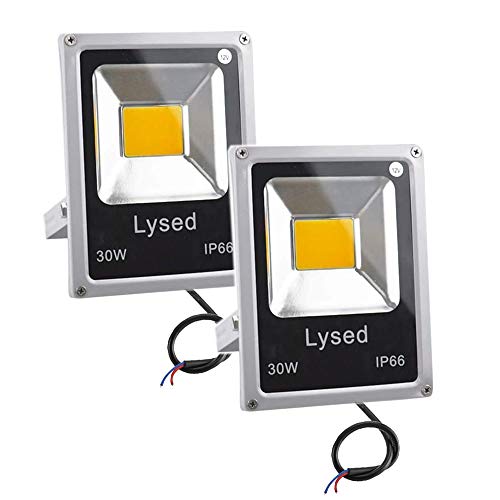
Regular flood lights can work if they are built for boat use, have suitable waterproof protection, and match the boat’s power system. The main problem is beam width plus mounting, durability, and resistance to splash and rain. A rating like IP66 can be useful to look for in that setting.
How many bowfishing lights do I need on a boat?
There is no single number that fits every boat. A small boat may get by with one or two well-aimed flood lights, while a wider deck may need several lights to remove shadow lines. The right count is the one that gives overlap without leaving dark gaps.
What color light is best for bowfishing at night?
Daylight white in the 5000K to 6000K range is a common choice because it helps fish stand out against surface water and bottom detail. The best color still depends on water clarity. Clear water often benefits most from strong contrast, while muddy water needs coverage first.
Are bowfishing lights and fish spotting lights the same thing?
No. They overlap in purpose, but they are not the same job. Bowfishing lights are built for broad illumination of the work area, while fish spotting lights are aimed to find a target more quickly. The difference shows up most in beam shape and mounting position.
What causes dead zones or dark spots between boat lights?
Dead zones happen when light beams do not overlap enough, or when hardware on the boat blocks part of the beam. High mounts, wide decks, and poor spacing can create shadow lines near the edges or center. The fix is usually better placement, not just more brightness.
What should I mount first on a bowfishing boat: bow light or spotter light?
Start with the bow light if the boat still has coverage gaps, glare at the front deck, or weak visibility in muddy water. Start with the spotter light if broad coverage is already handled and the problem is target pickup in clear water. The first mount should solve the biggest visibility problem, not the fanciest one.