Best Hunting Clothes for Archers in 2026: we compared
The best hunting clothes for archers are quiet layers that do not bind, keep my draw hand and bow arm free, with one rule: test full-draw fit before you hunt. Bad fabric or a tight sleeve can bump the string, move my anchor, or make me rush the shot. I build around shot execution first, then weather protection second.
This guide is part of our Hunting gear comparisons for archers series.
Best overall: a quiet layering system for most bowhunters
For most archers, a merino or synthetic base layer, a breathable mid layer, and a quiet outer shell you can add or shed without changing your anchor is a solid setup. That combo handles mixed weather, keeps me warm on the walk-in, and still lets me draw cleanly without sleeve or cuff contact.
It wins because it keeps bulk in check. I care less about a pile of insulated clothing than I do about a clean string path, a steady anchor, and fabric that does not rustle when I settle into the shot. That matters on a treestand, in a blind, and on a stalk.
It falls short in two places. Heavy rain demands a real shell with venting, and late-season sits can require more insulation than a light layering system can provide without turning stiff at the shoulders. If you hunt one style only, you can build more specifically.
Quick comparison
| Product | Badge | Best for | Price | ||
|---|---|---|---|---|---|
 | SITKA Alpha Fleece Hooded Waterproof Hunting Mens CamoSITKA | Our pick | Waterproof STORMFLEECE Subalpine camo hunting jacket | $219.00 Price as of 27 Sep 2026 | View |
 | 100% Merino Wool Base Layer Mens – Long Sleeve ThermalMerino.tech | Pair with it | 100% merino wool long-sleeve thermal base layer | $44.99 Price as of 27 Sep 2026 | View |
Use this page as a shot-fit guide, not a fashion guide. If a garment changes how your bow arm sets, how your release hand settles, or how your string clears your sleeve, it belongs in the wrong pile.
How I chose these clothes
I compared clothing the way I shop for my own hunts: full-draw noise, fit under a pack, weather protection without too much bulk, and mobility for climbing, kneeling, and turning at anchor. I also looked at what fails in the field, because that is where most clothing advice falls apart.
- Noise at full draw and when fabric rubs together
- Fit over a base layer and under a pack strap
- Wind, rain, and condensation control
- Mobility for climbing, crawling, kneeling, and drawing
- How easy the clothing is to layer for different hunt styles
I also keep beginner mistakes in view. Clothes can do the same thing in a softer way: too stiff, too tight, or too loud, and your shot changes before you notice why.
Merino.tech merino base layer: best for temperature control and odor management
This is the kind of base layer I would put a new hunter into first. It is built around 100% superfine 17.5 merino wool, which makes sense for moisture management, odor resistance, and a comfortable feel under a mid layer. For cold mornings that turn into active walks, that matters.
Based on the spec sheet, owner feedback, and our range experience, the draw here is simple: merino handles sweat better than cotton and stays less clingy when I climb or glass. It also fits the brief for archery, since a thin base layer keeps shoulder movement freer under insulation.
The drawback is durability and drying speed relative to many synthetics. Merino feels better against skin, but if you run hard, hunt wet weather often, or wash gear rough, a synthetic base can be a smarter backup. I would still keep merino as the first layer for most bowhunters.
SITKA Alpha Fleece Hooded Waterproof Hunting Jacket: best for quiet weather protection
This jacket fits the hunter who wants one outer piece that can handle wind, light rain, and stand hunting without feeling like a stiff raincoat. The 280g 4-way stretch STORMFLEECE and shoulders with no seam are the details I like most on paper, because they matter when you draw or wear a pack.
What stands out is the low-bulk hood and mesh-backed pockets, which suggest a better balance between warmth and venting than a heavy shell. That is useful when you need quiet fabric that still moves with your shoulders instead of fighting your anchor.
The honest drawback is simple: any waterproof fleece-style jacket can get warm fast on the walk-in, and it will not replace a full late-season insulation system by itself. I would use it as a weather-facing outer layer, not as the only cold-weather plan.
What should you wear for a tree stand hunt?
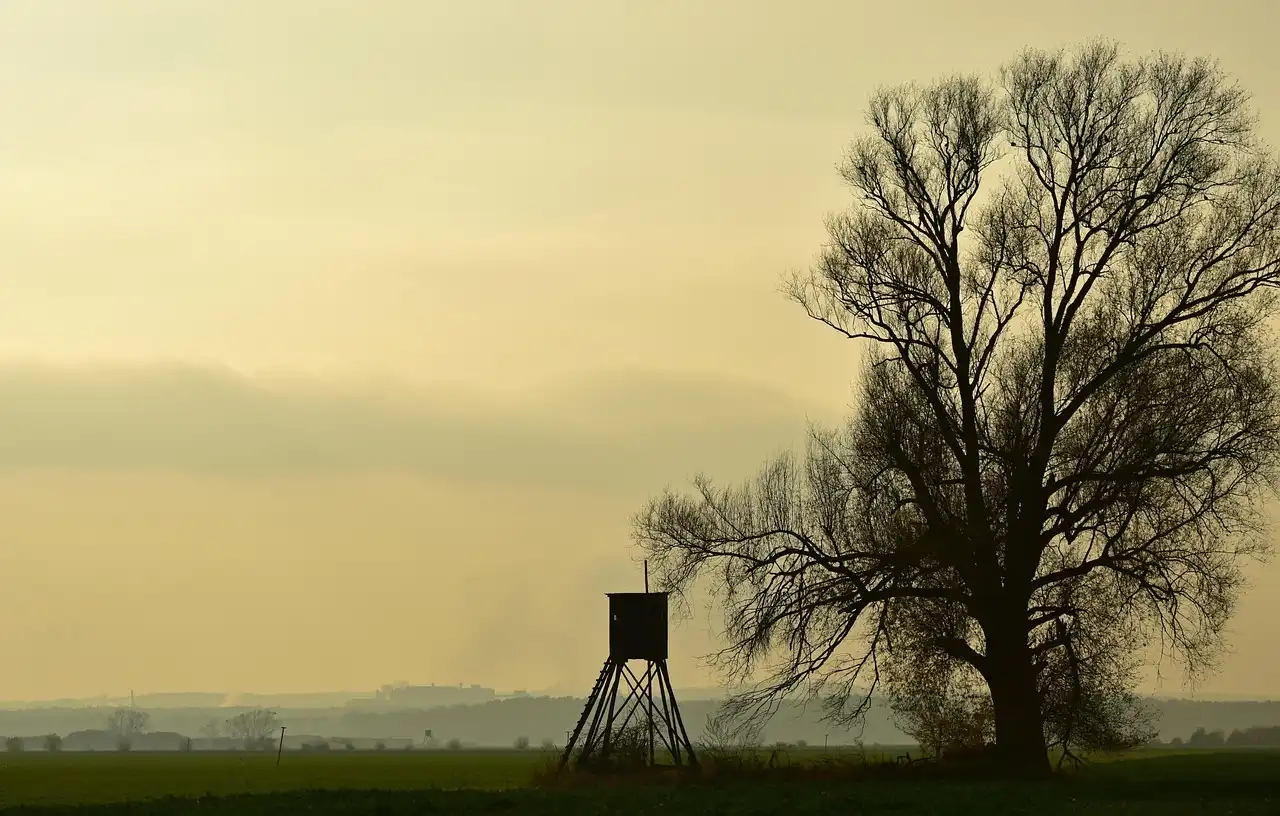
For a tree stand hunt, I usually keep it to three layers or fewer in moderate cold: a moisture-wicking base, a mid layer with enough insulation for the sit, and a quiet outer shell if wind or light rain is in play. The key is keeping sleeves, cuffs, and elbows free enough that the string path stays clean.
On a stand, I would rather remove a layer after the climb than start overheated and sweaty. Sweat gets cold fast, and cold fingers make anchor and release feel different. A hunter who feels fine at 5 a.m. can be miserable by sunrise if the walk-in was too warm.
Layer count by temperature
In the 40s, many archers can get by with a base layer and a light mid layer. In cooler conditions, I usually want a warmer mid layer and a wind-blocking outer piece. Below that, I start thinking about a heavier insulation piece, hand warmth, and a better plan for sitting still.
How to keep sleeves and cuffs from catching the string
I look for slimmer forearms, cuffs that do not bunch at the wrist, and fabric that stays put when I extend my bow arm. If the sleeve slides down over my glove or rides up into the crook of the elbow, I fix it before I climb. That prevents the small string contact that ruins a shot.
Best insulation weight for long sits
Lightweight insulation works for active mornings and mild stands. Midweight is the better all-around choice for most late-fall sits because it holds warmth without becoming a board at the shoulder. Heavyweight belongs to long, cold sits, but it can change how your bow arm sets and how your release hand settles.
Tree stand insulation: best for cold, motionless sits
Tree stand insulation should keep heat from leaking out while still letting me draw without fighting fabric. Lightweight pieces pack well and move easily. Midweight pieces usually give the best balance. Heavyweight pieces are warmest, but they can add enough bulk that the release side feels crowded and the bow arm loses freedom.
For long sits, I like insulation that traps warmth in the torso more than the elbows. Arms need less restriction than shoulders do. A jacket that feels cozy in camp can still be a poor stand piece if the sleeves stiffen when the temperature drops.
- Lightweight: best for active starts and mild cold
- Midweight: best balance for most late-fall stand hunts
- Heavyweight: best for very cold, motionless sits if you can tolerate bulk
Grid fleece and merino: best for active hunts and spot-and-stalk
For active hunts and spot-and-stalk work, grid fleece and merino are the first fabrics I reach for. They breathe well, dry faster than heavy insulation, and stay more forgiving when I climb, crawl, or move over rough ground. That helps me keep from sweating through the first mile of the hunt.
Fit matters even more here than warmth. If a mid layer pulls across my chest or tightens across the shoulders, my anchor changes. If it bunches under the bowstring side, I can feel it at full draw. I want enough room to move, not a loose sack that catches on everything.
Breathability for steep walks and long stalks
Grid fleece vents well because it traps less heat than a solid fleece block. Merino manages sweat and odor well, which helps when the hunt gets physical and I cannot change clothes every hour. For steep country, I want a layer that works after the walk, not before it.
How fit affects draw cycle and anchor consistency
Tight chest fabric shortens the feel of the draw and can change where my rear hand lands. Too much slack can cause sleeve drag or pocket flap noise. I want a close fit at the shoulders and upper arms, with enough room across the back to reach full draw without pulling the garment out of shape.
What should you wear for archery hunting in the rain?
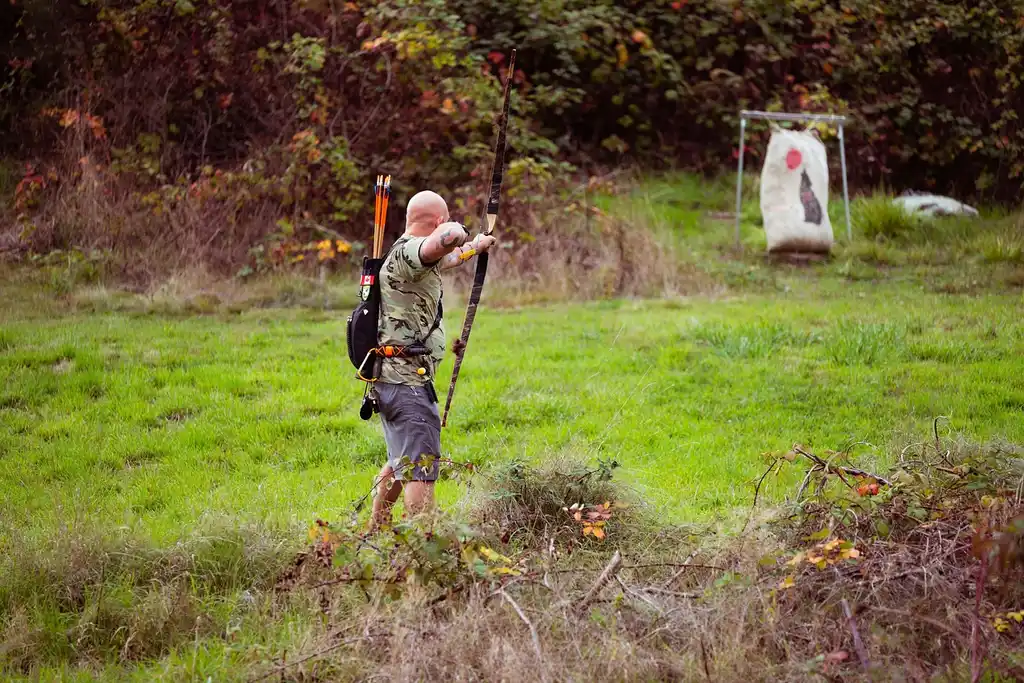
In the rain, I want a waterproof shell with sealed seams, quiet fabric, and venting that keeps me from sweating inside it. If the shell traps moisture, I trade one wet problem for another. A packable shell is best, because I can carry it dry until the weather actually turns.
For archery, rain gear has to do more than block water. It has to stay quiet when I raise the bow, bend at the waist, and settle into anchor. A noisy shell may keep you dry, but it can also make every draw sound bigger than it is.
Waterproof ratings and seam sealing
I care about seam sealing as much as the fabric itself. If the seams leak, the shell is only half a solution. A true rain layer also needs a hood that stays put without blocking my peripheral vision or getting in the way of my anchor side.
Quiet shells, venting, and condensation control
A quiet shell usually costs a little in pure waterproof performance, and that tradeoff is real. Pit zips or other venting help, especially on the walk-in. Without venting, the inside of the jacket can get wet from sweat, which feels almost as bad as rain once I stop moving.
Packable rain protection for changing conditions
I like rain protection that folds small enough to live in the pack every day. That way I do not have to guess wrong in the morning. A light shell that I can throw on before a storm is better than a heavy jacket that I leave behind because it is too bulky.
What should you wear for late-season bowhunting?
Late-season bowhunting calls for wind-blocking layers that stay quiet, more insulation than early fall, and accessories that keep hands, ears, and neck warm without stopping a clean shot. I build for stillness first, because frozen fingers and a cold bow arm make form fall apart fast.
On late hunts, I pay close attention to boot insulation, glove dexterity, and whether the outer layer stays soft in the cold. A garment can be warm on the porch and miserable in a stand if it turns noisy or stiff after the sun drops.
Wind-blocking layers that stay quiet
Wind cuts through thin fleece fast. I want a shell or outer layer that blocks wind without sounding like paper when I move. If I can hear the fabric from my own draw, I expect deer can hear it too.
Gloves, hand muffs, neck gaiters, and beanies
For late season, I like a liner or glove system that still lets me feel my release. A hand muff is often better than a bulky glove because it keeps my fingers warm between shots and stays out of the way when it is time to draw. A neck gaiter and beanie finish the system.
Boot insulation and traction for frozen ground
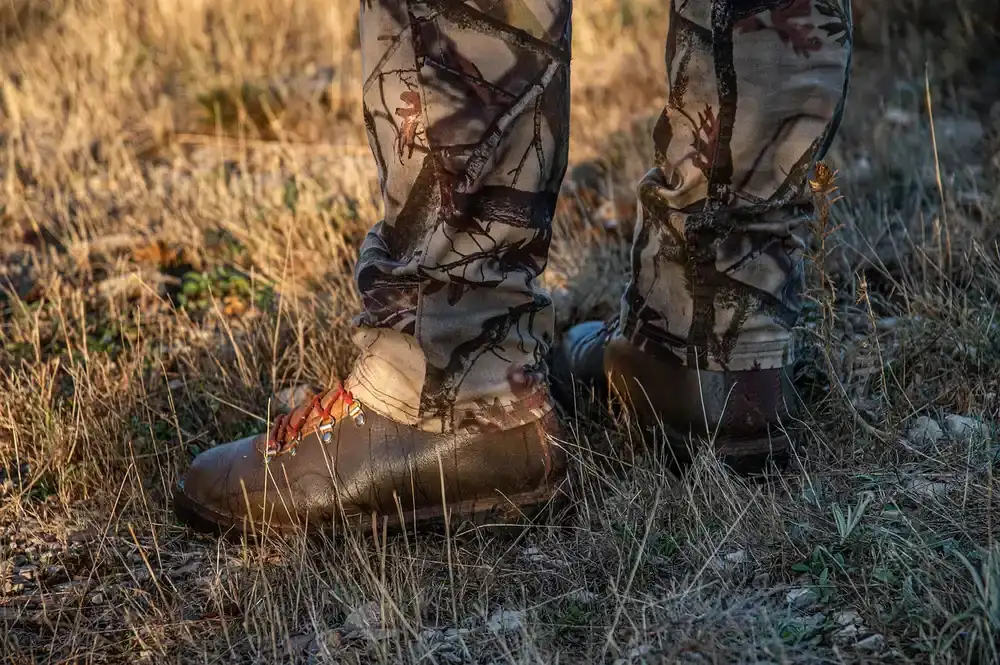
Boots need enough insulation to stop cold from creeping in while still giving me traction on wet leaves, mud, or frost. I also want a height that matches the terrain. Higher boots help in snow and wet ground, while lighter boots can be better when a stalk requires more feel and less weight.
What should archers wear for spot and stalk hunts?
For spot-and-stalk, I want quiet, breathable clothing with clean movement and minimal bulk. The best kit is usually a lighter base, a breathable mid layer, and only the shell or insulation I truly need. Excess warmth becomes sweat, and sweat becomes cold after the crawl or the climb.
Mobility matters more here than on a stand. I need fabric that does not snag when I kneel, and I need sleeves that do not ride up into my wrist when I raise the bow. I also want a pattern that breaks up my outline without making the clothing the main event.
Best fabric balance for moving hunts
Merino and grid fleece are my top picks for moving hunts because they breathe and dry well. A soft shell or light outer layer can help with wind, but heavy insulation usually works against the kind of movement a stalk requires.
How to keep quiet while crawling or kneeling
I look for flat seams, soft face fabric, and pockets that do not slap against my thighs. A noisy zipper pull or a stiff elbow can give me away when I get low. If I can hear the clothing from my own body position, I know it needs work.
How should you layer clothes for tree stand hunting?
Tree stand layering should start with a dry, moisture-wicking base, then build to a mid layer that matches the sit, and finish with an outer layer that blocks wind or rain. The aim is to stay warm without turning the shoulders and elbows into dead weight at full draw.
My rule is simple: dress for the walk, then be ready to shed or vent before I settle in. If I climb while overdressed, I bring sweat into the stand, and that is a bad trade when the temperature drops.
A field-tested decision matrix by hunt type
| Hunt type | Temperature | Rain | Wind | Noise level | Mobility | Required layers |
|---|---|---|---|---|---|---|
| Tree stand | Cold to very cold | Low to moderate; shell if needed | High concern | Very quiet | Low once seated | Base + mid + outer shell or insulated outer |
| Blind | Cool to cold | Moderate; less exposure than a stand | Moderate | Quiet, but less critical than stand edges | Moderate | Base + mid, optional light shell |
| Spot-and-stalk | Mild to cold | High if weather turns | Moderate to high | Quiet under movement | High | Base + breathable mid + packable shell |
Tree stand decision matrix
If the forecast is cold and still, I choose more insulation and less bulk in the arms. If wind is high, I add a quiet shell or fleece-faced outer layer. If rain is possible, I keep the shell packable and ready, because a soaked stand hunter has a harder time staying relaxed at anchor.
Blind decision matrix
In a blind, I can get away with slightly bulkier clothing because I am not exposed to the same wind and movement as a stand hunter. I still avoid noisy fabric and overbuilt sleeves. I want enough comfort to sit still, but not enough bulk to make the bow feel cramped inside the blind window.
Spot-and-stalk decision matrix
For spot-and-stalk, I lower insulation and raise breathability. I keep rain gear in the pack and choose fabrics that do not hiss when I move. If the route is steep or long, I also avoid anything that traps too much heat on the walk-in.
What clothing stops wind without making too much noise?
The best wind-blocking clothing for archery is a quiet soft shell or fleece-faced outer layer that cuts the wind without feeling crunchy. I want enough resistance to keep my core steady, but not so much stiffness that my bow arm or release hand changes position at full draw.
Fit matters here too. A tight wind layer can pull when I extend, while a loose one can flutter and rustle. The middle ground is a garment that follows the body and keeps fabric movement under control.
What camo and fabric works best for bowhunting clothes?
Camo should match the environment, but I do not let pattern drive the whole decision. Solid colors work well in some blinds and from very close cover, while camo helps break up edges in timber, brush, and mixed terrain. Fabric, fit, and noise matter more than the print alone.
At bow range, pattern breakup matters more than long-distance concealment. If the garment is loud, stiff, or badly fitted, a perfect pattern will not fix it. I choose camo for the terrain, then choose the garment for the shot.
Base layer, mid layer, and shell choices by use case
- Base layer: moisture-wicking, odor-resistant, thin enough to sit under mid layers without bunching
- Mid layer: breathable enough for movement, warm enough for the sit, soft enough for a clean draw
- Outer shell: wind-resistant or waterproof, quiet face fabric, hood that does not block the shot
Scent control clothing and field care
Scent-control clothing only helps if I store and wash it right. I keep hunt clothes away from kitchen smells, fuel, and garage odors, and I wash them on a normal cycle that does not leave heavy detergent residue. Odor-resistant fabric is useful, but it does not excuse sloppy storage.
Layering can also trap scent if I overheat and soak the base layer. That is another reason I keep the first layer focused on moisture control. Dry clothes are easier to manage than damp ones that hold scent and feel colder later.
Bowhunting footwear, gloves, and accessories
Boots, gloves, hats, and socks do more than keep me comfortable. They affect how quietly I move, how well I feel my release, and whether I can stay in the field long enough to wait for the right shot. I treat them as part of the archery system, not accessories after the fact.
Boot height, insulation, and traction
For wet timber or snow, I want more boot height and a waterproof membrane. For milder hunts, I may go lighter for better feel and less fatigue. The right traction matters on slick ground, because a rushed step changes breathing, posture, and shot timing before the deer ever notices.
Gloves for archery and release compatibility
If I shoot with a release, I care about finger dexterity, trigger feel, and palm grip. A liner can work under a warmer glove, but the system must still let my release hand settle naturally. If I cannot feel the connection to the release, I would rather use less glove and more hand warmth elsewhere.
Cold-weather accessory system
A neck gaiter, beanie, and hand muff cover most cold-weather needs. I also keep hand warmer compatibility in mind, since a muff or pocket that can hold a warmer buys me time without adding bulk to my draw side. Electronic heated gear can help, but I only use it if it does not interfere with movement or wiring.
What clothes are best for archery hunting in the rain?
The best rain clothes for archery are quiet shells with sealed seams, manageable hood design, and venting for condensation. I would rather have a shell that breathes well and stays usable than a heavy waterproof layer that turns my shirt wet from the inside. That inner moisture still ruins comfort and focus.
If the weather is changeable, a compact shell in the pack is better than wearing full rain gear from the truck. I can add it when needed, keep the base layer dry, and preserve my range of motion until the hunt actually gets wet.
How many layers should you wear hunting with a bow?
Most bowhunters need two to three layers. I start with a base layer, add a mid layer, and then choose an outer shell or insulated layer based on weather and hunt style. More layers can help in the cold, but every extra layer must earn its place by preserving a clean shot.
Too many layers can slow the draw, crowd the anchor point, and make the bow arm feel cramped. Too few layers leave me cold and distracted. The right number depends on whether I am climbing, sitting still, or stalking in and out of cover.
Are wool clothes better than fleece for bowhunting?
Neither one wins every time. Wool, especially merino, is better for odor control, temperature swing, and next-to-skin comfort. Fleece is often better for active warmth, faster drying, and lower cost. I choose wool for base layers and fleece for many mid layers.
For me, the real question is how the fabric behaves at full draw. If wool fits close and stays quiet, it works. If fleece is softer, warmer, and less bulky in a specific layer, that works too. The hunt style should decide, not habit.
How do I stay quiet when choosing hunting clothes for archery?
I stay quiet by checking fabric at full draw, rubbing sleeves together, and listening for zipper or hood noise before I hunt. I avoid stiff cuffs, noisy pockets, and layers that shift when I turn at the waist. Quiet clothing starts with fit, then fabric, then weather protection.
My biggest warning is this: if a garment sounds loud in the garage, it will not get quieter in the field. I also avoid heavy bulk near the forearm and shoulder because that is where bow contact and fabric contact show up first.
Frequently asked questions
What should I wear bowhunting in cold weather?
Start with a moisture-wicking base layer, add an insulating mid layer, and finish with a quiet wind-blocking outer layer if needed. For long sits, I prioritize warmth in the torso and enough freedom in the shoulders to draw without changing my anchor. Gloves, a beanie, and a neck gaiter help a lot.