Hunting Stabilizer vs Target Stabilizer: What Archers Need
I tell many hunters to start with a short-to-moderate hunting stabilizer; go longer only if your setup is heavy, your shots are slow, or you hunt from a blind and want more hold. Pick the wrong stabilizer and you get extra bulk, poor balance, and misses from a bow that feels different on every shot. I’ll break down hunting vs target stabilizers, show where a compact rig wins, and explain when a hybrid setup makes sense.
| Decision factor | Hunting stabilizer | Target stabilizer: what archers need | Winner |
|---|---|---|---|
| Maneuverability in cover | Shorter and easier to move through trees, blinds, treestands, packs, and uneven ground | Longer bars can snag, bump rests, and slow movement in tight spaces | Hunting stabilizer |
| Fine balance control | Usually simple front weight and dampening | More room for front, side, and rear adjustments | Target stabilizer: what archers need |
| Carry comfort | Lighter overall and better for long walks or steep climbs | Heavier setup can feel better at full draw, but costs more on the hike | Hunting stabilizer |
| Best use case | Stand hunting, blind hunting, thick cover, and quick shots | Target rounds, field archery, and long practice sessions | Tie |
Hunting stabilizer vs target stabilizer: the real difference
A hunting stabilizer is built to stay out of the way first. A target stabilizer is built to give you more control over how the bow sits in your hand, even if that means more length and more parts hanging off the riser.
Most compound bows have an accessory bushing for a front stabilizer, so the starting point is the same. The split happens in use: hunters usually want a compact, maneuverable setup, while target archers have more room to fine-tune length, weight, and balance.
What a stabilizer changes on a bow
Both styles move weight away from the riser. That changes the bow’s feel at full draw and during the shot cycle. A front stabilizer bar is the first piece most archers notice, because it mounts at the front of the riser and changes how the bow wants to tip.
Longer bars give the bow more steadiness through the front end. Shorter bars keep the bow easier to move. That tradeoff shows up fast when I am climbing into a stand with a pack on my back.
Why hunting bows usually run shorter and lighter
Hunters may choose a shorter stabilizer because the bow must move through trees, blinds, treestands, packs, and uneven terrain. A hunting stabilizer should give meaningful stabilization without making the bow unnecessarily heavy. That is why compact hunting models such as the Bee Stinger MicroHex make sense in the field.
I have shot bows that felt great on the range and annoying in the woods. Extra rod length was the reason. When I carry a bow through brush, I want the least hardware that still settles the sight picture.
Why target bows usually use longer bars and more adjustment
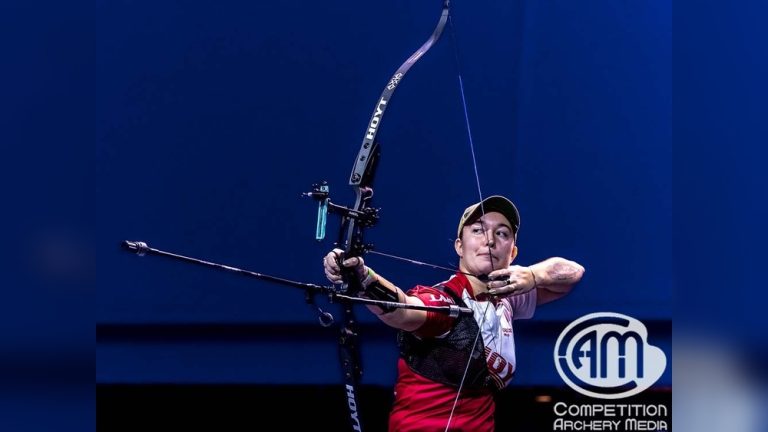
Target archers can accept a longer, heavier setup because the bow is used on a range or course. The extra mass helps them tune front and rear weight until the bow sits where they want it during the shot. The Bee Stinger Premier Plus is built for that kind of flexibility.
That setup makes less sense when you are kneeling in wet leaves or sitting in a cramped blind. The field punishes length more than the range does.
What does a front stabilizer bar actually do?
A front stabilizer bar can change steadiness, sight movement, and how quickly the bow reacts when you settle your pin. It can also cut down on vibration and hand shock feel after the shot, but it does not fix a bad tune or sloppy release. Think of it as a handling tool, not a cure-all.
Leverage, hold feel, and sight movement
The front bar is the bow part most hunters bolt on first. Add length and the bow resists sudden twitching more, but it also feels larger in the hand and around brush. Shorten it and the bow moves easier, though the sight may float a little more.
My own first compound bow was set 10 lb too heavy, and I flinched for a month before I backed the limb bolts out. Stabilizer weight can create the same kind of wrong-feel problem if you stack it on too fast.
Vibration dampening and hand shock feel
Many hunting-focused stabilizers include dampeners, and they do help reduce vibration and hand shock feel. I like that benefit, but I do not treat it like magic. A good tune and clean form still do the real work.
A patent on bow stabilizers with magnetic damping suggests the same general idea: control motion, not just deaden noise. That is useful, but it is one part of the package.
What a stabilizer cannot fix
A stabilizer does not guarantee accuracy by itself. If your arrow spine is off, your rest is out of line, or your grip torques the riser, the bar will not save the shot. It may even hide the real problem for a while.
I see that mistake with new shooters a lot. They add weight, the bow feels calmer, and they assume the setup is tuned. It is easy to fool yourself that way.
Can I use a target stabilizer for hunting?
Yes, but only when the extra length and hardware do not get in the way of the hunt. A target stabilizer can work in the field if you hunt from a roomy blind, take long shots from a fixed position, or use the same bow for 3D practice and hunting. For moving hunts, the bulk can become a real problem.
When a target setup works in the field
If your hunting style is almost stand shooting from one lane, a longer front rod can help the bow hold steady. That can also make sense for a hybrid practice bow that sees both 3D targets and fall hunts. In that case, you may value repeatability more than quick handling.
When bulk becomes a real problem
Longer bars catch on pack straps, blind walls, and tree limbs. They also add fatigue on long hikes. Once the bow feels awkward enough that you stop carrying it comfortably, the setup has gone too far for hunting.
The tradeoff between steadiness and carry comfort
Target gear can feel dead steady at full draw, and that is why archers like it on the line. Hunting asks a different question: can you get the bow up quickly, settle, and shoot without fighting the hardware? If the answer is no, the target setup has gone too far.
How long should a hunting stabilizer be for a tree stand?
For a tree stand, I like compact lengths that still calm the bow without making it awkward to lift, turn, or rest across a rail. Nock On describes hunting setups as typically using shorter front rods, with 8-15 inches total length, and that tracks with what I see work best when space is tight.
Treestand length choices
In a treestand, the main job is clean handling. A shorter front stabilizer helps you draw around the rail, shoulder the bow without bumping gear, and rotate quietly when a deer appears from the wrong angle. If your stand is cramped, shorter wins.
Blind length choices
In a blind, you can sometimes stretch a little longer because the walls hide some of the side motion. Even then, I would keep the setup compact unless you shoot from a fixed window with plenty of room. The blind gives you less need for a long bar than target shooting does.
Spot-and-stalk length choices
Spot-and-stalk hunting favors the shortest practical setup. You are climbing, crouching, and moving through brush, so every inch matters. I would rather carry a bow that moves well than one that feels perfect only at anchor.
Do I need a side bar or rear bar for hunting?
Most hunters do not need a side bar or rear bar. Those pieces are often used in target setups because they help fine-tune left-right and front-back balance, but they add size and complexity that may not be worth it in the woods. I only reach for them when the bow has a clear balance issue that a simple front bar cannot solve.
What side bars and rear bars are built to do
A side bar shifts weight off the main axis so you can tune how the bow hangs and settles. A rear bar helps counterbalance the bow and can stop a nose-heavy feel. Target archers use both because they have more room to tune around a fixed shot routine.
When hunters skip them
If you are sitting in a stand or moving through cover, extra bars are usually more trouble than they are worth. They add snag points and weight, and they make the bow slower to maneuver. That is why hunting setups often skip them entirely.
When a hybrid setup makes sense
If you hunt and shoot 3D a lot, a hybrid setup can make sense. I would keep a modest front bar on the bow and only add side or rear weight if I can feel a real problem, such as a nose-dive at full draw or a bow that wants to roll badly in the hand. If the bow already settles well, stay simple.
Proof asset: hunting-style decision matrix
This is the part many articles miss. The right answer changes by hunting position, not by brand loyalty. I use the same question every time: what does this setup need to solve in the field?
| Scenario | Recommended stabilizer length range | Weight emphasis | Problem this choice solves |
|---|---|---|---|
| Treestand | 6-8 inches front stabilizer, quick-release if possible | Light to moderate front weight, keep it compact | Helps with steady aim while keeping the bow easy to lift, turn, and carry in tight space |
| Blind | 8-10 inches front stabilizer | Moderate front weight, only add more if the bow feels jumpy | Improves hold without making the bow hard to move around walls and windows |
| Spot-and-stalk | 5-8 inches front stabilizer | Light weight, focus on carry comfort and fast handling | Reduces fatigue on the move and keeps the bow from feeling clumsy in brush |
| Hybrid 3D practice | 8-12 inches front stabilizer, modular if you swap between uses | Moderate front weight with optional rear tuning for practice | Lets you tune repeatable hold for target work while staying close to a hunting feel |
How much weight should I add?
Add weight in small steps. That is the cleanest way to avoid fatigue and to find the point where the bow settles without becoming tiring. Too much weight can make the bow nose-heavy, slow your hold, and punish your shoulders during long sits or uphill carries.
How removable weights change hold feel
Removable weights let you fine-tune the bow instead of committing all at once. Target archers do this often because they can adjust front and rear weight to change how the bow sits in the hand. Hunters can use the same idea, but usually with a much smaller pile of weight.
Why fatigue shows up fast
Fatigue is not a theory issue. It shows up when you are holding at full draw longer than planned, or when you have already walked farther than expected. If the stabilizer makes the bow feel better for ten seconds and worse for ten minutes, it is too much.
A simple way to test weight in small steps
- Start with the bare stabilizer and shoot several groups.
- Add a small amount of weight and check hold, sight movement, and carry feel.
- Repeat until the bow settles without pulling your shoulder forward.
- Stop at the first point where extra weight starts to hurt handling.
Fit, mounts, and setup checks before you buy
Before I buy any stabilizer, I check the accessory bushing, thread compatibility, and the bow manual. Most compound bows have an accessory bushing for a front stabilizer, but the thread must match. I have seen good gear become useless because the mount did not fit the bow.
Accessory bushing fit and thread compatibility
Do not assume every stabilizer threads into every bow the same way. Check the bushing size and make sure the rod threads cleanly by hand before you head to the range. That one check saves time and prevents damaged hardware.
Quick-release mount use in tight spaces
A quick-release mount can be useful for moving through tight spaces, and many hunters find it especially handy in a treestand. Nock On notes that hunting setups often use detachable or quick-release designs, and I agree with that idea for bows that must move through cover fast. If you want a rear stabilizer on a hunt, quick-release hardware makes more sense than a fixed long rod.
World Archery rulebook notes for competition shooters
If you also shoot competition or field archery, check the relevant rulebook before you copy a hunting setup into a tournament bow. Equipment class rules can limit stabilizer length or configuration, so the answer for the woods may not be legal on the line. That matters more than brand or weight.
Choose hunting stabilizer if…
Choose a hunting stabilizer if you hunt from treestands, blinds, or thick cover and you want a bow that moves easily. I would also choose it for long carries, steep climbs, and any setup where fatigue matters as much as hold. A compact front bar is the safer default for most bowhunters.
If you want an example of that style, the MicroHex hunting approach fits the field-first idea well. It is the kind of setup I would trust when I care more about clean handling than maximum adjustment.
Choose target stabilizer: what archers need if…
Choose a target stabilizer if your bow spends most of its time on the range or the course, or if you shoot 3D and want more control over front and rear balance. I would also pick it if the bow is heavy enough that a longer bar solves a real hold problem. That is where the extra adjustment earns its keep.
The Premier Plus style fits that use case because it is built for flexibility and adjustment. It is the better answer when steady aiming matters more than moving fast through cover.
Frequently asked questions
What is the difference between a hunting stabilizer and a target stabilizer?
A hunting stabilizer is usually shorter, lighter, and easier to carry in the field. A target stabilizer is usually longer and more adjustable, with room for side or rear bars. I choose between them based on how much movement my hunt demands and how much tuning control I actually need.
Can I use a target stabilizer for hunting?
Yes, if the bow stays easy to move through the places you hunt. I would consider it for blinds, fixed stands, or hybrid 3D practice, but not for thick cover or long stalks. If the setup slows your draw or catches on brush, it is the wrong fit.
Do hunting stabilizers really make a bow quieter?
They can reduce vibration and hand shock feel, and that may make the shot seem quieter. But they do not silence a poorly tuned bow, and they do not replace clean execution. I treat dampeners as support gear, not the main fix.
How long should a hunting stabilizer be for a tree stand?
For most tree stands, I like a compact front stabilizer in the 6- to 8-inch range. That keeps the bow manageable when you lift, turn, or lean around the rail. If your stand is very open, you can go a little longer, but only if the bow still moves cleanly.
Do I need a side bar or back bar for hunting?
Most hunters do not. Side bars and rear bars are more useful in target setups where fine balance control matters more than carry comfort. I only add them to a hunting bow when a very specific balance problem shows up and a simple front stabilizer cannot fix it.
Should beginners start with a simple front stabilizer or a modular system?
Begin with a simple front stabilizer. Learn what the bow feels like before you add side bars, rear bars, or a pile of weights. Once you can name the problem clearly, then a modular system can make sense. That keeps you from buying complexity you do not need.