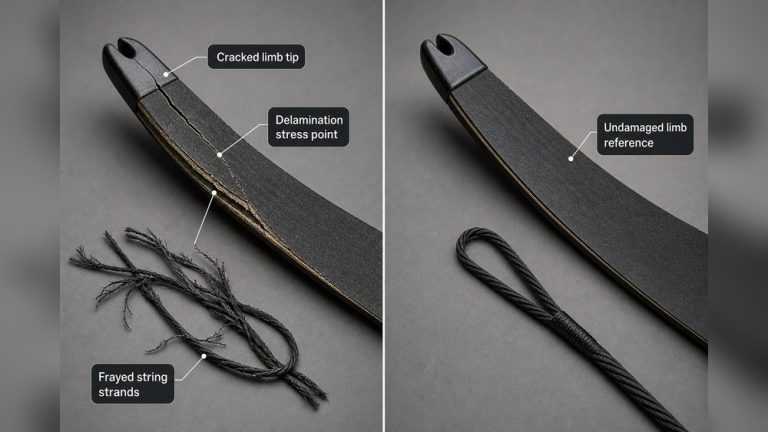
Bowfishing Boat Setup Cost: What You’ll Actually Spend
A basic used jon-boat bowfishing setup usually lands around $1,020 to $2,550, while a cleaner purpose-built build often lands near $3,500 to $7,900, with lights and battery power often driving the biggest jumps. Skip the budget math and you buy too much weight, too little light, or a boat that is unsafe on the water. This guide breaks down costs by boat, deck, lights, power, and rigging so you can budget by build level.
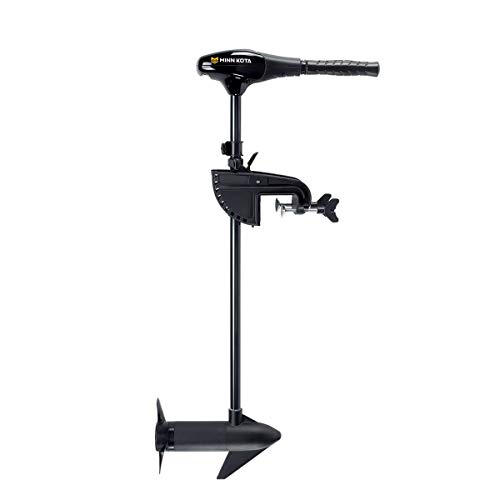


Must-have gear
The must-have list is short: a stable boat platform, a bowfishing bow with a reel, and arrows with barbed tips. Add lights only after those pieces are sorted. A buyer can add deck upgrades later, but the boat choice and basic rigging decide whether the setup is usable, safe, and worth the money.
Boat platform and deck basics
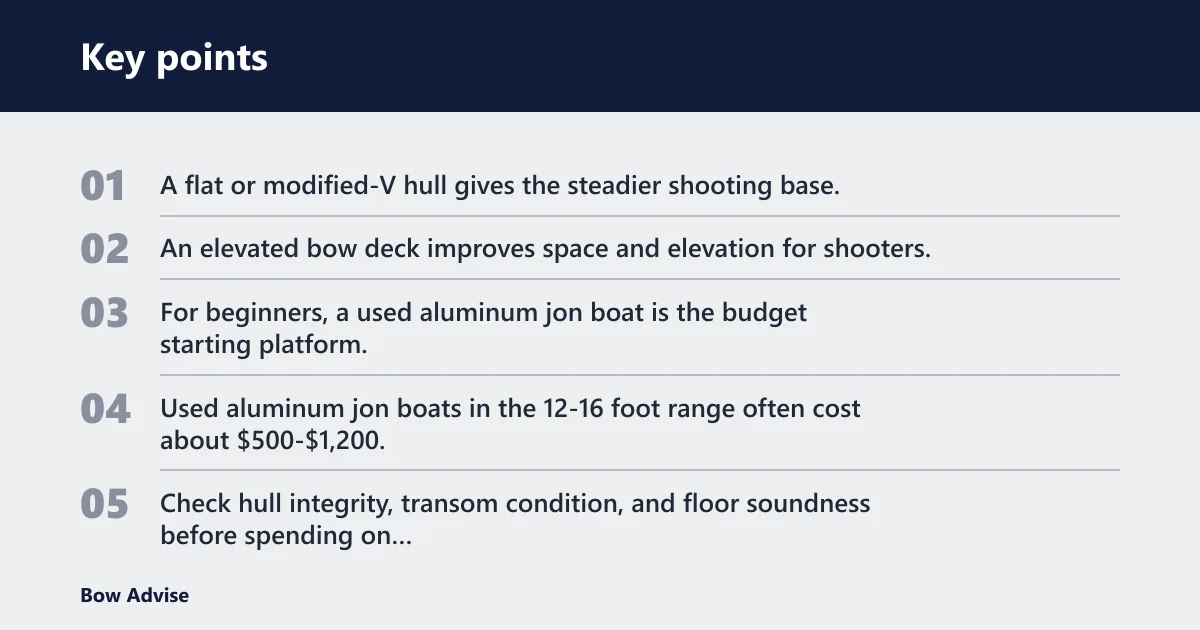
A flat or modified-V hull gives the steadier shooting base, and deck space matters more than top speed. An elevated bow deck improves space and elevation for shooters, while a basic flat floor keeps costs down and helps with balance. For beginners, a used aluminum jon boat is the budget starting platform.
Used aluminum jon boats in the 12-16 foot range often cost about $500-$1,200, and that is where many budget builds begin. Check hull integrity, transom condition, and floor soundness before spending on accessories, because a weak hull turns a cheap boat into a bad purchase.
Bowfishing reel

A reel has one job: fast, controlled retrieval after the shot. Retriever-style reels use a hopper instead of a spool for zero drag, while spincast reels can still work in a budget setup. Line control matters most after release, so a tangle-prone setup costs time and fish.
The AISANJAN combo is one way to cover the bow-and-reel line item in the table, since it bundles the bow, reel, and arrows into one purchase. It is a right-hand compound package with a bottled reel, so it fits a basic cost-conscious build better than a premium custom rig.
Bowfishing arrows
Bowfishing arrows need to be heavy and tough, and fiberglass is the common material because it takes abuse. Screw-in barbed tips help retain fish after the shot, and carp-point style tips are a common match for rough water and repeated impacts. Thin target arrows are the wrong tool here.
A good arrow budget is not large, but cheap arrows still fail fast. Broken shafts, bent inserts, or loose tips increase replacement cost and make the whole rig less reliable. For a beginner build, durability matters more than shaving ounces.
Lighting and power essentials
Bowfishing is most often done at night using specialized lighting systems, and lights are the biggest reason total cost jumps. LED systems can be bow-mounted or deck-mounted, and they may run from a marine battery or a generator. Wiring complexity directly changes the final bill.
For simple night setups, a battery-powered LED kit can keep cost and noise down. A generator-powered setup supports higher output and longer sessions, but it adds weight, mounting work, and fuel management. That tradeoff is why light choice changes the total more than almost anything else.
What drives the total price?
The total price is mostly decided by three things: whether you start with an existing boat or buy a used jon boat, how you build the deck, and whether your lights run on a battery or a generator. Each choice changes both the upfront bill and the weight you carry on the water.
Boat choice: existing boat vs used jon boat
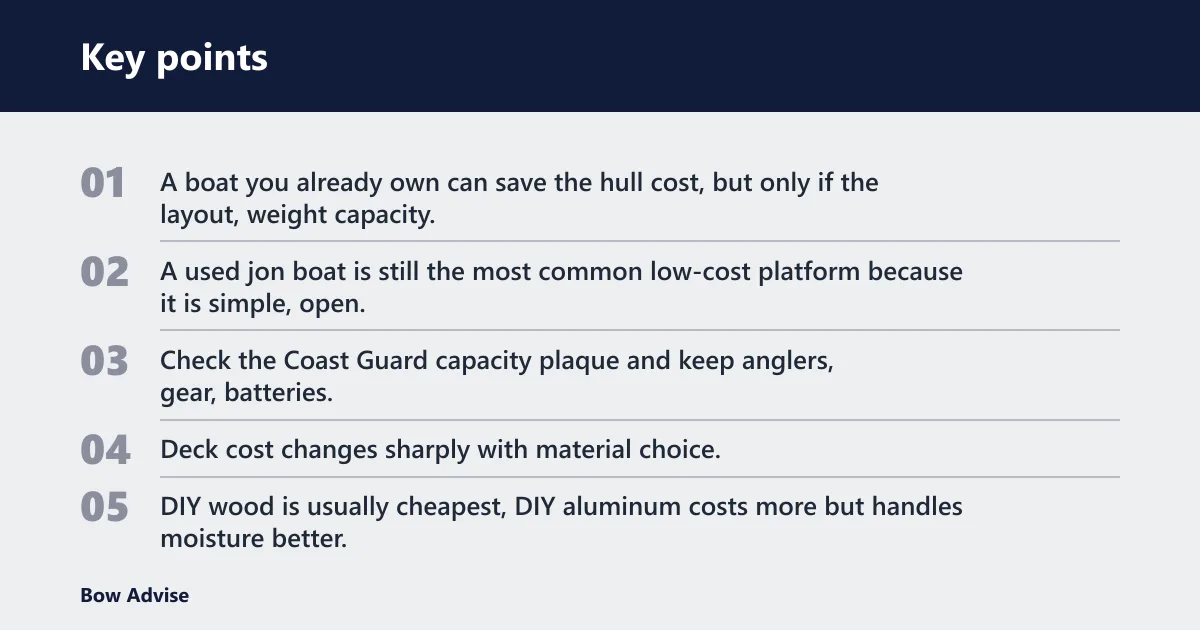
A boat you already own can save the hull cost, but only if the layout, weight capacity, and floor are fit for shooting. A used jon boat is still the most common low-cost platform because it is simple, open, and easy to modify. Open layouts make deck work easier.
Check the Coast Guard capacity plaque and keep anglers, gear, batteries, and lights inside the listed limit.
Deck build: DIY wood, DIY aluminum, or prebuilt
Deck cost changes sharply with material choice. DIY wood is usually cheapest, DIY aluminum costs more but handles moisture better, and a prebuilt platform saves labor at a higher purchase price. The wrong deck choice can also overload the boat or shift weight too far forward.
Overweight decks fail in two ways. First, they can push the hull too low and make the boat sloppy. Second, they raise the center of gravity and reduce shooting stability. Corrosion is another issue in saltwater, where untreated hardware and fasteners can shorten the life of a deck quickly.
Lights and power: batteries, wiring, or generator
Light systems can stay simple or get expensive fast. A small LED kit with basic wiring and one marine battery is the low-cost route. A multi-light deck with cleaner wiring, switches, and generator support increases both the parts list and the installation time.
Marine batteries reduce generator dependence and add runtime, but they also add weight. That matters on a small boat with multiple shooters. A larger battery bank can keep lights on longer, yet it can also force a bigger battery tray, heavier cabling, and a tighter balance plan.
Bowfishing boat setup cost table
Here is a concrete budget breakdown using three build levels. The totals reflect the kinds of parts that usually drive real costs: hull, deck, lights, power, and rigging. The biggest cost drivers are usually the boat itself, the light system, and the power source.
| Line item | Bare minimum budget | Midrange build | Serious night setup | Reusable from existing boat? |
|---|---|---|---|---|
| Used aluminum jon boat, 12-16 feet | $500-$1,200 | $500-$1,200 | $800-$1,800 | Sometimes |
| Deck and shooting platform | $100-$300 DIY wood | $300-$900 DIY aluminum or better wood | $900-$2,000 prebuilt or custom aluminum | Sometimes |
| Bowfishing lights | $40-$150 simple LED kit | $150-$500 brighter deck-mounted LEDs | $500-$1,500 multi-light system | No |
| Power source and wiring | $80-$250 marine battery and basic wiring | $250-$700 battery, charger, switches, wiring | $700-$1,800 battery bank or generator package | Sometimes |
| Bow, reel, arrows, and tips | $250-$500 | $500-$1,000 | $1,000-$1,800 | No |
| Mounts, rails, storage, misc. hardware | $50-$150 | $150-$400 | $300-$800 | Sometimes |
| Subtotal | $1,020-$2,550 | $1,850-$4,700 | $3,500-$7,900 | Depends on the hull |
The table subtotal does not include trailer repairs, registration, or a bad surprise like a rotten floor or failed transom. Those repairs can push the real total higher fast. If the hull needs work, the cheapest route is not always the cheapest result.
Freshwater starter example
Suppose a buyer starts with a 14-foot jon boat, adds a simple wood deck, a single LED kit, one marine battery, and a basic reel-and-arrow package. That build fits the low end of the table at roughly $1,020 to $2,550 because it avoids a generator, a high-output light bank, and a heavy custom platform.
Night-heavy example
A common first-timer mistake is upgrading to a powerful reel bow and then skimping on the deck lights, which can leave a bowfishing boat underprepared at night. Picture a 16-foot boat with two shooters, a big deck, and a bright night spread; if the wiring is thin or the battery bank is too small, the setup becomes dim, messy, and hard to run for long. In the table above, that kind of build is closer to the $3,500 to $7,900 range than the low-budget end.
Can you use a jon boat for bowfishing?
Yes, a jon boat is one of the best budget choices for bowfishing because it is stable, open, and easy to modify. A 12-16 foot aluminum jon boat is especially practical for a first build, as long as the hull is sound and the boat stays within its weight limit.
Best hull shapes for stability
Flat-bottom jon boats are the easiest to shoot from because they sit level and give a broad working area. A modified-V hull can also work if the deck is laid out correctly, but it is usually a little less forgiving than a flat hull when multiple anglers move around.
Stability matters more than speed. Bowfishing is about holding position, turning quietly, and shooting from a platform that does not rock every time someone shifts weight. That is why a small, simple hull can beat a faster fishing boat for this job.
Weight capacity and balance checks
Before spending on lights or a deck, check the Coast Guard plaque and compare the rated capacity to your real load. Anglers, batteries, deck material, coolers, and bows all count. A setup that looks fine on paper can become unsafe if the weight sits too far forward or aft.
Balance also affects shot quality. If the bow deck is heavy and the stern is light, the boat can squat awkwardly. That hurts both safety and accuracy. Keeping gear low and centered is usually better than building a tall front end.
What to inspect before buying used
- Check the hull for dents, cracks, and soft spots.
- Inspect the transom for rot, flex, or loose mounts.
- Step on the floor and look for flex or noise.
- Verify the title, capacity plaque, and registration needs.
- Measure available deck space before buying lights or hardware.
Nice-to-have upgrades
Nice-to-have upgrades do not make the boat legal or safe, but they make long nights easier. The first upgrades that usually pay off are a raised shooting deck, better lighting coverage, and cleaner storage. Those changes improve movement on the boat without changing the basic rig.
Raised bow platform and rail lighting
An elevated bow deck improves space and elevation for shooters, and rail lighting helps define the shooting area at night. These upgrades cost more than a flat floor, but they can make the boat easier to use when two people are moving at once.
Better seating, storage, and rod holders
Bowfishing boats do not need fancy seats, but they do need a place to store spare arrows, tips, gloves, and batteries. Rod holders may still be useful if the boat does double duty for fishing, but they should not get in the way of the shooting lane.
Higher-output lights and cleaner wiring
Brighter lights are tempting, yet they should be matched to the boat’s power system. Cleaner wiring matters because bad connections waste power and create headaches at night. If the setup uses more than one light bank, the wiring plan should be part of the budget from the start.
What should a budget setup include?
A budget setup should include a stable boat, a usable bow, a reel that controls line well, fiberglass arrows with barbed tips, and enough light to see target fish. For saltwater or harsh conditions, add corrosion-resistant hardware, sealed connections, and better battery protection.
Freshwater starter
For freshwater, the minimum practical package is a used jon boat, one bow, one reel, a few fiberglass arrows, a basic LED light kit, and a marine battery. That package keeps cost down while still covering the core tasks: shoot, retrieve, and stay lit enough to see fish.
Bow draw weight can usually sit in the 25-70 lbs. range for bowfishing. Comfort matters because repeated shots are common, and a tuned hunting bow can be overkill if it is awkward to draw, hold, and reload quickly.
Saltwater or corrosion-prone add-ons
In saltwater, the budget needs extra room for corrosion-resistant fasteners, better wire protection, and more frequent replacement of vulnerable parts. Salt can shorten the life of lights, switches, and exposed hardware. Spending a little more on sealing and materials usually saves money later.
Day setup versus night setup priorities
Day setups can skip the heavier light and power package, so the money goes more toward the hull, deck, and bow. Night setups need stronger lights, better wiring, and a power source that can run longer. Since bowfishing is most often done at night, most budgets should assume some lighting cost.
Consumables and spares
Consumables matter because bowfishing parts wear out quickly. Tips loosen, arrows get damaged, and small electrical parts fail. Keeping a few spares on board costs far less than ending a trip early because one cheap part stopped the whole setup.
Replacement tips, slides, and string
Barbed tips and line slides wear out under repeated abuse. Replacement parts are inexpensive compared with the boat, but they keep the system functional. If the reel or line setup is mismatched, line control becomes sloppy and the shot cycle slows down.
Extra arrows and nocks
Extra fiberglass arrows are worth carrying because shafts get bent, tips loosen, and nocks can fail. A bowfishing session often punishes arrows harder than target archery does, so one spare is rarely enough. A small stash reduces downtime and replacement urgency.
Battery maintenance items and fuses
Marine batteries need proper charging, secure mounting, and fuse protection. Fuses are cheap insurance for wiring mistakes and short circuits. If the boat runs lights at night, keeping spare fuses and a charger on hand is a basic budget decision, not an upgrade.
Frequently asked questions
How much does a bowfishing boat setup cost?
A realistic bowfishing boat setup usually falls into three bands: $1,020 to $2,550 for a bare-minimum used-boat build, $1,850 to $4,700 for a midrange build, and $3,500 to $7,900 for a serious night setup. The hull and lights drive most of the price.
How much do fishing boats cost?
For this article, the relevant cost is the bowfishing setup, which usually falls into the ranges in the table above. The goal is usually stability and open deck space, not a high-end fishing package.
What is the cheapest boat for bowfishing?
The cheapest practical option is usually a used aluminum jon boat in the 12-16 foot range. It is simple, light, and easy to modify. The low entry cost is useful, but the buyer still needs to check hull integrity, transom condition, and floor soundness before adding gear.
What makes a good bowfishing boat setup?
A good setup has a stable hull, enough deck space, a safe weight balance, reliable lighting, and a bow-and-reel package that retrieves fast and cleanly. If any one of those pieces is weak, the setup becomes harder to shoot from and more expensive to fix later.
How much do bowfishing lights cost?
Basic LED bowfishing lights can start under $150 for a simple kit, while brighter deck systems with better wiring and more coverage can reach $500 or more. Serious night setups cost more because the lights, switches, mounting, and power system all grow with the size of the boat.
What size boat is best for bowfishing?
A 12-16 foot boat is the common sweet spot for beginners because it is easier to tow, easier to outfit, and usually cheaper to buy used. Flat-bottom or modified-V hulls work best when the deck is laid out for stability and the weight stays within the capacity limit.
Can you use any bow for bowfishing?
Many bows can work, but the bow should suit repeated shooting and quick instinctive aiming. A bowfishing bow can be a recurve, compound bow, or lever action bow configuration, and a draw weight in the 25-70 lbs. range is commonly workable. A tuned hunting bow can be more than needed.