5-Arrow Quiver vs 6-Arrow Quiver: Do You Need More?
A 5-arrow quiver fits most bowhunters who carry fixed blades, field points, and one spare. Choose 6 arrows if you want room for a damaged broadhead, a lost shaft, or a long sit with no easy way to reach more gear. Pick wrong and you either haul extra bulk for no gain or run short when a head breaks or an arrow disappears. This guide compares 5- and 6-arrow field quivers by hunting use, arrow length, access, balance, and the situations where each capacity makes more sense.
5-arrow Quiver vs 6-arrow Quiver: the real tradeoff
| Decision factor | 5-arrow Quiver | 6-arrow Quiver | Winner |
|---|---|---|---|
| Carry capacity | Common middle-ground field capacity. | Upper-end common field capacity. | 6-arrow Quiver |
| Bow feel | Usually lighter and shorter on the bow. | Usually heavier and may extend farther. | 5-arrow Quiver |
| Backup margin | Enough for normal deer use plus a spare in some setups. | More room for a damaged point, lost arrow, or follow-up need. | 6-arrow Quiver |
| Noise and contact risk | Fewer shafts means fewer possible touch points. | More arrows can mean more chances for rattle if fit is poor. | 5-arrow Quiver |
| Best fit use case | General hunting, shorter sits, lighter setups. | Long sits, backup-heavy hunts, or hunters who want more reserve. | Tie |
What the extra arrow changes on the bow
The extra slot is not free. On a bow-mounted hunting quiver, one more shaft adds length, weight, and a bigger chance of contact with clothing, limbs, or blind fabric when space is tight.
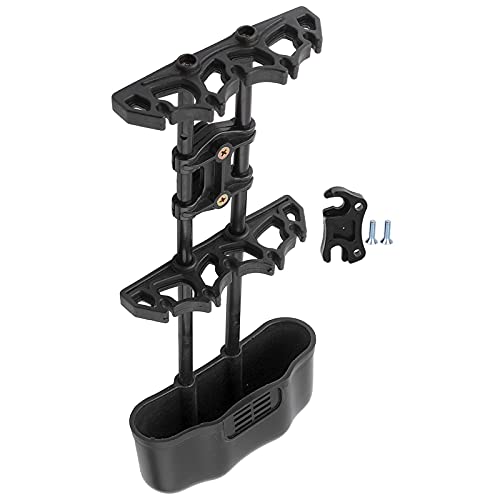
A bow-mounted hunting quiver usually carries 3 to 7 arrows and mounts to the riser or accessory rail. Silence, arrow retention, low profile, and broadhead protection are the real buying targets. Fit and bow feel matter first.
Why capacity matters less than fit and balance
A quiver that holds the right number of arrows can still be the wrong choice if the gripper is loose or the hood sticks out too far. Broadhead hood design matters because the hood protects fixed or mechanical broadheads, and foam or rubber inserts differ in how quietly they hold a point.
Bow balance changes as quiver weight moves the center of gravity. That shift can affect aim and hold, and the effect depends on the bow and the rest of the accessory stack: sight, rest, stabilizer, light, and quiver mount all add up.
Quick side-by-side comparison
For a hunter who wants the smallest practical field setup, 5 arrows is usually the cleaner choice. For a hunter who wants one more buffer against a damaged head, a lost arrow, or a long sit with limited gear access, 6 arrows is the safer reserve.
5 vs 6 arrows: field-use checklist
| Hunt style | Walk length | Shot frequency | Backup need | Balance penalty | Recommended capacity |
|---|---|---|---|---|---|
| Tree stand deer hunt | Short to moderate walk | Usually one shot, maybe a follow-up | Moderate | Lower concern if the bow stays on a hanger or hook | 5-arrow Quiver |
| All-day sit with long access route | Moderate | Low | Higher | Acceptable if the bow is not carried all day | 6-arrow Quiver |
| Spot-and-stalk | Long | Low to moderate | Moderate to high | More noticeable during carries and shots from odd positions | 5-arrow Quiver |
| Dense cover with quick follow-up chances | Short | Can be higher | High | Less important than immediate reserve | 6-arrow Quiver |
Choose 5 if the bow stays on you for long walks, you want a shorter quiver body, and your hunt rarely needs more than one spare arrow.
Choose 6 if you sit longer, want a larger backup buffer, or your hunting style makes spare-arrow access more valuable than trimming a little mass.
A common load is three arrows tipped with fixed blades and two field points for practice. A 5-arrow quiver usually fits that load cleanly. A sixth shaft mostly adds bulk unless the hunt calls for more reserve or the hunter wants one more broadhead-ready arrow on the bow.
Hunt style, walk length, and shot frequency
The longer the walk, the more quiver size matters. On long stalks, extra length and mass are easier to notice, especially when the bow swings at your side or brushes against pack straps and brush.
On stationary hunts, the penalty often shrinks. If the bow rides a hanger in a tree stand or rests in a blind, the quiver’s extra slot is less annoying and the backup margin can matter more.
Backup need and follow-up shot risk
The practical question is not “How many arrows can the quiver hold?” It is “How many arrows does the hunt need before the quiver adds dead weight?” For most deer hunts, one spare arrow is enough if the arrows are protected and the broadheads are sound.
Do hunters really need a 6-arrow quiver? Sometimes, yes. The extra slot matters most when a broadhead gets damaged, an arrow is lost to a bad hit or brush, or the hunter expects limited gear access after the first shot.
Balance penalty and noise check
More capacity can mean more weight, and more weight can move the bow’s center of gravity forward or sideways depending on the mount. That does not automatically make the bow worse, but it can change how steady the pin float feels at full draw.
Noise often matters more than raw mass. Rattling, swinging, or shaft contact usually cause more real-world trouble than the number printed on the package. A quiet 6-arrow quiver can beat a noisy 5-arrow setup every time.
Is a 5-arrow quiver enough for hunting?
Yes, for most bowhunters, a 5-arrow quiver is usually enough. A 5-arrow quiver usually covers a deer hunt with fixed blades, field points, and one spare, and it is commonly lighter and shorter than a 6-arrow setup. It is the better middle ground when the hunt is normal and the gear fits well.
When five arrows cover typical deer hunting
Five arrows are enough when the hunt is short, the shot window is predictable, and the hunter can resupply after the hunt. That fits many whitetail setups, especially tree stand hunts where the bow is not carried far once the hunter is in place.
A modern hunting quiver can hold five arrows plus a bonus arrow, so five does not mean thin reserve by default. It means enough capacity for field use without adding a sixth shaft that may never get touched.
When a fifth slot is just dead weight
If the fifth arrow exists only because the quiver can hold it, it may not help. A quiver packed to capacity but never needing the extra arrow carries extra mass, more broadhead protection hardware, and more room for noise.
Picture a hunter who hikes a mile and a half to a ridge blind with three broadheads and two field points. A 5-arrow quiver keeps that load simple. A 6-arrow quiver adds room, but no new advantage if the hunt is a single-morning sit.
What hunters give up by staying smaller
The main tradeoff is reserve. Staying at five means one less arrow in the field, which matters if a broadhead bends, a shaft gets lost, or a follow-up shot is needed and the hunter cannot quickly recover gear.
That tradeoff is reasonable for many hunts. It is less reasonable for a hunter who wants a deeper buffer for long sits, rough cover, or equipment that sees more field wear.
Does a 6-arrow quiver make a bow too heavy?
Not automatically. A 6-arrow quiver can feel heavier and longer than a 5-arrow quiver, but whether that matters depends on the bow, the mount, and the hunter’s style. For some setups the extra mass is fine; for others it changes the hold enough to notice right away.
How weight and center of gravity shift
Adding one more arrow changes both static weight and balance. The bow may tip forward slightly or feel less neutral in the hand, especially if the rest of the accessory stack already runs heavy.
That shift matters most at full draw and during longer holds. If the bow already feels front-heavy, the sixth arrow can make the aim feel more tiring.
Why longer carries expose balance issues
Long carries reveal small changes fast. A bow that feels fine on a short walk to a blind may feel awkward after a climb, a side-hill stalk, or a long walk back through brush with the quiver still mounted.
Quick-detach mounts help here. They let hunters remove the quiver fast for shooting or for a lighter carry, then reattach it when they want the arrows on the bow again.
When the added mass is acceptable
The added mass is acceptable when the hunt is mostly stationary, the bow is already tuned with the quiver mounted, and the hunter values backup more than shaving every ounce of feel. In that case, the sixth arrow is useful reserve, not wasted bulk.
Some hunters also prefer more arrow capacity because it cuts down on restocking between sits. That is a practical reason, not a style preference.
Arrow size, hood design, and mount fit
Micro-diameter vs standard-diameter arrows
Arrow diameter changes usable capacity. Micro-diameter shafts and standard-diameter shafts do not always sit the same way in the gripper, and the hood layout can make a “5-arrow” body fit differently depending on shaft size.
Some quivers are specified as compatible down to about .23 diameter. That matters because a tighter shaft can let a gripper hold securely while a larger shaft may crowd the hood or reduce practical spacing for broadhead blades and fletching.
Broadhead hood depth and material
Broadhead hoods protect fixed and mechanical heads, and the insert material matters. Foam inserts can cradle points quietly, while rubber inserts may hold with a different feel and different wear pattern.
Hood depth also matters. A hood that is 2.5 inches deep gives more coverage than a shallow cap, which can help protect blades and cut down on accidental contact in brush or while climbing into a stand.
Quick-detach mounts and accessory rail fit
Quick-detach mounts matter because they let a hunter remove the quiver before a shot or while moving through thick cover. That can improve shooting feel, but it can also change balance, so the bow should still shoot cleanly with the quiver on and off.
Mount location matters too. A quiver that fits the riser or accessory rail well will sit tighter and usually rattle less than one that is forced into a poor position.
A common mistake is choosing between a 5-arrow and 6-arrow quiver based only on how many shafts it holds instead of how easily it carries on the bow. A quiver can hold six shafts on paper and still be a poor fit if the hood is noisy, the gripper is loose, or the shaft diameter crowds the blades and fletching.
Choose 5-arrow Quiver if… / Choose 6-arrow Quiver if…
Choose 5-arrow Quiver if you want the smallest field quiver that still covers normal hunting, one spare arrow, and a lighter bow feel. It fits tree stand hunts, shorter sits, and hunters who notice extra bulk more than they need extra reserve.
Choose 6-arrow Quiver if you want a larger buffer for damaged broadheads, lost arrows, or long sits where a sixth shaft is worth carrying. It fits hunters who value reserve and do not mind a little more length or mass on the bow.
For most hunters, a 5-arrow quiver is a common default. Choose 6-arrow Quiver when the hunt is long, the backup risk is real, or the extra arrow meaningfully reduces stress in the field.

Which quiver size fits your hunt?
Tree stand hunting
Tree stand hunting usually favors a 5-arrow Quiver unless the sit is long and the hunter wants more reserve on the bow. The quiver stays mounted without much carrying strain, so the choice often comes down to whether the sixth arrow solves a real backup concern.
Noise control matters here because every bump in the stand is closer to the animal. A quiet hood and secure grippers are more important than adding an extra slot you may never use.
Spot-and-stalk and long walks
Spot-and-stalk often favors a 5-arrow Quiver because every extra ounce and inch is easier to notice. The smaller setup tends to carry better, swing less, and feel cleaner when crawling, climbing, or moving through brush.
If the hunter expects a rough day, a 6-arrow Quiver still makes sense when backup security matters more than trimming mass. The decision should follow the terrain, not the marketing label.
Beginner setup: 4-arrow, 5-arrow, or 6-arrow
A beginner usually does best with 5 arrows, unless the bow is very light and the hunting style is simple enough that 4 is clearly enough. Six is a better choice only when the beginner wants more reserve and the bow still feels balanced.
The Octane Furnace quiver holds four arrows, which shows that smaller hunting quivers are normal too. For a new hunter, though, five is the safer middle ground because it gives a spare without pushing the bow into a bulky setup.
For a beginner, the best question is not “largest or smallest?” It is “which size keeps the bow quiet, secure, and easy to shoot while still covering one lost or damaged arrow?” For many new bowhunters, that answer is 5.
Frequently asked questions
Do hunters really need a 6-arrow quiver?
Some do, but many do not. A 6-arrow quiver makes more sense when the hunter wants extra reserve for damaged broadheads, lost arrows, or long sits. If the sixth arrow never gets used, it is only carrying extra bulk.
How many arrows should a bowhunter carry on the bow?
Most bow-mounted hunting quivers carry 3 to 7 arrows, and the right number depends on the hunt. For most field use, 5 is the common middle choice. Go to 6 only when the extra reserve solves a real problem in the field.
Does a 6-arrow quiver make a bow too heavy or noisy?
It can, but not always. The real issue is fit, mount quality, and arrow retention. If the hood and grippers are quiet and the bow stays balanced, the extra arrow may be fine. If not, the added mass and contact points become obvious.
What’s the difference between a 5-arrow and 6-arrow Quiver?
The main difference is reserve versus size. A 6-arrow Quiver carries one more arrow, which adds backup margin but can also add weight and length. A 5-arrow Quiver is usually the cleaner carry when the hunter wants a smaller field setup.
How many spare arrows do you need for a deer hunt?
One spare is enough for many deer hunts if the arrows are protected and the broadheads are sound. Hunters who expect rough cover, long sits, or limited recovery time may want more reserve, which is where the sixth slot becomes useful.
Which quiver size is better for tree stand hunting?
For most tree stand hunting, a 5-arrow Quiver is the better default. It gives enough capacity for normal deer hunting while keeping the bow a little shorter and easier to manage in tight space. Choose 6 only if the extra buffer matters more.
Does arrow diameter change quiver capacity?
Yes. Micro-diameter and standard-diameter arrows do not fit every gripper the same way, and some quivers list compatibility down to .23 diameter. Arrow size can affect how many shafts fit cleanly, how tightly they sit, and how much room the hood needs.
Should a beginner buy a 4-arrow, 5-arrow, or 6-arrow quiver?
Most beginners should start with 5 arrows. It gives enough reserve without making the bow feel oversized, and it fits the most common hunting use case. A 4-arrow setup can be fine for very light field carry, while 6 is better only if backup matters more.