Fixed Pin vs Slider Sight for Hunting: Which Is Better?
For most bowhunters, a fixed-pin sight is the better pick for real hunting shots when speed and simple decisions matter most. A slider works better only if you can range, dial, and settle the pin under pressure. Pick the wrong one, and you waste time, miss low or high, or pass animals you could have shot. This guide compares fixed-pin and slider sights for treestand, blind, timber, and open-country hunting, then gives a clear rule for choosing one.
| Decision factor | Fixed Pin | Slider Sight for Hunting | Winner |
|---|---|---|---|
| Target acquisition | Multiple preset aiming pins give an instant reference. | One pin is clean, but the dial step takes time. | Fixed Pin |
| Distance precision | Good inside known bands, weaker when the animal is outside the preset gaps. | Better for exact yardage once the sight is dialed. | Slider Sight for Hunting |
| Setup and calibration | Simple once sighted in. | Needs a correct yardage tape, actual arrow speed, and bow tune. | Fixed Pin |
| Low-light field use | Can get crowded, especially with 5-pin or 7-pin layouts. | Cleaner sight picture, but the dial still needs a correct starting point. | Slider Sight for Hunting |
| Stress reliability | Fewer steps between seeing the animal and making the shot. | More ways to make a mistake if the dial is forgotten or rushed. | Fixed Pin |
| Long-range fine aiming | Limited by pin gap and preset distances. | Built for exact yardage and longer practice work. | Slider Sight for Hunting |
Fixed pin vs slider sight for hunting
The trade-off is plain: fixed pins cut decisions, while sliders ask for more setup and more discipline in exchange for finer aiming. In hunting, that difference matters more than paper accuracy. The best sight is the one you can run right when your pulse is high and the shot window is short.
What each sight is and how it works
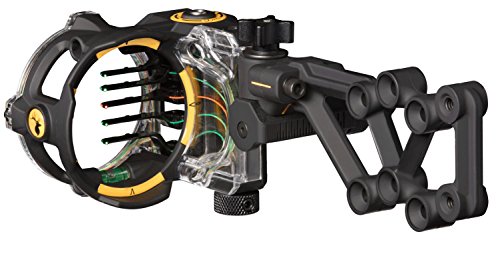
A fixed-pin sight uses multiple preset aiming points, often in 3-pin, 5-pin, or 7-pin layouts. A slider sight uses a single pin or movable pin system with a dial or slider for distance changes, and many models also include a micro-adjustable yardage scale.
Fixed pins give you different references without moving parts during the shot. Sliders give you one clean aiming point, then ask you to set the distance before the arrow leaves the bow.
The core trade-off: speed vs adjustable precision
Fixed pins are faster for close, sudden shots because the eye finds a pin quickly. That matters in tree stand hunting, ground blinds, and thick cover, where the animal may stop for only a second.
Slider sights shine when the range changes often and you can dial first. They are better for longer-range fine aiming, but only if the archer has time to range the target and confirm the dial setting.
When each sight tends to fail in the field
Fixed pins fail when the animal is outside the distances you covered with your pin layout. Pin gap can also become harder to read when adrenaline is high, light is fading, or the sight picture gets crowded by 5 or 7 pins.
Slider sights fail when the hunter forgets to adjust the dial, mismatches the yardage tape, or assumes the setup still matches the current arrow speed and tune. Those are real failure cases, not just setup details.
Comparison table: fixed pin vs slider sight
The better choice depends on how the bow is used in the field. A sight that looks more precise on paper can still be worse if it slows the hunter down or adds a mistake point under pressure.
Target acquisition and shot speed
Fixed pins win here because the aiming point is already there. A 3-pin or 5-pin sight is often easier to pick up quickly than a dialed sight, especially when the animal moves from lane to lane.
Distance control and aiming precision
Slider Sight for Hunting wins when the shot is known and time allows a dial. It can give a cleaner hold at exact distance, which helps on longer shots and on practice targets set at many yardages.
Setup complexity and calibration needs
Fixed Pin is simpler. Slider Sight for Hunting depends on arrow speed, bow draw weight, actual bow tune, and a yardage tape that matches the setup. If any of that changes, the tape can become wrong.
Low-light visibility and pin clutter
Fixed pins can become cluttered as pin count rises. A 7-pin sight may cover too much of a deer’s vitals in dim woods, while a single slider pin stays cleaner but still requires a correct setting.
Beginners, hunters, and field reliability
Fixed Pin is usually more forgiving for beginners because it reduces steps between range, aim, and release. Slider Sight for Hunting rewards discipline, but it punishes rushed setup and forgotten adjustments more harshly.
When does a fixed pin sight make more sense?
A fixed pin sight makes more sense when shots are usually close, fast, and inside a narrow distance band. It is the safer pick for hunters who want fewer actions between seeing the animal and releasing the arrow.
Tree stand and ground blind hunting
Tree stand hunting often gives short-to-medium shot windows, angled shooting, and limited time to adjust equipment. Ground blinds create a similar pattern: the animal may appear at 18 yards, then step to 27 yards, then vanish.
In those cases, a fixed pin sight lets the hunter hold and shoot without touching a dial. That helps when the shot is fast and the angle changes.
Thick cover and short-shot situations
In whitetail timber, a deer may step into a lane and disappear almost immediately. A fixed pin sight is better when the hunter must keep the sight picture simple and repeatable.
It also helps when pin gap is still readable at your common distances. A 3-pin setup often stays cleaner than a 7-pin setup in low light.
Low-stress simplicity and fast follow-through
Fixed pins reduce the chance of a live-shot mistake caused by forgetting a dial setting. That makes them a strong choice for hunters who want a compact hunting setup with less on-the-spot decision-making.
Say your shots in a tree stand are usually 18 to 32 yards. A fixed-pin sight covers that band well, while a slider adds steps you may not need.
When does a slider sight make more sense?
A slider sight makes more sense when the shot distance changes often and you can manage the dial before the shot. It is the stronger choice for hunters who accept more setup work in exchange for better aiming at exact yardage.
Open country and longer shooting lanes
Open country hunting gives more room for range changes and more chance to shoot at distances that do not fit clean fixed pin gaps. Slider sights help there because the pin can be set to the exact distance instead of guessing between pins.
That can matter when a stable rest, a clean lane, and extra time are all present.
Spot-and-stalk hunting
Spot-and-stalk hunting changes the answer because distance is less predictable and gear simplicity matters. A slider can work well here if the hunter can range the animal, confirm the dial, and shoot without rushing.
But if the setup requires too much thought, the benefit fades fast. The best slider use case is a hunter who accepts the extra step and can repeat it.
Dialing for exact yardage before the shot
Slider sights help at longer ranges because they offer fine aiming once dialed correctly. They do not help if the hunter skips the dial or uses the wrong yardage tape.
A common first-timer mistake is assuming the tape will stay right after changing arrow speed, bow draw weight, or point weight. If the setup changes, the tape must be checked again.
Field decision matrix for real hunting shots
This matrix turns the choice into hunting context. The best sight type depends on where the shot happens, how much time the hunter has, and how much setup can be trusted under stress.
| Scenario | Best sight type | Main risk | Setup notes |
|---|---|---|---|
| Treestand | Fixed Pin | Missing a short, fast window while dailing a slider | Use a simple pin layout that covers common 15-35 yard shots. |
| Ground blind | Fixed Pin | Cluttered sight picture in low light | Keep pin count modest and verify the most common yardages first. |
| Whitetail timber | Fixed Pin | Pin gap becomes hard to read under adrenaline | Choose pins that match the woods distances you actually shoot. |
| Open country | Slider Sight for Hunting | Forgetting to set the dial before the shot | Pre-range often and keep the yardage tape matched to the bow. |
| Spot-and-stalk | Slider Sight for Hunting | Extra steps when the animal is still moving | Use a fast ranging routine and a clean, readable dial. |
| Low-light last-minute shot | Fixed Pin | Hard-to-see dial and missed adjustment | Fewer pins usually beats a complex sight picture at dusk. |
| Beginner setup | Fixed Pin | Too many choices at full draw | Start with fewer pins and build distance familiarity first. |
| Long-range practice | Slider Sight for Hunting | Calibrating the tape to the wrong setup | Confirm actual arrow speed and match the tape to the tuned bow. |
How setup changes the answer
Setup changes the answer because slider performance depends on more moving parts. Fixed pins are less sensitive to those changes, so they stay predictable even when the hunt gets messy.
Arrow speed and pin spacing
Arrow speed, measured in feet per second, affects trajectory and pin spacing. Faster arrows usually stretch the distance between pins less at common hunting ranges, while slower arrows can create larger gaps between references.
That matters because pin gap is a visual tool. If the gap is too wide or too crowded, it is harder to read in the field.
Bow draw weight and trajectory
Bow draw weight influences arrow speed, which changes the arc of the arrow and the spacing between pins. A change in draw weight can also force a new slider setup if the bow is no longer sending arrows at the speed the tape expects.
That is why a sight that seemed correct last season can be off after a bow change.
Yardage tape calibration and bow tune
Yardage tape is used on many slider sights and must match actual bow tune and arrow speed. If the setup changes, the tape can be inaccurate, even if the sight itself is still functioning perfectly.
That is the hidden cost of slider precision. It is precise only when the base setup is correct.
What happens if the slider is not set correctly
If a hunter forgets to adjust a slider sight on a live animal, the most likely result is a miss or a poor hit due to the wrong aiming point. The risk grows when the target is inside the distance where the tape changes quickly.
If a deer stops at about 37 yards while the slider is still set on about 30 yards, the point of impact can be low. The arrow lands low because the pin was never moved to the real yardage. That failure is avoidable, but only if the hunter repeats the dial step every time.
Choose Fixed Pin if… / Choose Slider Sight for Hunting if…
Choose Fixed Pin if your shots are usually close, fast, and inside a narrow distance band. Choose Slider Sight for Hunting if you regularly need adjustable yardage and can manage the dial before the shot. The right answer is the sight that matches your real decision-making under stress.
Choose Fixed Pin if…
- You hunt treestands, blinds, or thick cover most of the time.
- You want the fastest possible sight picture with fewer steps.
- You prefer a compact hunting setup with simple, repeatable use.
- You are more comfortable with preset pins than with a dial.
Choose slider sight for hunting if…
- You hunt open country or spot-and-stalk terrain with changing distances.
- You can range, dial, and confirm the setting under pressure.
- You want cleaner aiming at exact yardage, especially beyond common pin gaps.
- You are willing to keep the tape matched to the bow tune and arrow speed.
One-sight decision rule
If your hunting style rewards speed, low stress, and short windows, go fixed pin. If your hunting style rewards exact yardage and you can keep the dial process disciplined, go slider. For mixed hunting styles, fixed pin is the safer default unless long-range shots are a regular part of the plan.

Frequently asked questions
Is a fixed pin sight or slider sight better for hunting?
For most hunting, a fixed pin sight is better because it reduces decision-making and speeds up target acquisition. A slider sight is better when longer-range precision matters and the hunter can reliably range and dial before the shot. The better choice depends on the terrain and shot windows.
What are the pros and cons of a slider sight for real hunting shots?
A slider sight gives cleaner aiming at exact distance and works well for longer shots. The downsides are extra setup, more steps under pressure, and a real chance of error if the dial or yardage tape is wrong. It rewards discipline more than speed.
What are the pros and cons of a fixed pin sight in the field?
A fixed pin sight is fast, simple, and easy to trust in close woods or blind hunting. Its downside is that pin gap and preset distances can feel limiting outside your common yardages, especially in low light or when a shot falls between pins.
Do slider sights help at longer ranges without slowing you down?
They help at longer ranges only if the dial is already set or can be set without delay. If the hunter still has to range, confirm, and dial in the middle of the shot, the sight is slower than a fixed pin. Precision improves, but speed usually drops.
How many pins should a hunting sight have?
There is no single best number, but 3-pin and 5-pin setups are common for hunting because they balance coverage and visibility. A 7-pin sight gives more references but can clutter the sight picture, especially in low light or under stress. Fewer pins are usually easier to read quickly.
Can one sight work for both tree stand and spot-and-stalk hunting?
Yes, but the fit depends on how often each style is used. A fixed pin can cover both if the distance band stays fairly narrow. A slider can cover both if the hunter can manage the dial every time. For mixed use, the simpler system is usually easier to trust.