Bowhunting Vs Target Archery: Essential Showdown
Bowhunting focuses on ethical kill shots in unpredictable outdoor settings, demanding consistency and rugged gear. Target archery emphasizes bullseye accuracy in controlled environments, prioritizing speed and fine-tuning. Both build crucial skills, but their demands shape gear choice and practice routine differently.

Delta McKenzie
Delta McKenzie Intruder 3D Deer Archery Target…
- Scoring Rings: IBO
- Arrow Tip: Broadhead, Expandable or Field Tip
- Bow Speed: 350 fps
As an Amazon Associate I earn from qualifying purchases.
Choosing between bowhunting and target archery can feel confusing when you first pick up a bow. You see amazing shots on TV, but which path is right for your practice time and goals? Many beginners worry they need completely different expensive gear or massive amounts of space. Don’t stress! Both disciplines use the same core mechanics—stance, draw, and release. We are here to clear up the differences so you can choose the path that brings you the most fun and confidence. We will break down the gear, the practice, and the mindset needed for each sport. Let’s look step-by-step at what makes bowhunting and target archery unique showdowns!
Bowhunting Vs Target Archery: Understanding the Core Goals
The most important difference between bowhunting and target archery is the ultimate goal. While both require accuracy and consistency, the stakes and environments are worlds apart. Think of it like comparing marathon running to track sprinting—both involve running, but the strategy, training, and pressure are totally different.
Target Archery: The Pursuit of Perfect Precision
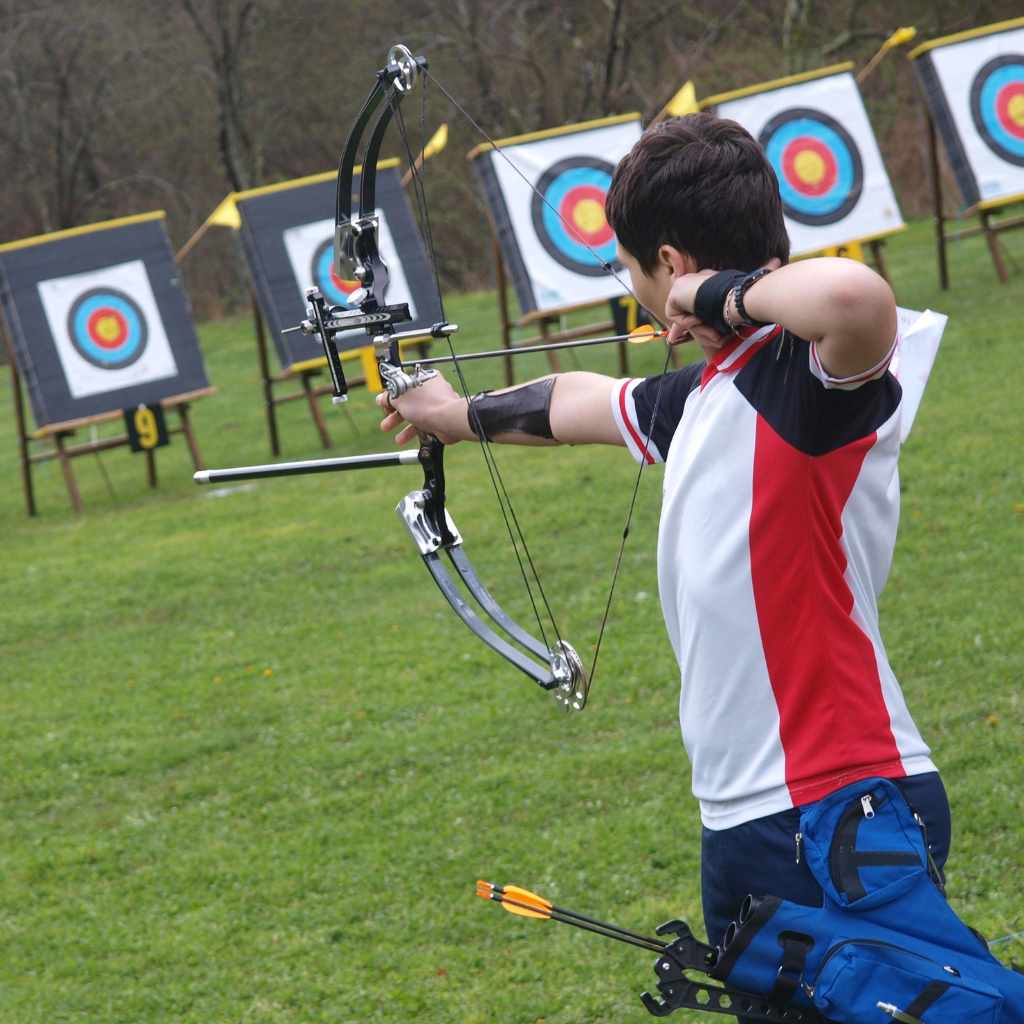
Target archery is all about hitting the exact center, time after time, under controlled conditions. Whether you are doing Olympic-style Recurve or shooting FITA-style rounds, the environment is predictable. You usually shoot the same distance, the weather is often managed, and the target never moves.
The Environment: Controlled and Consistent
In target archery, everything is designed to eliminate variables. You might shoot indoors or on a range where wind is minimal. This allows archers to focus intensely on refining their technique until it becomes automatic. It is a pure test of mechanics.
The Equipment Focus: Speed and Fine-Tuning
Target archers love precision tuning. They use highly adjustable sights, specialized stabilizers to dampen vibration, and high-speed bows. Equipment setup is critical because a millimeter off on the sight can mean the difference between a 10-ring and an 8-ring.
- Sights: Often feature fine-tuned micrometers for exact adjustments.
- Stabilizers: Long rods designed to keep the bow perfectly steady during the shot sequence.
- Arrows: Usually lighter and stiffer for maximum speed and straight flight over long distances.
- Aesthetics: While performance is key, many target archers also prefer bright colors and sleek, modern designs.
Bowhunting: The Test of Real-World Accuracy
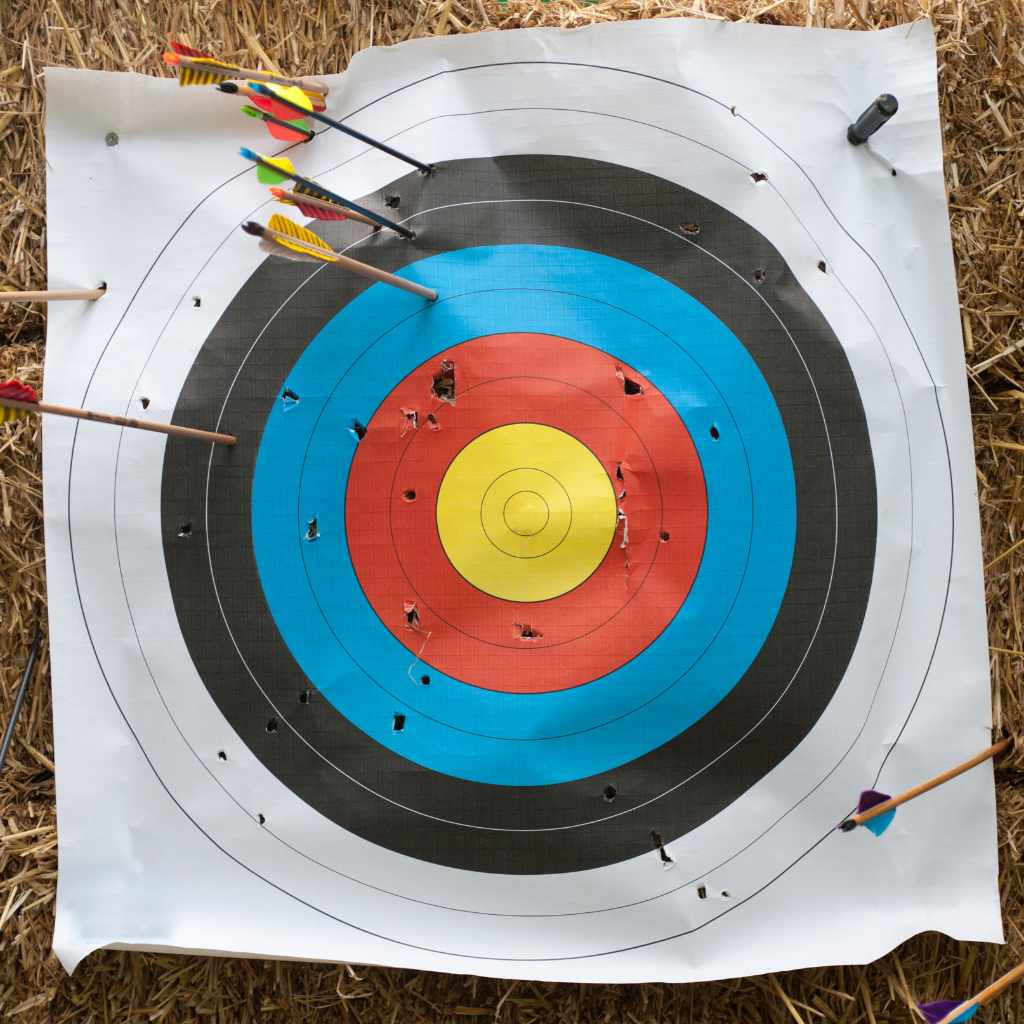
Bowhunting shifts the focus from hitting a static center to ethically placing a shot on a live animal within a critical safety zone. This adds layers of complexity like movement, varied distances, and challenging terrain.
The Environment: Dynamic and Unpredictable
A hunter rarely gets the perfect 20-yard standing shot. They must account for wind shifts, uneven ground (uphill or downhill shots), varying light conditions, and the animal’s movement or nervous state. This demands adaptability.
The Equipment Focus: Reliability and Knockdown Power
In bowhunting, equipment failure is not an option. Hunters prioritize reliability and kinetic energy (knockdown power). While accuracy is paramount, the equipment must also be durable enough to withstand the rugged elements of the woods or wilderness.
- Sights: Often use single-pin movable sights or simple multi-pin sights, designed for quick acquisition in the field, not extreme fine-tuning.
- Stabilizers: Shorter and less obtrusive to prevent snagging on brush.
- Arrows: Heavier and tougher to retain energy upon impact and push through hides or light brush.
- Broadheads: The cutting tips used for hunting, which replace target points and require specialized practice to ensure they fly exactly like the practice tips.
| Feature Comparison | Target Archery | Bowhunting |
|---|---|---|
| Primary Goal | Highest possible score (bullseye) | Ethical, lethal shot placement on game |
| Environment | Controlled, predictable, flat ground | Unpredictable, variable weather, uneven ground |
| Typical Range | Standardized distances (18m, 30m, 50m, etc.) | Varies widely; often requires judging unknown distances |
| Equipment Style | Highly tuned, often heavier stabilizers, fast bows | Durable, compact, focus on reliable energy transfer |
The Skill Development Showdown: What Practice Looks Like
The practice routines for these two disciplines reflect their unique goals. If you are a beginner, understanding these practice styles helps you structure your time effectively, no matter which path you lean toward.
Target Archery Practice: Repetition and Calibration
Target practice is meticulous. It is about making the exact same motion every single time. You focus heavily on your “form” until it becomes muscle memory.
Step-by-Step Target Practice Routine Highlights:
- Tuning Day: Spend hours paper tuning your arrows and adjusting your sight at close range (e.g., 10 yards). This ensures your bow and arrow combination shoots perfectly straight.
- Distance Progression: Slowly move back, ensuring you master one distance before adding another.
- Shot Routine Drills: Focus on anchoring precisely, holding steady (the “hold”), and executing a smooth release, often using specific aiming techniques like gap shooting or peep alignment.
- Endurance: Shooting hundreds of arrows in a session to build fatigue resistance while maintaining form.
Bowhunting Practice: Simulating Reality
Hunters need to train for the “worst-case scenario.” They must be ready to shoot when they are slightly tired, rushed, or off-balance. This is often called “hunting shape.”
Essential Bowhunting Practice Drills:
1. Shooting Under Duress (Simulated Fatigue)
You cannot afford to tire out an animal waiting for you to calm down. Hunters must train their bodies to perform under stress.
- Do 20 jumping jacks or run in place for 30 seconds, then immediately draw and shoot at a target. This teaches you how to settle your aim when your heart is racing.
2. Distance Estimation Training
In the field, you rarely have rangefinders calibrated perfectly for every shot. Hunters must learn to estimate distance quickly and accurately.
- Set up targets at distances you estimate (e.g., “That looks like 35 yards”). Measure it only after you shoot.
- Practice shooting from positions that mimic real hunting scenarios, such as kneeling, leaning against a tree, or shooting slightly uphill.
3. Broadhead Practice (Crucial Safety Step!)
Broadheads fly differently than field points because of their blades. If a broadhead flies inconsistently, it is dangerous and causes animal trauma. You must practice with the exact broadheads you plan to hunt with until you verify field point accuracy.
Safety Note: When practicing with broadheads, always use a target specifically rated for them (often foam block targets designed to stop deep penetration). Never shoot broadheads into common foam bag targets, as the blades can get stuck irreversibly or damage the target casing dangerously. For more on field point tuning vs. broadhead tuning, reputable sources like state wildlife agencies offer great guides [Ducks Unlimited on Broadhead Tuning].
Cross-Training: Where the Sports Overlap
The good news for beginners is that the foundations of excellent archery are universal. Whether you are aiming for the Olympics or an elk, these fundamental skills are the same:
Core Archery Fundamentals
- Stance: A balanced, square stance provides a solid base.
- Grip: A relaxed bow hand grip prevents torquing the bow handle, which causes arrows to fly inconsistently.
- Draw Cycle: Smoothly pulling the string back to a repeatable anchor point.
- Aiming/Holding: Maintaining a steady pin float or sight picture.
- Release: Allowing the drawing fingers/mechanical release to move cleanly away from the string without snatching.
Mastering these elements in a target setting builds the muscle memory needed for the stress of the hunt.
Equipment Crossover: What You Can Share?
Beginners can save money by starting with gear that overlaps:
- The Bow: A compound bow purchased today can easily be set up for either discipline by swapping sights and string silencers.
- Arrows: You can start with high-quality arrows suitable for both, switching the tip (field point for targets, broadhead for hunting).
- Release Aids: Mechanical release aids are common in both compound target archery and modern bowhunting.
Decoding the Gear: Key Differences Explained for Beginners
If you walked into an archery shop today, the sheer variety of equipment can be overwhelming. Let’s simplify the major component differences you will encounter when deciding between a target setup and a hunting setup.
Sights and Scopes
Target Sights: These are large, often featuring long extension bars and precise, magnified scopes (especially in Olympic Recurve). Adjustments are made in tiny increments to hit the ‘X’ ring. They are built for static aiming.
Hunting Sights: These are smaller, rugged, and usually use a single illuminated pin, sometimes adjustable for distance (a movable pin). The focus is on fast visibility and durability against bumps and weather. Many hunters use fiber optic pins that glow brightly in low light.
Stabilization Systems
Target Stabilizers: Long rods extending forward and sometimes backward from the bow. They dramatically reduce vibration and help the archer hold the bow steady while aiming for long periods. They can interfere with carrying a bow through thick brush.
Hunting Stabilizers: Short, stiff “stubbies” or small single rods. Their job is mainly to absorb vibration upon the shot and balance the bow, not to slow down aiming adjustments massively.
Arrow Dynamics: Weight vs. Speed
This is subtle but important. Target archers generally prefer lighter arrows to maximize speed and reduce the effect of gravity over the required distance.
Bowhunters must balance speed with Momentum**. Heavier arrows carry more kinetic energy to ensure proper penetration through animal tissue. A beginner needs an arrow stiff enough for their draw weight but generally leans toward a setup that favors knockdown power over pure speed.
| Component | Target Archery Configuration | Bowhunting Configuration |
|---|---|---|
| Stabilization | Long front rod, sometimes short back rod (weight focused). | Short, simple rod or stubby stabilizer (durability focused). |
| Sighting Device | Large scope, multiple adjustment points, high magnification. | Single illuminated pin, quick elevation adjustment preferred. |
| Arrow Tip | Blunt, uniform Field Points. | Sharp, mechanically deploying Broadheads (must be practiced with). |
| Accessories | String silencers minimal; focus on sight clarity. | Peep sight often crucial; large amount of camouflage or silencing material. |
A Beginner’s Decision Tree: Which Path First?
If you are new to archery, the best advice I can give you is this: Start where you have the easiest access to good coaching and safe ranges, and train the fundamentals perfectly.
Why Start with Target Practice? (Recommended for 90% of Beginners)
Target practice provides immediate, undeniable feedback. If you miss the center, you know instantly that your form wobbled, your anchor point drifted, or your release was sloppy. This rapid feedback loop accelerates learning crucial shooting habits.
When you begin, you need to build rock-solid consistency. This consistency is the absolute prerequisite for ethical hunting. You cannot develop repeatable form while simultaneously worrying about wind direction or animal movement.
Checklist: When You Are Ready to Transition to Hunting Practice
Do not rush this step. You should be consistently grouping arrows tightly (within the size of a softball) at 30 yards on a paper target before deeply considering the hunting transition. Only then should you proceed. According to safety guidelines provided by many certified archery instructors, mastering range qualification is critical before moving to broadhead practice.
- Achieve perfect consistency in your form (no flinching, consistent anchor).
- Comfortably shoot 40-50 arrows in one session without noticeable breakdown in your form.
- Successfully tune your sight to shoot perfectly with your chosen broadheads at 20 yards.
- Become proficient at judging unknown yardages within a 15-yard margin of error. (If you guess 35 yards, you should be within 20-50 yards).
When Bowhunting Practice Becomes the Focus
Once you have the target fundamentals down, bowhunting practice integrates those skills into a challenging application. It emphasizes mental fortitude, quick decision-making, and mastering shooting from awkward positions.
The transition is less about learning how to shoot and more about learning when and where to shoot under pressure. If you are passionate about wildlife and the outdoors, this path offers unmatched excitement.
Safety First in Both Disciplines
No matter which path you choose, safety is non-negotiable. Archery can be incredibly safe when simple rules are followed, but ignoring them leads to serious risk. Here are the universal rules we all follow, whether we are shooting 10 feet away or 60 yards away.
Universal Archery Safety Rules (The Non-Negotiables)
- Never dry fire your bow: Releasing the string without an arrow absorbs all the stored energy into the bow limbs, which can cause them to crack or shatter, sending pieces flying dangerously.
- Know Your Backstop: Ensure your target is appropriately rated and that you have a safe backstop (like a large mound or specialized net) behind it to catch missed arrows.
- Check Your Gear: Before every session, inspect your string for fraying and your limbs for any cracks or stress marks. Damaged equipment is dangerous equipment.
- Always Establish Clear Range Rules: If you are on a range, obey the Range Officer’s commands. Never draw an arrow until instructed, and never point a nocked arrow at anyone.
For further reading on safe range operation and ethics, organizations like the National Archery in the Schools Program (NASP) offer excellent, easy-to-digest safety manuals that apply universally [NASP Safety Guidelines].
FAQ: Beginner Questions on Bowhunting vs. Target Archery
Q1: Can I use my target bow for hunting immediately?
A: Technically yes, but practically, no. You must swap out the target sight for a rugged, single- or multi-pin hunting sight, and most importantly, you must switch to broadheads and re-tune for those tips. Target bows are also often tuned for higher speed, which may not always be ideal for the heavy, high-momentum arrows preferred by some hunters.
Q2: Which style is easier to learn first?
A: Target archery is easier to learn first. The environment requires fewer variables (no wind, no gauging distance), letting you focus 100% on developing perfect shooting form.
Q3: Do I need a different type of bow (Recurve vs. Compound) for each?
A: No. Both styles use Recurves, Crossbows, and Compounds. However, modern competitive target archery is dominated by high-end Recurves (Olympic style) and custom Compounds. Bowhunting is almost entirely done with Compound bows today due to their speed, let-off (holding weight), and customization options.
Q4: How much does target archery equipment cost compared to hunting gear?
A: High-end target competition setups are often more expensive because they involve highly specialized, highly adjustable accessories (like sophisticated scopes and long stabilizers). A beginner hunting setup can often be very capable and slightly less expensive initially because the accessories are simpler and more rugged.
Q5: If I practice hunting shots, does that make me a target archer?
A: No. If your goal is to participate in sanctioned 3D shoots or field rounds, you are a target archer. If your goal is to harvest game with a bow, you are a bowhunter
Related pick: Check today's price on Amazon