Burlap Vs Tarp Archery Target: Proven Essential
Burlap vs. Tarp Archery Target: For beginners, burlap excels at stopping arrows quietly and is often easier to stop with DIY methods, while thick tarps are excellent for weather resistance and structure, though both require specific backing layers for optimal arrow stopping and longevity.

Morrell
Morrell High Roller Foam Archery Target, 6…
- Practice Accuracy From Every Side: 6 sided cube target features 21 bullseyes, providing multiple aiming points to improve shooting…
- Stops High-Speed Arrows: High-density self-healing foam is engineered to stop arrows traveling up to 450 FPS from compound bows an…
- Built for Repeated Training: Durable waterproof foam construction resists wear and fading, providing dependable performance throug…
As an Amazon Associate I earn from qualifying purchases.
Welcome to the range! As you start your archery journey, one of the most exciting pieces of gear to create (or buy!) is your target. It needs to stop your arrows safely, last a long time, and not cost a fortune. Two common materials pop up in beginner discussions: burlap and tarps. Which one is right for you? Sizing up burlap vs tarp archery target choices can feel tricky when you just want to start shooting.
Don’t worry! This is a super common question. We will break down exactly what each material brings to the table. We will look at stopping power, cost, and durability. By the end, you will know exactly which backing material fits your shooting style and budget best. Let’s make arrow stopping simple and keep your practice fun!
Understanding Archery Target Backing Materials
When building or buying an archery target, you usually have two main parts: the outer layer (which you see) and the backing material (what actually catches and stops the arrow shafts).
The backing material is the real workhorse. Its job is crucial: it must grip the arrow tip firmly enough to stop its momentum quickly, but gently enough that you can easily remove the arrow without tearing up the material or damaging your arrow. Here’s why beginners often debate burlap and tarps.
Why the Material Choice Matters So Much
Choosing the right material impacts three key areas:
- Arrow Stopping: A poor stop can lead to arrows punching through the target (a safety hazard) or arrows getting stuck too tightly (a frustration hazard).
- Longevity/Durability: How many shots can the target take before it needs repair or replacement? Weather exposure also plays a role here.
- Cost & Availability: Beginners usually want low-cost options that utilize materials found easily at local stores.
Burlap Archery Targets: The Soft Stop Specialist
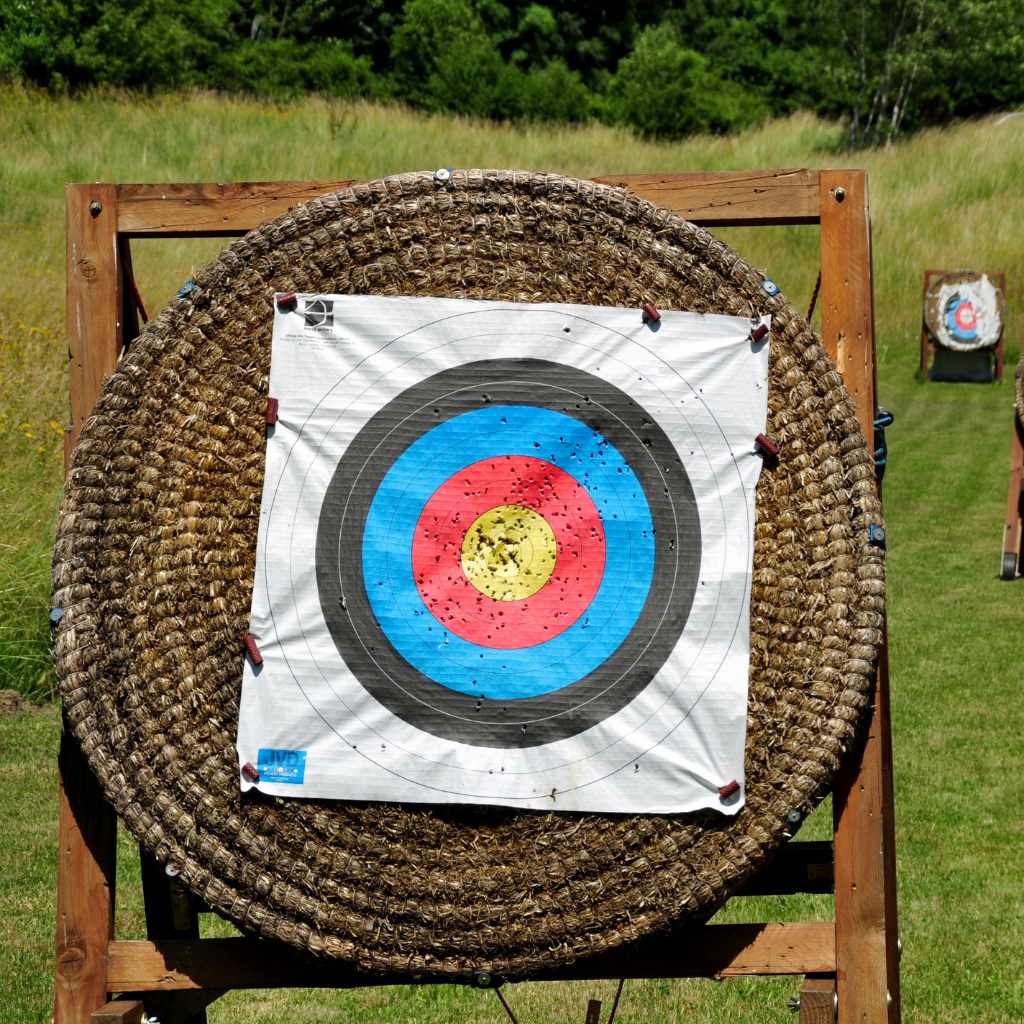
Burlap is a coarse, loosely woven fabric made from jute or sisal fibers. It’s one of the oldest materials used for archery targets, often seen in traditional field target bags.
Pros of Using Burlap
Burlap shines brightest in stopping power and sound management.
- Excellent Arrow Stopping: The woven, slightly loose nature of burlap allows the arrow tip to penetrate and embed securely without excessive wear on the arrow itself. It grips the shaft nicely.
- Quiet Shooting: Shots hitting a layered burlap target are often much quieter than those hitting hard plastic or thick tarp layers, which can be nice if you practice near neighbors.
- Inexpensive and Accessible: Burlap rolls or bags are generally very affordable and can be found at craft stores, garden centers, or fabric suppliers.
- Easy Arrow Removal (When Layered): When several layers of burlap are packed tightly, the arrow penetrates the outer layers but slows down gradually, often making removal quite smooth.
- Biodegradable: Over time, natural jute burlap breaks down more easily than synthetic materials.
Cons of Using Burlap
While great for stopping arrows, burlap has its drawbacks, especially when exposed to the elements.
- Poor Weather Resistance: This is the biggest weakness. Burlap soaks up water like a sponge. If left in the rain, it gets heavy, rots quickly, molds, and degrades rapidly.
- Requires Substructure: Burlap alone cannot stop a speeding arrow unless it is layered very thickly (a technique used in archery bag targets). It almost always needs a sturdy frame or box built around it.
- Debris/Mess: Older, dry burlap can shed small fibers, creating a bit of mess around the shooting area.
How Burlap Targets Are Typically Used
Burlap is rarely used as a standalone block; it is best utilized in specific target designs:
- Layered Bag Targets: Many commercial “bag targets” use tightly packed burlap sacks filled with layered burlap strips, which are then sewn into one solid block.
- Target Cover: Sometimes, burlap is used as the outer wrapping for compressed foam inserts, helping to hold the foam together and provide a different kind of friction on the arrow shaft.
Tarp Archery Targets: The Durable Shield
A tarp (short for tarpaulin) is typically a waterproof, heavy-duty sheet of flexible material, most commonly made from polyethylene (plastic) or vinyl.
Pros of Using Tarps
Tarps are strong and built to survive outdoor conditions.
- Excellent Weather Resistance: Tarps shed water beautifully. If your target sits outside year-round, a tarp skin or an interior made of heavy tarp material will last much longer than natural fibers.
- Structural Integrity: Thicker vinyl or PVC-coated tarps offer inherent rigidity. They hold their shape well, which forms a strong outer shell for DIY targets.
- Affordability and Availability: Standard blue or silver utility tarps are incredibly cheap and available at any hardware store.
- Good for “Wrap-Around” Covers: Tarps make great outer wraps for targets filled with softer materials, providing a protective layer against sun (UV degradation) and rain.
Cons of Using Tarps
When used as the primary stopping layer, tarps can present challenges.
- Arrow Friction/Removal Issues: This is the main problem. Smooth plastic or vinyl offers very little friction. Arrows tend to slide right through thinner tarps easily, or, if the tarp is thick and taut, the arrow can get stuck under the plastic layer, making it hard to pull out.
- Noise: Shots hitting a taut tarp often produce a loud “thwack” sound, which can be startling or annoying during practice.
- UV Degradation: While good against rain, even heavy plastic tarps will eventually become brittle and crack under constant exposure to direct sunlight.
How Tarps Are Typically Used
Tarps are rarely the ideal inner stopping layer, but they are fantastic components:
- External Protective Covering: Wrapping a stack of foam or wood blocks in a heavy-duty tarp protects the interior from rain and sun damage.
- DIY Stop Bag Shells: Using a tarp as the outer “bag” for a target filled with shredded old clothing or foam scraps.
- Ground Barrier: A cheap tarp placed under your target prevents moisture from rising up from the ground into your target structure.
Burlap vs Tarp Archery Target: A Head-to-Head Comparison
To help you decide quickly, let’s place the features side-by-side. This comparison focuses on their use as the immediate stopping surface.
| Feature | Burlap (Jute/Natural Fiber) | Tarp (Poly/Vinyl Plastic) |
|---|---|---|
| Primary Stopping Power | Excellent (when layered/packed) | Poor (tends to let shafts slide or bind) |
| Arrow Removal Ease | Good/Easy | Difficult/Variable |
| Weather Resistance | Very Poor (Needs shelter) | Excellent (Waterproof) |
| Noise Level on Impact | Quiet | Loud/Sharp |
| Cost of Material Per Square Foot | Low to Moderate | Very Low |
Building Better Targets: Combining Burlap and Tarp
As an archery guide, I can tell you the best solution often isn’t choosing one over the other, but using them together—or substituting them with modern materials.
The ultimate beginner-friendly target uses a combination of materials to leverage the strengths of each.
The “Best of Both Worlds” DIY Target Concept
If you are building a box target (a wooden frame stuffed with material), here is a proven method that uses the strengths of both:
- The Core Stopper: Use layers of compressed material that actually stops the arrow. For absolute beginners, this could be old carpet scraps, compressed plastic film (like contractor waste film), or thick foam blocks (like those used for flotation).
- The Friction Layer (Burlap’s Role): Wrap your core stopper material in several layers of burlap. This provides the necessary friction to slow the arrow gently, making removal easy and quiet.
- The Protective Shell (Tarp’s Role): Wrap the entire finished block (burlap and core) tightly in a heavy-duty vinyl or PVC tarp. This shell protects the burlap and foam/carpet from rain, dew, and UV rays, dramatically extending the life of the target block.
This three-part system keeps the quiet, gentle stop of burlap inside while using the durability of the tarp outside. If you stop by a reputable archery supply store, you might see this layering technique used frequently in their premium bag targets, often utilizing specialized synthetic woven materials instead of natural burlap for even better durability.
Modern Archery Target Alternatives Beginners Should Know
While burlap and tarps are budget staples, technology offers fantastic alternatives that often outperform them when used alone. If you have a slightly larger budget, consider these highly effective stoppers, particularly if you shoot modern bows with high draw weights (over 45 lbs).
1. Compressed Foam Blocks (The Industry Standard)
These are often sold as single, large blocks of layered high-density polyethylene foam. They are fantastic because:
- They are excellent for stopping high-speed modern arrows.
- They are weatherproof.
- Arrow removal is usually simple if the foam blocks are layered correctly.
- They do not degrade or absorb moisture like burlap.
If you check safety guidelines from organizations like the National Archery in the Schools Program (NASP), they prioritize foam-based targets for safety and consistency (Source: NASP Official Website).
2. Polypropylene Rope Targets (DIY Heaven)
This method involves tightly wrapping polypropylene rope (the synthetic kind, not natural fiber sisal) around a frame or mandrel. It creates a dense, self-healing block. While it takes significant time to wrap, the resulting target is amazing:
- Outstanding stopping power for almost any bow.
- Highly durable and excellent weather resistance.
- Arrow removal is smooth due to the rope fibers separating slightly upon impact.
3. Layered Plastic Film (DIY “Bag” Target Filler)
Instead of burlap, some DIYers use layers of thick plastic sheeting, often called “contractor plastic” or simply bubble wrap (though heavy industrial film works better). This material is tightly compressed inside a sturdy outer bag (which could be a tarp or actual burlap). This method offers great stopping power and moisture resistance at a very low cost, though arrow removal can sometimes be sticky if the layers compress too tightly.
Practical Guide: Choosing Based on Your Shooting Environment
Your decision on burlap vs tarp archery target needs to strongly reflect where and how you practice.
Scenario 1: Indoor Range or Covered Practice Space
If you shoot indoors, or under a solid roof structure where rain and direct sun are never a concern, Burlap excels.
Why? You prioritize the quiet impact and easy arrow removal that layered burlap provides. Since moisture isn’t an issue, you don’t need the weather protection a tarp offers. You can save money by getting raw burlap and building a simple wooden frame.
Scenario 2: Field Practice (Backyard, Woods, Uncovered Area)
If your target lives outside and gets hit by dew, rain, or hours of sun, Tarp (as a protective layer) is essential.
Why? Burlap will rot or mold inside of a month if left out uncovered. You must use a heavy-duty tarp as an exterior shell to keep moisture out, even if you fill the interior with slightly more weather-resistant materials like old carpet or foam chunks.
Scenario 3: Budget Conscious and Time Rich
If you want the cheapest option and don’t mind a project, Burlap is the way to start, but you must build a sturdy roof/cover over the target itself or plan to bring it inside every time it rains.
Scenario 4: Shooting High-Powered Bows (Over 50 lbs)
If you are using a modern compound bow with a high draw weight, neither loosely packed burlap nor a simple tarp will stop the arrow safely for long. Focus on compressed foam or the polypropylene rope method. These materials manage the kinetic energy of faster arrows much more effectively.
Tips for Extending the Life of Any DIY Target
No matter which material you choose, maintenance is key to getting your money’s worth. Good target husbandry saves money and keeps your practice safe.
Maintenance Checklist:
- Rotate Regularly: After every few hundred shots, slightly shift the target block so that the arrows are hitting a new, unused section. This prevents “shooting out” one single spot.
- Check the Backstop: Always ensure you have a safe backstop (like a solid wall or mound of dirt) behind your target just in case an arrow passes completely through—especially important for new, stiff burlap layers.
- Inspect for Mold (Burlap): If you use burlap and it gets wet, ensure it dries out completely. If you see green or black spots, isolate that section immediately as mold can weaken the material structure.
- Tighten the Wrap (Tarp/Bag Targets): If you use a heavy tarp wrapping, check the tension every few weeks. As the inner material compresses, the wrap may loosen, allowing the internal material to shift. Re-tightening the rope or straps keeps the block dense and effective.
- Arrow Removal Check: If you notice arrows are ripping large chunks of the material out upon removal, your material is too hard, or you need to shift your shooting angle more often. Gentle removal prevents premature target failure.
Frequently Asked Questions (FAQ) for Beginners
Q1: Can I just shoot at an old tarp hanging on a fence?
A: For very low-poundage bows (like junior recurves under 20 lbs), an old, heavy vinyl tarp draped over something might stop a slow arrow. However, for standard beginner equipment (30+ lbs), a single tarp will let arrows pass through or tear badly. You need layers of dense material behind the tarp or a very thick, multi-layered tarp construction only.
Q2: Will my arrows be ruined if I shoot into heavy plastic tarps?
A: Yes, they might be. Thick plastic tarps tend to create a very smooth surface. If the arrow buries itself between the layers of plastic and the surface is very taut, pulling the arrow out can cause significant damage to the plastic wrapping and potentially damage the fletchings or shaft of your arrow.
Q3: Which material is better if I only ever shoot indoors?
A: If shooting indoors where weather is controlled, the advantage shifts firmly to Burlap. Layered and tightly packed burlap offers a quieter shot and easier arrow removal than any basic plastic tarp.
Q4: How many layers of burlap do I need to stop a 40 lb recurve bow?
A: This varies based on the weave, but for a 40 lb bow, you generally need at least 18 to 24 inches of tightly packed, compressed burlap strips or bags to stop the arrow safely. That’s why it’s often built inside a rigid wooden box frame.
Related pick: Check today's price on Amazon