How Big Is an Archery Target? Official Sizes (40/80/122cm)
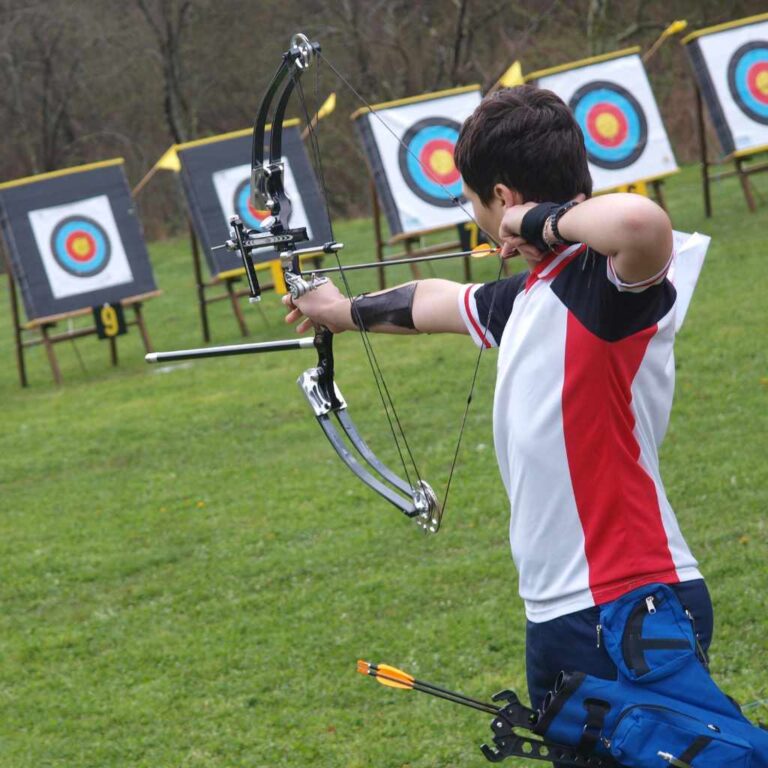
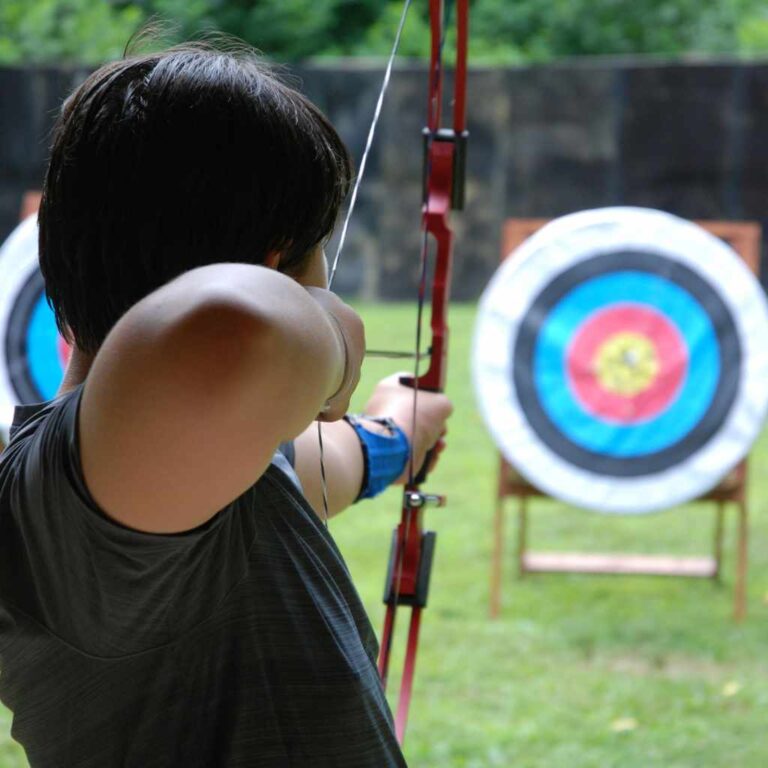
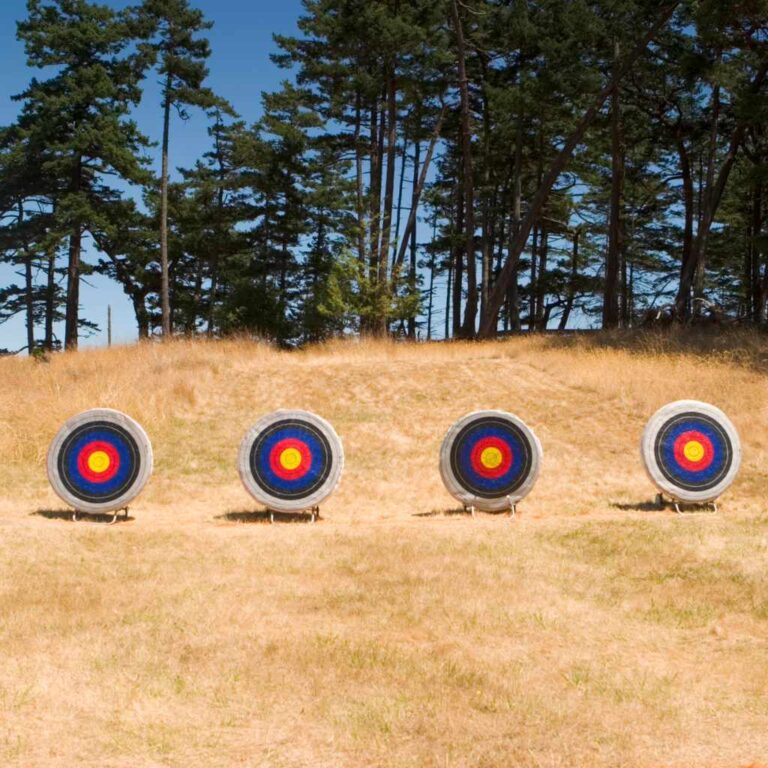
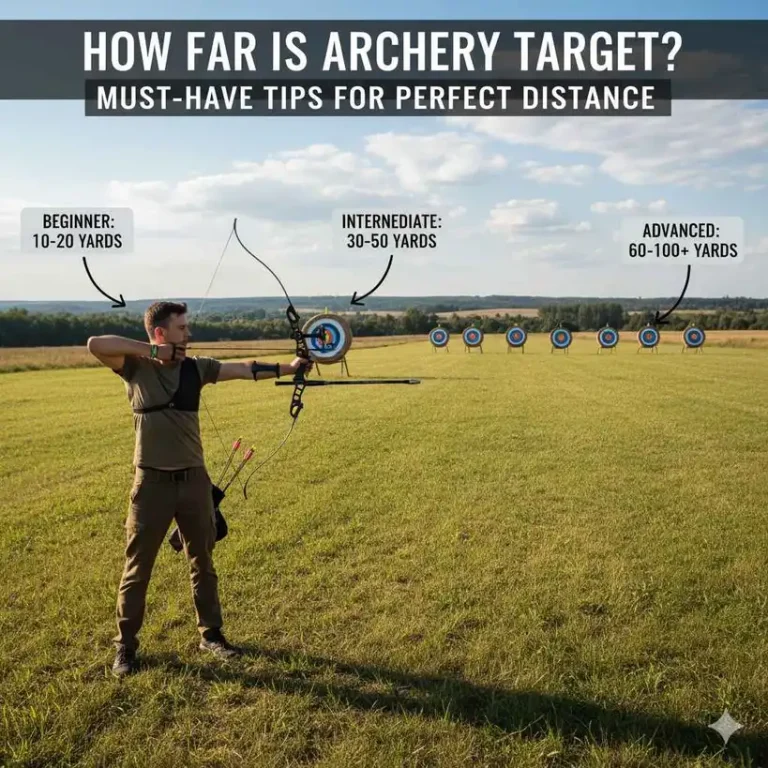
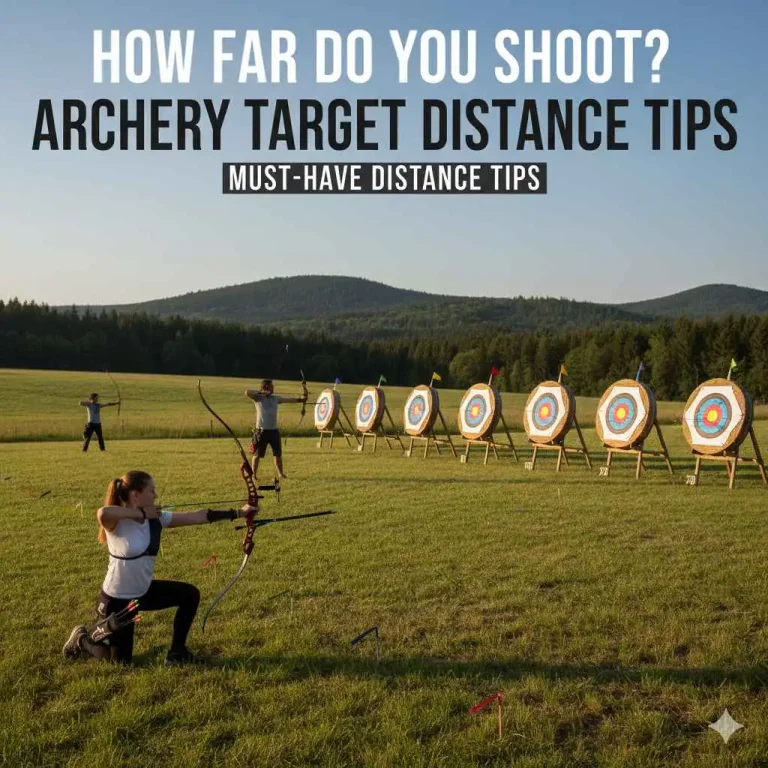
Official World Archery target sizes: 40cm at 18m (indoor), 80cm at 50m (compound outdoor), and 122cm at 70m (Olympic recurve). For backyard practice, a 24-36 inch face at 10-20 yards works well. Here’s the full breakdown by discipline, plus how to pick the right size for your skill level.
Why Target Size is Non-Negotiable for Better Archery
Many beginners think bigger is always better. While a huge target is forgiving, it doesn’t train you to aim precisely where you want the arrow to land. Target size affects three key things: your improvement curve, your safety zone, and your wallet.
The Link Between Target Size and Skill Building
When you first start, you might miss the target completely! A larger target absorbs these early misses and keeps practice fun. However, as you get better, you need to shrink the effective scoring area to train precision.
Too Big: If your target is too large for your current skill level, you might not develop the disciplined focus needed to hit the center mass. You are training “spray and pray,” not precision.
Too Small (Too Soon): If you jump to a tiny target before you can reliably hit a larger one, you get frustrated. Every miss means walking to retrieve the arrow, which breaks focus and enjoyment.
The right size matches the challenge to your current ability. It should feel achievable but require focus.
Safety First: Backstops and Target Dimensions
Target size is directly related to safety, especially when shooting at home. While the target face is what you aim at, the overall material structure must be large enough to stop errant arrows (overshoots or arrows that pass through).
If you are shooting a powerful modern compound bow, even if you aim for the small center, you need a target system rated for high impact speeds and large coverage just in case the arrow travels past the intended spot. Always check the manufacturer’s recommended draw weight rating for the specific target material.

Understanding Archery Target Standards: A Size Deep Dive
Archery targets aren’t just random circles; they are often based on established international standards. Knowing these terms will help you shop smarter.
Target Sizes for Different Disciplines
The size standardized for a competition is almost always smaller than what a beginner uses for casual backyard practice.
| Archery Discipline | Target Face Size | Official Distance | Why This Size? |
|---|---|---|---|
| Recreational / Backyard | 30-48 inches | 10-20 yards | Increases enjoyment and reduces frustration from missed shots. |
| Indoor (World Archery) | 40 cm (15.7″) | 18 meters | Standard indoor face for both recurve and compound. |
| Compound (Olympic/WA) | 80 cm (31.5″) | 50 meters | Compound’s official outdoor distance and face size. |
| Recurve (Olympic/WA) | 122 cm (48″) | 70 meters | The full-size face used at the Olympic recurve distance. |
| Barebow (WA) | 122 cm (48″) | 50 meters | Same large face as recurve, shot at a shorter distance. |
| 3D Animal Targets | Varies (life-size or scaled) | Variable | Mimics hunting situations with realistic scoring zones. |
The Metric Mystery: Converting Inches to Centimeters
Since many high-end, competition-grade targets use metric measurements, understanding the conversion is key.
1 Inch = 2.54 Centimeters
A standard 40 cm target face is about 15.7 inches.
An 80 cm target face is about 31.5 inches.
A full 122 cm target face (used for Olympic recurve at 70m) is about 48 inches.
For beginners, anything in the 24-inch to 36-inch range works perfectly for general practice at close range (10–20 yards).
Best Pick to Match Official Sizes

KAINOKAI Paper Target Faces, 40cm/60cm/80cm Set
Covers the exact official sizes this guide’s own chart lists (40cm indoor, 60cm field, 80cm compound), so you can practice at your actual competition face size.
- Best for: practicing at real World Archery-standard face sizes
- Why we picked it: one listing covers 3 official sizes instead of buying separately
- Main drawback: paper faces only, needs a foam or bag backer behind them
Compare more options
 Option 1 THREE ARCHERS 40cm Paper Targets, 30pc
|  Option 2 Morrell 80cm Official Paper Target Face
|  Option 3 Highwild Archery Target Stand
|
As an Amazon Associate we earn from qualifying purchases.
Choosing the Right Target Size for Your Current Skill Level
This is where we match the target to the shooter. I recommend scaling the target size as your consistency improves. Think of it like training wheels—you remove them when you’re steady!
Phase 1: The Absolute Beginner (Learning Form and Safety)
If you are brand new—still learning how to properly draw, anchor, and release—you need maximum coverage. Your goal right now is muscle memory and safety, not a bullseye.
Recommended Size: 30 inches minimum, often larger (36” or 40”).
Why: You need a large, visible area to build positive reinforcement. Every time an arrow hits the target, your brain says, “Good job!” This builds confidence quickly.
Target Type: Often a simple foam block or layered bag target.
Phase 2: Building Consistency (First 100 Shots)
Once you can consistently hit the 30-inch target within a few inches of the center repeatedly, it’s time to dial in. You are moving from hitting the target zone to hitting the scoring zone.
Recommended Shift: Move to a 24-inch target face, or use the layered bag where you start aiming only for the inner 18-inch ring.
Goal: Focus intensely on grouping arrows tightly together, even if the group is slightly off-center initially. Tight groupings show good form.
Phase 3: Precision and Competition Prep
When your groups are reliably tight (within the size of a fist) at your practice distance, you can transition to competition-style sizes.
Recommended Size: 40 cm (15.7 inches) or 60 cm (23.6 inches).
Why: This forces you to execute perfect form because the margin for error is much smaller. This is crucial if you plan to shoot in local leagues or FITA-style events.
External Validation for Target Sizing
When choosing a target for a specific bow, always check the manufacturer’s recommendation based on kinetic energy. For instance, targets rated for high-poundage compound bows (like those over 50 lbs) often require a thicker, denser material to stop the arrow completely, regardless of the face size printed on it. You can find safety guidelines related to archery range construction and target requirements from national sporting bodies, such as those referenced by the National Archery in the Schools Program (NASP) guidelines on safe practice setups.
Evaluating Target Material Size vs. Face Size
This is a common confusion point for new archers. The target material (the foam block) is often much larger than the paper or vinyl “face” you are aiming at.
The Target Bag or Block Size
This is the actual physical dimension of the stopping material. This size is primarily determined by safety and how far back you shoot.
Distance Relationship: If you shoot at 10 yards, a 24-inch square target block is quite sufficient for a 20-30 lb recurve bow. If you are shooting 30 yards or more, you need a block large enough to catch any arrow that misses the paper face entirely.
Stopping Power: Bigger targets often mean more material thickness, which is vital for stopping high-speed compound arrows. Don’t skimp on the block size just because the paper face is small.
Using Target Faces for Different Bow Types
Competition faces are printed on disposable paper or vinyl sheets that are taped onto a larger, durable foam core or bag.
| Bow Type | Typical Purchase Size of Target Face | Maximum Draw Weight Considerations |
|---|---|---|
| Traditional Recurve/Longbow | 60 cm (23.6”) or 80 cm (31.5”) | Generally lower impact; easier to stop. |
| Modern Recurve (Olympic Style) | 80 cm (31.5”) | Medium to high impact; requires good stopping material depth. |
| Compound Bow (Lower Pounds < 40 lbs) | 40 cm (15.7”) or 60 cm (23.6”) | Medium impact. |
| Compound Bow (High Pounds > 50 lbs) | 80 cm (31.5”) or larger specialty foam | High impact; often requires layered, self-healing foam blocks. |
Practical Setup: Determining Your Ideal Home Archery Range
Before you even buy a target, you need to determine the safe distance for your shooting area. This dictates the size you must buy for safety.
Step 1: Measure Your Available Space
Be realistic. Is your backyard 15 yards deep or 50 feet deep?
Short Range (10–15 yards): Most backyard setups fall here. You can use smaller, more affordable targets like 24-inch blocks, provided they are thick enough.
Medium Range (20–30 yards): This requires a stable, well-anchored target, likely in the 30- to 36-inch range for full coverage.
Step 2: Know Your Bow’s Power (Draw Weight)
Draw weight is the force (in pounds) required to pull your bowstring back to full draw. Higher weight means faster arrows and deeper penetration.
Low Weight (Under 30 lbs): Arrows move slower. Entry-level foam targets that are 18–24 inches wide are usually fine if they are 10 inches thick.
High Weight (Over 50 lbs): Arrows move very fast. You must use high-density foam or layered bag targets designed to stop high-energy arrows. A larger physical target footprint offers a better chance for the arrow to dissipate energy safely if it hits the edge.
Step 3: Selecting the Target Construction
The target material matters more than the paper face size.
1. Foam Blocks (Layered/Solid): Excellent for compounds. Size is usually sold by the external dimension (e.g., 24″x24″x10″). The thickness (the third dimension) is crucial for stopping power.
2. Bag Targets: These use layered fabric that “catches” the arrow. They are extremely popular because they are lightweight, portable, and the arrow slides out easily. Size ranges from 20 inches up to 42 inches square. They work well for most recurves and low-to-mid-poundage compounds.
3. 3D Targets: The target is shaped like an animal. Scoring rings are placed on vital areas. These are great for variable practice but are usually the most expensive and are often softer, meaning they wear out faster with high-poundage bows.
Tips for Making Any Target Feel “Right”
Even if you have a standard 30-inch bag, you can manipulate its effective target size to aid your practice.
Using Target Bosses and Inserts
Most large bag or foam targets allow you to use smaller, separate inserts (often referred to as “bosses” or “dots”).
The Beginner Hack: Use the full 30-inch surface for your first week. Once you are consistent, place a 20-inch paper target overlay on top of the foam. Now, your effective target size is 20 inches, even though the material behind it is large.
The Precision Drill: Once the 20-inch target is easy, cover the center 10 inches with a smaller dot or target sticker. Now you are drilling for that small center while having the safety net of the 20-inch ring behind it.
The Principle of Shrinking the Field of View
This is the mental trick used by coaches everywhere:
1. Shoot at the target, but consciously focus your vision only on the small center X-ring.
2. Pretend the outer rings do not exist. You are only aiming for that tiny spot.
3. If you are using a very large target (like a 40-incher), this forced tunnel vision simulates aiming at a much smaller target.
Target Size Comparison: Why 40cm is the New Standard for Many
The 40 cm (15.7-inch) target face is incredibly common in many outdoor target archery circuits outside of the absolute largest world championships (which use 80 cm).
Pros and Cons of the 40 cm Target
This size hits a sweet spot for many archers shooting between 30 and 50 yards with recurve bows.
Pros:
Provides a tangible goal that demands accuracy.
Many inexpensive paper faces are printed in this size, making practice affordable.
It is the standard for many local leagues.
Cons:
It appears very small if you are shooting much closer than 20 yards, potentially leading to frustration.
If you are shooting high-poundage compounds, even if the paper is 40 cm, the stopping block must be substantial (often 36”+ wide) for safety.

FAQ: Beginner Questions About Archery Target Sizing
Q1: If I shoot a low-poundage beginner bow, can I use a huge, cheap target?
Yes, for absolute beginners, a larger, softer, inexpensive foam target is great for fun and building confidence. Just make sure the material seems thick enough that the arrow won’t pass completely through at your closest shooting distance.
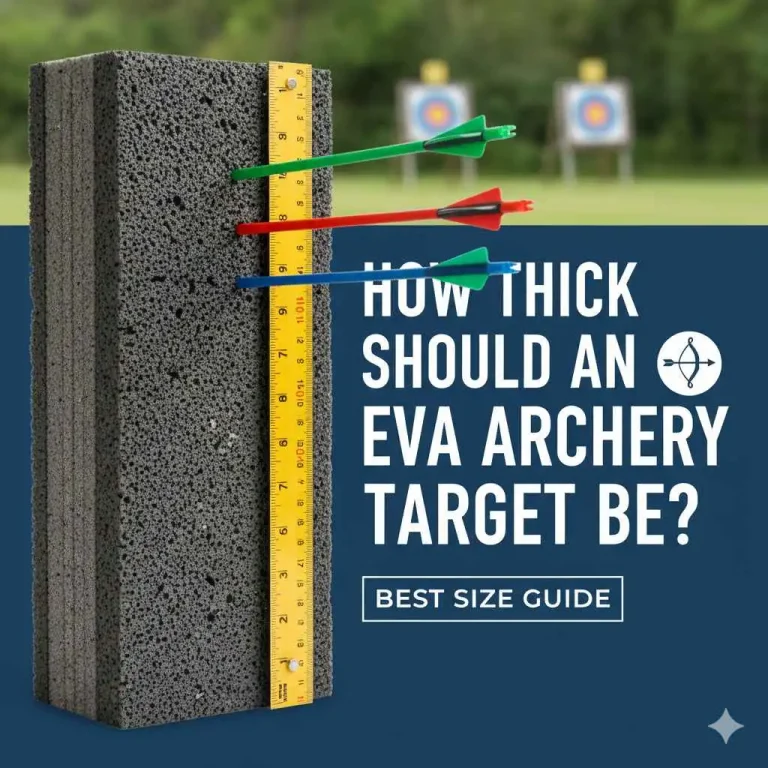
Q2: How thick should my target material be to stop my arrows safely?
This depends heavily on your bow. For lightweight recurves (under 30 lbs) at 15 yards, 8 to 10 inches of dense material usually works. For powerful compounds (over 50 lbs), you need 12 inches or more of professional-grade, layered foam to safely stop the arrow without blowout.
Q3: Should I buy a target rated for competition size (80cm) even if I only practice in my yard?
If you plan to compete soon, yes, buying an 80 cm (31.5 inch) setup is smart, as it’s designed for longer distances (70m). For casual backyard shooting, a 30-inch bag target without a printed face is cheaper and easier to handle for short distances.
Q4: Do I need a separate backstop if I use a big target?
If you shoot outdoors, even with a large target, a proper backstop system (like catching netting or a large earthen berm) is always recommended. Targets are designed to stop arrows aimed correctly; they don’t always stop arrows that dramatically miss the side.
Q5: What is the smallest target face I should ever use?
For practice, generally nothing smaller than 15 inches (40 cm) unless you are an experienced archer shooting at longer distances (over 50 yards). Using a very small dot too early can discourage learning proper form.
Q6: Can I just print my own target faces and stick them on anything?
You can print your own faces to practice aiming, but make sure the material underneath the paper is rated to stop your specific bow weight safely. The paper itself offers zero stopping power.
Conclusion: Aiming for the Right Fit
Choosing the right size for your archery target is a direct investment in your enjoyment and your improvement curve. Remember, there is no single “correct” size; there is only the correct* size for your current needs. Start big enough that you feel successful, and systematically transition to smaller, more challenging sizes as your form tightens and your confidence grows. Always prioritize the thickness and density of the material—the stopping power—over the printed size of the face. Keep your setup safe, keep your practice consistent, and I promise you’ll see those arrows grouping beautifully in no time. Happy shooting!