How 3D Archery Targets Are Made: Essential Guide
ets are typically made using durable, weather-resistant polyurethane foam poured into detailed molds. The process involves mixing liquid chemicals, carefully pouring them into real-life animal shapes, allowing them to cure until solid, and then removing the finished, sturdy target ready for years of arrow practice.
NiceTargets
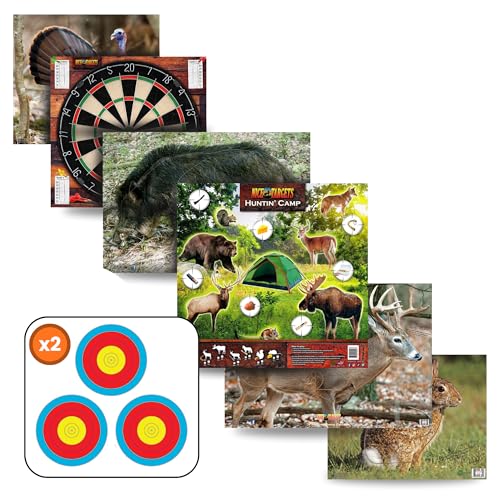
NiceTargets Sharpshooter Variety 8 Pack Target Set…
- DURABLE ARCHERY VARIETY: 8 reusable weatherproof targets that blend game animals, fun shooting games, and precision spots for ever…
- GIFT READY: Holiday friendly set that wraps easily under the tree and delivers instant fun for families, friends, beginners, and p…
- PLASTIC MAKES PERFECT: NiceTargets were born from disappointment with sad paper targets that ripped and fell apart in rain and sno…
As an Amazon Associate I earn from qualifying purchases.
Ever wondered how those incredibly realistic deer, bears, or funny foam critters at your local 3D range get their shape? You invest time and money into your arrows and bow, so knowing what your target is made of helps you choose the best one! Sometimes, especially after pulling out stubborn shafts, these targets seem like magical, impenetrable foam. It can look complex, but the process of how 3D archery targets are made is actually quite straightforward when you break it down. This guide, written just for archers like you, will walk you through every step, using simple language. Get ready to see your target in a whole new light!
Why 3D Targets Are a Big Deal for Archers
3D targets aren’t just fun shapes; they are essential training tools. Unlike flat bag targets, 3D targets help you practice depth perception, judging distance (ranging), and aiming at vital kill zones, just like in a real hunting scenario. Because they need to handle thousands of hard hits from various arrow types (field points, broadheads, crossbow bolts), the material choice is absolutely critical.
Material Matters: The Magic of Polyurethane Foam
If you look up most quality 3D targets, you will find one key material mentioned: Polyurethane (PU) foam. Why foam? It hits the sweet spot for durability, weight, and arrow stopping power.
Polyurethane foam is a polymer known for its flexibility and strength. When specifically formulated for archery targets, it offers fantastic self-healing properties. This means the material compresses when an arrow hits it, grips the shaft gently to stop it, and then slowly expands back to its original shape.
Here are a few reasons why PU foam wins:
- Arrow Stopping Power: It stops arrows safely without excessive damage to the shaft or tip.
- Weather Resistance: High-density PU holds up well against sun, rain, and temperature changes (though UV protection is still recommended for longevity).
- Lightweight: Even large targets are manageable to move around a course.
- Density Control: Manufacturers can adjust the recipe to create soft patches (for easy arrow removal) and hard patches (for structural integrity, often on the legs or base).
For those interested in the science behind durable materials, understanding polymer chemistry gives you a better appreciation for why these targets last. You can find basic information on polymer structure on educational sites like those associated with polymer science research departments.

The Step-by-Step Manufacturing Process: How 3D Archery Targets are Made
Creating a lifelike, durable 3D target is a blend of precise engineering (the mold) and controlled chemistry (the foam). It generally follows five main stages, reminiscent of casting statues or producing high-end automotive parts.
Step 1: Design and Mold Creation
Before any foam is mixed, you need a container for it. This is the mold, and it dictates the final look of the target.
- Sculpting the Master: Professional sculptors create an original 3D master model of the animal (e.g., a boar, a turkey, or a life-size deer). These models are incredibly detailed and accurate.
- Creating the Negative Mold: This master model is used to create a two-part (and sometimes three-part) mold, usually made of durable metal (like aluminum or steel) or high-grade fiberglass or resin. These mold halves must fit together perfectly to prevent foam leaks and ensure sharp detail on the final product.
- Hollow Core Consideration: Most large 3D targets are not solid foam all the way through. They often have a hollow center or a slightly softer core to save material, reduce weight, and make arrow removal easier, especially in higher-end, layered targets. The mold needs to account for this hollow space.
Step 2: Preparing the Polyurethane Chemicals
Polyurethane foam is created by mixing two primary liquid components—a polyol blend and an isocyanate—along with various additives.
This is where the target’s specific characteristics are determined:
- The “A” Side (Polyol Blend): This liquid contains the main polymer backbone, catalysts (to speed up the reaction), blowing agents (to create the cells in the foam), and color pigments.
- The “B” Side (Isocyanate): This is the hardening agent.
Crucial Control: The ratio between the A and B sides must be measured with extreme accuracy. A slight change in the ratio drastically affects the foam’s density, curing time, and final hardness. Manufacturers use sophisticated computerized metering and mixing equipment to ensure consistency for every batch.
Step 3: Mixing and Pouring the Foam
Once the chemicals are mixed, the clock starts ticking. The reaction begins almost immediately, generating heat and expanding the liquid into a low-density foam. This is often referred to as the “cream time.”
- Injection: The mixed liquid is pumped under pressure into the closed, pre-heated mold. High pressure ensures the liquid reaches every crevice, capturing all the fine details sculpted in Step 1.
- Expansion: As the liquid reacts, it expands, filling the mold cavity completely. For targets designed with a hollow core, a special mandrel (a shape inserted beforehand) keeps the center open, or less foam is injected, allowing for a thinner skin.
- Venting: Molds are usually designed with small vents to allow excess expanding gas to escape without disrupting the surface finish.
Step-by-Step Foam Curing and Demolding
The amount of time the foam needs to react and solidify depends on the specific chemical formula used. This is crucial for target longevity.
| Curing Factor | Impact on Target | Manufacturer Control |
|---|---|---|
| Temperature | Higher temperature speeds up curing but can cause surface imperfections. | Molds are often gently heated to control the reaction rate. |
| Catalyst Level | Directly controls how fast the curing reaction happens. | Adjusted based on the desired demolding time (usually 15–45 minutes). |
| Density | Denser foam is heavier but resists tearing longer. | Adjusted by controlling the amount of blowing agent used. |
Once the curing process is complete—the foam is firm and no longer tacky—the mold is opened. This phase, called demolding, requires care to avoid tearing the foam surface.
Step 4: Finishing and Scoring
The raw foam shape is now created, but it still needs features to be usable on the range.
- Trimming: Any excess foam (called “flash”) that squeezed out between the mold seams must be carefully trimmed away using specialized knives or hot wire cutters.
- Painting and UV Protection: Most 3D targets are painted with durable, flexible paints designed to withstand UV radiation and impact. This step also adds realism. High-quality targets often receive a special clear-coat sealant for extra defense against the elements.
- Adding Scoring Zones (Rings): Using stencils or precision machinery, the vital scoring rings (the “heart” and “lung” zones) are painted onto the target. These rings must be precise as they define the rules of competition.
Step 5: Inserting Metal Supports and Replacement Faces
A large target needs stability. Without internal supports, a large foam deer could easily topple over if hit in certain areas.
Manufacturers embed metal rods, sleeves, or specialized plastic tubes deep inside the target while the foam is still curing or immediately after demolding. These structures:
- Provide a solid anchor point for mounting the target onto a stand or metal pole.
- Stabilize leg structures or neck areas that receive frequent, heavy impacts.
For very large targets, or targets designed for high-powered bows, manufacturers sometimes design replaceable zones.
The Concept of Replaceable “Changer” Dots
Many highly durable targets use a modular system where the most frequently hit area—like the vital zone on a large foam animal—is made of a different, often slightly softer or more densely layered foam insert. This “insert” can be unscrewed or pulled out and replaced when it becomes too torn up, saving the archer from buying an entirely new target immediately.
This design feature is a true testament to modern target engineering, allowing archers to focus their money on arrows and practice time rather than constant replacement.
Durability and Target Layers: The Advanced Structure
Not all 3D targets are simple one-density foam shells. As archery technology has advanced, so has target manufacturing, especially for commercial ranges that see thousands of arrows annually. Truly advanced targets often use a layered approach, which directly affects how long they last and how easy it is to remove arrows.
Understanding Layered Foam Targets
Layered designs aim to combine the best features of stopping power and easy extraction. Think of it like a high-quality cutting board—it has different material zones built for specific tasks.
A typical layered 3D target structure might look like this:
- Outer Skin (The “Skin”): A tough, often slightly harder foam layer that takes the initial brunt of the impact and maintains the target’s shape against weather.
- Middle Layer (The “Body”): This is the main stopping medium. It’s formulated to grab the arrow shaft firmly but allow for reasonable pulling force.
- Core/Insert (The “Heart”): Often the softest part, designed specifically for easy arrow removal. In many premium targets, this is the only part that needs frequent replacement.
When an arrow hits a layered target, it travels through the outer layer, slows down in the middle, and stops in the core. Arrow removal is generally easier because there is less friction in the final stopping material.
The Influence of the Targetmaker on the End Product
The final quality of a 3D target relies heavily on the expertise of the company making it. A skilled manufacturer controls these variables:
| Manufacturing Aspect | Beginner-Friendly Impact |
|---|---|
| Chemical Ratio Precision | Affects how easily you can pull your arrows out every time. |
| Mold Hardness/Material | Determines how sharp and realistic the final antlers or feathers look. |
| UV Inhibitors Added | How long the target stays vibrant and firm before becoming brittle in the sun. |
When shopping, recognizing a quality manufacturer often means looking for targets that explicitly mention specific PU formulations or layered construction, rather than just “foam.”
Making It Safe: Safety in Foam Design
While the focus is often on stopping power, safety for the archer is paramount. The materials used in 3D targets are chosen specifically to minimize hazards, especially concerning ricochets and arrow damage.
Polyurethane foam is inherently safer than solid materials for a crucial reason: it absorbs energy instead of reflecting it.
When an arrow hits a dense material like wood or metal, the energy can cause the arrow to bounce back (ricochet), which is incredibly dangerous. Because PU foam compresses, the energy dissipates into the material itself, stopping the arrow with minimal rebound risk.
For beginners learning archery safety, this inherent forgiveness in the material means you can focus more on your form and less on worrying about severe equipment failure due to impact.
Caring for Your Investment
Even the best-made target needs care to maximize its lifespan in the sun and rain. Remember, the manufacturing process builds durability, but care ensures longevity.
- Positioning: Always place your targets in shaded areas when possible. Direct, harsh sunlight degrades the UV inhibitors built into the paint and foam skin over time.
- Storage: If storing targets long-term (like over winter), clean off dirt and store them under a breathable tarp, off the ground. Avoid wrapping them tightly in plastic, as this traps moisture.
- Arrow Removal: Always pull arrows straight out along the shaft line, avoiding twisting or prying. This preserves the self-healing nature of the foam matrix.

FAQ: Beginner Questions About 3D Targets
Q1: Can I make my own 3D target at home?
A: While you can certainly make simple bag targets or foam blocks, creating a high-quality, detailed 3D target requires specialized, often hazardous, chemical components (the isocyanates) and professional, high-pressure molding equipment. It is generally safer and more cost-effective for beginners to purchase commercially made targets.
Q2: How long should a quality 3D target last?
A: This varies widely based on climate, bow poundage, and frequency of use. A high-quality, full-body deer target used moderately outdoors might last 3 to 5 years before the foam becomes too significantly degraded to stop arrows safely. Highly used range targets might need annual insert replacements.
Q3: What is the difference between polyurethane and PEVA foam targets?
A: Polyurethane (PU) is the industry standard for high-quality, durable 3D animal targets because of its excellent stopping and self-healing characteristics. PEVA (Polyethylene Vinyl Acetate) foam is often used in shooting blocks or simpler, less detailed targets. PU generally provides better longevity and handles broadheads more reliably than standard PEVA.
Q4: Why do some targets have replaceable parts?
A: Replaceable parts, often called “inserts” or “faces,” allow archers to swap out the area that sees the most impact (like a deer’s vitals) without replacing the entire, expensive sculptured body. This is a cost-saving, longevity-focused feature common in high-end models.
Q5: Can I shoot broadheads at 3D foam targets?
A: Only if the target explicitly states it is broadhead approved. Most standard, less dense 3D targets are designed only for field points. Shooting broadheads into non-approved targets causes excessive tearing, ruins the foam structure quickly, and can be dangerous if the broadhead catches and doesn’t stop cleanly.
Q6: What makes a target easy to pull arrows from?
A: An easy-to-pull target usually has a lower density foam in the core and often utilizes layered construction. The specific blend of chemicals impacts friction. Targets with greater “gel” content within the foam tend to grip arrows less aggressively than overly rigid foams.
The Future of 3D Target Manufacturing
As archery continues to grow, the manufacturers of 3D targets are constantly seeking ways to improve durability while making the user experience—namely arrow removal—easier. We are seeing several trends shaping the future of how these targets are made.
Related pick: Check today's price on Amazon