Competition Bow Cost: Real Budget Breakdown by Level
A beginner competition setup usually costs about $500–$1,200, intermediate setups about $1,200–$2,500, and serious target or 3D rigs often run above $2,500; recurve is usually cheaper than compound at the same level. Underbudgeting leads to poor gear matches, weaker scores, and extra replacement costs. This guide prices the full setup by archer level and discipline, including bow, arrows, sight, rest, release, stabilizers, and essentials.
Competition bow cost at a glance


Bow-only price versus full setup cost
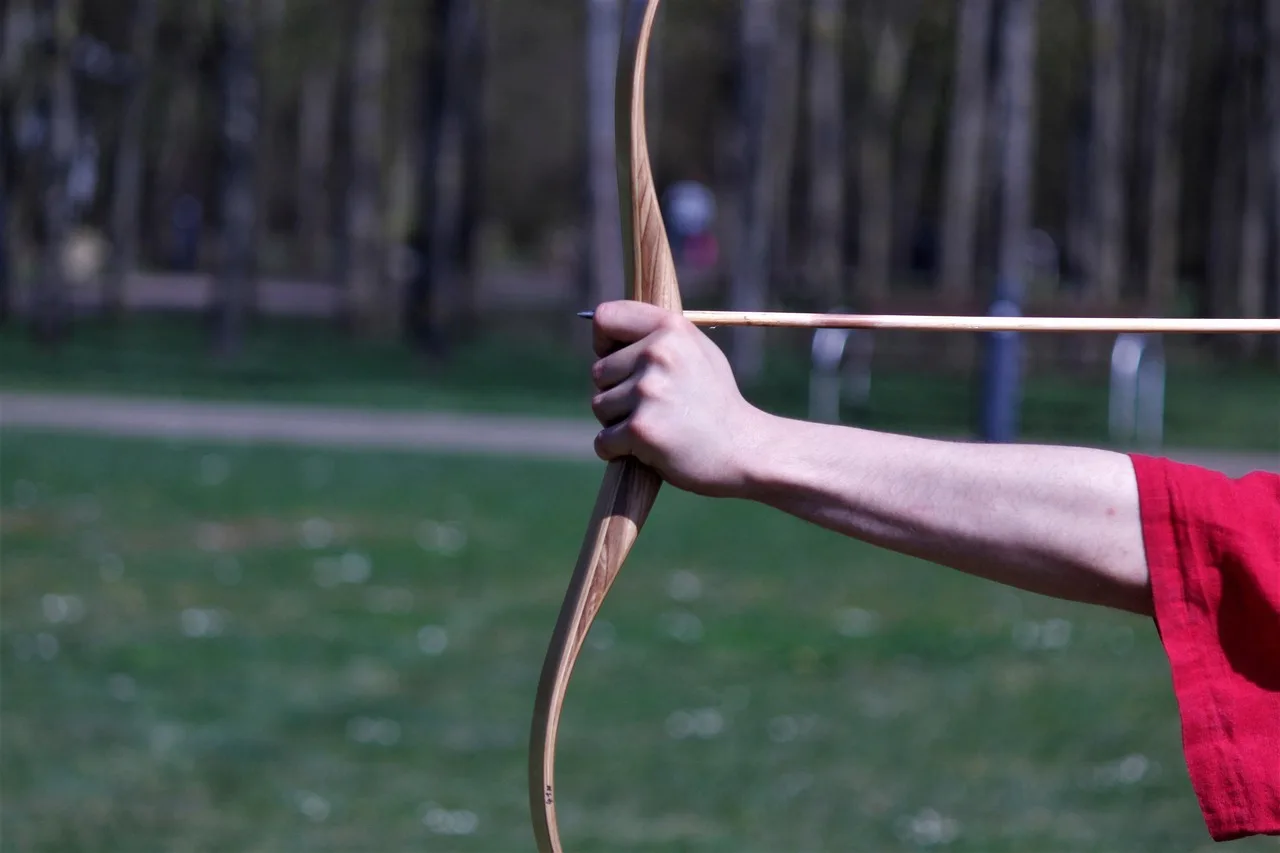
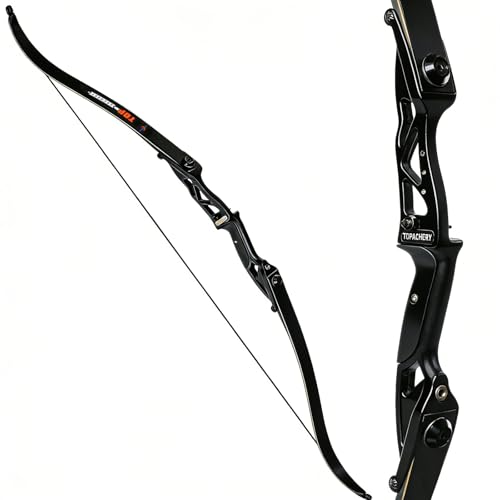
The bow itself is only part of the bill. Entry-level bow-only prices typically range from $300 to $600 for a starter competition bow, while ready-to-shoot package bows may include some accessories and others must be bought separately.
That split matters because a “cheap” bow can still become an expensive first season once arrows, a case, tuning, and club fees are added. A real competition-ready first season usually sits much higher once the missing pieces are added.
Starter budget and tournament-ready budget
For a new archer, the practical choice is between a basic first-season setup and a tournament-ready rig. The first keeps costs low while form is still changing. The second pays for better adjustability, cleaner tuning, and accessories that are harder to outgrow.
Competition gear can climb to $1,000–$3,000+, especially once the bow, matched arrows, sight, rest, stabilizers, release aid or tab, case, and replacement costs are all counted.
What changes the total most
The biggest cost drivers are bow type, included accessories, and how much tuning the setup needs for the archer. Materials matter too. A carbon riser, machined aluminum parts, tighter limb pockets, and a better cam system all raise the price.
Draw weight range and adjustability also change the total. A bow that can be adjusted widely without a shop visit can save money later, while a low-cost bow that needs immediate upgrades can cost more by the end of the season.
How much does a competition bow cost?
A competition bow can cost from about $300 to $600 at the entry level, but that does not mean the full setup is done. For the first tournament season, the real spending usually rises once arrows, sighting parts, and tuning items are added. Recurve usually starts lower than compound.
Entry-level price bands by bow type
The bow cost table below gives a clearer split. Recurve bows are commonly listed at $120–$250, while compound bows are commonly listed at $300–$600. Those numbers reflect the bow itself, not the complete competition kit.
That gap widens after accessories are counted. A recurve setup can stay relatively lean if the archer uses a finger tab and a simple sight. A compound setup usually needs a sight, rest, and release aid before it feels competition-ready.
Why recurve is often cheaper than compound
Recurve bows usually cost less because the system is simpler. There are no cams, no cable guards, and no release aid requirement for basic shooting. That keeps both the starting price and the accessory list smaller.
Compound bows bring more adjustability and more parts. The cam system helps with let-off and holding weight, but it also adds cost, setup time, and tuning complexity. The price difference is not only in the bow body; it shows up in the accessories too.
What counts as a real competition setup
A real competition setup is more than a bare bow. It includes the sighting method, arrow rest or clicker-related parts for recurve, arrows matched to draw weight and length, a case, and a small tuning allowance. Without those, the bow may shoot, but it is not ready for scored rounds.
Say a new archer buys a bare compound for $400 and skips the rest and release aid. The bow is technically usable, but the first local tournament will still require more spending before the setup is match-ready.
Recurve and compound cost differences
Recurve and compound do not cost the same at the same skill level. Recurve is usually cheaper to get on the line, while compound tends to cost more once the sight, rest, and release aid are included. That is the key budget difference for tournament archery.
Barebow recurve versus sighted recurve
Barebow recurve is usually the lowest-cost competition path. It removes the sight and stabilizer system, leaving the archer with the bow, arrows, tab, and a few small accessories. That keeps the first season simpler and cheaper.
Sighted recurve costs more because the archer adds a target sight and often a stabilizer system. Olympic-style recurve uses a sighted setup, and that setup is where the recurve price starts to rise. The bow itself may still be modest, but the full kit is no longer barebones.
Compound bow pricing and cam systems
Compound bows usually start at a higher bow price because of the cam system and the extra machining involved. The bow is only the beginning. The release aid, sight, and rest are part of the normal competition budget, not optional extras.
That is why compound often feels more expensive even when the base bow price looks similar. A compound archer who leaves out the release aid or buys a hunting-style sight for target work can end up spending twice on replacements.
Accessory costs that change the gap
Accessories are what move the total. Recurve needs a finger tab, and sighted recurve needs a target sight and often a stabilizer. Compound usually needs a sight, rest, and release aid before the setup is complete.
Competition relevance matters here. A single-pin sight is more common in target or precision-oriented use than a multi-pin hunting sight. A multi-pin setup may work for some archers, but it is not the usual default for target competition.
Competition bow budget ladder
The ladder below separates bow-only cost from a realistic first-year total. It also separates barebow and sighted recurve from entry and tournament-ready compound, because those are not interchangeable budgets.
| Tier | Bow price | Essential accessories | First set of arrows | Tuning / fit allowance | Likely first-year total | Who it is for |
|---|---|---|---|---|---|---|
| Barebow recurve | $120–$250 | $40–$90 for tab, arrow rest, basic case | $60–$120 | $30–$80 | $250–$540 | New club archer, short local practice season, or a first barebow league setup |
| Beginner sighted recurve | $300–$600 | $80–$180 for sight, button, tab, simple stabilizer | $80–$160 | $50–$120 | $500–$1,050 | Beginner-to-intermediate archer entering Olympic-style rounds or local tournaments |
| Entry compound | $300–$600 | $80–$200 for sight, rest, release aid, case | $90–$180 | $60–$150 | $530–$1,130 | New compound shooter who wants a usable first-season tournament setup |
| Tournament-ready compound | $700–$1,200+ | $200–$500 for higher-end sight, rest, release, stabilizer system, case | $120–$240 | $100–$250 | $1,300–$2,500+ | Serious league shooter or archer preparing for heavier competition use |
The table is meant as a planning tool, not a brand shopping list. The exact total moves with used gear, shipping, and whether the bow package already includes a sight or rest.
What accessories add to the budget?
Accessories add enough cost to change the entire plan. For target archery, the sight, rest, tab or release aid, stabilizer, and case often determine whether the setup stays basic or becomes tournament-ready. Those items are not decorative. They affect scoring and repeatability.
Sight and rest pricing
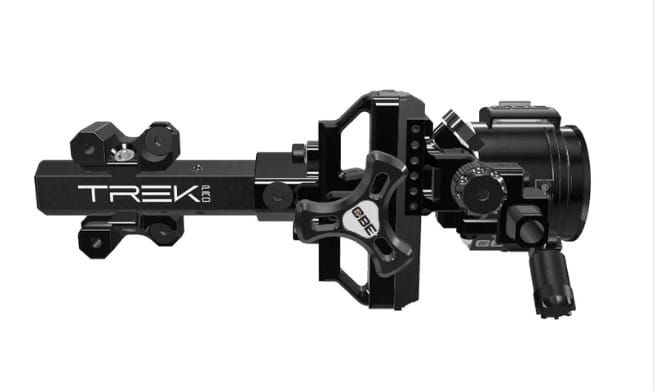
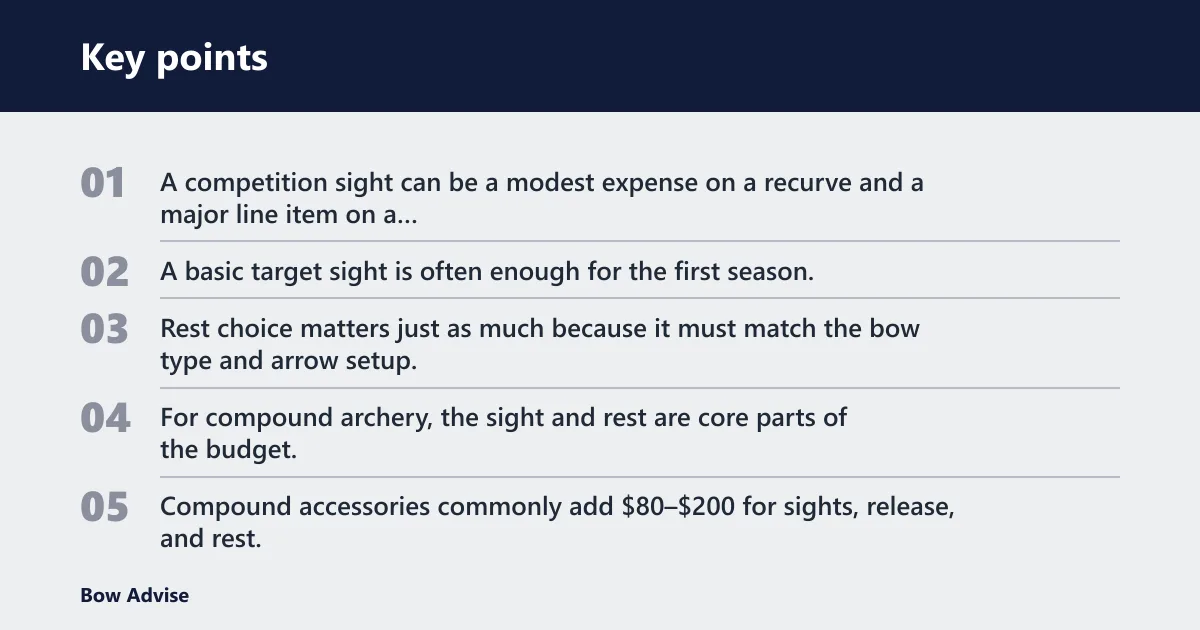
A competition sight can be a modest expense on a recurve and a major line item on a compound. A basic target sight is often enough for the first season, while a more refined sight is usually a later upgrade. Rest choice matters just as much because it must match the bow type and arrow setup.
For compound archery, the sight and rest are core parts of the budget. Compound accessories commonly add $80–$200 for sights, release, and rest, which is why a compound setup rises quickly after the bow purchase.
Finger tab or release aid costs
Recurve shooters usually budget for a finger tab, while compound shooters budget for a release aid. The tab is smaller and cheaper, but it still matters because string feel and anchor consistency affect scoring. The release aid is more expensive, but it is standard equipment for most compound competition setups.
A common first-timer mistake is buying the bow first and leaving no money for the tab or release. The result is a bow that can be shot, but not shot well enough to judge fit or scoring potential.
Stabilizer, case, and basic extras
A stabilizer system is optional for barebow, but it is a common and useful upgrade for target recurve and many compound setups. It improves hold, balance, and bow reaction, all of which matter in competition. A case also matters because tuning gear and arrows need protection between shoots.
Other small costs add up: string wax, nocking points, serving touch-ups, and spare screws or dampeners. None of them is expensive alone. Together, they can easily shift the first-year bill upward.
How much should arrows and tuning cost?
Arrows and tuning are where many budgets slip. A competition setup needs a matched first dozen, and the wrong shaft spine can force a second purchase. Plan for arrow cost, fitting, and a small tuning allowance instead of assuming the bow will shoot perfectly out of the box.
Arrow set price by the dozen
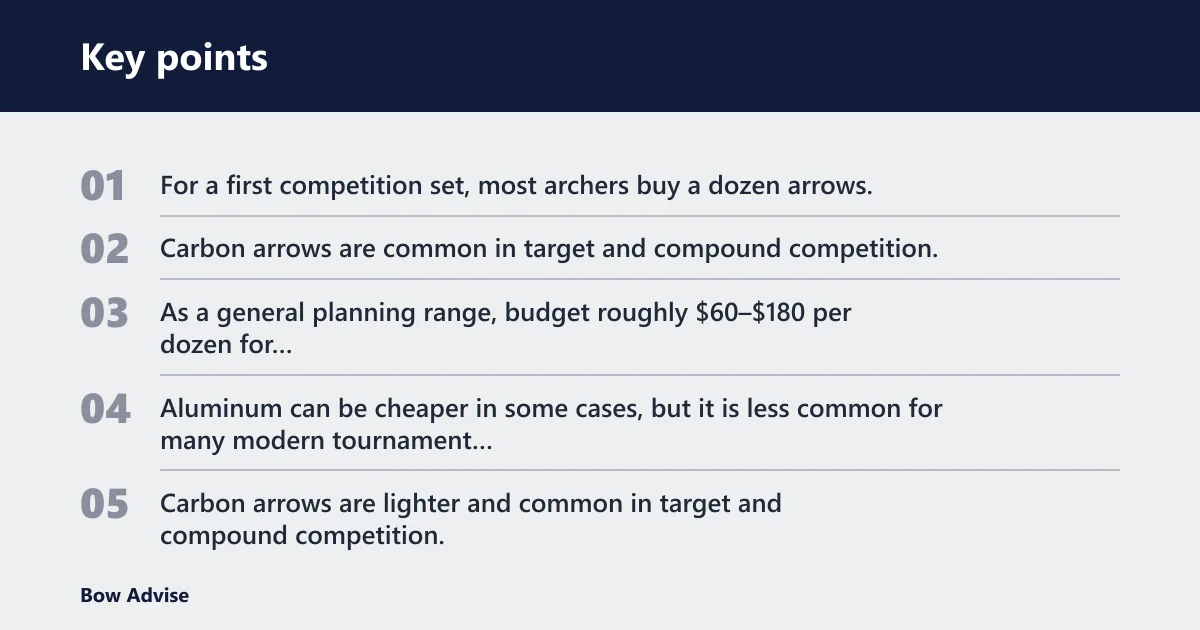
For a first competition set, most archers buy a dozen arrows, sometimes one spare half-dozen if breakage is likely. Carbon arrows are common in target and compound competition, while aluminum and aluminum-carbon shafts remain common in some recurve contexts.
As a general planning range, budget roughly $60–$180 per dozen for beginner-to-intermediate competition arrows, with better shafts, points, inserts, and fletching pushing the total higher. Aluminum can be cheaper in some cases, but it is less common for many modern tournament setups.
Carbon versus aluminum arrows
Carbon arrows are lighter and common in target and compound competition. Aluminum arrows can be good for some recurve applications, especially where straightness and tuning needs favor them, but they are often a narrower fit for broader competition use.
Spine matching matters more than brand name. If the spine is wrong for the bow’s draw weight and the shooter’s arrow length, the arrow may leave the bow poorly and tune badly. That can cost more than the price difference between arrow materials.
Spine matching and first-year tuning allowance
First-year tuning should be budgeted on purpose. That means points, nocks, plunger adjustment on recurve, rest adjustment on compound, and possibly a different arrow spine if the first guess was wrong. A reasonable first-year tuning allowance is $30–$150 depending on how much changes after the first few sessions.
Suppose a shooter starts with a 28-inch draw and buys arrows that are too stiff for the bow. The group size can look poor even when the release is improving. A spine correction often fixes the budget problem faster than a new sight would.
What ongoing costs should you plan for?
First-year cost is not the whole cost. Archery has ongoing expenses for range access, competition entries, maintenance, and replacement parts. Those costs are easy to ignore when shopping for a bow and hard to ignore after the first season starts.
Range fees and club dues
Range fees or club dues can be monthly or annual. A separate guide lists range fees or club dues at $0–$300, which is a useful planning bracket for club shooters. Free access exists in some places, but many tournament archers pay something for regular shooting time.
Coaching also matters. Even a few sessions can save money by preventing bad gear choices and poor form habits that lead to replacement purchases later.
Entry fees and coaching
Tournament entry fees are recurring, and they vary by event level. Local shoots are usually cheaper than larger sanctioned events. Coaching is another line item if the archer wants faster progress or needs help with setup and scoring.
These costs do not belong in the bow price alone, but they belong in the first-season budget. A cheap bow with frequent replacement buys is often more expensive than a better-planned setup with fewer mistakes.
Strings, cables, wax, and replacements
Maintenance and warranty costs are shown at $5–$120, which is a sensible reminder that upkeep is part of ownership. String wax, replacement strings or cables, and small repairs are not rare over a season of regular shooting.
Compound bows bring extra cable and timing concerns. Recurve bows have fewer moving parts, but strings still wear. Broken arrows are also part of the normal budget, especially in target groups and close practice lanes.
How much do bows cost for tournament archery?
For tournament archery, the bow itself is only the starting number. A real tournament budget should include arrows, sighting gear, rest or tab, stabilizers where needed, a case, and enough tuning money to get the setup shooting cleanly. The total often doubles the bow price.
Realistic budget examples by discipline
For a beginner barebow recurve shooter, a manageable first-year total is often in the low hundreds. For a sighted recurve beginner, the realistic total moves toward the mid-hundreds to around $1,000. For entry compound, a similar first-year total is also in the mid-hundreds and can climb fast with better accessories.
That is not a luxury figure. It is what happens when the setup is built to stay in use for a season instead of a weekend.
How to spend in the right order
- Choose the discipline first: barebow recurve, sighted recurve, or compound.
- Buy the bow only after the draw weight and setup style are settled.
- Reserve money for arrows, sight or rest, and the release aid or tab.
- Set aside a tuning allowance before paying for cosmetic upgrades.
- Keep room for range fees, entry fees, and replacements after the first month.
That order keeps the budget tied to performance, not impulse. It also avoids the common trap of buying a premium bow before form is stable enough to use it well.
Frequently asked questions
How much does a good competition bow cost?
A good competition bow can sit anywhere from the entry range up to $1,000–$3,000+ once the complete rig is counted. The bow alone is only part of the price. For most beginners, “good” means the bow fits the discipline and draws cleanly, not that it is the most expensive option.
What is the cheapest bow for competition archery?
Barebow recurve is usually the cheapest competition path because it removes the sight and stabilizer system. Recurve bows are commonly listed at $120–$250, which helps keep the first-season total down. The lower cost works best for archers who are starting in club shoots or local barebow leagues.
What accessories add to a competition bow budget?
The main budget items are the sight, rest, arrows, tab or release aid, stabilizer, case, and tuning supplies. For compound, the sight, rest, and release aid are especially important and can add $80–$200 or more. Recurve setups often spend less on accessories, but they are not free.
Is a recurve or compound cheaper for competition?
Recurve is usually cheaper at the same level because it has fewer moving parts and a smaller accessory list. Compound bows start at a higher bow price and often need more add-ons to feel competition-ready. Once sights, rests, and release aids are counted, compound usually costs more.
How much should I budget for arrows and accessories?
Plan on about $60–$180 for a first dozen competition arrows, with carbon generally costing more than aluminum. Add another $80–$200 for compound accessories, or a smaller amount for a recurve tab, sight, and basic stabilizer. A tuning allowance of $30–$150 keeps the budget realistic.