Best Tabs for Tournament Archery Beginners: we compared
I’d start most beginner tournament recurve archers with the Ringsun leather tab because it gives a firm leather face, simple fit adjustment, and the kind of clean finger separation that helps shots stay repeatable. A sloppy tab throws off anchor, adds finger pinch, and turns a good shot into left-right misses. I’ll break down the best first tabs by fit, release feel, and tournament-friendly features.
This guide is part of our Archery competitions: rules, formats and gear series.
Quick comparison
| Product | Badge | Best for | Price | ||
|---|---|---|---|---|---|
 | Cajun Archery Hot Shot 4 Finger TempestCajun Archery | Upgrade pick | Cajun Archery Hot Shot 4-finger mechanical release | $177.60 Price as of 5 Oct 2026 | View |
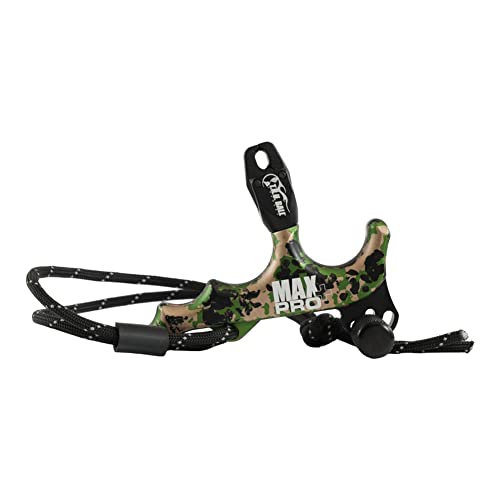 | TRU Ball Max Pro Plus Camo 4 FingerT.R.U. BALL | Our pick | TRU Ball camo 4-finger release with swivel head | $134.99 Price as of 5 Oct 2026 | View |
 | Ringsun Leather Archery Finger Tabs,Handmade Archery FingerRingsun | Budget pick | Handmade full grain leather finger tab | $12.99 Price as of 5 Oct 2026 | View |
The tabs below are ranked for beginner tournament use, not for brand hype. I’m looking first at release consistency, then at fit stability, then at whether the tab can survive long ends without creeping out of position.
According to Best Finger Tab for Archery: Top Picks for Comfort, Durability, and … — Ringsun’s tab is described as measuring 3 by 2.75 inches.
How we chose
I compared these options the way I would help a new recurve archer at my club: can the tab keep a clean release under pressure, does it fit a range of hands, and does it stay put through a long end. I also weighed leather feel, break-in time, handedness, and how easily a beginner can set it up.
Practice comfort matters. Tournament comfort matters more. A tab can feel soft in the hand and still fail when you anchor hard, hold longer than planned, or start string walking with barebow spacing.
I also separated tabs from gloves on purpose. A glove can feel friendly on day one, but a tournament tab usually gives me better control over finger position and release clarity on a recurve bow.
Ringsun leather tab: best for first tournament use
- High quality handcrafted leather
- Adjustable belt for fit
- Ideal for recurve practice
I’d put this first for a beginner who wants a simple, leather-forward tab that supports a clean release without a lot of setup drama. The guide recommends Ringsun as a full grain leather tab for durability and all-weather practice, and that matters when you are still learning how your anchor and finger placement interact.
What stands out is the fit-first shape. Ringsun’s tab is described as measuring 3 by 2.75 inches, which points to a compact working surface that should suit archers who do not want extra material hanging off the bow hand. It is listed as a right-hand tab, so left-handed archers should verify the orientation before buying.
The drawback is simple: leather tabs need break-in time, and a stiffer face can feel awkward before it settles. If your fingers are wide apart or you like a lot of built-in structure, you may need to adjust a bit more than you would with a glove.
SPG tab: best for barebow and string walking
I’m using the same listing here because the fit story changes when you shoot barebow. SPG is sold as a two-pack, which makes it a spare-friendly option, and it uses double-layer construction for abrasion resistance and comfort. That makes sense for barebow archers who ride the tab harder with string walking and need steadier finger separation.
The plastic finger spacer is the detail that matters most here. On barebow, that spacer can help keep the fingers from crowding each other when the crawl changes and your anchor pressure shifts. I like that for beginners who are still learning how a tab should feel under a changing finger position.
The drawback is that a spacer is not for everyone. If your anchor is tight under the jaw or your facial reference is already crowded, the added bulk can interfere with the clean line from string to face. In that case, a slimmer setup may work better.
Hide & Drink tab: best for comfort and leather feel
This is the pick I would point to for a beginner who values soft leather and a more handcrafted feel. Hide & Drink is described as handmade from full grain leather, and full grain usually means a tab that can age well if you keep it dry, clean, and used consistently.
For a first-time tournament archer, the comfort win is real. A tab that settles across the fingers without hot spots can help you hold a steadier anchor through a long practice end. That said, soft feel should not fool you into thinking it is automatically the most stable choice for every hand shape.
The drawback is that very soft leather can blur feedback. If you are still learning what a clean release feels like, a tab that feels too plush can hide problems like finger pinch or a creeping anchor.
LAMCLTH tab: best for easy adjustment
For beginners who keep changing glove size preferences, finger wrap tension, or anchor style, the LAMCLTH tab is the one I’d watch first. It includes an upgraded metal buckle for fit security, and that matters when you want a tab that stays put through a full practice session or a tournament line.
The listing describes it as a genuine leather tab with a soft feel, so it sits in that middle space between too stiff and too floppy. That can help archers who are moving from casual shooting into competition and need something less fussy than a glove but less bare-bones than a stripped tab.
The drawback is that an easy buckle does not fix a poor hand match. If the tab shape does not line up with your finger width or anchor style, the buckle will only hold a bad fit more tightly.
BICASTER tab: best for right-handed beginners
This one is the simplest right-handed pick in the group. BICASTER is described as a right-handed tab in black, medium size, and it uses genuine cow leather for comfort and durability. That makes it easy to place in a beginner shortlist when the archer wants a familiar, no-frills setup.
I like it as a reference point for new recurve shooters because the sizing language is direct. Medium size can be a good starting place if you are between small and large, but only if your finger spacing and anchor style line up with the cut of the tab.
The drawback is obvious: a medium tab can be neither here nor there if your draw hand is small or broad. If your fingers crowd the string or the edge rides into your anchor, it will show up quickly.
Seektop glove: best if you still prefer glove-style protection
Seektop is not a tab at all. It is a three-finger archery glove, and that difference matters because gloves protect the fingers while usually giving less release consistency for tournament shooting than a proper finger tab. It uses cow leather tips and a flexible, high-elastic fabric base.
I’d only steer a beginner toward this if they are still uncomfortable with tab style contact or they are coming from traditional shooting and want a familiar feel. A glove can be easier to put on, and some archers like the direct finger contact it gives in practice.
The drawback is precision. For tournament recurve use, a glove often gives me less repeatable string feel, which makes anchor pressure and release timing harder to keep constant end after end.
What finger tab should a beginner use for tournament archery?
A beginner should usually start with a leather tab that fits snugly, separates the fingers cleanly, and lets the string leave without drag. For tournament recurve use, I prefer a tab over a glove because it gives me more repeatable finger placement and less release drift when the line pressure goes up.
The best first choice is rarely the fanciest one. I want a tab that stays stable, clears the anchor, and does not force me to change my draw hand just to make the gear behave.
What makes a tournament tab different from a practice tab?
Practice-only comfort can hide weak fit. In a tournament, the tab has to survive repeated ends, pressure, and longer holds without creeping. A tab that feels fine for backyard shooting may still cause pinch, finger crowding, or a vague release once scoring starts.
What size finger tab do I need for recurve archery?
Size should match your draw hand, finger width, and anchor style more than a brand label. If the tab is too small, your fingers feel crowded and the leather edges can dig in. If it is too large, the material can bunch near the anchor and blur the release.
When I help beginners at the club, I watch the tab under actual draw pressure. That tells me more than a desk-size guess ever does.
How I judge size in the hand
I want full finger coverage with no overhang that interferes with the chin or jawline. The tab should sit flat when you draw, and the finger stalls or leather face should not fold into the string path. That is where clean release starts.
Should I buy a leather tab or a glove for competition?
I would choose a leather tab for most tournament beginners. Leather tabs usually give better release consistency, simpler finger spacing control, and clearer feedback at anchor. A glove can be comfortable, but it often gives me less precise string feel for scored shooting.
That said, a glove can still be useful if a beginner cannot tolerate tab pressure yet. Seektop fits that category better than a tab does, but it is still a compromise if tournament accuracy is the goal.
When a glove makes sense
If your hands are sensitive, if you are easing into finger-drawn release work, or if you are not ready for tab fit tuning, a glove can buy time. It is a comfort choice first. It is not my first choice for clean tournament releases.
Do I need a finger spacer on a tournament tab?
Not always, but many beginners benefit from one if their fingers crowd together or the release feels unstable. A finger spacer helps separate the fingers, which can reduce pinch and make the string leave the hand more consistently. It can also improve comfort during longer ends.
On the other hand, some archers find the spacer gets in the way of a tight anchor or narrow face position. Barebow shooters are more likely to care about this because string walking changes how the tab sits under the fingers.
When I would skip the spacer
If your anchor is already crowded, if you shoot a compact face position, or if the spacer makes the tab feel bulky under the jaw, skip it. Clean release beats extra parts. A spacer should solve a problem, not create a new one.
How thick should the leather be on an archery finger tab?
Leather should feel firm enough to protect the fingers and keep the release clean, but not so stiff that the string hangs up or the tab takes forever to break in. Full grain leather usually gives a better long-term feel than cheap thin leather, while genuine leather can still work if the cut and fit are right.
I care less about a label and more about how the face behaves under draw weight. If the leather feels mushy, the string can blur. If it feels brick-stiff, you may fight the release until it softens.
Break-in matters more than people think
A new leather tab often changes shape after a few sessions. That is normal. The trick is to start with a fit that stays secure even before the leather fully settles, so you are not chasing a moving target every practice end.
What finger tab works best for indoor recurve competition?
For indoor recurve competition, I want a tab that stays stable, gives a clean anchor, and does not shift after the first dozen arrows. Indoor lines reward repeatability. A firm leather face, secure buckle, and sensible finger separation matter more than flashy extras.
Indoor shooting also exposes tiny fit errors. If the tab creeps, pinches, or blurs the string under bright lights, you will notice it quickly on the target face. That is why I lean toward a simple, secure setup over a loose, soft one.
Indoor conditions I watch for
Longer holds, tighter scoring pressure, and repeated shot rhythm can expose weak fit. If the tab moves on the hand or interferes with anchor consistency, it will show up indoors faster than it does in casual backyard shooting.
How do I know if a tab fits my draw hand correctly?
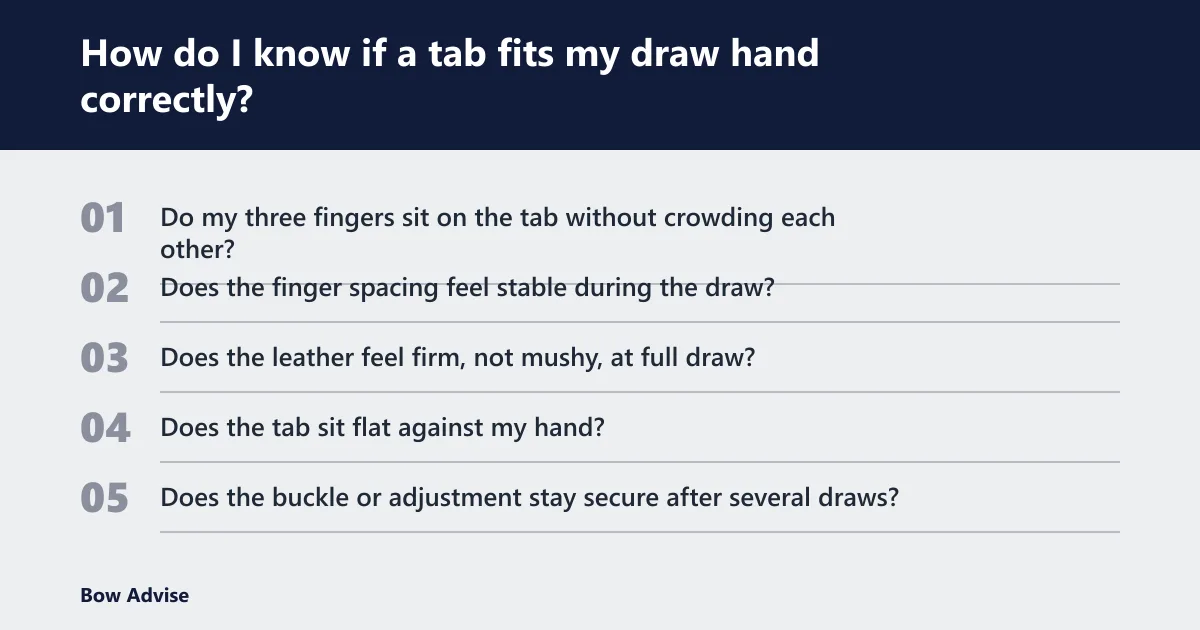
A tab fits correctly when your fingers sit naturally, the leather covers what it should, and the tab does not interfere with your anchor or release. You should be able to draw, anchor, and let down without the tab twisting, pinching, or shifting under pressure.
The best check is not how it feels in your palm. It is how it behaves at full draw, where small fit mistakes become real shot errors.
Beginner tournament tab fit checklist
- Do my three fingers sit on the tab without crowding each other?
- Does the finger spacing feel stable during the draw?
- Does the leather feel firm, not mushy, at full draw?
- Does the tab sit flat against my hand?
- Does the buckle or adjustment stay secure after several draws?
- Does the tab clear my anchor without pressing into my jaw or chin?
- Do I avoid finger pinch when I hold at anchor?
- Does the string leave cleanly without a dragged or blurred feel?
- Does the tab stay in place through a full end without creeping?
- Can I repeat the same release feel on the next shot?
If you answer “no” to two or more of those checks, the tab is probably the wrong fit. I would fix fit before I chase bow tuning.
Can a beginner use the same tab for practice and tournaments?
Yes, and that is usually the smart move. One tab for both practice and tournaments gives you the same finger spacing, same anchor clearance, and same release feel every time. That consistency is worth more than owning different tabs for different days.
I would only split them if your practice setup is very different from your tournament setup, such as switching between a glove and a tab, or moving between barebow string walking and a more conventional recurve hold. Even then, consistency should guide the decision.
Which one should you buy
If you shoot recurve at a club target line, I’d start with Ringsun. It gives you a straightforward leather tab with the right kind of basic fit logic for a first tournament setup.
If you plan to shoot barebow, I’d lean toward the SPG setup because the finger spacer and double-layer build support the kind of finger separation and abrasion resistance barebow work asks for. If you want the softest feel, Hide & Drink is the comfort pick, but only if you can still keep the release clean.
If you are moving from a glove, the LAMCLTH tab is the easiest bridge because the buckle adjustment can help you tune the fit without fighting the whole setup. If you want a simple right-handed option, BICASTER is the most direct fit. If you still want glove-style protection, Seektop is the glove choice, not the tournament-tab choice.
I would not buy by price alone. I would buy by how the tab holds your fingers, clears your anchor, and stays stable through a full end.
Frequently asked questions
What finger tab should a beginner use for tournament archery?
A beginner should usually use a leather finger tab with simple adjustment, solid finger separation, and enough structure to keep the release repeatable. For recurve tournament shooting, I prefer a tab over a glove because it gives clearer string feel and fewer surprises at anchor.
What size finger tab do I need for recurve archery?
You need a size that matches your hand width, finger spacing, and anchor style. The tab should cover your fingers without crowding them or hanging so far off the hand that it interferes with your face. Fit at full draw matters more than the label.
Should I buy a leather tab or a glove for competition?
I’d buy a leather tab for competition unless you have a specific comfort issue that makes a glove necessary. Tabs usually give better release consistency, better anchor clearance, and better control over finger position. Gloves can be easier at first, but they often trade away precision.
Do I need a finger spacer on a tournament tab?
Not every archer needs one, but many beginners benefit from it because it keeps the fingers from crowding and can steady the release. If your anchor is tight or your face is compact, the spacer may get in the way. That is why fit must come first.
How thick should the leather be on an archery finger tab?
Thick enough to protect the fingers and keep the string feel clean, but not so stiff that it resists break-in for too long. Full grain leather is usually my first choice because it holds up well, while genuine leather can still work if the fit is right and the face stays stable.
What finger tab works best for indoor recurve competition?
For indoor recurve, I want a stable leather tab with a secure buckle and a clean anchor line. Bright indoor lighting and repeat ends expose fit problems fast, so I would favor a tab that stays put, does not creep, and does not blur the release under pressure.