Archery Tournament Etiquette: Line Manners and Scoring Calls
At tournaments, keep quiet on the line, step in only on command, and use the scoring system before anyone pulls arrows or argues a line call. Poor line manners slow the group, create bad calls, and can cost points or a protest. This guide walks through the exact workflow from reaching the shooting line to signing the scorecard, with the words to use and the mistakes to avoid.
What you need
- Scorecard or scoring app approved by the event
- Pen or pencil that writes clearly in any weather
- Target number and assigned marker, if the event uses them
- Basic awareness of who the judge is and how to get attention
- Clothing and gear that will not snag other archers on a shared line
Arrival and line-up
Get to your target early enough to sort gear, find the correct detail, and hear the briefing. Arrival is the time to confirm target number, shooting order, and whether the event uses an A line and B line. It is also the moment to learn who the target captain is and who scores if the format assigns that role.
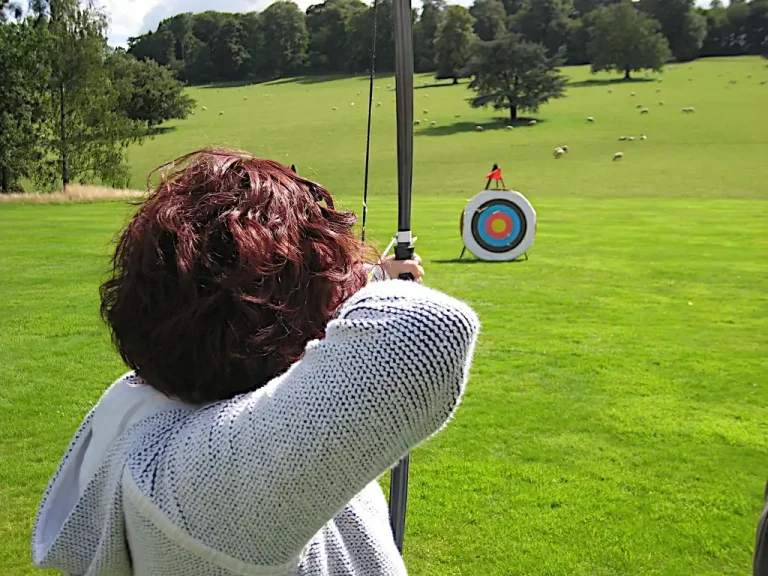
What changes from club rounds is the pace and the formal sequence. In many events, the first signal brings archers to the line, but it is not the signal to start shooting. A later signal tells archers to begin shooting after line-up.
What to know before the first end
Listen for the start, clear, and any oral signal or horn/whistle used by that event. Do not assume a familiar local cue means the same thing everywhere. If the briefing says four-minute ends for five arrows, treat that as the timing for that round and build your pace around it.
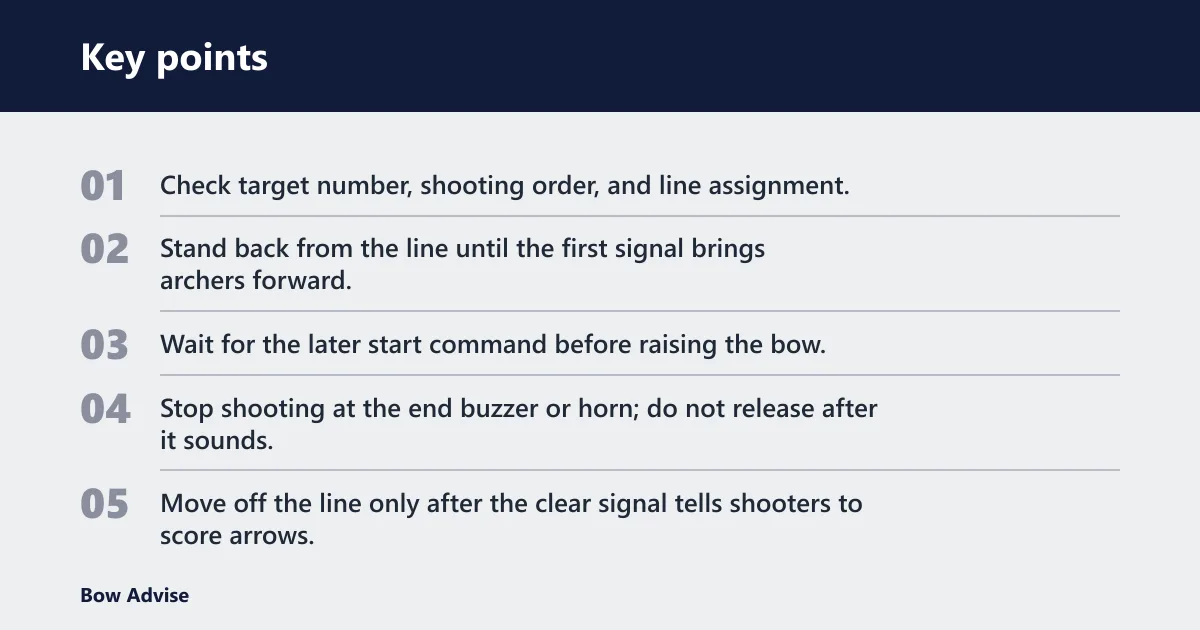
- Check target number, shooting order, and line assignment.
- Stand back from the line until the first signal brings archers forward.
- Wait for the later start command before raising the bow.
- Stop shooting at the end buzzer or horn; do not release after it sounds.
- Move off the line only after the clear signal tells shooters to score arrows.
When do I step onto the line?
Step onto the line only when the first signal has brought archers forward and your target detail is set. That first signal is a line-up call, not permission to shoot. Wait for the later start command before drawing or releasing, and leave the line at the clear signal after shooting ends.
On shared targets, timing matters even more. Archers should not step away while the shooter on either side is at full draw. On shared lines, do not step in or out when the neighboring shooter is at full draw. That keeps movement from breaking concentration or creating a safety problem.
Line signals and movement
If the event uses A line and B line, stay with your assigned line unless an official moves you. The clean habit is simple: line up on command, shoot on command, clear the line on command. If a whistle or horn is used, treat it the same way as a verbal signal and wait for the next command before shooting.
Suppose the line is packed and the shooter beside you is already at full draw. Do not shift your feet, step behind the line, or walk in front of the target face. One late step can force a neighbor to settle again, which slows the end for everyone.
How should I act while others shoot?
Stay quiet, stay still, and keep your attention on your own timing. Loud talking, loud phone use, advice unless asked, and emotional outbursts all break the shooting rhythm. Good line manners also mean watching your feet so you do not crowd a neighbor on a shared target.
The best standard is calm, minimal movement. If you are not the shooter, do not coach, do not comment on the shot, and do not react to a close group with noise. When another archer is at full draw, remain out of the way until the arrow is away and the line is clear.
Shared-target spacing
Foot marker spacing should leave sufficient room for both archers on a shared target. Position markers so they do not interfere with a neighbor’s stance, draw path, or step-off space. If the line feels cramped, adjust before the end begins, not while someone is anchored.
Quiet range behavior is more than silence. It also means no sudden moves, no unnecessary help, and no wandering onto the line while a shot is being settled. If someone asks for advice, wait until the end is over unless the event official directs otherwise.
How do I call scores correctly?
Call scores in groups of three, from highest value to lowest value, and point to each arrow as it is called. Do not touch the arrows or the target face while calling them. The scorer should record the values, and no arrow should be handled until all values are called, recorded, and checked.
This is where many new archers lose time. A correct call is short, clear, and consistent. If a target face has a tight cluster, point carefully and keep your hand clear of the shaft and the line cutter. If an arrow value is doubtful, call for a judge rather than guessing.
Score calls that stay clean
| Arrow group | Correct call format | What to avoid |
|---|---|---|
| First three arrows | Call the highest value first, then the next two in descending order, pointing to each arrow as you speak | Calling out of order or touching the shafts before recording |
| Line cutter | Pause and ask for a judge if the value is in doubt | Deciding by memory or arguing before the judge arrives |
| Shared target | Match the arrow to the correct shooter before any scoring is entered | Recording the wrong archer on a busy face |
Tournament line checklist
This checklist is for the on-deck routine from arrival through arrow pull. Use it as a practical day-of reference, especially on shared targets where most etiquette mistakes happen.
| What the archer does | Exact phrase or action to use |
|---|---|
| Arrival | “Check target number, line assignment, and shooting order.” |
| Line-up | Stand behind the line until the first signal brings archers forward. |
| Start | Wait for the later start command before drawing or shooting. |
| Shooting | Stay quiet and do not step away while a neighbor is at full draw. |
| Scoring | Call three arrows at a time, from highest to lowest, and point to each one. |
| Dispute | “Judge, please check this arrow value.” |
| Arrow pull | Wait until all values are recorded and checked, then pull straight back without damaging the face. |
| End of round | Thank the target captain before leaving the target area. |
Target captain flow
The target captain oversees the scoring flow, helps keep the target organized, and often receives thanks at the end of the round. If your detail uses a target captain, let that person keep the group moving. Do not crowd in front of the scorer or pull arrows out of sequence.
A common first-timer mistake is stepping toward the target face before the scorer finishes. Picture a shared target with two recurve archers and two compound archers. One archer spots a tight line cutter and reaches for the shaft too soon. That interrupts the call, risks a wrong value, and can force a judge to reset the whole discussion.
How do I handle disputes and uncertain values?
Call a judge whenever an arrow’s scoring value is in doubt. The judge is usually the final authority on disputed scoring and handles line-cut decisions. Do not keep debating after the judge has been called; state the concern once, clearly, and let the judge decide.
If the line call is obvious to you but not to the scorer, still pause. A clean dispute process is faster than a long argument, and it protects the scorecard. On a shared target, also check that the arrow is assigned to the correct shooter before the value is entered.
Dispute steps
- Stop the scoring conversation.
- Point to the arrow in question without touching it.
- Ask for a judge using a short request.
- Wait for the decision before anyone records the value.
- Accept the ruling and move to the next arrow group.
What happens if I shoot before the start signal?
Early shooting is a timing fault, not a harmless head start. If you shoot before the start signal, stop immediately and tell the official at once. Do not try to hide the shot or keep the end moving as if nothing happened. The result depends on the event rules, and errant shots can cost scoring.
One tournament example uses four-minute ends for five arrows. That same ruleset warns archers who shoot before or after the buzzer can lose their highest scoring arrow. Treat the horn or buzzer as the hard boundary. If it sounds, the end is over.
If that happens, do not argue on the line. Alert the judge or range officer, then wait for the ruling. Prevention is simple: count the signal sequence and never raise the bow until the correct start command.
How do I avoid slowing down scoring?
Keep the flow tight: call cleanly, wait for recording, and pull only when allowed. The fastest score ends are usually the quietest ones. Delay comes from talking, wrong-order calls, touching arrows too soon, or mixing shooters on a shared target.
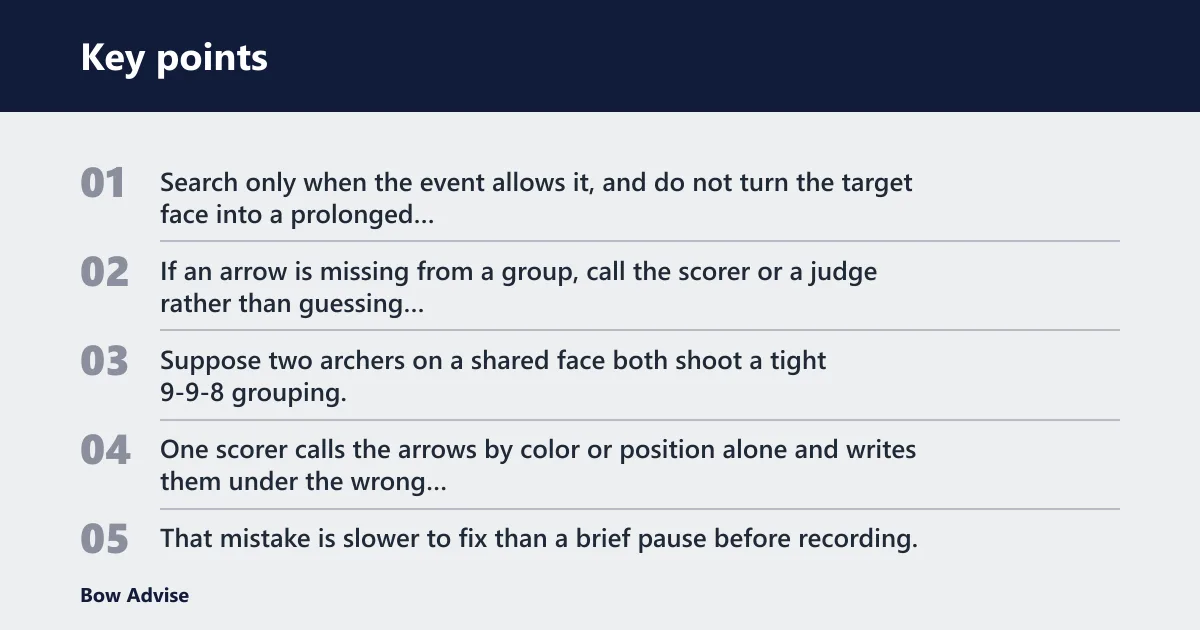
Limit lost-arrow searching during the round. Search only when the event allows it, and do not turn the target face into a prolonged hunt. If an arrow is missing from a group, call the scorer or a judge rather than guessing where it landed.
Common mistakes and consequences
| Mistake | What usually happens | How to avoid it |
|---|---|---|
| Early shooting | Possible penalty, lost score, or a removed arrow value depending on event rules | Wait for the start signal every end |
| Talking on the line | Distracts neighbors and slows the end | Stay silent unless scoring or asking for a judge |
| Touching arrows too soon | Can create a bad call or a dispute | Leave every arrow untouched until values are recorded and checked |
| Cross-scoring | The wrong archer gets the points | Match each arrow to the correct shooter before writing anything down |
Suppose two archers on a shared face both shoot a tight 9-9-8 grouping. One scorer calls the arrows by color or position alone and writes them under the wrong name. That mistake is slower to fix than a brief pause before recording, so confirm the shooter first and the value second.
Frequently asked questions
What should I do when I arrive at an archery tournament?
Check in, find your target, and listen to the briefing before touching the line. Confirm target number, line assignment, scoring order, and any local signal system. Put your scorecard, pen, and judge contact awareness in place before the first end starts, because that saves time later.
When is it okay to step on or off the shooting line?
Step onto the line when the first signal brings archers forward, and step off only after the clear signal after shooting ends. On shared lines, do not move while the neighboring shooter is at full draw. If the event uses A line and B line, stay with the assigned side.
Can I talk while other archers are shooting?
Keep conversation off the line. Loud talking, phone use, and coaching without being asked can break another archer’s shot process. If you need to say something urgent, wait until the end is over or ask the range official to handle it.
How do you call scores correctly in archery?
Call arrows in groups of three, highest value first, then the next lower scores. Point to each arrow as you call it, and do not touch the shaft or target face while speaking. Let the scorer write the values before anyone pulls arrows or debates a mark.
When should you touch arrows on the target face?
Only after all values have been called, recorded, and checked. Before that point, do not touch any arrow, because moving it can change the call or create a dispute. If a line cutter is uncertain, call a judge before anyone reaches in.
What do I do if I disagree with an arrow value?
Stop the discussion and call for a judge. The judge is the final authority on disputed scoring and line-cut decisions. State the concern once, point to the arrow without touching it, and wait for the ruling before any value is written down.