Archery Stabilizer Cost
Archery stabilizer cost often starts around $40 to $80 for a basic hunting setup, about $100 to $200 for a usable beginner target setup, and $250 or more for a competition-style setup with bars, weights, and mounts. Buy the bar first and you can still miss the real cost. A front-heavy bow, weak balance, and extra parts often show up after the purchase. This guide breaks down what each setup needs, what to budget, and where the money should go first.
What your stabilizer setup actually costs


The right budget depends on the setup, not the rod alone. A short hunting bar may cover field use. A target rig often needs more length, more weight, and extra hardware. That is why a $60 bar can become a roughly $180 purchase once mounts and weights are added.
For a budget hunting bow, the goal is simple: reduce jump and noise without making the rig awkward to carry. For target recurve or compound use, the goal shifts toward steadier aim and better balance at full draw, which usually raises the total.
Budget hunting setup
A basic hunting stabilizer setup can work well at the low end because it usually needs only one short bar, a few weights, and sometimes a simple quick disconnect. The price stays lower because the bar is short and the hardware stack is small.
Beginner target recurve setup
A beginner target recurve setup usually costs more because the bar is longer and the archer often wants finer balance control. Even a modest setup can include a front bar, a weight stack, and sometimes a side rod or V-bar if the bow needs better level balance.
Beginner compound setup
Beginner compound setups often sit between hunting and full target pricing. Many compound archers start with one front bar, then add a quick disconnect and a small weight stack. If the bow feels nose-heavy, the next step may be a side rod rather than a bigger front bar.
Competition-ready target setup
Competition setups cost the most because they usually need the bar, multiple removable weights, a V-bar or offset, and often a back bar. More parts give more adjustment range, but they also add cost and bulk.
What does a stabilizer actually do?
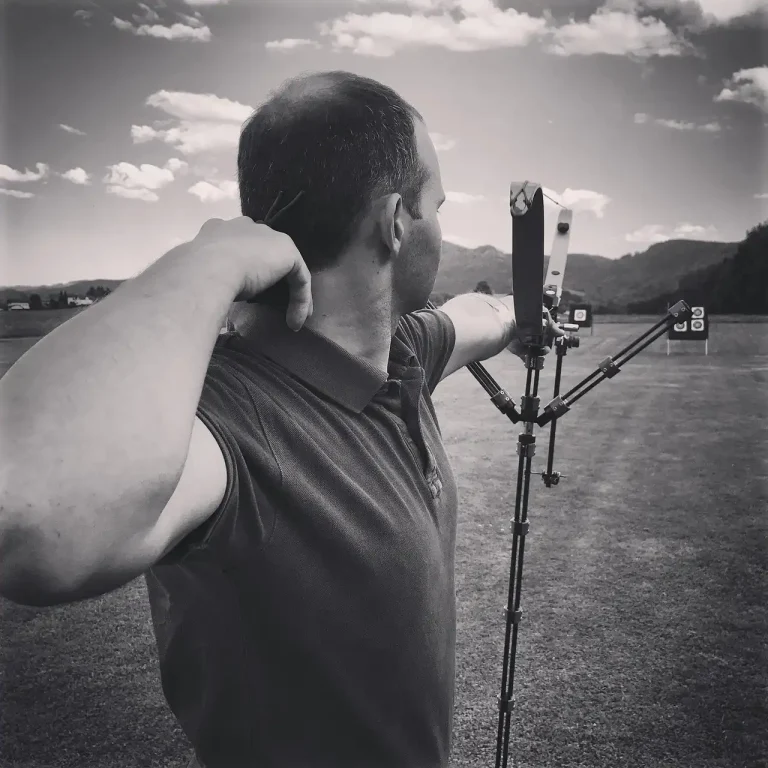
A stabilizer attaches to the riser and changes how the bow sits in the hand. It adds inertia, cuts vibration when the arrow leaves, and can help the bow settle more cleanly at full draw. That is the main reason archers buy one.
Riser attachment and hold steadiness
Archery Support says a stabilizer increases inertia and can use weights out front to counterbalance draw. In practical terms, the bow resists sudden movement a little better, which can help the pin or aiming point settle more predictably.
Vibration and noise reduction
Dampening matters, especially on hunting bows. Many stabilizers use internal dampers or elastomer pads to cut shock and noise, and that is one reason even a short bar can feel better than bare riser mass alone.
Why length changes stability
Longer bars usually add more stability because the weight sits farther from the riser. That extra distance helps the bow resist wobble. It also adds bulk, and it can be awkward in a blind, in thick cover, or on a bow that must stay compact.
Suppose a hunter adds a 12-inch bar to a tight tree stand setup. The bow may feel calmer at the shot, but the extra length can catch on straps, railings, or clothing before the shot ever happens.
Why do target stabilizers cost more?
Target stabilizers usually cost more because they are longer, more adjustable, and often built for heavier hardware stacks. A target setup may also need a V-bar or offset plus side rods, so the full system costs more than the front bar alone.
Longer bars and tighter tolerances
Target bars often sit in the higher price bands because they must stay stiff over more length. Easton’s Halcyon is described as the smallest diameter carbon stabilizer ever from Easton, and Easton says it uses 360º Windcutter technology. That kind of design focus usually sits above basic hunting pricing.
Easton also describes Contour CS as using aerospace-grade graphite fiber and says it is optimized for the stiffest possible stabilizer. Easton says Micro Flex is a High Modulus Carbon design. Those are premium material cues, and premium material usually comes with a higher ticket.
Weights, side rods, and V-bars
Target setups often need more than a single front rod. A side rod or back bar setup can counter front-heavy balance and help the bubble level sit closer to center, but it adds cost, clamps, and more tuning time.
Balance changes that add hardware cost
The more the archer wants to tune balance, the more parts the setup needs. That means a bar alone is not the real budget. The real budget includes the weight stack, the mount, and sometimes the side-rod hardware.
How much does a hunting stabilizer cost?
A hunting stabilizer usually costs less than a target setup because it is shorter, simpler, and easier to carry. Common hunting lengths run about 6 to 12 inches, and many buyers only need a short bar plus a small weight stack or built-in damping.
Common 6- to 12-inch lengths
Bow Basics lists the Trophy Ridge Static 6" at $39.99, and Archery Care lists the Bee Stinger Sport Hunter Xtreme 8" at $64.99 and the Bee Stinger MicroHex 12" Hunting Stabilizer at $94.99. Those prices show the usual hunting ladder: shorter bars are cheaper, and longer hunting bars cost more.
Noise control and portability
Hunting bars often get chosen for vibration and noise control first, then for size second. Lancaster sells Hunting Stabilizers as a dedicated category and also separates Stabilizers & Dampers from hunting-specific bars, which reflects a real product split in both use and pricing.
What a budget hunter can skip
A budget hunter can often skip V-bars, back bars, and long target rods. Those parts add bulk and are not needed for a mobile bow. A compact bar with decent damping is usually the better spend.
Stabilizer budget map
The table below separates bar price from the full setup cost. That matters because weights, mounts, and side rods can cost as much as the bar itself. The minimum viable spend is the lowest practical total, not the cheapest bare rod.
| Setup type | Minimum viable spend | What must be included |
|---|---|---|
| Budget hunting | $40 to $80 | Short hunting bar, basic mount or quick disconnect if needed, and at least some weight or built-in damping |
| Beginner target recurve | $100 to $180 | Longer front bar, separate weights, and a simple mount; add a side rod only if the bow stays front-heavy |
| Beginner compound | $90 to $170 | Front bar, weight stack, and often a quick disconnect; optional side rod or offset if balance needs it |
| Competition-ready target setup | $250+ | Long front bar, weight stack, V-bar or offset, side rod/back bar, and quick disconnect or equivalent mounting hardware |
A common first-timer mistake is buying a long target bar for a hunting bow, then adding even more weight because the bow still feels unstable. The result is a rig that is heavier, bulkier, and less useful in the field than a shorter hunting setup with proper damping.
- Pick the setup goal first: hunting, beginner target, or competition.
- Choose the shortest bar that fits that goal.
- Add only the weight needed to balance the bow.
- Include the mount, quick disconnect, or V-bar before setting the budget.
- Stop buying hardware once the setup matches the use case.
Carbon, hybrid, and diameter choices
Carbon is where the price can climb quickly. Carbon bars are usually stiffer and lighter than cheaper materials, and that lighter mass can help with handling. But the payback depends on the setup. A hunter who only needs a short front bar may not need premium carbon.
High-modulus carbon and stiffness
High modulus carbon tends to cost more because it aims for stiffness with low mass. That matters on longer target bars, where flex can affect feel and tuning. Easton’s premium carbon descriptions fit this higher-end category.
Micro diameter and wind behavior
Diameter matters too. The same source says the Halcyon is the smallest diameter carbon stabilizer ever from Easton, and that small profile is meant to help in the wind. Smaller diameter can improve wind behavior, but it is a premium feature, not a must-have for every archer.
When premium material is worth the price
Premium carbon makes the most sense when the bow already needs a longer bar, more precise balance, or better wind behavior. For a short hunting stabilizer, the money may be better spent on a solid mount and enough weight to tune the bow correctly.
Weights, side rods, and quick disconnects
Stabilizer weights are often sold separately. Removable 1 oz, 2 oz, and 4 oz pieces are commonly included in tuning kits, and those pieces can change the balance point without replacing the whole bar. That flexibility is useful, but it also means more line items in the budget.
Removable weight stacks
Weights let the archer tune the bow instead of guessing at a fixed setup. Too little weight can leave the bow twitchy. Too much can make it slow to aim and tiring to hold.
Back bar and side rod setups
Side rod and back bar setups help counterbalance front weight, especially on target bows with more front mass. They also increase the total cost and add bulk, which is why they make sense for target use far more often than for hunting.
Mounts and quick disconnects
Quick disconnects are easy to overlook, yet they change the real price. A bar that looks affordable on its own may need a mount, an offset bracket, or a disconnect before it can be used safely and consistently.
Which brands are worth checking?
The best brand choice depends on price band first. Lancaster’s category split shows that hunting and general stabilizer lines are not the same product class, so start by matching the category before chasing logos.
Price bands to look at first
For budget hunting, entries like the Trophy Ridge Static 6" sit in the low-cost range. For mid-level hunting, Bee Stinger hunting bars are common examples in the next tier. For premium target carbon, Easton’s Halcyon, Contour CS, and Micro Flex show where higher-end pricing usually starts to appear.
What to compare across brands
Compare included weights, mount hardware, bar length, diameter, and whether the price already includes a quick disconnect. Two bars with the same listed price can have very different total costs once the missing parts are counted.
When a cheaper bar is enough
A cheaper bar is enough when the bow is short-range, mobile, or simply needs basic damping. A budget stabilizer can still reduce vibration and improve hold if the length, weight, and mount fit the bow properly.
Frequently asked questions
How much does an archery stabilizer cost?
The total changes fast once weights and mounts are included.
What is the cheapest stabilizer that still works well?
The cheapest usable option is usually a short hunting bar with enough damping to cut noise and some weight to steady the bow. The same source lists the Trophy Ridge Static 6" at $39.99, which shows how low the entry point can be for a simple setup.
Do target stabilizers cost more than hunting stabilizers?
Yes, usually. Target stabilizers tend to be longer, stiffer, and more likely to need side rods, V-bars, and weight stacks. Hunting stabilizers are shorter and more compact, so the full setup often costs less and stays easier to carry.
What features make a stabilizer more expensive?
Longer length, carbon construction, smaller diameter, higher stiffness, and built-in damping all push price upward. Add-ons raise it further. A bare bar is one thing; a complete setup with weights, a quick disconnect, and a side rod is another.
Are carbon stabilizers worth the extra money?
Carbon is worth the extra money when the setup needs stiffness, lower mass, or better wind behavior, especially on longer target bars. For a basic hunting bow, a cheaper bar with good damping may be the smarter buy if the archer does not need premium features.
How much should I budget for a complete stabilizer setup with side rods and weights?
For a complete target setup with side rods, weights, and mounts, budget at least $250 and often more. The bar is only part of the cost. V-bars, offsets, and removable weight stacks can add a large share of the final total.