Tree Stand Quiver vs Ground Quiver: Which Fits Best?
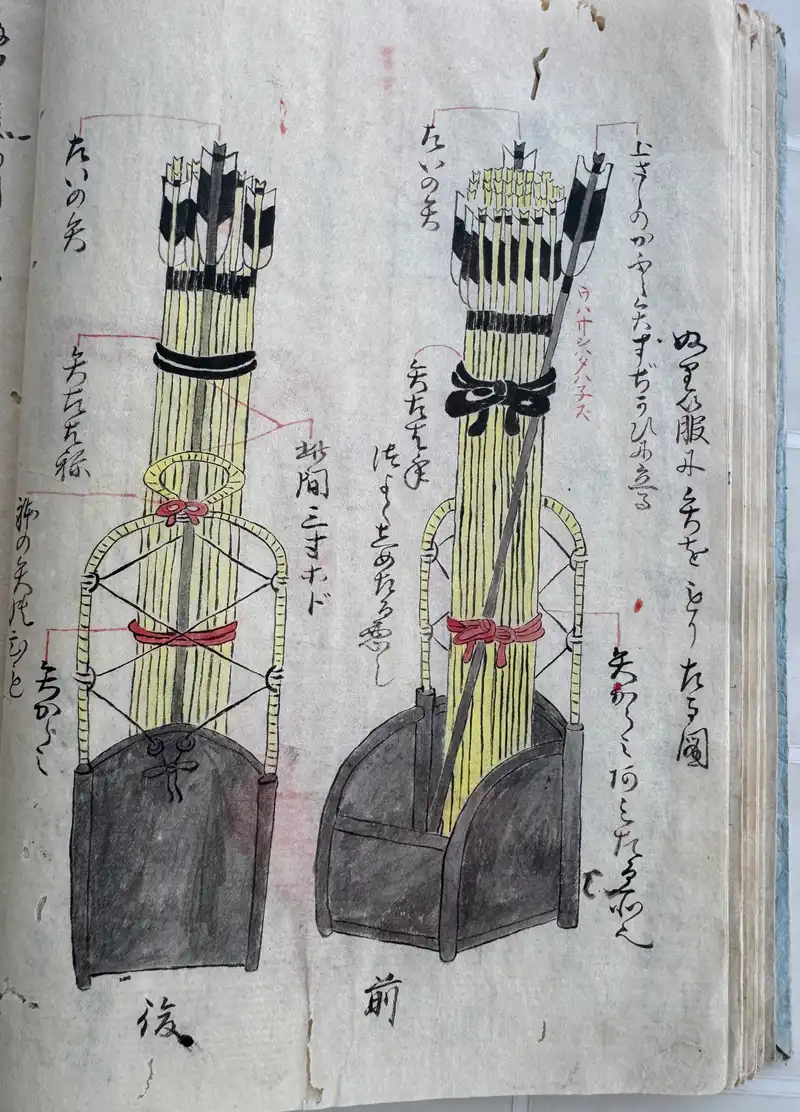
For most bowhunters, a tree stand quiver wins for treestand hunts because it keeps arrows within seated reach and speeds a first shot; a ground quiver is better when you need quiet, lower-profile storage in a blind. Pick the wrong one and I waste seconds, bump arrows, or fumble the first draw. I’ll compare seated access, clearance, noise, and first-arrow speed for compound and traditional bows.
| Decision factor | Tree Stand Quiver | Ground Quiver | Winner |
|---|---|---|---|
| Seated access | Best when you are sitting higher in a stand and want the arrows close to the bow hand | Best when you are seated low in a blind and need a fast pull without reaching up | Ground Quiver |
| Clearance | Can touch the seat, rail, tether, or platform edge if profile is wide | Better around blind walls if the quiver stays low and narrow | Ground Quiver |
| Noise control | Good if the hood and grippers are snug, but more likely to bump stand parts while shifting | Usually quieter in a blind if arrows do not hit fabric or frame | Ground Quiver |
| Climbing security | Strong point; arrows stay attached to the bow on the climb | Less relevant because the bow is often carried in and set down | Tree Stand Quiver |
| Carry comfort | More bow weight during the walk in and on the platform | Often lighter on the bow if the quiver comes off before setup | Ground Quiver |
Tree stand quiver vs ground quiver: the real trade-off
The split is simple. A tree stand quiver favors attached carry and clean access from an elevated seat, while a ground quiver favors low, seated access inside a blind or from a ground-level setup. I care less about labels and more about where the arrows sit when I am half-turned, cold, and trying not to make noise.
What changes when you hunt seated instead of standing
Seated hunting changes everything about reach. In a tree stand, I want the first arrow where my drawing hand can grab it without lifting my elbow into the rail or seat. On the ground, I want the arrow low enough that I can get it with one hand while staying inside the blind window.
How access, clearance, and noise decide the winner
Access wins when the quiver does not force a twist. Clearance wins when the hood and shaft tips do not hit a rail, seat, or blind wall. Noise wins when rubber grippers hold the shaft tight and the hood does not buzz, tap, or scrape during a shift.
How each quiver style works in the field
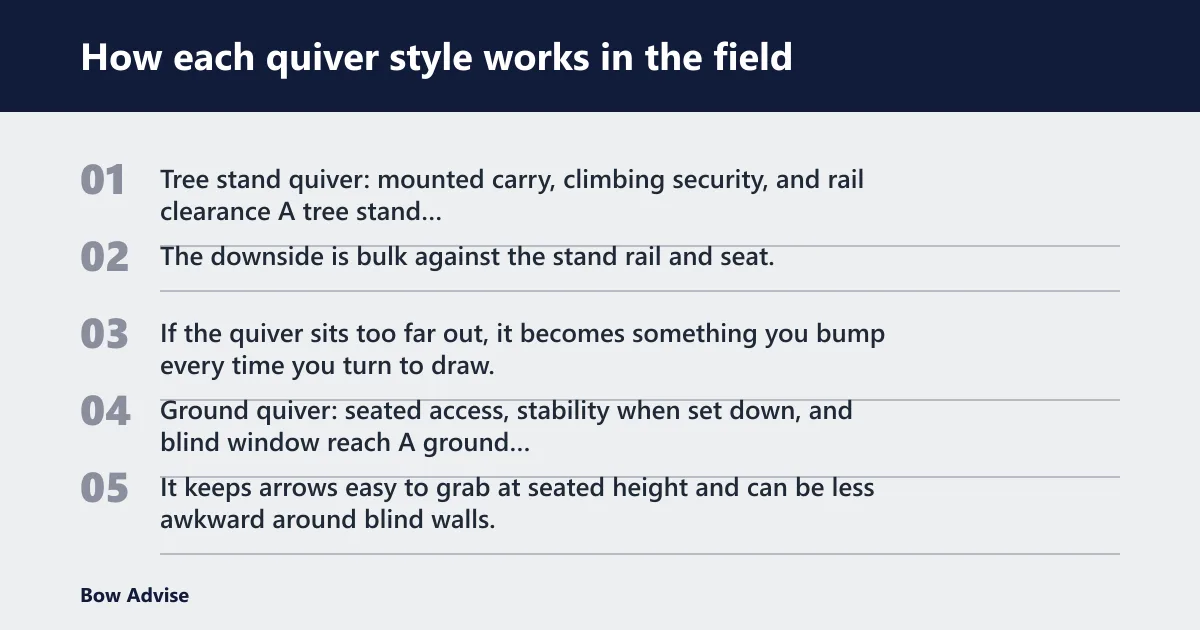
Tree stand quiver: mounted carry, climbing security, and rail clearance
A tree stand quiver keeps arrows on the bow during the walk in and the climb, which helps when you want one compact package. The downside is bulk against the stand rail and seat. If the quiver sits too far out, it becomes something you bump every time you turn to draw.
Ground quiver: seated access, stability when set down, and blind window reach
A ground quiver works best when the bow is off the shoulder and you are already settled. It keeps arrows easy to grab at seated height and can be less awkward around blind walls. The weak point is fit: if the shafts ride too high, the top of the quiver can hit fabric or leave the arrow too far above your hand.
Bow-mounted quiver, side quiver, and back quiver: where they fit in this comparison
Most hunters are really choosing between a bow-mounted quiver, a side quiver, or a traditional back quiver. A bow-mounted quiver changes bow balance the most, but it gives the fastest arrow control for compound bows and quick-detach setups. A side quiver stays slimmer and can clear a stand better. A traditional back quiver carries well while stalking, but seated access is slower and draw interference is real.
When I coach beginners, I tell them to stop thinking about “best quiver” and start thinking about “where does my drawing hand land first.” That question matters more than any marketing term.
Which quiver is quieter in a treestand?
A tree stand quiver is quieter in a treestand only when its hood, grippers, and mounting point stay tight against the bow and away from the rail. A ground quiver can be quieter overall because it usually stays out of the climbing and railing problem, but only if it does not rattle when you set it down or brush it against frame parts.
Noise from hood contact, arrow rattle, and brush contact
The noise problems I see most often are simple. The hood taps the stand. The shaft nocks knock inside the hood. The quiver body rubs fabric or a seat frame. A rubber gripper that feels good in the hand is only useful if it also keeps the arrow from shifting when you turn.
How quiver profile affects movement in a stand
Profile matters more than people admit. A wide quiver catches on a rail when you lean, and that tiny snag can become a real problem when a deer is already inside range. I prefer the slimmer setup in a tight treestand because it gives me more room to rotate without scraping the platform edge.
Which quiver is easier to use from a ground blind?
A ground quiver is easier to use from a ground blind because it matches seated height and keeps the first arrow within easy reach. A tree stand quiver can work, but it often sits too high, asks for more shoulder movement, and increases the chance of hitting blind fabric or the shooting window frame.
Seated reach and low-light access
In low light, I want the arrow to be where my hand expects it. If I have to hunt for the shaft tip with my fingers, I am already wasting time. A ground quiver keeps that motion smaller, and smaller motions matter when the bow arm is already tight from sitting still.
Blind fabric, shooting windows, and hand clearance
Ground blinds punish sloppy gear placement. Fabric can catch a broadhead hood, and a window flap can snag a quiver during the draw. A low-profile side-mount or compact ground quiver usually works best because it leaves more room between the bow and the wall.
Field-use decision table: open treestand, enclosed blind, and mobile ground setup
The cleanest way I can rank this is by situation. I use different scores because each setup changes the problem. A quiver that is excellent in an open treestand can be annoying in an enclosed blind, and the reverse is true too.
| Hunting scenario | Tree Stand Quiver | Ground Quiver | Best for compound bows | Best for traditional bows | Recommendation |
|---|---|---|---|---|---|
| Open treestand | Access 4/5, Noise 3/5, Clearance 3/5, Carry comfort 4/5 | Access 3/5, Noise 3/5, Clearance 4/5, Carry comfort 3/5 | Tree Stand Quiver | Side quiver | Tree Stand Quiver |
| Enclosed blind | Access 2/5, Noise 2/5, Clearance 2/5, Carry comfort 3/5 | Access 5/5, Noise 4/5, Clearance 4/5, Carry comfort 4/5 | Ground Quiver | Traditional back quiver or side quiver | Ground Quiver |
| Mobile ground setup | Access 3/5, Noise 3/5, Clearance 3/5, Carry comfort 4/5 | Access 4/5, Noise 3/5, Clearance 4/5, Carry comfort 3/5 | Bow-mounted quiver with quick detach | Back quiver | Ground Quiver |
Why open treestands favor the tree stand quiver
Open stands usually give you more room, so an attached quiver can make sense. I still watch the rail clearance and seat bumping, because the issue is not whether the quiver works in theory. It is whether you can rotate, settle, and draw without touching metal.
Why enclosed blinds favor the ground quiver
In a blind, every inch counts. I want the arrow at seated height, the hood away from fabric, and no extra width near the window. That is why the ground quiver usually wins when the shot lane is narrow and the movement space is tight.
Why a mobile ground setup changes the question
When I am moving on foot, I think about carry fatigue and snag risk first. A lighter quiver or a quick-detach setup can make sense if I expect to remove it before the shot. I learned that lesson after I set my first compound too heavy and spent some time flinching until I backed the limb bolts out.
What quiver holds arrows more securely while climbing into a stand?
A tree stand quiver can hold arrows more securely while climbing because the arrows stay with the bow instead of riding in a looser carry system. A good arrow retention system matters here: rubber grippers, a solid hood design, and a knock pocket that keeps the broadhead from shifting. For climbing, I want security first and speed second.
Arrow retention system details that matter
Look for rubber grippers that hold without crushing the shaft. A hood should keep the point protected and quiet, not let it chatter against the shell. If the hood is sloppy, the bow may still feel fine on the ground and fail the moment you step onto a ladder or platform.
Tree stand safety and limited movement space
Tree stands reward compact gear. Limited movement space means every added inch is one more chance to catch the seat or platform edge. A slim quiver with firm retention is easier to live with than a bulky one that looks strong on the rack but gets in the way when you shift your weight.
Will a heavier quiver matter when carrying a bow to a blind or stand?
Yes, heavier quiver weight matters, especially if you hike in far or carry the bow for a long sit. Extra ounces change how the bow hangs at your side and how tired your forearm feels by the time you reach the stand or blind. It also affects how easily the bow settles on a rail or rests in your lap.
Quiver weight, bow balance, and carry fatigue
On a compound, a heavier bow-mounted quiver shifts balance forward. Some hunters like that steady feel; others hate the nose-heavy swing. On a traditional bow, extra weight can make the carry awkward, especially when I am slipping through brush or holding the bow with one hand while opening a blind door.
Mounting hardware and fit on compound and recurve bows
Quick detach hardware helps when you want to remove the quiver before the shot or swap between setups. Adapter brackets matter because compound bows and recurve bows do not always take the same mounting layout. I have seen hunters force a fit and then blame the quiver when the real issue was the bracket.
How do I choose between a side-mount quiver and a hanging quiver?
A side-mount quiver is better when you want a slimmer profile and less stand interference. A hanging quiver makes more sense when you want the arrows off the bow and easy to stage beside you. I choose by hand clearance first, then by how much room the stand or blind gives me to rotate.
Side quiver profile width and interference
A side quiver keeps the package narrow, which helps in stands and blinds with little room. That slimmer profile reduces the chance of bumping the seat or brushing the wall. It also helps when I need to keep the bow close to my body while standing, climbing, or kneeling.
Traditional back quiver: carry position, seated access, draw interference, mobility while stalking
A traditional back quiver is a carry tool more than a seated hunting tool. It is fine while stalking or moving between spots, but seated access is slower and draw interference is real. If I am hunting from a chair, a blind, or a stand, I would rather have the arrows where my hand can reach them without a shoulder roll.
What should I look for in a quiet hunting quiver?
Look for a quiet hunting quiver with tight arrow retention, a hood that does not rattle, and a mount that does not shift under movement. The quietest setup is the one that avoids contact with the stand rail, seat frame, blind fabric, or shooting window trim. That is the practical test I use on my own range and in the field.
Use a practical checklist before you buy
- Measure seated reach from your hunting position.
- Check whether the hood clears the rail, seat, or blind wall.
- Test arrow retention with broadheads and field points if you use both.
- Decide whether you need quick detach hardware.
- Match the mount to your compound or recurve setup.
- Count how many arrows you really carry.
- Choose the hand that will grab the first arrow.
Use the shop layout as a clue, not a rule
When I look at a retailer’s navigation, I pay attention to how they separate categories. WoodsArcheryRange lists “Quivers & Accessories” as a shopping category, separates “Hunting Bow Quivers” from “Hunting Side Quivers,” and also lists “Traditional Back Quivers.” It also groups tree stand and blind accessories together, alongside “Tree Stands & Blinds” and “Ground Blinds,” which mirrors how hunters actually think about these setups.
Choose Tree Stand Quiver if… / Choose Ground Quiver if…
Choose a tree stand quiver if you climb with the bow, want the arrows secured on the move, hunt from an open stand with decent room, or need the first arrow close while you stay seated. Choose a ground quiver if you hunt from an enclosed blind, want faster seated access, need lower profile storage, or keep hitting fabric and window frames with a tall attached quiver.
For compound bows, I lean toward a tree stand quiver for treestand hunting and a ground quiver for blind hunting. For traditional bows, I usually prefer a side quiver in a stand or a back quiver for stalking, then a compact ground quiver only when seated blind work demands it.
Can one quiver do both jobs? Yes, but only if the profile is slim, the mount is secure, and your seated reach still works in both locations. If it passes those three tests on your own bow, you have a real crossover setup. If not, you are better off matching the quiver to the hunt.
Frequently asked questions
What’s the difference between a tree stand quiver and a ground quiver?
A tree stand quiver is built around keeping arrows on the bow for elevated hunting, climbing, and seated access in a stand. A ground quiver is easier to use from a blind or low seated setup because it keeps the arrows lower, closer to your hand, and away from stand-specific clearance problems.
Which quiver is quieter in a treestand?
The quieter choice in a treestand is usually the one with the slimmer profile, tight retention, and the least contact with the rail or seat. A tree stand quiver can be very quiet if it fits well, but a loose hood or wide body will betray you the first time you shift your weight.
Which quiver is easier to access from a ground blind?
A ground quiver is easier to access from a ground blind because it matches seated height and reduces the amount you need to lift your shoulder or elbow. It also tends to work better with blind windows, where a taller bow-mounted quiver can snag fabric or push into the frame.
Do I need a different quiver for hunting from a tree stand vs the ground?
You do not always need two quivers, but the hunt type should drive the choice. If you split time between treestands and blinds, pick the option that fits your most common setup and test it in the other one before season. I would rather carry one quiver that truly fits than two that are both awkward.
What quiver holds arrows more securely while climbing into a stand?
A tree stand quiver with strong arrow retention usually holds best while climbing. Look for rubber grippers, a secure hood, and a mount that keeps the arrows from swinging into the stand. If the arrows move at all during the climb, that is a sign the fit is not right.
Will a heavier quiver matter when carrying a bow to a blind or stand?
Yes, heavier quiver weight matters more than many hunters admit. It changes carry fatigue, bow balance, and how easy it is to maneuver the bow in tight spaces. If your walk-in is long or you carry the bow a lot before the shot, light weight and good balance are worth paying attention to.