Back Quiver vs Side Quiver: Which Fits You Best for Archery?
Choose a side quiver if you want faster arrow access, cleaner movement, and safer carry. I reach for a back quiver mainly for traditional style and off-range use. Pick the wrong one and you slow your draw, snag clothing, and make stalking or range movement awkward. I’ll compare fit, speed, comfort, safety, and when each quiver makes sense for recurve shooting and bowhunting.
Back quiver vs side quiver: the real trade-off


The trade-off is movement, not looks. A back quiver asks you to reach over your shoulder and pull from behind your line of sight, while a side quiver keeps arrows on your hip where you can see and index them faster. That difference matters more as soon as you walk brush, sit down, or shoot a recurve under pressure.
| Decision factor | Back Quiver | Side Quiver | Winner |
|---|---|---|---|
| Draw speed | Slower, because you reach behind your shoulder and hunt for the shaft | Faster, because arrows sit on the hip for direct access | Side Quiver |
| Arrow visibility | Poorer; the arrows are behind you during retrieval | Better; the arrows stay in your peripheral vision | Side Quiver |
| Snag risk | Moderate; broad motion can catch clothing or brush | Varies by type, but lower for a streamlined field quiver and higher for a bulky hip quiver | Field Quiver |
| Seated comfort | Poorer in chairs, tree stands, and tight seats | Better for sitting, especially with a slimmer field quiver | Side Quiver |
| Accessory capacity | Usually low | Higher in a hip quiver; lower in a field quiver | Hip Quiver |
| Target-line safety | Weaker in crowded spaces because of the blind over-the-shoulder motion | Stronger, especially on a range where arrows stay visible | Side Quiver |
Why the back quiver loses on speed
A back quiver changes the draw path from simple to blind. You reach over the shoulder, find an arrow, and pull it free without seeing the point clearly. That slows repeat shots and makes bad indexing more likely. I’ve seen beginners hesitate twice, once at the shoulder and again when the arrow tip brushes clothing.
Why the side quiver wins on practical movement
A side quiver keeps the arrow where your eyes can help your hands. That makes it easier to confirm the shaft, avoid tip contact, and move through a crowd or through brush with less drama. For recurve and hunting use, that cleaner access usually matters more than the traditional look.
Why movement beats style
Style matters until the first awkward draw. On a range, in a blind, or while climbing into a stand, the quiver that stays out of the way wins real points.
What is a back quiver?
A back quiver is a rear-carry quiver worn across the back, with arrows accessed over the shoulder. It gives a traditional carry feel and a clean off-range look, and it can hold a useful number of arrows without hanging on the hip. The trade-off is that retrieval depends on shoulder mobility, body awareness, and a consistent draw habit. (en.wikipedia.org)
Rear-carry arrow access and over-the-shoulder draw
With a back quiver, the arrow lies behind the archer, so retrieval starts with a reach behind the neck and upper back. That motion can work smoothly for an archer who has practiced it, but it is less forgiving when you are rushed, tired, or wearing bulky clothing. The human back extends from the neck to the gluteal region, and that long carry zone is part of why the quiver can feel stable while walking.
Arrow capacity and walking stability
Back quivers usually carry enough arrows for casual shooting and traditional sessions, and they tend to stay put during straight-line walking. I like that part for relaxed range sessions and for the look at traditional events. The problem shows up when the walk gets messy, because your shoulders keep turning and the arrow ends up behind your field of view.
Best fits: traditional archery and off-range carry
A back quiver fits traditional archery, cosplay, and off-range carry better than it fits high-movement shooting. If the goal is period feel or a certain visual, it does that job well. If the goal is fast, repeatable access in a shooting lane, it gives up too much.
What is a side quiver or hip quiver?
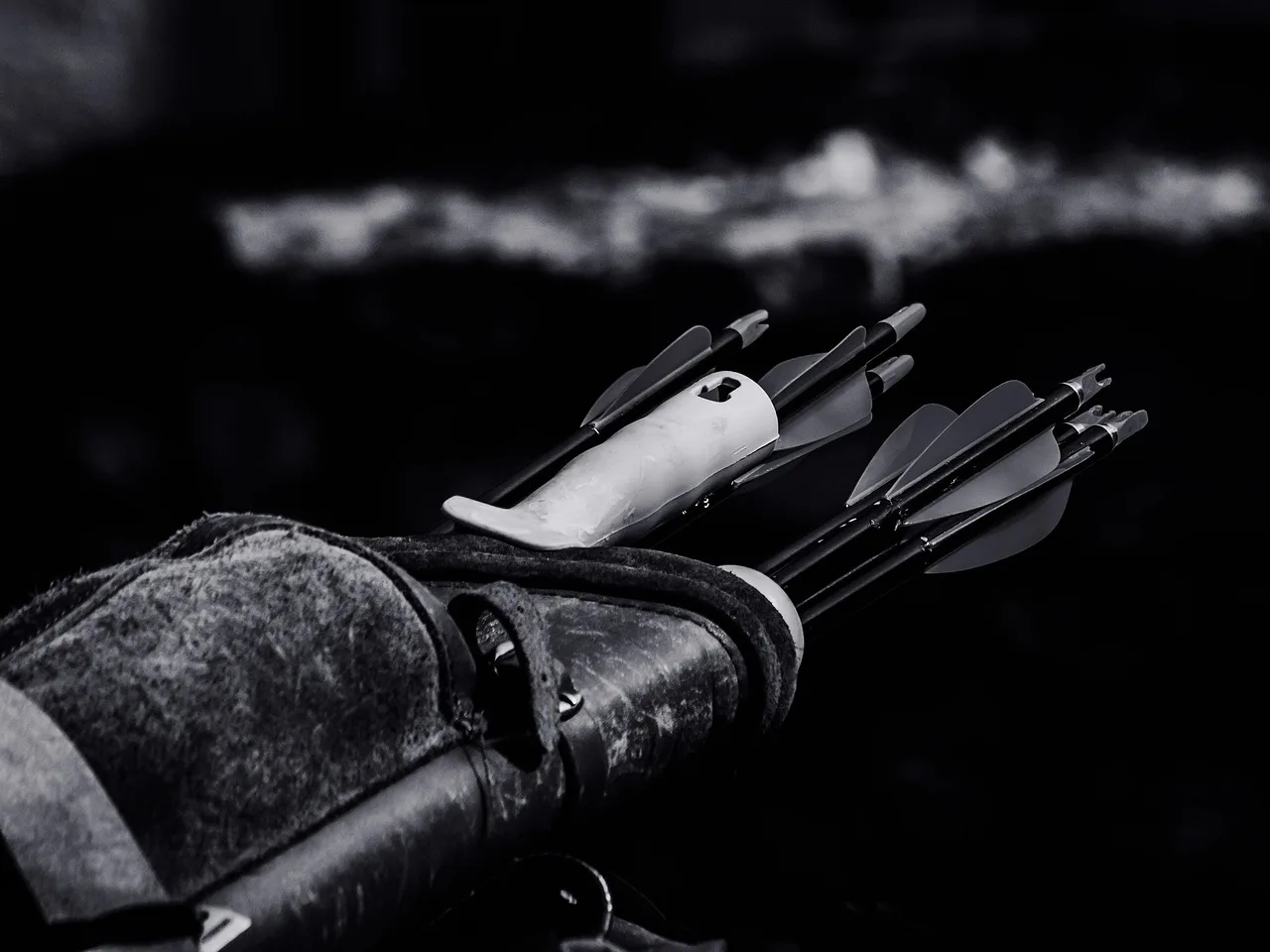
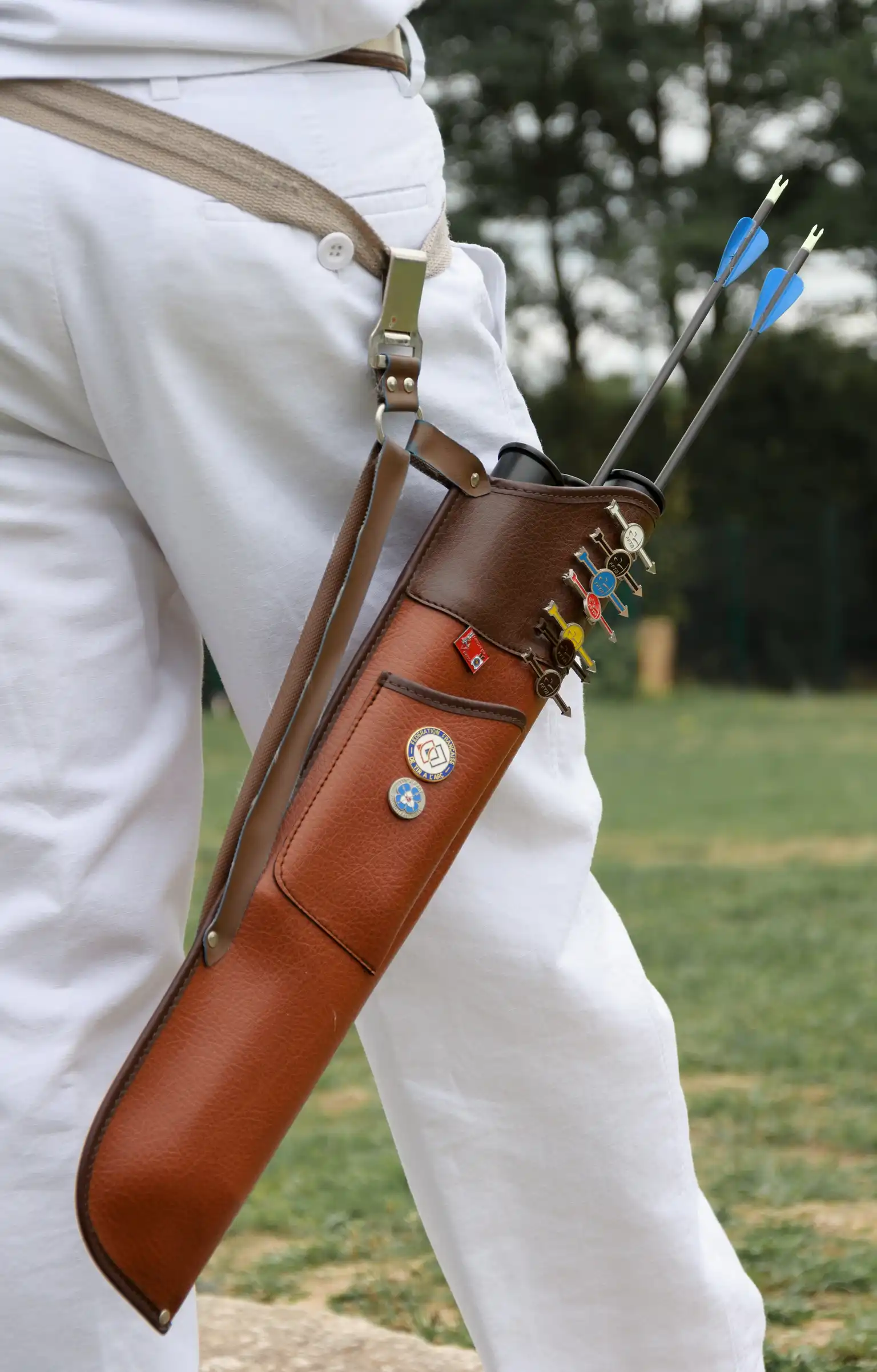
A side quiver, often called a hip quiver, is a waist-belt carry that keeps arrows at the archer’s side with the shafts visible and easy to reach. In a hip quiver, arrows point forward of the archer. That makes indexing easier and the first draw cleaner, especially for recurve and hunting work.
Waist-belt carry and front-facing access
Hip quivers and field quivers are both worn on a waist belt. The difference is that a hip quiver keeps more of the arrow forward of the body, while a field quiver sends the arrows behind the archer’s arm. That small change matters a lot when you are drawing fast or walking through brush.
Arrow visibility and indexing
Front-facing access makes it easier to select the right arrow without looking away from the target line for long. That helps beginners who are still building a repeatable draw. It also helps bowhunters who need quiet, low-motion access while staying aware of the ground and the cover in front of them.
Accessory storage and leg bulk
Hip quivers generally offer more space for arrows and accessories, which is handy if you carry broadheads, tools, or extra gear. The trade-off is that they can be cumbersome and catch on objects. In my own use, anything that adds leg bulk shows up first when I sit, kneel, or move through thick cover.
How do back quivers and side quivers affect shooting mechanics?
They change the mechanics in different ways. A back quiver asks for a bigger reach and more shoulder rotation, while a side quiver shortens the retrieval path and keeps the arrow in sight longer. For recurve archery, that difference can affect string clearance, draw consistency, and how often you bump the quiver on the limb or shelf.
Arrow retrieval mechanics and blind draw risk
The back quiver’s main failure mode is the blind draw. You cannot see the arrow point as easily, so the tip can snag clothing or miss the shaft cleanly on the first attempt. A side quiver reduces that problem because the arrow is visible sooner, which cuts down on searching and fumbled grabs.
- Reach for the arrow.
- Confirm the shaft by feel and sight.
- Clear the nock cleanly.
- Bring the arrow into the draw path without brushing clothing.
Handedness, shoulder mobility, and consistency
Handedness changes how natural each quiver feels, but shoulder mobility can matter even more. If the shoulder is tight, a back quiver becomes annoying fast, and your draw rhythm changes shot to shot. I saw that with one of my club beginners who had a limited reach on one side; the hip quiver fixed most of the inconsistency in a single session.
Recurve bow setup and quiver interference
Recurve bows expose more of the working parts around the shelf and limbs, so interference shows up quickly. A back quiver can bump the bow arm during the set-up phase, while a hip quiver can interfere with crawl or shelf access if it sits too far forward. For barebow and target recurve, I prefer the cleaner side carry because it stays out of the string path more often.
Back quiver vs side quiver for hunting and field use
For hunting, the side quiver is the more practical choice. It keeps the arrows visible, reduces the over-the-shoulder motion, and gives you better control when moving through brush, climbing into a tree stand, or stalking on the ground. A back quiver can work, but it becomes a liability once noise and snag risk matter.
Brush, noise, and snag risk
Back quivers have more blind movement, and that raises the chance of brushing against clothes, straps, or limbs. In brush, that matters because every extra motion can make noise. Side carry is easier to manage because the arrow position is more predictable, and you can keep the quiver tighter to the body.
Tree stand sitting and ground stalking
Sitting is where back quivers lose ground. The arrows ride behind your back, so a stand seat, blind chair, or truck seat can push the quiver into awkward angles. Ground stalking also favors the hip or field quiver because it lets you keep the arrows accessible while crouching or pivoting.
When a back quiver becomes a liability
If you are ducking under branches, turning fast, or sitting often, the back quiver stops being elegant and starts being annoying. The shoulder reach slows the first arrow, and the blind motion can cost you more than it saves. That is why I treat it as a traditional carry option first and a hunting option second.
Is a hip quiver or field quiver better for target archery?
For target archery, the field quiver is usually the cleaner choice, while the hip quiver offers more storage and a larger profile. A field quiver sends arrows behind the archer’s arm, has a sleeker profile than hip quivers, and hangs flatter on the leg. It is less bulky, but it also has less room for arrows and accessories.
Why field quivers stay slimmer
Field quivers are built for a flatter carry. That lower profile matters on the shooting line and when you are moving between targets because it keeps the quiver from swinging as much. In practice, that helps with clean footwork and reduces the chance of clipping nearby gear or other archers.
Why target archers like easy arrow access
Easy access matters when you are shooting round after round. You want one clean draw, a known arrow selection, and a profile that does not fight your posture. Field quivers do that well, and that is why field quivers are preferred by nearly all professional archers.
Accessory capacity versus clean profile
Hip quivers win if you need more room for accessories. Field quivers win if you want less bulk and a cleaner line. For target archery, I would choose the field quiver unless I had a specific reason to carry extra gear on the belt.
Decision matrix: back quiver vs hip quiver vs field quiver
Here is the practical breakdown I use when I think about actual movement, not just appearance. The scores reflect how each quiver may behave for recurve shooting, hunting, and beginner use, with 5 indicating the strongest fit for that factor. The best score is not always the best choice for your style.
| Criteria | Back Quiver | Hip Quiver | Field Quiver | Notes | Winner |
|---|---|---|---|---|---|
| Draw speed | 2 | 4 | 5 | Recurve and beginner use favor visible, direct access | Field Quiver |
| Arrow visibility | 2 | 4 | 4 | Hip carry shows the shaft best; field carry still stays accessible | Hip Quiver |
| Snag risk | 3 | 2 | 4 | Brush and seated movement punish bulky carry | Field Quiver |
| Seated comfort | 2 | 3 | 4 | Tree stands and chairs favor a slimmer side profile | Field Quiver |
| Accessory capacity | 2 | 5 | 2 | Hip quivers generally offer more space for arrows and accessories | Hip Quiver |
| Target-line safety | 2 | 4 | 5 | Cleaner side carry helps in crowded ranges and on the line | Field Quiver |
What the matrix says for recurve archers
For recurve work, a field quiver is often a strong all-around pick if you shoot target or 3D. It keeps the draw simple and stays out of the way better than a back quiver. The hip quiver is a strong second choice if you value storage more than a slim profile.
What the matrix says for hunters
For bowhunting, I would rather have a field quiver or a compact hip quiver than a back quiver. The back quiver loses too much ground on snag risk, seated comfort, and line safety. If you hunt from a stand or move through thick cover, the side carry wins.
What the matrix says for beginners
Beginners usually need the easiest path to repeatable habits. That means visible arrows, simple indexing, and fewer odd body motions. A field quiver is often the cleanest starting point, and a hip quiver is a good choice if the beginner also wants more storage.
Choose back quiver if… / choose side quiver if…
Choose a back quiver if you want traditional carry, a cosplay look, or a casual setup where speed and seated movement do not matter much. Choose a side quiver if you want faster access, safer movement, and better use around recurve shooting, target lines, or hunting cover. That is the clean split.
Choose back quiver if…
Choose it if your main goal is traditional archery presentation, off-range carrying, or a look that matches a historical kit. Choose it if you have the shoulder mobility to reach cleanly over the shoulder and you do not mind slower arrow retrieval. Choose it if you are not spending much time seated or moving through tight brush.
Choose side quiver if…
Choose it if you shoot recurve often, want quicker indexing, or need safer access while walking, standing, or hunting. Choose a hip quiver if you need more storage and accessories. Choose a field quiver if you want the slimmer option for target work, 3D, or crowded lines.
Best choice by archer type
For beginners, I lean side quiver, with field quiver first and hip quiver second. For target archers, field quiver wins. For bowhunters, side carry wins again, because the practical movement advantages matter more than the traditional look. For pure traditional display, back quiver still has a place.
Frequently asked questions
back quiver vs hip quiver
A back quiver gives you a traditional over-the-shoulder draw, while a hip quiver keeps the arrows easier to see and grab. For practical shooting, I favor the hip quiver. For appearance and off-range carry, the back quiver still has a clear place.
is a back quiver better than a side quiver for archery
For most archery use, no. A side quiver is usually better because it improves visibility, access, and movement. I only reach for a back quiver when the traditional look matters more than fast, repeatable arrow retrieval.
which quiver is easier to draw from, back or side
The side quiver is easier to draw from. You can see the arrow sooner, index it faster, and avoid the blind shoulder reach that slows back-quiver use. That difference shows up quickly for beginners and even more in hunting or crowded ranges.
what are the pros and cons of a back quiver
The main pros are traditional carry, a clean off-range look, and decent walking stability. The main cons are slower retrieval, blind draw risk, and awkward seated use. I treat it as a style-first option with limited practical advantages.
what are the pros and cons of a side quiver
The pros are speed, visibility, safer movement, and better practical use for recurve and hunting. The cons depend on the type: a hip quiver can be bulky and catch on objects, while a field quiver has less room for arrows and accessories. That trade-off is why I separate them.
what quiver is best for beginners
A field quiver is usually the best starting point for beginners because it keeps arrows visible, reduces awkward reaching, and stays slimmer on the body. A hip quiver is a good backup if the beginner wants more accessory space. I would not start most new archers on a back quiver.