Black Gold Quiver Review: Worth It for Bowhunters?
Black Gold quivers are a good option for hunters who want a lighter, quieter bow-mounted quiver with a solid fit on many compounds. Skip it if you need the fastest single-hand arrow access or a rock-bottom price.
This guide is part of our Archery quivers: types, fit and buying guide series.
Verdict

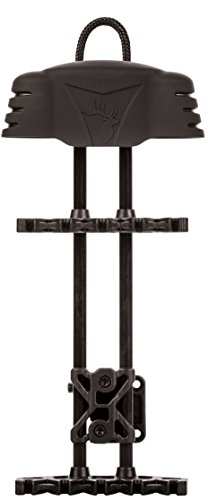


A bad quiver throws off balance, adds noise, and can make a bow harder to hold steady at full draw. This review covers field fit, balance, failure points, and how Black Gold compares with TightSpot and Fuse on compound bows and recurve bows.
Black Gold sits in the hunting quiver tier where fit and balance matter more than simple storage. The strongest case is a compound setup with room for careful tuning at the stabilizer and sight bar. Recurve shooters should be more selective, because brace height, limb shape, and traditional riser hardware can make bow-mounted carry awkward or impossible on some rigs.
Specs at a glance
| Spec | Black Gold quiver line |
|---|---|
| Mounting style | Bow-mounted hunting quiver |
| Intended use | Compound bow hunting; some recurve setups with compatible hardware |
| Arrow capacity | Common hunting capacity is 5 arrows on this class of quiver |
| Weight | Often roughly in the 7 to 10 ounce range for lightweight hunting quivers, depending on model |
| Adjustability | Quiver-to-bow position adjustment for balance and clearance |
| Hood | Broadhead-protecting hood with grippers for arrow security |
| Typical hardware | Mounting bracket, quiver body, hood, and arrow grippers |
Black Gold’s market position is straightforward: a premium hunting quiver brand with a reputation for fit-first design. That matters because quivers fail in the same few places again and again: they hit cables, sit too far off the bow, rattle against limbs, or make the bow nose-heavy.
Who it is for
Black Gold quivers are for compound bow hunters who care more about balance, quiet carry, and a clean sight window than about the lowest price. They also suit hunters who swap arrows often and want broadhead protection that does not crush fletching or let points rattle loose.
They are less attractive for recurve bow users who need simple, traditional carry or who shoot a bow with very little riser real estate. A back quiver or hip quiver may fit that setup better. Tree stand and blind hunters are the strongest match, because a stable bow-mounted quiver keeps arrows ready without adding much bulk in the way of a sling, rest, or window frame.
Compound bow hunters
On a compound, the main fit questions are stabilizer clearance, cable guard interference, and how far the quiver shifts the bow’s center of mass. A good mount should sit close enough that it does not torque the riser, yet leave enough room for the bow to come to full draw without the hood bumping cables or the bottom cam area.
Recurve bow users
Recurve fit is the harder case. Many recurves lack the accessory mounting geometry that modern quivers expect, and some have limb or brace-height shapes that make a side-mounted hunting quiver awkward. If the bow has a compatible threaded mount or accessory point, fit can work, but this is the edge case where checking hardware before buying matters most.
Tree stand and blind hunters
For stands and blinds, the best quiver is quiet, compact, and easy to keep out of the way in cramped positions. Black Gold’s appeal is that it can cut arrow clatter and keep broadheads covered while still leaving the bow ready to present quickly. If the setup is tight, though, a long quiver body can still catch on seat rails, blind fabric, or shooting sticks.
Pros and cons
Pros
- Strong fit-adjustment potential for compound bows
- Quiet hood and gripper design for hunting carry
- Good broadhead protection for fixed-blade heads
- Usually lighter than bulky multi-piece quiver setups
Cons
- Not the cheapest quiver option
- Can still create clearance problems on some compounds
- Recurve compatibility is limited by bow hardware
- Single-arrow access is not always as fast as a simple back quiver
What works
Black Gold’s best trait is the blend of retention and bow fit. A good hunting quiver should hold each shaft firmly, protect broadheads from contact, and stay quiet when the bow is moved, leaned, or carried through brush. That combination is where Black Gold generally earns attention from serious bowhunters.
The hood design matters because broadheads are where many quivers fail. Fixed-blade heads can nick foam, snag on loose grippers, or strike nearby arrows if the quiver allows too much movement. A tighter hood and secure grip reduce that risk, especially on climbs into a stand or when crossing deadfall on a stalk.
Balance is the other major win. A quiver that hangs too far off the riser makes a bow feel side-heavy and slower to settle at full draw. A lighter quiver, or one mounted closer to the bow, tends to feel better in the hand and easier to hold on target.
Quiet carry and rattle control
Quiet carry matters more than most buyers expect. A quiver can look fine in the garage and still click, buzz, or shift once the bow is carried with a sling or bumped against a ladder stand. Black Gold’s appeal is its hunting-first approach to noise control, but the final result still depends on arrow shaft diameter, gripper tension, and how tightly the bracket is set.
Arrow retention and broadhead safety
Arrow retention should be strong enough that the shaft does not creep out when the bow is brushed against clothing or a tree trunk. It should also release without fighting the hunter at the moment of truth. A good system gives one clean motion: secure in transit, quick on demand, and no broadhead contact that damages the hood or the fletching.
Balance after mounting
Balance changes with every ounce added to the riser. A 7 to 10 ounce hunting quiver may sound light, but that weight sits far from the grip and can feel larger than the number suggests. On a compound already carrying a long front stabilizer, the extra front load can be welcome or annoying depending on how the bow is tuned.
What does not
The biggest drawback is that fit problems do not disappear just because the quiver is well made. On some compounds, the hood sits too close to the cable guard or the bottom cam. On some recurve setups, there may be no clean way to mount it at all without adding hardware that changes the feel of the bow.
Weight and bulk can also work against the hunter. A quiver that protects broadheads well may still be long enough to snag when slipping into a blind window or twisting in a stand. Access speed can suffer in those cramped setups, especially if the hunter wants one-hand arrow removal without looking down.
Say your compound uses a wide cable guard and a long axle-to-axle length. A quiver that rides even slightly too low can brush the lower cam at full draw. The bow may still shoot, but that contact point can make the setup noisy and annoying in the field.
Picture a recurve with a short brace height and minimal accessory threads. A bow-mounted quiver may add more trouble than value. The hunter gets extra weight, a wider profile, and fewer storage benefits than a simple traditional carry system.
Clearance problems to watch
Clearance is the first thing to check on a compound bow. Look at the quiver hood against the cable guard, cables, and the bottom limb pocket. On recurves, the concern shifts to limb path and brace-height space. If the hood or arrows sit where the string path needs room, the setup is wrong even if it technically bolts on.
Weight and bulk trade-offs
Lightweight does not mean invisible. A hunting quiver adds a real side load, and the longer the body, the more it can catch on brush or seat rails. Hunters who climb tight stands or move through cedar thickets should pay as much attention to profile as to total ounces.
Access speed limits in tight setups
Fast access is where some bow-mounted quivers lose ground to hip or back carry. In a ground blind or cramped tree stand, the bow may need to be rotated before an arrow can come free cleanly. That is fine for most still-hunting or stand hunting, but less ideal if the hunter wants instant, one-motion access.
Field-fit decision table
The scores below reflect field-fit judgment, not lab data. A 5 is strong fit with few issues. A 1 is a poor match or a frequent source of problems.
| Use case | Bow clearance | Arrow retention | Noise control | Balance | Access speed |
|---|---|---|---|---|---|
| Compound bow | 4 | 4 | 4 | 4 | 3 |
| Recurve bow | 2 | 3 | 3 | 2 | 3 |
| Tree stand | 4 | 4 | 4 | 4 | 3 |
| Ground blind | 3 | 4 | 4 | 3 | 2 |
| Spot-and-stalk | 3 | 4 | 3 | 4 | 3 |
How does the Black Gold quiver compare with TightSpot and Fuse?
Black Gold competes most directly with TightSpot on fit and with Fuse on practical hunting value. TightSpot is often the name hunters reach for when they want maximum adjustment and a reputation built around precise bow fit. Fuse usually appeals to buyers who want dependable function and simpler pricing. Black Gold lands between them in a fit-first package that is still aimed at serious hunters.
On adjustability, TightSpot often gets the nod from archers who want extensive fine-tuning around brace height, risers, and side offset. Black Gold is still strong here, but the right model and bow pairing matter more. Fuse tends to be easier to justify on budget, though that lower price can come with less refinement in fit and balance.
Fit and adjustability
For compound bows with stabilizers and cable guards, all three brands can work, but the best choice is the one that clears the bow cleanly at full draw. TightSpot is usually the safer bet for maximum adjustment headroom. Black Gold is attractive when the buyer wants a cleaner hunting package without paying for more adjustment than the bow actually needs.
Noise and retention
Black Gold and TightSpot both target hunters who care about quiet carry and secure arrow hold. Fuse models can be solid here too, but the difference is often in how tightly the quiver hugs the bow and how much tinkering is needed to stop small rattles. The quietest setup is the one that fits the specific bow, not just the brand name.
Value and support
Black Gold’s value case is strongest when the buyer wants a premium quiver without moving to the top price tier. Replacement parts and support matter too, because quiver grippers, brackets, and hoods can wear or go missing over time. Buyers should check whether the dealer or brand can supply the exact hardware needed for the model they plan to mount.
How much does a Black Gold quiver cost?
Black Gold quivers usually sit above entry-level pricing and below the most expensive custom-looking hunting setups. Exact cost depends on model, color, and whether the package includes extra hardware. A fair way to judge value is to compare street price, not just MSRP, and to account for whether the quiver solves fit problems without extra parts.
For hunters comparing packages, the real question is whether the quiver saves time and frustration on the bow. If it mounts cleanly, keeps arrows secure, and does not force another purchase to make clearance work, the value is better than the sticker alone suggests. If the bow needs adapters or trial-and-error, the cost climbs quickly.
Which Black Gold quiver model is best for bowhunting?
The best Black Gold model is the one that matches the bow and the hunt, not the one with the flashiest marketing. For most compound hunters, the best pick is the model that mounts closest to the riser, keeps the hood compact, and offers enough adjustability to clear the cable guard and stabilizer without added fuss.
Hunters who prioritize treestand use should favor the most compact option with secure arrow retention and a hood that does not stick far below the bow. Recurve users should be cautious and treat compatibility as the deciding factor. If the bow cannot accept the quiver cleanly, the “best” model is the one you do not buy.
Should you buy it?

Buy a Black Gold quiver if you run a compound bow, hunt from stands or blinds, and want a quieter, more balanced bow-mounted setup than most budget quivers provide. It is a good choice for hunters who care about fit details and broadhead protection and who are willing to pay more for a cleaner result.
Keep shopping if you need the cheapest workable quiver, if you shoot a recurve with limited mounting options, or if you want the fastest possible arrow access in tight quarters. That is where back carry, simpler carry systems, or a different brand may suit you better. On a properly fitted compound, though, Black Gold is a solid buy.
Frequently asked questions
Is the Black Gold quiver worth it?
Yes, for hunters who value fit, balance, and quiet carry more than a low sticker price. It makes the most sense on a compound bow that can accept a bow-mounted quiver cleanly. If the setup already feels crowded or front-heavy, the value drops fast.
How does the Black Gold quiver compare to TightSpot or Fuse?
TightSpot is usually the deeper fit-and-adjustability choice, especially on picky compound setups. Fuse is often the value play. Black Gold sits between them, with a strong hunting-first design and good balance potential when the bow and quiver match well.
What bow types does the Black Gold quiver fit?
It fits compound bows best and can work on some recurve bows only if the bow has compatible mounting hardware. The recurve case is less forgiving because brace height, limbs, and lack of threaded mounting points can create clearance and balance problems.
How much does a Black Gold quiver cost?
Pricing varies by model and retailer, and street price is the number that matters most. Black Gold usually sits above entry-level quivers and below the most expensive custom-style options. Package value improves if it mounts cleanly and does not require extra parts.
Is the Black Gold quiver lightweight enough for hunting?
Generally yes. Most hunting quivers in this class are light enough to carry, but the real issue is where that weight sits. Even a modest ounce count can change bow feel if the quiver hangs far off the riser or loads the front end badly.
What are the main complaints about Black Gold quivers?
The main complaints are clearance problems, added bulk in tight setups, and price. Some bows need more adjustment than expected to avoid cable guard or cam contact. Recurve users also run into fit limits faster than compound hunters do.
Does Black Gold make quivers for compound bows and recurves?
Black Gold quivers are mainly aimed at compound bows, where mounting hardware and clearance geometry are more predictable. Some recurve setups can work, but only when the bow and accessory mounting point line up properly. Traditional bows need a careful fit check before purchase.