Is The Hunter Quiver Worth It? The Essential Verdict
Yes, a hunter quiver is absolutely worth it if you are a bowhunter or an archer who moves through varied terrain. It excels at keeping your arrows secure, quiet, and instantly accessible. However, for dedicated target archers shooting from a stationary position, a hip or ground quiver is often a more practical and comfortable choice.
Stepping into the world of archery is exciting, but it can also feel a little overwhelming. You have the bow, you have the arrows, but what about all the other gear? One of the first accessories you’ll consider is a quiver, and with so many types available, it’s easy to feel lost. You’ve probably seen the “hunter quiver,” the kind that attaches directly to the bow, and wondered if it’s the right fit for you.
Don’t worry, you’re not alone in asking this question. Choosing the right quiver can make a huge difference in your comfort, convenience, and overall enjoyment of shooting. We’re here to break it all down for you in simple, easy-to-understand terms. In this guide, we’ll explore what a hunter quiver is, what makes it tick, and help you decide if it’s the perfect partner for your archery adventures.
What Exactly Is a Hunter Quiver?
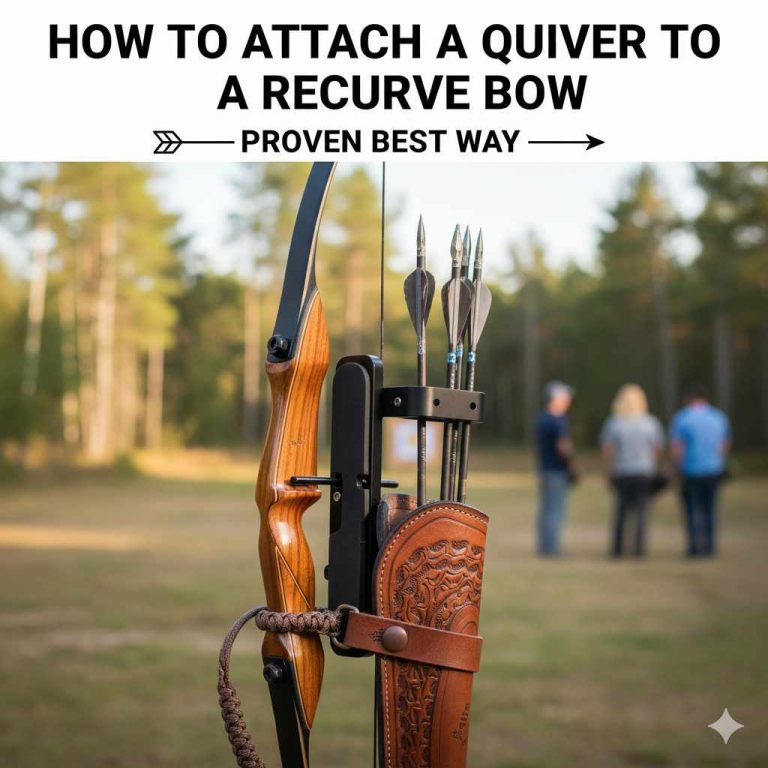
Before we can decide if it’s worth it, let’s get clear on what a hunter quiver is. At its core, a hunter quiver is designed for one primary purpose: to carry arrows safely and quietly while on the move, especially through woods, fields, or other challenging environments. The most common type of hunter quiver is a bow-mounted quiver.
As the name suggests, this quiver attaches directly to the riser (the handle section) of your bow. It typically consists of two main parts:
- The Gripper: A section with flexible, rubber-like slots that firmly grasp the arrow shafts, preventing them from rattling or falling out.
- The Hood: A protective cover at the top that encases the broadheads or field points. The hood is usually lined with foam or a durable material to keep the arrow tips sharp, safe, and silent.
The entire design is focused on efficiency and stealth. By keeping your arrows attached to your bow, they are always within reach for a quick follow-up shot. This is a massive advantage for bowhunters who might only have a split second to react. The compact design also minimizes the chance of snagging on branches or brush as you move through the woods.

Key Features to Look For in Any Good Quiver
Whether you choose a hunter quiver or another style, there are universal features that separate a great quiver from a frustrating one. Understanding these will empower you to make an informed choice. Let’s look at the essentials.
Arrow Capacity and Security
How many arrows do you need to carry? A hunter quiver typically holds between three and six arrows. For most hunting situations, this is more than enough. The most important factor here isn’t just capacity, but security. The gripper system must hold your arrows snugly without damaging the shafts. A good quiver will keep your arrows locked in place even if you’re hiking, climbing a treestand, or accidentally drop your bow.
Material and Durability
Your quiver will face the elements right alongside you. Look for quivers made from high-quality, durable materials like impact-resistant polymers or carbon fiber. These materials are lightweight yet strong enough to withstand bumps and scrapes. They are also weather-resistant, so a little rain won’t be a problem. Avoid flimsy plastic that can become brittle in the cold or warp in the heat.
Noise Reduction
For a hunter, silence is golden. Any unexpected sound can alert game and ruin a hunt. A quality hunter quiver is designed for stealth. This means it has a solid construction that doesn’t rattle, arrow grippers that absorb vibration, and a hood with a soft foam insert that dampens any sound from the broadheads. When you draw an arrow, it should be a smooth, silent motion.
Weight and Balance
Since a bow-mounted quiver adds weight directly to your bow, its design is critical. A well-designed quiver will be lightweight and positioned to minimize its effect on your bow’s balance. Many modern quivers are adjustable, allowing you to mount them closer to the riser to maintain a stable feel. A poorly balanced bow is harder to aim and can lead to fatigue and inaccurate shots.
Ease of Attachment and Detachment
You won’t always want the quiver on your bow. For practice sessions or when you’re in a treestand, you might prefer to remove it. Look for a quiver with a simple, secure, and quiet mounting system. A quick-detach lever or dovetail mount allows you to remove the quiver with one hand without making a lot of noise. The connection should be rock-solid when attached, with no wiggle or play.
Putting The Hunter Quiver to the Test: A Detailed Breakdown
So, how does the typical hunter quiver stack up against our criteria? Let’s dive deep into its performance, looking at the good and the not-so-good.
Design and Build Quality
Most reputable hunter quivers are built to last. Brands use advanced polymers and sometimes even carbon fiber to create a frame that is both light and incredibly tough. The focus is on a streamlined profile that hugs the bow, preventing it from becoming a clumsy appendage. The hood is often designed with a “cut-on-contact” foam that won’t dull your broadheads, and the grippers are usually dual-layered, with one gripper near the top and one near the bottom for maximum arrow security. This thoughtful engineering means your gear is protected and ready when you are.
Performance in the Field: Where It Shines
This is where the hunter quiver earns its name. Imagine walking through thick underbrush. A hip or back quiver could easily snag on a low-hanging branch, spilling your arrows or making a racket. With a bow-mounted quiver, your arrows are protected and move with you and your bow as one unit. When you spot your target, there’s no extra movement required to grab an arrow. It’s right there. This seamless integration of bow and ammunition is the hunter quiver’s greatest strength.
Furthermore, modern designs have come a long way in managing balance. Many models allow you to adjust the quiver’s position forward, backward, up, or down, helping you find the perfect center of gravity for your specific setup. This customization helps counteract the added weight, making your bow feel more stable at full draw.
Performance for the Hobbyist: Mixed Results
If your archery is confined to the backyard or a target range, the benefits of a hunter quiver are less pronounced. At a range, you typically shoot many arrows, and a 5-arrow quiver will need frequent refilling. More importantly, the added weight on the bow, even if well-balanced, can cause fatigue over a long practice session. Many target archers prefer to have their bow as light as possible for maximum stability and precision. In this setting, a simple hip quiver or ground quiver that holds a dozen or more arrows is far more convenient.
Pros and Cons of a Hunter Quiver
To make it even simpler, here’s a quick-glance summary of the advantages and disadvantages.
Pros:
- Unmatched Convenience: Your arrows are always attached to your bow and ready for a quick shot.
- Stealth and Silence: Designed to be quiet, with secure grippers and a protective hood that prevents rattling.
- Compact and Snag-Free: Keeps arrows tucked in tight to the bow, ideal for moving through dense woods or brush.
- Arrow Protection: The hood fully protects sharp broadheads, keeping both the hunter and the blades safe.
- Improved Bow Stability (Potentially): For some shooters, the slight forward weight can act as a mini-stabilizer, helping to steady their aim.
Cons:
- Added Weight: It makes your bow heavier, which can lead to fatigue during long shooting sessions.
- Altered Bow Balance: If not properly designed or adjusted, it can throw off the natural balance of your bow, potentially affecting accuracy.
- Limited Capacity: Most models hold 3-6 arrows, which may not be enough for a long day of target practice.
- Vibration and Torque: A poorly mounted quiver can introduce vibration or torque into the bow upon release, impacting the arrow’s flight.
Comparing Quiver Types: Which is Right for You?
The hunter quiver is just one of several options. Seeing how it compares to other common styles can help clarify which one best fits your needs. Here is a handy table to guide you.
| Quiver Type | Best For | Typical Capacity | Pros | Cons |
|---|---|---|---|---|
| Bow-Mounted (Hunter) Quiver | Bowhunting, 3D Archery, Mobile Archers | 3-6 Arrows | Fast arrow access, quiet, compact, protects broadheads. | Adds weight to the bow, can affect balance, limited capacity. |
| Hip Quiver | Target Archery, Backyard Practice, Competitions | 6-20+ Arrows | High capacity, doesn’t affect bow weight/balance, easy access. | Can be noisy, arrows can snag on brush, can get in the way. |
| Back Quiver | Traditional Archery, Reenactments, Roving | 12-24+ Arrows | Very high capacity, traditional look and feel, keeps hips clear. | Difficult to retrieve arrows silently, arrows can fall out, can be cumbersome. |
| Ground Quiver/Bow Stand | Stationary Target Practice, Blind Hunting | 6-12+ Arrows | Zero weight on bow or body, holds bow and arrows, very stable. | Completely immobile, only useful in a fixed location. |
How to Choose the Right Quiver for You
The perfect quiver is a personal choice. It’s not about finding the “best” quiver, but the best one for your specific situation. Follow these simple steps to find your ideal match.
Step 1: Define Your Primary Archery Activity
Be honest about how you spend most of your time shooting.
- Are you a hunter? If yes, a bow-mounted hunter quiver is almost certainly your best bet for its stealth and convenience.
- Are you a target shooter? If you spend your time on a range or in your backyard, a hip or ground quiver will likely serve you better by keeping your bow light and holding more arrows.
- Do you do a bit of everything? Consider a hunter quiver with a high-quality quick-detach system. You can keep it on for 3D courses or walking in the woods, and pop it off for stationary practice.
Step 2: Consider Your Bow and Setup
The type of bow you shoot matters. Most modern compound and some recurve bows come pre-drilled with standard mounting holes for a bow quiver. If you shoot a traditional longbow or recurve without these bushings, a bow-mounted quiver might not be an option without special adapters. In that case, a traditional back or hip quiver would be a more natural fit.
Step 3: Set Your Budget
Quivers can range from $20 for a basic model to over $200 for a premium carbon fiber one. You don’t need to break the bank. A mid-range quiver from a reputable brand will offer excellent durability, noise reduction, and a secure grip. Focus on finding the best features for your needs within a budget you’re comfortable with.
Step 4: Read Reviews and Ask for Advice
Before you buy, see what other archers are saying. Look for reviews that mention your bow model or shooting style. Don’t be afraid to visit a local pro shop and ask for recommendations. They can let you handle different models and even mount them on a bow so you can feel the difference in weight and balance. For more community-driven advice, resources like the ArcheryTalk forums are filled with experienced archers happy to share their knowledge.

Frequently Asked Questions (FAQ)
Can I use a hunter quiver for target practice?
Absolutely! You can use any quiver for any type of archery. However, a hunter quiver’s low capacity and added weight on the bow can become inconvenient for long practice sessions where you shoot dozens of arrows. Many archers detach their hunter quiver for practice.
How do I attach a hunter quiver to my bow?
Most hunter quivers attach to the side of the bow’s riser using two screws that fit into pre-drilled accessory holes. It’s a simple process that usually only requires an Allen wrench. Just line up the mounting bracket with the holes on your riser and tighten the screws securely.
Does a bow-mounted quiver affect my accuracy?
It can, but a well-designed, properly mounted quiver should have a minimal effect. The added weight can change how the bow feels and balances. It’s important to practice shooting with your quiver on (and full of arrows) to get used to the feel and make any necessary sight adjustments.
How many arrows should a quiver hold?
For hunting, 4-5 arrows are generally sufficient. For target practice, you may want a quiver that holds 12 or more to minimize trips to the target. It all depends on your activity. A hunter quiver prioritizes being compact over having a high capacity.
Are expensive quivers really that much better?
Often, yes. More expensive quivers typically use lighter and stronger materials (like carbon fiber), have better adjustment options for balance, feature quieter designs, and include more secure arrow grippers. While a budget quiver will hold arrows, a premium one enhances the shooting experience through better design and performance.
What’s the difference between a one-piece and a two-piece quiver?
A one-piece quiver is a single unit that attaches to the bow via one bracket. It’s the most common type and is easy to detach. A two-piece quiver has a separate hood and gripper that each mount directly to the bow’s riser or limbs. Two-piece quivers are generally more secure and offer a more streamlined fit, but they are not quickly detachable.
How do I stop my arrows from rattling in the quiver?
If your arrows are rattling, first check that they are pushed firmly into the gripper. Ensure the gripper is designed for your arrow shaft diameter (standard vs. micro-diameter). Some quivers have adjustable grippers. Also, make sure the hood foam is making good contact with the arrow tips.
The Final Verdict
So, is the hunter quiver worth it? The answer is a resounding “yes,” but with an important condition: it has to be the right tool for your job. If you are a bowhunter, a 3D archer, or anyone who needs to carry their bow and arrows through the great outdoors, a high-quality hunter quiver isn’t just worth it—it’s an essential piece of equipment. Its ability to provide silent, secure, and immediate access to your arrows is unmatched in those scenarios.
However, if your archery passion lives on the flat, predictable ground of a target range or your backyard, the hunter quiver’s advantages become less critical. The added weight and limited capacity can become drawbacks. In that case, your money and your shooting arm would be better served by a simple hip or ground quiver.
Ultimately, the best gear is the gear that makes you want to shoot more. Think about where and how you shoot, consider the pros and cons we’ve laid out, and choose the quiver that best supports your personal archery journey. Happy shooting!