How Weather Affects Outdoor Archery Competitions
If wind holds at about 8–10 mph or more, set the sight around the average drift and check for any temperature-driven sight shift before scoring starts. Ignore that, and missed calls on drift, pin gaps, grip pressure, and equipment behavior can cost points fast. This guide turns wind, heat, cold, rain, humidity, and glare forecasts into specific competition-day checks, adjustments, and no-go calls.
Weather response table
| Condition | Likely shot failure | Check before first end | Adjustment priority | Do not change on the line |
|---|---|---|---|---|
| Wind | Crosswind drift, bow-arm instability, late sight movement | Flag direction at the shooting line, target line, and half distance; confirm whether gusts are steady or switching | Highest. Recheck sight mark, anchor repeatability, and float control before changing anything else | Arrow length, gross brace-height changes, or a new release timing plan |
| Cold | Stiffer fingers and limbs, tighter draw cycle, altered anchor feel | Check hand warmth, sleeve clearance, and whether layers touch string path or forearm | High. Warm up longer, then verify hold and clicker or release feel | Tab thickness, glove choice, or release setting you have not practiced with |
| Rain | Wet strings, damp gear, reduced consistency, grip slip | Confirm string cover, towel access, limb and sight protection, and nocking point dryness | High if rain is steady. Protect gear first, then keep the shot process simple | Fresh equipment changes during scoring ends |
| Humidity | Water absorption, slower drying, subtle feel change in string and tab | Inspect string, tab, glove, and arrows for moisture retention | Moderate. Expect consistency issues more than dramatic aim change | Over-correcting sight marks for humidity alone |
| Glare | Washed-out pin, poor target edge read, inconsistent gap estimate | Check sun angle, hat brim, peep or sight hood, and target face contrast | High for sight picture. Shade the eye line before touching tune | Changing draw weight or moving sight housing far from a known setup |
| Temperature swings | Shifted sight marks, different limb feel, changing arrow speed | Compare warm-up conditions with line conditions and note any speed change | Medium to high. Confirm marks again when the temperature changes quickly | Major tune changes between short weather shifts |
Recurve and compound notes
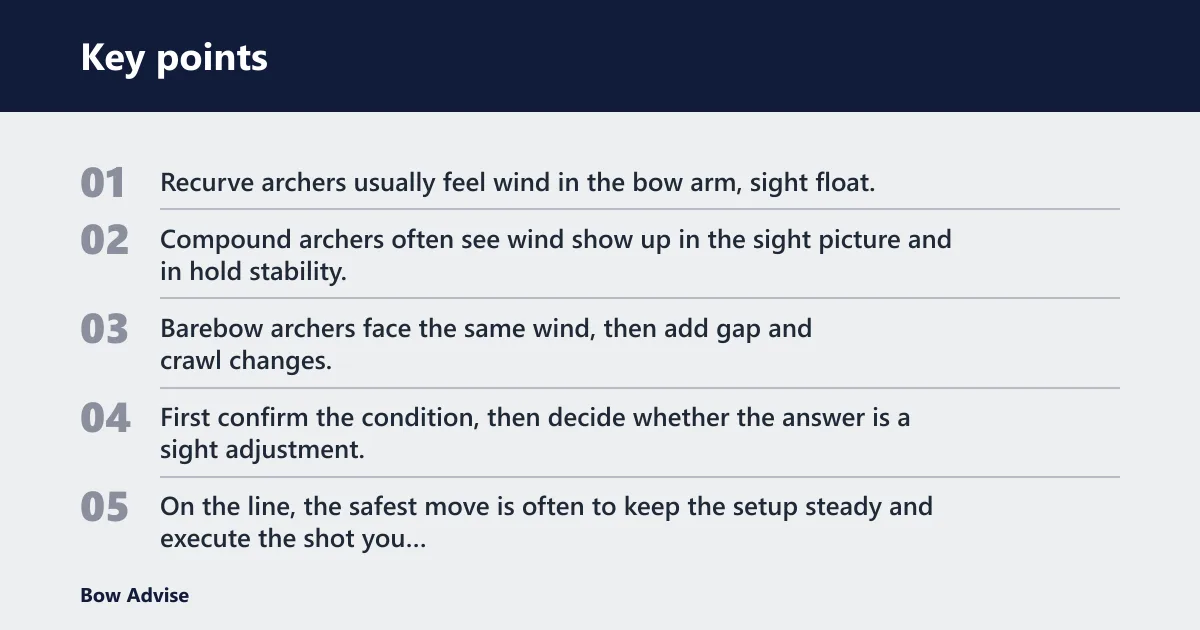
Recurve archers usually feel wind in the bow arm, sight float, and finger release more directly. Compound archers often see wind show up in the sight picture and in hold stability, but a release aid can hide some hand movement until the shot breaks. Barebow archers face the same wind, then add gap and crawl changes.
Do not change every setting at once. First confirm the condition, then decide whether the answer is a sight adjustment, a hold correction, or a process change. On the line, the safest move is often to keep the setup steady and execute the shot you already know.
Why wind changes scores first
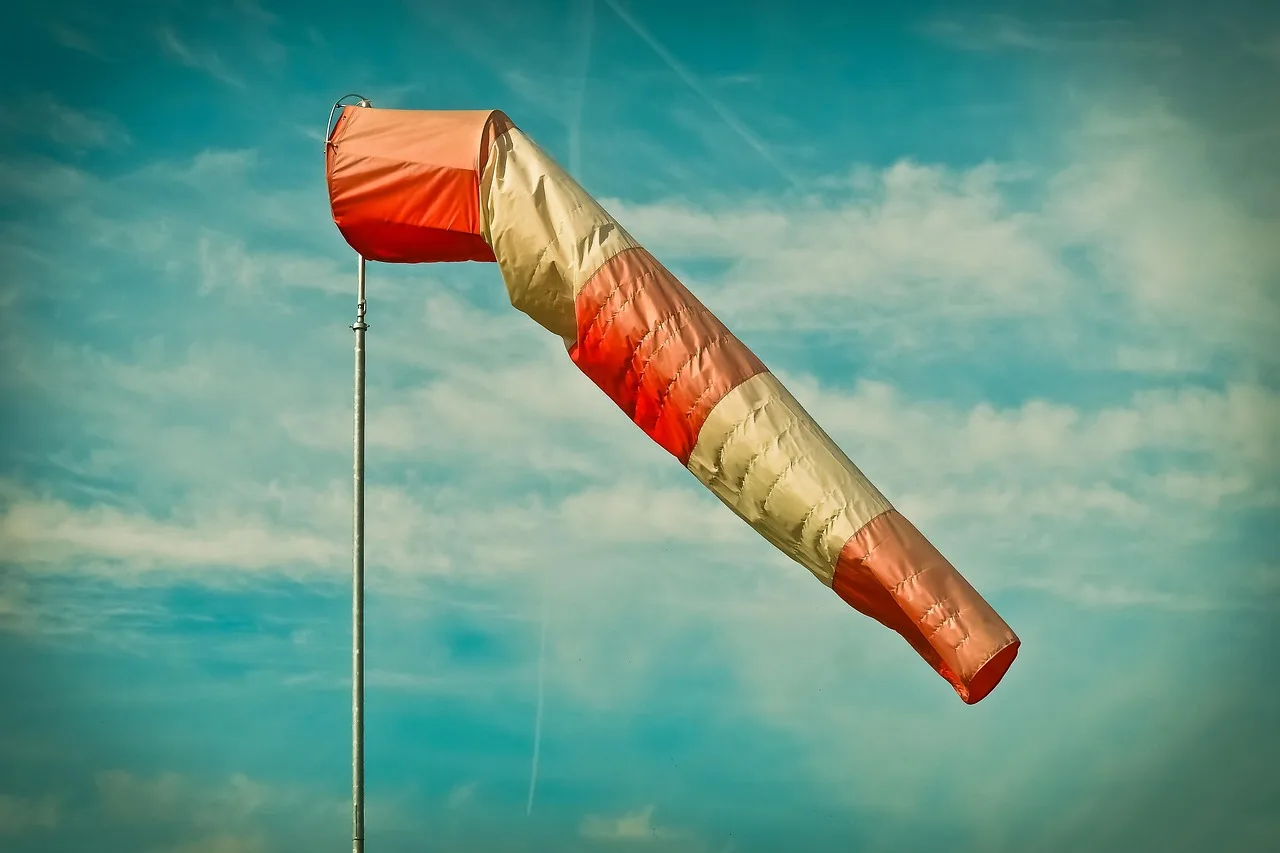
Wind matters most outdoors because it pushes the bow arm and moves arrows sideways. At longer distances, even a modest crosswind can turn a centered shot into a scoring-line arrow. That is why World Archery outdoor qualification changes so much from indoor work, where the standard round is 60 arrows at 18 metres.
Crosswind drift and longer distances
A crosswind has more time to act on the arrow the farther the target sits away. That matters in the standard World Archery outdoor qualification round, which is commonly described as using 72 arrows at 70 metres for recurve and 50 metres for compound and barebow. Recurve and barebow also typically shoot on a 122 cm face, while compound uses an 80 cm face.
At 70 metres, the same drift that might only move an arrow a little at close range can turn into a clean miss on the wrong side of the line. Compound archers often get a narrower sight picture at 50 metres because of the smaller face, but the target face also gives less margin for a soft call on wind drift.
Bow-arm movement, aim hold, and sight picture
Wind does more than move arrows. It can make the bow arm twitch, shift shoulder tension, and widen the sight float. A gusty line often shows up as a changing left-right hold before the arrow leaves the bow. That is why wind correction is as much about body control as it is about sight moves.
For recurve, the biggest issue is often that the sight picture seems to chase the wind. For compound, the pin may look steady for a moment, then the bow reacts to a gust and the release timing breaks down. In both cases, the first fix is a repeatable shot rhythm.
What to adjust first
Start with the sight mark only after the wind pattern is clear. If the wind is steady, hold for the average drift and avoid chasing gust spikes. If the wind switches direction, keep the same mark and focus on clean execution until conditions settle. Changing the sight for every gust usually creates more missed arrows than it solves.
A common first-timer mistake is moving the sight three clicks after one left miss, then another two clicks after the next right miss. The misses were from switching wind, not from a failed zero. Let the condition define the adjustment.
Suppose the line is reading a left-to-right crosswind at about 10 mph, but the flags near the target flick harder than the flags by the shooting line. That is a warning to hold the sight on the average condition, not the strongest gust. The arrow should be adjusted for the pattern that lasts longest.
How does cold weather change the shot?
Cold weather changes the shot by stiffening fingers and limbs, slowing the warm-up feel, and making the anchor less repeatable if clothing gets in the way. The problem is often a clothing and form issue, not only an equipment issue. That matters when the bow feels different before the first scoring arrow.
Muscle stiffness and draw cycle
Cold makes fingers and limbs stiffer. The draw cycle can feel heavier, the clicker or back tension can feel less clean, and the shot may break late. That can change where the sight settles and how the arrow leaves the string. Some archers also see small sight-mark shifts because the full system feels different.
For compound, cold hands can reduce trigger control on a release aid. For recurve, cold fingers can make tab pressure uneven and disturb the loose. In both styles, the answer is not a dramatic setup change. It is a longer warm-up, a stable grip, and a shot cycle that feels familiar.
Layers, sleeve clearance, and anchor consistency
Clothing layers can change draw length and sleeve clearance. A thicker jacket may press against the string arm sleeve or alter the string path near the forearm. Extra bulk at the shoulder can also shift anchor height a little, which is enough to matter at outdoor distance.
Check the exact layers that will be worn on the line, not just the warm-up clothes. Cold weather archery problems often begin when the archer changes one layer after practice and then notices a different anchor or a brush on the string arm. If the sleeve touches the string path, the shot process needs attention before scoring starts.
Finger tab and release aid feel in low temperatures
Gloves change finger feel, and cold hands reduce control. A tab that feels normal in practice can feel too thick when the hands are cold, and a release aid can feel sluggish if the hand is numb. Use the exact setup planned for competition, and practice with it before event day.
Do not switch from bare fingers to a glove, or from one release aid configuration to another, on tournament morning unless that setup has already been trained. The hands need to trust the trigger, tab, and anchor under cold conditions before the first end.
What rain, humidity, and glare do to equipment
Rain and humidity can affect archery accuracy by changing how strings, tabs, grips, and arrow shafts feel in the hand. Water absorption and slower drying can reduce consistency. Sun glare can wash out a sight pin or make the target face harder to read, especially when the light angle changes between ends.
Wet strings, damp limbs, and grip changes
Rain soaks strings and can make the bow feel dead or sticky. Damp gear dries slowly, and that slower dry time keeps the setup inconsistent from arrow to arrow. A wet grip can also make the bow hand squeeze harder, which adds torque and changes the arrow path.
Humidity is less dramatic than rain, but it still matters because damp materials do not behave the same as dry ones. A tab that has absorbed moisture can change finger release feel. A soaked arm guard or wet sleeve can also alter clearance if it starts to cling near the string path.
Sun glare and target glare
Sun can wash out a sight pin. It can also flatten the target face so the aiming point looks fuzzy. The fix is usually to manage the line of sight first: adjust hat brim angle, use the sight hood or peep in a way that keeps the eye line clean, and verify that the target face is visible before changing the bow.
Glare is a sight-picture problem before it is a tune problem. If the pin disappears in bright light, the archer may chase the bow or move the anchor when the issue is really a visibility issue. Shade the eye line first, then confirm the mark.
Do sight marks need changing outdoors?
Yes. Outdoor sight marks need to be rechecked because the distances are longer than indoor, and the weather changes the arrow’s speed and behavior. Many archers use a new sight tape or re-zero the sight outdoors before the first scoring end. Weather-specific marks matter more when wind and temperature swing during the day.
Why outdoor marks differ from indoor marks
Indoor setup often carries no use outdoors without adjustment. The standard indoor round is commonly described as 60 arrows at 18 metres, while outdoor qualification stretches to 70 metres for recurve and 50 metres for compound and barebow. A sight that worked indoors will rarely land the same way at those outdoor marks.
That is why sight marks and sight tape should be treated as outdoor tools, not as a carryover from the indoor season. If the mark has only been confirmed at short range, it is not ready for a scoring round with wind and heat in play.
How weather and temperature move marks
Temperature can slightly change arrow speed, and that shifts the sight mark. Cold air, warm air, and changes in limb feel can all move the pin a little. The point is not to guess the exact effect in advance; the point is to recheck the mark on the same day and confirm the current condition.
Weather-specific marks are useful when the morning practice round is calm but the afternoon scoring round is windy or hotter. If the first end begins after a big temperature swing, the sight tape should be checked again before the scorecard matters.
What to verify before the first end
- Confirm the current wind direction and strength at the line and the target.
- Check whether the warm-up sight mark still matches the scoring distance.
- Verify pin visibility in the current light.
- Inspect string condition, tab or release feel, and clothing clearance.
- Leave tune alone unless the arrow impact pattern shows a repeatable change.
What should you change before match day?
Before match day, the best changes are the ones that make the setup steadier outdoors: arrow choice, tune confirmation, and clothing or release setup. Many archers switch to slimmer outdoor shafts because wind pushes them around less. That choice matters most when the forecast points to side wind and longer distance.
Arrow spine and shaft choice for outdoor wind
Many archers switch from indoor shafts to slimmer outdoor shafts because wind pushes them around less. World Archery target rules cap shaft diameter at 9.3 mm, so the outdoor choice still has a limit. The goal is not just smaller arrows; it is arrows that match distance and conditions without creating a tune problem.
Arrow spine should be matched before the first tournament, not guessed on event morning. A shaft that is too stiff or too weak can show up as poor forgiveness in wind, but the fix has to begin in practice and tuning. Outdoor season is where shaft choice starts to matter more than indoor comfort.
Bow tune checks before the first tournament
Check tune before the season starts, then confirm it again outdoors. The bow should group cleanly at the outdoor distance, with the sight mark and shaft behavior making sense together. If the pattern changes in wind, confirm whether the problem is drift, torque, or an actual tune issue before moving rest settings or limb bolts.
Do not use match day for major equipment experiments. A pre-tournament tune check should settle the arrow flight, then the competition day should only require small sight or process changes. That approach keeps the archer from chasing problems that are really weather effects.
Clothing, gloves, tabs, and release aid setup
Cold weather demands the exact clothing layers planned for competition. That includes sleeves, jackets, gloves, and any arm protection that can affect string clearance. The same is true for a release aid or finger tab: the setup used in practice should be the one used in scoring.
If the glove changes trigger feel, or the tab changes anchor depth, the shot can drift even when the bow is tuned correctly. The safer choice is to verify the full clothing-and-release package during practice in the same forecasted conditions.
How do archers compete safely in extreme heat or wind?
In extreme heat or wind, the first safety step is to slow down and confirm whether the line is still shootable. Heat can drain control and wind can move equipment, arrows, and people. If the event allows a pause, use it to check equipment stability, hydration, and range commands before resuming.
Extreme heat can make the body less steady and increase fatigue, which hurts shot timing. Strong wind can make flags, stands, and loose gear unsafe. If the condition is changing fast enough to affect safety, the priority shifts from score to control and range discipline.
Competition-day order of operations
- Check line safety and target stability.
- Confirm whether the forecast matches the current condition.
- Set or verify the sight mark for the day’s distance.
- Check clothing, tab or release, and string condition.
- Hold the shot process steady unless a repeatable pattern forces a change.
That order helps separate weather effects from setup mistakes. If the first arrow lands out in the wind, the answer may be to hold the same mark and clean up the execution rather than to rebuild the bow.
How do archers practice for variable weather before a tournament?
Practice should match the forecast as closely as possible. The most useful sessions are the ones that train sight adjustment, anchor consistency, and hold control in changing wind, temperature, or light. A calm indoor habit does not fully prepare an archer for the outdoor line.
Practice the forecast, not the ideal day
Use the same clothing layers, tab, release aid, and shafts that will be used in competition. If wind is expected, practice holding for an average drift instead of chasing each gust. If cold is likely, start practice with the same layers and gloves planned for the event.
Picture a recurve archer moving from a warm practice lane to a cold outdoor field, then noticing the anchor sits slightly higher because the jacket collar touches the chin. That small change can move the arrow enough to matter at 70 metres. The fix is to discover it in practice, not on the score line.
Build a simple weather checklist
- Wind direction at line and target
- Current sight mark or tape
- Clothing clearance at full draw
- String, tab, or release dryness
- Pin visibility and target contrast
- Arrow and bow setup already confirmed outdoors
This checklist is short on purpose. Competition day does not reward a long rethink. It rewards a clear read of the forecast, then a small set of changes and a steady shot process.
Frequently asked questions
How does wind affect outdoor archery competitions?
Wind can push the bow arm and move arrows sideways, which makes it the biggest outdoor accuracy problem. Crosswind drift shows up more at longer distances, so recurve at 70 metres and compound or barebow at 50 metres both need wind-aware sighting and hold control before the first scoring end.
What weather conditions make archery scores drop the most?
Wind usually hurts scores fastest because it changes both arrow flight and bow control. Cold can also cause a drop if it stiffens the body or changes clothing fit, while rain, humidity, and glare can add equipment and sight-picture problems. The worst score loss usually comes from switching tactics too often.
How should I adjust my sight marks for outdoor archery?
Recheck sight marks outdoors at the actual competition distance, then confirm them in the current weather. Temperature, wind, and light can move the mark enough to matter. Do not copy indoor marks to an outdoor line without a new zero or a fresh sight tape.
Does cold weather change arrow speed in competition?
Cold can slightly change arrow speed because it affects string feel, limb feel, and body tension. The effect is usually seen first in the sight mark rather than as a dramatic change in the bow. A quick outdoor recheck before scoring is safer than guessing from indoor settings.
What should you wear for an outdoor archery tournament in cold weather?
Wear the exact layers planned for the line, then verify that sleeves, collars, and gloves do not touch the string path or alter anchor. Cold weather issues often come from clothing and form, not only from bow setup. The release or tab must still feel normal with those layers on.
Can rain or humidity affect archery accuracy?
Yes. Rain can wet strings, grips, and tabs, while humidity can change how gear dries and how consistent it feels shot to shot. The main response is protection and drying, not constant equipment changes. Keep the shot process simple and protect the gear before the first end.
Should I change arrows or bow setup for outdoor season?
Often yes, especially if the indoor setup was built for 18 metres. Many archers move to slimmer outdoor shafts because wind pushes them around less, but the arrows still need to match the bow and distance. Confirm spine and tune before the first tournament, not during it.
What should I check on my bow before an outdoor competition?
Check the sight mark, string condition, arrow choice, and whether clothing or gloves alter the shot. Also confirm that the bow tune still groups at outdoor distance. The best pre-match check is one that proves the setup works in the same conditions expected for scoring.
How do I practice for variable weather before a tournament?
Practice with the same clothing, tab or release, arrows, and sight setup that will be used on match day. Then add the likely weather variable: wind, cold, or bright light. The goal is to learn which change is real and which one can be ignored when the score starts.