CBE Vertex Sight Review: Is It Worth It?
The CBE Vertex family is worth it for serious target and 3D compound archers who want a stable micro-adjustable sight, but the best value usually sits in the mid-tier setup with a long bar and a clean single-pin configuration. Pick the wrong version and you lose stability, sight marks, and time at the tuning bench. This guide compares the Vertex versions for target, field, and 3D use and says which model fits each format best.
This guide is part of our Archery competitions: rules, formats and gear series.
Verdict
Buy the Vertex Target if pure target shooting is the goal. Buy the Vertex Elevate if you want the top target option with finer adjustment control and a newer bar layout. Skip the family if you want a simple, low-cost sight for casual shooting, because the Vertex line pays off only when repeatable adjustment and competition setup matter.
Specs at a glance
| Item | Vertex Target | Vertex model | Vertex 3D |
|---|---|---|---|
| Extension bar | Dovetailed bar extendable out to 8 inches | 6-inch carbon fiber extension bar | Detachable scope mount |
| Elevation travel | 3 inches | 0.002-inch per click windage and vertical adjustments | 2 inches of vertical travel adjustment |
| Axis adjustment | 1st, 2nd, and 3rd axis | Target sight configuration | Rapid travel focus |
| Sight scales and tapes | 15 laser engraved sight scales and 15 self adhesive sight tapes | Interchangeable sight scales | Detachable scope mount |
| Scope housing options | 1 3/8-inch or 1 5/8-inch diameters | 1 3/8-inch or 1 5/8-inch diameters | 1 3/8-inch or 1 5/8-inch diameters |
| Lenses | 2x, 3x, 4x, 5x, 6x, and 8x Acuate lenses | 2x, 3x, 4x, 5x, 6x, and 8x Acuate lenses | 2x, 3x, 4x, 5x, 6x, and 8x Acuate lenses |
| Pin options | Rhino pin sizes 0.010, 0.019, and 0.029 | Rhino pin sizes 0.010, 0.019, and 0.029 | Rhino pin sizes 0.010, 0.019, and 0.029 |
That table shows why the family is easy to misread. The Vertex Target is the clearest fit for fixed-bar target use, the Elevate has more premium parts, and the 3D model is built around faster travel and a detachable scope mount. Those differences matter more than the logo on the side.
Who it
The CBE Vertex is for compound archers who want repeatable sight movement, precise axis control, and a setup that can hold up through tournament tuning. It is a strong fit for target archers who need a long bar, 3D shooters who want clean adjustment, and field archers who care about steady alignment on steep shots.
It is less attractive for the archer who wants the cheapest usable sight and does not mind looser adjustment steps or a less modular setup. A common first-timer mistake is buying a target sight for every discipline, then discovering the bar length, travel, and setup style fit one format better than the others.
Pros
- Strong competition-focused adjustment range.
- 1st, 2nd, and 3rd axis control on the Vertex Target.
- Multiple scope and lens combinations.
- Clear model split for target and 3D use.
Cons
- More setup work than a basic sight.
- Higher buy-in makes the wrong model a costly mistake.
- At least one fit issue has been reported with a mounting hole needing modification.
What works
The strongest part of the Vertex family is adjustment control. The Vertex Target uses a dovetailed extension bar extendable out to 8 inches, and that length helps balance the sight picture on longer setups. The Target sight also offers 1st, 2nd, and 3rd axis adjustments, which matter when uphill and downhill shots shift the bow’s apparent level.
That axis control helps on steep field lanes and mountain shots because a level bubble alone is not enough. Suppose a shooter is on a downhill 3D peg with a long distance mark. If the sight is not properly axed, the pin can look true while the arrow drifts off line as the bow angle changes.
The Elevate version pushes the top side of the family further. It has a 6-inch carbon fiber extension bar and zero backlash 0.002-inch per click windage and vertical adjustments. It also includes a rapid slide elevation button, a detachable scope tube mount, and interchangeable sight scales.
Scope choices are broad enough to suit different aiming preferences. CBE scope housings are available in 1 3/8-inch and 1 5/8-inch diameters, with vented or non-vented variants. Acuate lenses come in 2x, 3x, 4x, 5x, 6x, and 8x powers, and the line is made by Feather Vision for archery scope compatibility. Rhino pin options are listed at 0.010, 0.019, and 0.029.
The sight tape system is also practical for competitive use. The Vertex Target includes 15 laser engraved sight scales and 15 self adhesive sight tapes. A sight tape gauge tool is used to select the sight tape number, and it typically requires 30-yard and 60-yard marks to set the tape correctly. That setup matters because a sight tape is only useful when the yardage marks are consistent and readable.
What works best by format
- Target round: Vertex Target or Vertex model, depending on how much adjustment refinement matters.
- 3D and field: Vertex 3D if quick travel matters more than a long target bar.
- Mixed use: Vertex Target if one sight must cover more than one competition style.
What does not?
The main drawback is setup friction. The Vertex line is not hard to understand once it is installed, but it is not the kind of sight that forgives rushed setup. Sight tape selection, scale alignment, and axis correction all take time, and that time is part of the purchase price.
There is also a real fit complaint tied to published review material: the mounting hole needed to be milled larger. That kind of issue does not appear on every setup, but it is the sort of problem that matters to a buyer expecting a clean bolt-on fit.
Value is another point to weigh carefully. The build quality was scored at 93%, and scope quality at 85%, which supports the premium positioning. Even so, the family makes more sense for archers who will use the adjustment range, not for someone who simply wants a sight that works out of the box with minimal tuning.
Say your tournament setup needs a 10-ring hold that repeats on every lane. The Vertex can help, but only if the tape, scope, and axis are tuned correctly. If the same archer wants the fastest possible install, a less adjustable sight may feel easier on day one.
Buyer decision matrix
| Model | Travel | Adjustability | Portability | Setup complexity | Best-fit competition use case | Buy it or skip it |
|---|---|---|---|---|---|---|
| Vertex Target | Longer bar and 3 inches of elevation travel | 1st, 2nd, and 3rd axis plus tape-based setup | Less compact than a rapid-travel build | Moderate to high | Target archery and mixed indoor/outdoor tournament use | Buy it if target shooting is the priority; skip it if compact travel is more important |
| Vertex model | 6-inch carbon fiber bar with fine click adjustments | 0.002-inch per click windage and elevation, rapid slide elevation button | Light and tidy for a premium target build | High | Serious target shooters who want the cleanest adjustment feel | Buy it for premium target work; skip it if the budget is tight or the extra precision will not be used |
| Vertex 3D | 2 inches of vertical travel adjustment | Detachable scope mount and quick travel layout | Most portable of the three | Lower than the target models | 3D and field courses where speed and portability matter | Buy it for 3D and field use; skip it if you need a long target sight picture |
How the Vertex compares
Compared with cheaper competition sights, the Vertex line buys cleaner adjustment, better modularity, and a more competition-ready feel. Cheaper sights often give enough adjustment to get on paper, but they usually do not match the same level of bar options, axis control, or scope flexibility.
The real tradeoff is value versus simplicity. A budget sight may be enough for local shooting, while the Vertex makes more sense when repeatability and setup precision matter across multiple events. That is why the right question is not whether the Vertex is good, but whether the shooter needs the extra control enough to justify the extra setup work.
For long-distance shooting, the Vertex is accurate enough in the sense that its adjustment system supports precise yardage indexing and repeatable aiming. That does not make the bow itself more accurate. It does make the sight less likely to be the limiting factor when the shooter has already built a clean tune.
Alternatives
TOPOINT ARCHERY 3 Pin Bow Sight
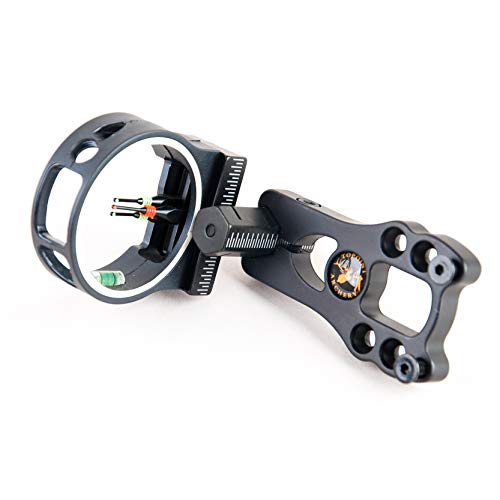
This is the lower-cost option for archers who want a basic multi-pin sight without committing to a premium competition setup. It fits the budget side of the market, but it lacks the Vertex family’s bar travel, axis control, and modular scope approach. The main drawback is simple: it is not a true competition sight replacement for shooters who need exact repeatability at long range.
SAS 3-Pin.029 fiber Optics bow Sight

This is another budget-minded choice with a straightforward three-pin layout. It can work for casual compound use, but it does not compete with the Vertex line on adjustability or setup refinement. Buyers should expect less precision and fewer competition-focused features, which is why it makes more sense for entry-level use than for serious target or 3D tuning.
Should you buy it?
Buy the Vertex Target if you shoot target rounds, want the 1st, 2nd, and 3rd axis system, and expect to keep one sight through a lot of tuning. Buy the Vertex Elevate if you want the strongest refinement in the family and are willing to pay for the premium adjustment feel. Buy the Vertex 3D if portability and faster travel matter more than a long target bar.
Skip the family if your priority is a low-cost, no-fuss sight for casual shooting. The Vertex line pays off when the bow is being tuned, the sight tape is being indexed correctly, and the sight picture needs to stay consistent across difficult lanes. That is where the family earns its price.
Frequently asked questions
Is the CBE Vertex sight worth it for target archery?
Yes, the Vertex is worth it for target archery if the shooter values repeatable micro-adjustment, axis setup, and a long sight bar. The Target and Elevate versions make the most sense here. Buyers who only want a simple sight may not use enough of the system to justify the extra complexity.
What makes the CBE Vertex different from cheaper competition sights?
The Vertex family stands out through bar length, axis control, scope options, and more refined adjustment hardware. Cheaper sights often cover the basics, but they usually do not offer the same mix of 1st, 2nd, and 3rd axis adjustment, modular scopes, and competition-focused tape setup.
Does the CBE Vertex have 1st, 2nd and 3rd axis adjustment?
The Vertex Target does. That matters for uphill and downhill shooting because bow angle can change the sight picture even when the bubble looks centered. A properly axed sight reduces one more source of error when the shot angle is steep or the lane is uneven.
How far does the CBE Vertex extension bar adjust?
The Vertex Target uses a dovetailed extension bar that extends out to 8 inches. The Elevate uses a 6-inch carbon fiber extension bar, while the Vertex 3D uses a detachable scope mount. Longer extension gives more fit and balance options, especially on target rigs.
What comes in the box with the CBE Vertex Target Sight?
The sourced details confirm the Target sight includes 15 laser engraved sight scales and 15 self adhesive sight tapes. It also uses the sight tape gauge tool for setup, which requires 30-yard and 60-yard marks. Other contents are not stated here unless the product listing confirms them.
Is the CBE Vertex Elevate better than the original Vertex?
For archers who want the most refined target setup, the Elevate is the stronger option. Its 6-inch carbon fiber extension bar, 0.002-inch per click adjustments, rapid slide elevation button, detachable scope tube mount, and interchangeable sight scales make it the premium choice in the family.
What scope and lens options work with the CBE Vertex?
CBE scope housings are available in 1 3/8-inch and 1 5/8-inch diameters, with vented or non-vented variants. Acuate lenses are offered in 2x, 3x, 4x, 5x, 6x, and 8x powers, and Rhino pin sizes are listed at 0.010, 0.019, and 0.029.
Are CBE Vertex sights accurate enough for long-distance shooting?
Yes, provided the sight is installed and tuned correctly. The Vertex family has the adjustment range and axis control needed for long-distance work in competition settings. Accuracy at distance still depends on bow tune, archer form, and proper sight tape setup, not on the sight alone.
What problems do buyers mention with the CBE Vertex sight?
The main fit issue tied to published review material is a mounting hole that needed to be milled larger. That is not the same as a design flaw on every unit, but it is a real buyer concern. Setup time and tape tuning are the other common friction points for a system this adjustable.
Is the CBE Vertex easy to install and tune?
It is manageable, but not quick in the way a basic sight is quick. The Vertex needs bar setup, sight tape selection, and axis correction before it is competition-ready. Once installed, the adjustments are straightforward, but the first setup usually takes more patience than a simple recreational sight.