Archery Competition Rules: Whistles, Divisions & Scoring
Archery competition rules focus on safety, fairness, and scoring. Key rules involve following whistle commands for shooting and retrieving arrows, staying behind the shooting line until signaled, and respecting equipment regulations for your division. Scoring is based on where your arrow hits the target, with higher points for shots closer to the center.
Have you ever watched archery in the Olympics and wondered how it all works? Stepping onto the competition field for the first time can feel a little intimidating. There are rules about when to shoot, how to score, and even what kind of bow you can use. It might seem like a lot to remember, but don’t worry!
Most archery rules are simple and designed to keep everyone safe while having a great time. Think of them as a friendly guide to ensure the competition is fair and fun for every archer. In this guide, I’ll walk you through the essential rules in a clear, step-by-step way. We’ll break it all down so you can walk into your first tournament with confidence.
Understanding the Basics: Core Rules for Every Archer
Before we dive into specific types of competitions, let’s cover the foundational rules — for a broader look at how formats, scoring, and rounds fit together, see our overview of how archery competitions work. These principles apply to almost every archery event you’ll encounter. If you’re specifically wondering how many arrows you’ll shoot, see our breakdown of arrows per round by format. They are all about safety, fairness, and good sportsmanship.
Safety First: The Golden Rule of Archery
Safety is the number one priority in archery. Every rule is built around this core idea. Always remember:
- Only Nock an Arrow on the Shooting Line: Never place an arrow on your bowstring unless you are on the designated shooting line and have been given the signal to shoot.
- Always Point Your Bow Downrange: Treat your bow like it’s always loaded. Never point it at another person, even without an arrow.
- Never “Dry Fire” Your Bow: A dry fire is when you release the bowstring without an arrow. This can seriously damage your bow and even cause it to break, which is dangerous for you and those around you.
- Wait for the Signal to Retrieve Arrows: Never cross the shooting line to get your arrows until the official “all clear” signal is given. Everyone must finish shooting first.

Equipment Regulations: Is Your Bow Competition-Ready?
Each archery competition has different divisions based on the type of bow you use. This keeps the competition fair. For example, an archer with a simple longbow won’t be competing against someone with a high-tech compound bow full of gadgets.
Common divisions include:
- Recurve (Olympic Style): This is the style you see in the Olympics. These bows have sights, stabilizers, and clickers but no magnifying lenses or release aids.
- Compound: These bows use a system of cables and pulleys (cams) to make holding the bow at full draw easier. They allow for sights with magnification and mechanical release aids.
- Barebow: This is a form of recurve archery without sights, clickers, or stabilizers longer than what is needed to attach a weight. Archers aim by looking down the arrow.
- Traditional (Longbow): This division is for classic wooden longbows. No sights or other accessories are allowed, offering a pure, traditional experience.
Before a competition, your equipment will usually be inspected to ensure it meets the rules for your chosen division. You can find detailed equipment rules on the World Archery website, which sets the international standard.
Best Pick for Any Division
Ringsun Leather Archery Finger Tab
Genuine safety gear allowed in every division this guide covers, from recurve to barebow to traditional.
- Best for: protecting your fingers during repeated ends at a tournament
- Why we picked it: legal in all competition divisions, unlike gear that’s division-restricted
- Main drawback: takes a session or two to get used to the feel
Compare more options
 Option 1 SAS Traditional Leather Arm Guard
| 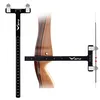 Option 2 SOPOGER Archery Bow Square T-Shape
|  Option 3 KESHES Recurve Bow Stringer Tool
|
As an Amazon Associate we earn from qualifying purchases.
The Shooting Line: Commands and Etiquette
The shooting line is where all the action happens. Order is maintained using a system of whistle or voice commands. While the exact number of blasts can vary slightly, the system is generally universal.
| Whistle Command | Meaning |
|---|---|
| Two Blasts | Archers may walk from the waiting line to the shooting line. You can set up your equipment but cannot nock an arrow. |
| One Blast | Begin shooting. You can now nock your arrow and start shooting your designated number of arrows for that “end.” |
| Three Blasts | Stop shooting immediately and retrieve your arrows. Walk to the target to score and pull your arrows. |
| Multiple Blasts (Emergency) | STOP shooting immediately! This is an emergency signal. Let down your bow if drawn, and wait for instructions. |
Good etiquette is also key. Be quiet and still when others are shooting. Stay in your designated lane and avoid distracting your fellow archers. It’s all about mutual respect.
Types of Archery Competitions and Their Specific Rules
Archery is a diverse sport with several different disciplines. Each has its own unique charm and set of rules. Let’s look at the three most popular types for beginners.
1. Target Archery (The Olympic Style)
This is the most common form of archery competition. Archers shoot at stationary, circular targets set at known distances on a flat field.
The Goal: The objective is simple: shoot your arrows as close to the center of the target as possible to score the most points.
Scoring System: The standard target face has 10 rings, with colors representing different scoring zones. The center, or “bullseye,” is worth 10 points.
| Color | Ring Value |
|---|---|
| Gold (Inner) | 10 (often marked as “X” for tiebreakers) |
| Gold (Outer) | 9 |
| Red | 8 and 7 |
| Blue | 6 and 5 |
| Black | 4 and 3 |
| White | 2 and 1 |
If an arrow lands on the line between two scores, you are awarded the higher point value. Any arrow that misses the target completely scores zero.
Shooting Rounds and Distances: A “round” is a set number of arrows shot at specific distances. The type of round depends on the competition, your age, and your equipment style. For example, the official Olympic round involves shooting 72 arrows at a 122cm target from 70 meters away.
Beginner tournaments often use shorter distances, such as 18 meters (about 20 yards) for indoor competitions or 30-50 meters for outdoor events.
Timing Rules: Target archery is a timed event. You have a specific amount of time to shoot a set number of arrows, usually three or six. For example, you might have two minutes to shoot three arrows. This keeps the competition moving and adds a fun element of pressure.
2. Field Archery
If you love hiking and the outdoors, field archery might be for you. Think of it as golf, but with a bow and arrow. Archers walk a course, often through woods or hilly terrain, and shoot at different targets from various distances and angles.
The Challenge: The distances are often unmarked, so you have to judge the distance yourself. You’ll also encounter uphill and downhill shots, which adds another layer of difficulty and fun.
Target Faces and Scoring: The targets can be traditional bullseye targets or black targets with a yellow center. Scoring is simpler than in target archery. For example, the center bullseye might be worth 5 points, the next ring 4, and the outer ring 3.
Navigating the Course: You shoot in small groups, moving from one target (or “peg”) to the next. Etiquette is crucial here—stay quiet while others are judging distance and shooting, and wait for your turn safely behind the shooting peg.
3. 3D Archery
3D archery is arguably the most visually exciting form of the sport. Instead of paper targets, you shoot at life-sized foam models of animals set in natural, woodsy environments.
The Experience: This format simulates a real hunting scenario, making it very popular with bowhunters and outdoor enthusiasts. The distances are almost always unmarked, testing your estimation skills to the fullest.
Scoring Zones: The foam animals have scoring rings that correspond to an animal’s vital areas.
- A shot in the “heart” area is typically worth the most points (e.g., 10 or 12).
- A shot in the larger “lung” area is worth slightly less (e.g., 8).
- A hit anywhere else on the animal’s body is worth the least (e.g., 5).
- A complete miss scores zero.
Judging Distance: Since you don’t know the exact distance, you must rely on your eyes and experience. Is that foam deer 25 yards away or 35? Getting it right is a huge part of the challenge and satisfaction of 3D archery.
Scoring Your Arrows: How Points Are Counted
After everyone in your group has shot their arrows, the three-whistle blast signals it’s time to go to the targets and score. This process also has its own set of rules to ensure fairness.
Step-by-Step Scoring Process:
- Walk to the Target: Approach the target together as a group. Never run.
- Designate a “Caller” and “Scorers”: One person will call out the scores for each arrow, and two people will record them on separate scorecards. Having two scorers helps prevent errors.
- Call the Scores: The caller points to each arrow and announces its value, starting with the highest-scoring arrow and working down to the lowest.
- Wait to Touch Arrows: No one should touch any arrows or the target face until all scores have been called and agreed upon. This is a critical rule!
- Check for “Liners”: If an arrow shaft is touching a dividing line between two scoring rings, it gets the higher value. This is a moment of excitement for any archer!
- Record the Scores: The scorers write down the values on the scorecards. At the end of the round, they compare cards to make sure they match.
- Pull the Arrows: Once all scores are recorded, archers can pull their own arrows from the target. Be careful not to damage another person’s arrows while doing so.
What About Bounce-Outs or Pass-Throughs?
It can be frustrating when you make a good shot, but the arrow doesn’t stick in the target. What happens then?
- Bounce-Out: An arrow that hits the target but bounces off. If you and your group saw it hit, you may be able to score it based on the un-marked mark it left on the target face. A judge must be called to make the final decision.
- Pass-Through: An arrow that goes completely through the target. Similar to a bounce-out, if the hole can be identified, a judge will determine its score.
In both cases, it’s important not to touch the target and to call a judge for an official ruling. Honesty and integrity are the cornerstones of archery.
Navigating Your First Competition: A Practical Guide
Knowing the rules is one thing, but putting them into practice is another. Here’s a simple timeline of what to expect at your first tournament.
- Arrival and Registration: Arrive early. You’ll need to check in, get your scorecard, and find out your target assignment.
- Equipment Check: An official may inspect your bow, arrows, and other gear to make sure it complies with the rules for your division. This is standard procedure, so don’t be nervous.
- Find Your Lane: Head to your assigned target. You’ll likely be sharing a target with one to three other archers. Introduce yourself—it’s a great way to make new friends!
- Practice Ends: Before the official scoring begins, you’ll get a few “ends” (rounds of arrows) to warm up. Use this time to get a feel for the distance and conditions.
- Scoring Begins: Listen for the whistle commands. Shoot your arrows, wait for the signal, and then walk to the target to score. Remember the etiquette—be patient and respectful.
- Handling a Mistake: Dropped an arrow over the line? Equipment malfunction? Don’t panic. Raise your hand and calmly explain the situation to a judge. They are there to help you.
- Finish and Turn in Your Scorecard: After the final end, add up all your scores. You and your fellow scorers will sign the scorecards to verify them. Turn them in at the designated location.
The most important thing is to have fun and learn. Your first competition is about the experience, not about winning. For more information on local and national events, check out the USA Archery event calendar.
Common Mistakes to Avoid in Your First Tournament
Everyone makes mistakes, but knowing what to look out for can help you have a smoother day.
- Shooting Out of Turn: Pay attention to the shooting order. Most competitions have archers shoot in groups of two (A/B and C/D lines) to save time. Make sure you know when it’s your turn.
- Touching the Target Face Too Early: This is a big one. Wait until every arrow has been scored before anyone touches the target or an arrow.
- Incorrectly Filling Out the Scorecard: Double-check your math. Simple addition errors are common when you’re tired at the end of a long day.
- Not Being Prepared: Bring water, snacks, sunscreen, and a small toolkit for your bow. Being comfortable helps you focus and shoot better.
- Forgetting to Enjoy It: Don’t get so caught up in your score that you forget to have a good time. Celebrate your good shots, learn from your bad ones, and enjoy the community.

FAQ: Your Archery Competition Questions Answered
What should I wear to an archery competition?
Comfortable, close-fitting clothing is best. You don’t want loose sleeves or hoodies catching on your bowstring. Many competitions have a dress code, often requiring closed-toe shoes and prohibiting jeans or camouflage. Check the event rules beforehand.
Can I talk to other archers while on the shooting line?
It’s best to remain quiet on the shooting line to allow everyone to focus. You can chat and socialize behind the waiting line, but once you step up to shoot, it’s time for quiet concentration.
What happens if my equipment breaks during the competition?
If you have an equipment failure (like a string breaking or an arrow rest failing), let a judge know immediately. They will typically give you a set amount of time (often 15 minutes) to repair it. You may be able to make up the arrows you missed.
How many arrows do I need for a tournament?
You should bring at least six arrows, even if you only shoot three at a time. This gives you spares in case you damage or lose one. It’s always better to have more than you need.
What is an “end” in archery?
An “end” is a round of shooting. In most target competitions, an end consists of three or six arrows shot in a specific time limit, after which all archers go to the target to score.
Do I need to be a member of an organization to compete?
For most official tournaments, you will need to be a member of a national governing body like USA Archery. This membership usually includes insurance coverage. For smaller, local club shoots, membership might not be required.
Is it okay to ask for help at a competition?
Absolutely! The archery community is known for being friendly and supportive. If you have a question, don’t hesitate to ask a judge or a more experienced archer. They are almost always happy to help a newcomer.
Conclusion: Ready to Take Your Shot?
Stepping into the world of competitive archery is an exciting journey. While the rulebook might seem long, the core principles are simple: be safe, be fair, and have fun. Every rule, from the whistle commands to the scoring process, is there to create a positive and orderly environment for everyone.
Your first tournament is a fantastic learning experience. You’ll meet fellow archers, test your skills under friendly pressure, and discover a new level of enjoyment in the sport. Remember to relax, focus on your form, and soak in the atmosphere. Don’t worry about your score—just focus on doing your best and enjoying the day. Now that you understand the rules, you’re ready to nock an arrow and take your first competitive shot with confidence.