How Long Is an Indoor Archery Range? Standard Distances
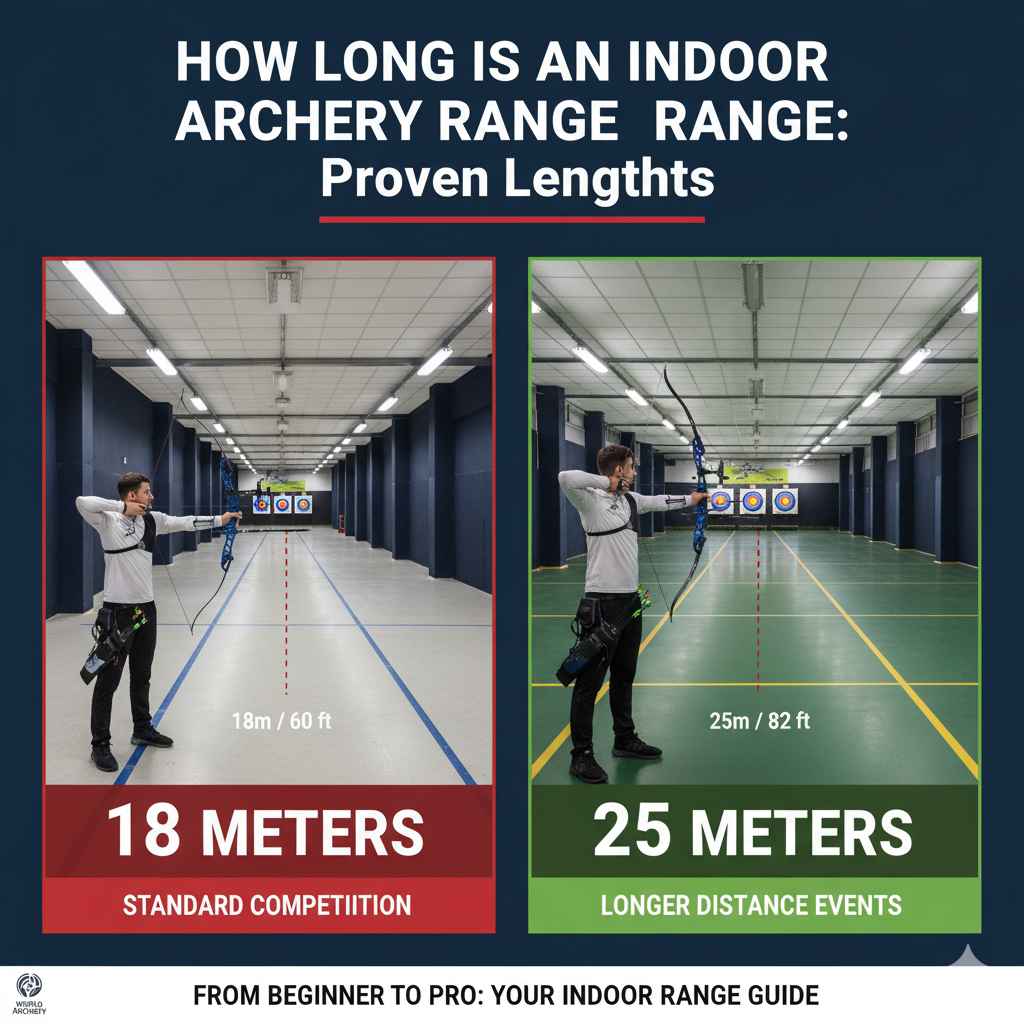
The ideal length for an indoor archery range varies depending on the type of archery and the space available, but common lengths range from 10 yards for recreational shooting to 50 yards or more for competitive target archery. Beginners often start on shorter ranges.
For a closely related bow or archery topic, How Indoor Archery Works gives readers a useful next step.
For a closely related bow or archery topic, Different Form of Archery: Essential gives readers a useful next step.
For a closely related bow or archery topic, How Wide Is an Indoor Archery Lane: The Essential Answer gives readers a useful next step.
Welcome, fellow archers! Ever wondered about the perfect setup for shooting arrows indoors? You’re not alone. Many beginners get a bit fuzzy on the specifics, especially when it comes to the “how long” question for an indoor archery range. It’s a common point of curiosity, and understanding it can really help you enjoy your practice sessions more, whether you’re just starting out or looking to improve your accuracy. Don’t worry, we’ll break down everything you need to know about indoor range lengths in a simple, easy-to-understand way. Let’s get your arrows flying true!
Understanding Indoor Archery Range Lengths: What Beginners Need to Know
As you take your first steps into the exciting world of archery, you’ll quickly discover that different types of shooting require different setups. One of the most fundamental aspects of setting up or visiting an indoor archery range is understanding its length. This isn’t just about aesthetics; the distance between you and your target directly impacts the skills you practice, the equipment you might use, and the overall experience. For beginners, knowing these standard lengths helps in choosing the right facility and understanding practice goals.
Think of it like this: a short range is great for getting a feel for your bow and making sure your form is consistent. A longer range allows you to work on precision and see how slight adjustments affect your shot over greater distances. We’ll explore the proven lengths that make indoor archery ranges effective and enjoyable, ensuring you have the knowledge to practice safely and with purpose.
Why Range Length Matters for Indoor Archery
The distance in an indoor archery range is a crucial factor for several reasons, especially for those just picking up a bow:
- Skill Development: Shorter ranges help build confidence and focus on fundamental form. As you get comfortable, longer distances challenge your accuracy and require better control over your aim and release.
- Equipment Choice: Different bows and arrow types are better suited for specific distances. For instance, lighter draw weight bows are often ideal for closer ranges.
- Safety: A suitable range length ensures arrows have a safe place to land, preventing them from overshooting backstops.
- Practice Variety: Having access to different distances allows for varied practice, mimicking various shooting scenarios and helping you become a more well-rounded archer.
- Competition Standards: If you plan to compete, knowing the standard distances for different archery disciplines is essential for effective training.

Common Indoor Archery Range Lengths for Beginners
For most newcomers to archery, the focus is on learning the basics: stance, grip, draw, anchor, aim, and release. Shorter ranges are perfect for this. They allow you to concentrate on making each shot consistent without the added challenge of judging longer distances.
10-Yard Ranges: The Perfect Starting Point
Many indoor archery facilities, especially those focused on introductory lessons, will have a range that extends to approximately 10 yards (about 9 meters). This distance is fantastic for:
- New Shooters: Getting a feel for drawing the bow and releasing an arrow.
- Equipment Setup: Tuning your bow and ensuring your arrows are flying straight.
- Form Practice: Repetitively practicing proper shooting form without complex aiming adjustments.
- Close-Quarters Familiarity: Building confidence that your arrows are hitting the target consistently.
At 10 yards, even slight imperfections in your form or equipment can be easily identified, making corrections more straightforward. It’s all about building that solid foundation.
15-20 Yard Ranges: Stepping Up the Challenge
Once beginners feel comfortable at 10 yards, the next logical step is often to move back to a 15 or 20-yard range (approximately 13.5 to 18 meters). This slight increase in distance offers a bit more challenge while still being very manageable for newcomers.
At this distance, you’ll start to notice:
- Slight Aiming Adjustments: You begin to understand how your sight (if you’re using one) or your gap shooting (if you’re not) needs to be adjusted.
- Arrow Trajectory: You can observe the natural fall of your arrows more clearly.
- Increased Focus: The longer sight picture requires a bit more focus and steadiness.
Many recreational archery clubs and indoor leagues utilize these distances, especially for beginner or recreational divisions. It’s a great sweet spot for developing accuracy and a consistent feel for your shots.
Indoor Archery Range Lengths for Intermediate and Advanced Archers
As archers progress, their training needs evolve. They might be preparing for specific competitions, trying to improve their scores, or simply seeking to hone their skills over greater distances. This is where longer indoor ranges become essential.
25-30 Yard Ranges: Building Precision
Moving into the 25 to 30-yard range (about 23 to 27 meters) is where many intermediate archers find their stride. This distance is common in:
- Club Shooting: Many local clubs offer facilities that extend to this length.
- Some Tournament Classes: Certain indoor archery tournaments might have ends shot at these distances.
- Advanced Practice: Archers who want to refine their accuracy and develop a more precise aiming technique use these ranges.
At 25-30 yards, understanding windage (even indoors, subtle air currents can play a role) and elevation adjustments becomes more critical. It pushes archers to be more deliberate with every element of their shot.
50 Yard and Beyond: Competitive Target Archery
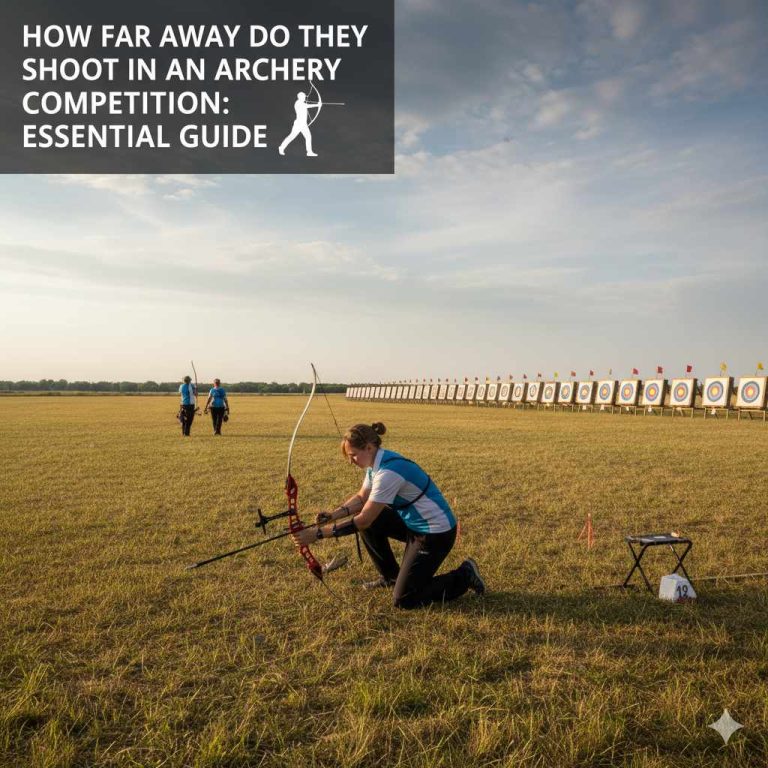
For those aiming for competitive target archery, particularly disciplines like World Archery or FITA-style shooting, longer ranges are non-negotiable. While outdoor ranges are more common for these distances, some larger indoor facilities are equipped for them.
- World Archery Indoor Championships: These events are typically shot at 18 meters (roughly 20 yards), but longer indoor setups are used for training and other competitive formats.
- Olympic Recurve and Compound Archery: While outdoor distances for major competitions are 70 meters, athletes will train over various distances indoors, often including 30, 40, and even 50 yards (45 meters) to simulate specific aspects of their outdoor game or for specific training needs.
- Barebow and Traditional Archery: Disciplines focusing on pure skill without sights or advanced stabilizers often practice at longer distances to test their instinctive aiming and release.
These longer ranges demand a high level of skill, consistent technique, and a deep understanding of your equipment. They are typically found in specialized training facilities or larger sports complexes.
Factors Influencing Indoor Range Length Decisions
When a facility decides how long to make an indoor archery range, several factors come into play:
First and foremost is the intended use. Is it for a beginner’s lesson program, a club for recreational shooters, or a high-performance training center? This will dictate the primary distances needed.
Available Space is obviously a huge constraint. The physical dimensions of the building or allocated area will determine the maximum practical length. A good backstop is crucial, and its depth needs to be considered along the entire length of travel for the arrows.
Budget also plays a role. Building out longer ranges often requires more sophisticated safety measures, ventilation, and target systems, all of which add to the cost.
Finally, local regulations and safety standards must be met. This includes ensuring adequate clear zones, proper ventilation for arrow rest components, and safe distances from spectators.
Safety Considerations for Indoor Ranges
Regardless of the length, safety is paramount. All indoor archery ranges, from the shortest 10-yard setup to the longest 50-yard expanse, must have robust safety protocols. This includes:
- Adequate Backstops: These are critical to stop arrows safely and retrieve them. Materials like dense foam blocks, specialized arrow-stopping curtains, or reinforced earth berms are used. The US Archery Association (USA Archery) provides extensive guidelines on target and backstop safety. You can find useful resources on their member resources page, which often includes facility design and safety checklists.
- Clear Shooting Lines: Designated areas where archers stand must be clearly marked and only accessible when it’s safe to shoot.
- Range Safety Officer (RSO): A trained individual to oversee operations, enforce rules, and manage safety.
- Prohibited Areas: Ensuring no one can walk into the line of fire or behind the targets.
- Arrow Retrieval Procedures: Establishing safe times and methods for retrieving arrows.
Table: Typical Indoor Archery Range Lengths and Their Uses
Here’s a quick overview of common indoor range lengths and what they are best suited for:
| Range Length (Yards) | Range Length (Meters) | Primary Use & Target Archer | Key Benefits |
|---|---|---|---|
| 10 | ~9 | Absolute Beginners, Equipment Tuning, Basic Form Practice | Easy to learn, quick identification of form issues, builds confidence. Accessible. |
| 15 – 20 | ~13.5 – 18 | Beginner Lessons, Recreational Shooting, Indoor Leagues, Early Competition Training | Good balance of challenge and manageability, suitable for most club settings. |
| 25 – 30 | ~23 – 27 | Intermediate Archers, Skill Refinement, Precision Practice, Some Tournament Formats | Develops finer aiming skills, observes arrow trajectory more closely. |
| 40 – 50+ | -45 – 55+ | Advanced/Competitive Archers, Specialized Training (e.g., simulating outdoor conditions), High-Level Practice | Demands high accuracy, tests advanced technique, prepares for longer outdoor distances. |
Choosing the Right Range for Your Archery Goals
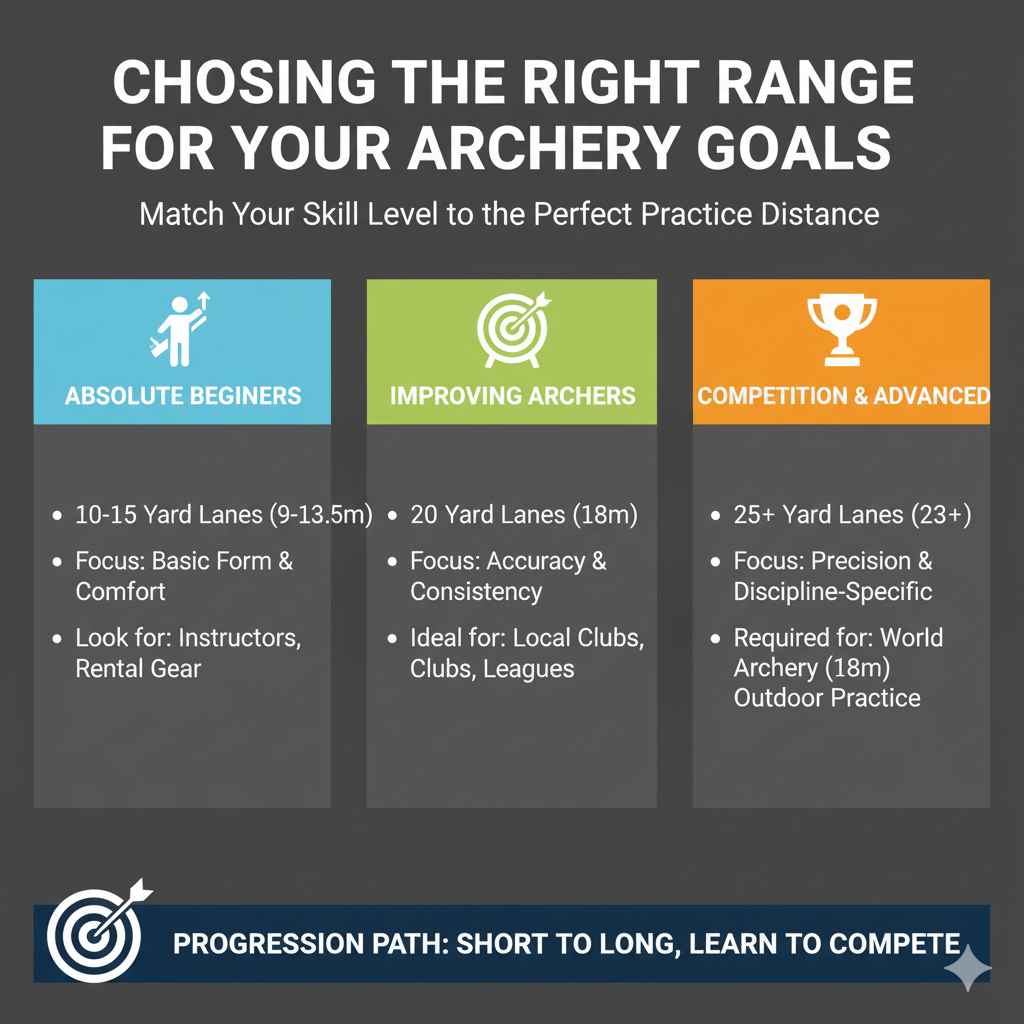
When you’re deciding where to practice, consider your current skill level and what you want to achieve:
For Absolute Beginners: Look for a facility that offers 10-yard or 15-yard lanes with instructors available. Focus on getting comfortable with the bow and learning proper technique.
For those who’ve shot a bit: A 20-yard range is a great place to solidify your form and start working on accuracy. Many local archery shops or clubs have ranges of this length.
For serious improvement or competition: You’ll want access to ranges that are 25 yards and longer. If you’re aiming for specific disciplines like World Archery, ensure the venue offers 18 meters (which is close to 20 yards) with the correct target size.
FAQ: Your Indoor Archery Range Questions Answered
Let’s tackle some frequently asked questions about indoor archery range lengths.
Q1: What is the shortest recommended length for an indoor archery range?
A1: For absolute beginners, 10 yards (about 9 meters) is considered the shortest practical and effective length. This allows them to focus entirely on their shooting form and get comfortable with the equipment safely.
Q2: Is a 20-yard indoor range good for all archery disciplines?
A2: A 20-yard range (approx. 18 meters) is excellent for recreational shooting and many beginner or intermediate indoor archery competitions, especially those using World Archery 18-meter targets. However, for disciplines that primarily shoot much longer distances outdoors, it serves more as a tool for practicing fundamentals and tuning, rather than direct competition simulation.
Q3: How do I know if an indoor range is long enough for my practice needs?
A3: Consider your goals. If you’re working on basic form, 10-20 yards is usually sufficient. If you’re aiming to improve accuracy over distance, 25-30 yards is better. For competitive target archers preparing for outdoors, access to longer training distances, even if not standard competition lengths, is beneficial. Always check with the range or club about their available yardages.
Q4: What kind of targets are used at different indoor range lengths?
A4: At shorter ranges (10-20 yards), larger targets or dots are common to make hitting easier and build confidence. As the range length increases (25+ yards), targets typically become smaller, requiring greater precision. Competitive archery follows specific target face size rules depending on the discipline and distance, governed by organizations like World Archery or USA Archery.
Q5: Can I use my compound bow or recurve bow at any indoor range length?
A5: Yes, generally you can use either a compound or recurve bow at most indoor range lengths. However, at shorter distances, powerful compound bows might require specialized arrow rests or target butts that can safely stop the arrows without excessive speed. For longer distances, the bow’s power and your ability to control it become more critical. Always check the range’s specific rules and equipment recommendations.
Q6: What is the typical length of an indoor archery range at a major sporting event?
A6: For major indoor events like the World Archery Indoor Championships, the standard distance is 18 meters, which is approximately 20 yards. However, larger, more versatile indoor archery facilities might offer longer lanes up to 50 yards or more for training and other competitive events.
Q7: Are there safety concerns specific to longer versus shorter indoor ranges?
A7: Yes. Shorter ranges might see more arrows hitting the target face unevenly due to less time for correction. Longer ranges demand more precision; any flaw in form is amplified, and arrow trajectory over a longer distance requires more careful aiming. Both lengths require a robust backstop and strict adherence to safety rules, but on longer ranges, the potential impact of an errant shot is increased.
Conclusion: Finding Your Perfect Indoor Shooting Distance
As you can see, the length of an indoor archery range isn’t a one-size-fits-all situation. It’s a carefully chosen aspect that directly supports the learning process and shooting goals of every archer, from their very first arrow to their most challenging competition shot.
For beginners, starting at a comfortable 10 or 15 yards is your launchpad to success. It’s where you build the confidence and form that will serve you for years to come. As your skills grow, you can gradually move back, exploring the nuances of accuracy at 20, 25, and even 30 yards. And for those with competitive aspirations, longer ranges in specialized facilities are where you’ll truly hone your precision and prepare for the demands of the sport.
No matter where you are on your archery journey, understanding these common range lengths helps you find the right place to practice, set realistic goals, and most importantly, enjoy the rewarding experience of shooting a bow and arrow. So, grab your bow, head to a range that suits your level, and let those arrows fly with confidence!