Is Olympic Archery Compound: A Critical Mistake
No, Olympic archery does not use compound bows. The official bow is the recurve bow, a more traditional style that relies entirely on the archer’s strength and skill to draw and hold. This choice honors archery’s historical roots and focuses on pure form, precision, and the athlete’s ability.
Have you ever watched the Olympics and felt inspired by the archers? They stand so still, aim with intense focus, and send arrows flying perfectly to the target. It’s amazing to see! This often sparks a desire to try archery yourself. But it can also lead to a common point of confusion. You might walk into an archery shop and see bows with wheels and cables that look very different from what you saw on TV.
This is a question I get all the time from new archers. It’s easy to assume all modern bows are the same, but they aren’t. Don’t worry, you’re not alone in wondering! In this guide, I’ll walk you through exactly what kind of bow is used in the Olympics, why it’s chosen, and how it compares to other popular bows. Let’s clear up the confusion and get you on the right path for your archery journey.
Why the Recurve Bow Reigns Supreme in the Olympics
The Olympic Games have a deep respect for history and tradition. The goal is to create a level playing field where an athlete’s physical skill and mental strength are the ultimate tests. When it comes to archery, the recurve bow perfectly embodies this spirit. It is a direct evolution of the bows used for thousands of years in hunting and warfare, refined for modern accuracy but still fundamentally simple.
Unlike a compound bow, which uses a system of cams (wheels) and cables to make it easier to hold at full draw, the recurve bow offers no such help. The archer must pull and hold the entire draw weight using only their back and arm muscles. This makes Olympic archery an incredible display of strength, stability, and control. The International Olympic Committee and World Archery, the sport’s governing body, choose the recurve bow to keep the focus purely on the archer’s ability.
Think of it this way: the recurve bow ensures that the competition is between the athletes, not their equipment. Every archer faces the same physical challenge of mastering their strength and steadying their aim under immense pressure. This purity is what makes an Olympic gold medal in archery so prestigious. It’s a true testament to human skill and dedication.

Recurve vs. Compound: A Beginner’s Guide to the Key Differences
To really understand why the Olympic choice matters, let’s break down the two most popular types of bows you’ll encounter: the recurve and the compound. They might both shoot arrows, but they are very different machines. Understanding these differences will help you decide which path in archery is right for you.
The Olympic Recurve Bow: The Archer’s Bow
The recurve bow is named for its distinctive shape. The limbs (the top and bottom parts of the bow) curve away from the archer at the tips. When the string is drawn, these curves store more energy than a straight-limbed bow, resulting in a faster and more powerful shot. It’s an elegant and timeless design.
When you shoot a recurve, the effort you feel increases the farther you pull the string back. If the bow has a 40-pound draw weight, you are holding all 40 pounds at full draw. This requires significant strength and conditioning. Modern Olympic-style recurve bows are “takedown” models, meaning the limbs can be detached from the central handle, or “riser,” for easy transport and customization.
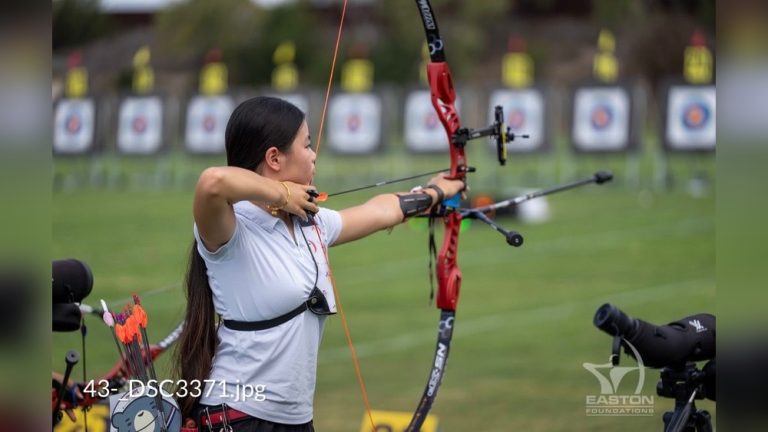
Key parts of an Olympic recurve setup include:
- Riser: The handle and central part of the bow where everything else attaches.
- Limbs: The upper and lower arms that store the energy.
- String: Connects the two limb tips and propels the arrow.
- Arrow Rest: A small perch that supports the arrow before it’s fired.
- Sight: An adjustable aiming device with a pin or reticle to help with precision.
- Stabilizers: Long rods that attach to the riser to absorb vibration and help the archer hold steady.
- Clicker: A small device that makes an audible “click” to let the archer know they have reached their ideal draw length, ensuring consistency from shot to shot.
The Compound Bow: The Power of Technology
The compound bow is a modern marvel of engineering, invented in the 1960s. Its most noticeable features are the wheels, or cams, at the top and bottom of the limbs. These cams are connected by a system of cables and a string. This system is the compound bow’s secret weapon.
As you draw a compound bow, the cams rotate, which makes the draw weight feel heaviest at the beginning and middle of the pull. As you approach full draw, the cams “let off” a significant percentage of the weight—often 60% to 90%. This means a compound bow with a 60-pound peak draw weight might only require you to hold 12 pounds at full draw. This “let-off” makes it much easier to hold steady and aim carefully.
Key parts of a compound bow setup include:
- Riser: Usually shorter and more rigid than a recurve riser.
- Limbs: Typically shorter and stiffer, moving less than recurve limbs.
- Cams: The wheels that provide the mechanical advantage and let-off.
- String & Cables: The system that makes the cams work together.
- Peep Sight: A small ring installed in the bowstring that you look through, similar to the rear sight on a rifle.
- D-Loop: A small cord tied onto the string where you attach a mechanical release aid.
- Release Aid: A handheld trigger device used to pull and release the string, which provides a much cleaner release than fingers.
To make this even clearer, here is a simple table comparing the two bows side-by-side.
| Feature | Olympic Recurve Bow | Compound Bow |
|---|---|---|
| Appearance | Graceful, simple curves. Long and elegant. | Complex, with wheels (cams), cables, and a more mechanical look. |
| How It Works | Archer draws and holds the full weight of the bow. | Cams provide a mechanical advantage, reducing the holding weight. |
| Holding at Full Draw | Requires holding 100% of the peak draw weight. Very physically demanding. | Features “let-off,” reducing holding weight by 60-90%. Much easier to hold. |
| Sighting System | A single, adjustable sight pin. No magnification. | Often uses a peep sight in the string and a magnified scope-style sight. |
| Firing the Arrow | Released directly from the fingers (using a finger tab for protection). | Fired using a mechanical release aid for a perfectly consistent release. |
| Speed & Power | Fast and powerful, but generally slower than a compound bow of the same peak weight. | Extremely fast and powerful, generating more energy. |
| Skill Required | Requires immense physical strength, control, and flawless form. Often called “purer.” | Requires precision and consistency, but technology helps manage the physical load. |
| Olympic Status | The only style of bow permitted in the Olympic Games. | Not permitted in the Olympic Games, but used in the Paralympic Games and other world championships. |
So, Where Can You See Compound Bows in Competition?
Just because compound bows aren’t in the Olympics doesn’t mean they aren’t for serious competitors. In fact, compound archery is an incredibly popular and competitive sport with its own prestigious tournaments around the globe. Events like the World Archery Championships, the World Cup circuit, and the famous Vegas Shoot feature some of the most accurate shooters on the planet, all using compound bows.
In these competitions, accuracy is pushed to the absolute limit. Archers often shoot at smaller targets from long distances, and a perfect score is common. The technology of the compound bow allows for a level of precision that is nearly impossible to replicate with a recurve. It is a different discipline, one that celebrates consistency, technical mastery, and nerves of steel.
Many people are also surprised to learn that compound bows are featured in the Paralympic Games. This allows athletes with certain physical disabilities to compete at the highest level, as the let-off feature can make holding the bow more manageable.
Which Bow is Right for You as a Beginner?
Now for the big question: should you start with a recurve or a compound bow? There is no wrong answer here! The best bow for you depends entirely on your personal goals and what you find most enjoyable. This isn’t about which bow is “better,” but which bow is a better fit for you.
Choose a Recurve Bow if:
- You are inspired by the elegance and tradition of Olympic archery.
- You want to build a strong foundation of archery fundamentals from the ground up.
- You enjoy a physical challenge and want to develop your strength and control.
- You love the idea of a simple connection between you, the bow, and the arrow.
- Your ultimate goal is to compete in Olympic-style tournaments.
Choose a Compound Bow if:
- You are interested in achieving the highest level of accuracy as quickly as possible.
- You plan on bowhunting (where it is legal and you are properly trained).
- You have physical limitations that might make holding a recurve bow at full draw difficult.
- You enjoy technology, gadgets, and fine-tuning your equipment.
- You want to shoot with maximum power and speed.
Here is another quick table to help you weigh the pros and cons as a complete beginner.
| Bow Type | Pros for Beginners | Cons for Beginners |
|---|---|---|
| Recurve Bow | Builds excellent fundamental form. Generally less expensive to start. Lighter to carry. Simple to understand and maintain. | Less forgiving of mistakes in form. Physically more demanding to shoot for long periods. Can be harder to become accurate with quickly. |
| Compound Bow | Much easier to hold at full draw. Easier to be accurate with sooner. Technology helps compensate for minor errors. Highly adjustable. | More expensive initial investment. More complex, with more parts that can require tuning. Heavier and bulkier. |
Getting Started: Your First Steps into Archery
Feeling excited and ready to shoot your first arrow? That’s fantastic! The most important thing you can do now is start the right way—safely and with good guidance. Rushing out to buy equipment without any experience is a common mistake. Here is a simple, step-by-step plan to get you started on your archery adventure.
- Find a Local Club or Range: The absolute best first step is to find an archery club or range near you. Trained coaches can provide a safe environment and teach you the basics correctly from day one. A great resource is the USA Archery Club Finder, which can help you locate certified instructors in your area.
- Try Before You Buy: Nearly all clubs and ranges offer introductory lessons or beginner courses that include rental equipment. This is a golden opportunity! You can try both recurve and compound bows to see which one feels better to you, all without spending a dime on your own gear.
- Learn the Safety Rules: Archery is an incredibly safe sport when a few simple rules are followed. Your coach will teach you these, but the most important ones are to only point a bow in a safe direction, only nock an arrow when you are at the shooting line, and never, ever “dry-fire” a bow (releasing the string without an arrow), as this can damage the bow and cause injury.
- Focus on Form, Not Gear: A skilled archer with a basic bow will always outperform a beginner with expensive equipment. In the beginning, your entire focus should be on learning proper shooting form. A good stance, grip, anchor point, and release are the building blocks of accuracy. Your coach is your best guide here.
- Listen to Your Body: Archery uses muscles in your back, shoulders, and core that you may not use regularly. It’s normal to be a little sore at first. Start with a low draw weight bow, take breaks, and don’t overdo it. Building your “archery muscles” takes time.

Frequently Asked Questions (FAQ)
Here are answers to some of the most common questions I hear from people just starting out.
Is a recurve bow harder to shoot than a compound bow?
In general, yes. A recurve bow is less forgiving of mistakes and requires more physical strength to hold steady. This is why building good form is so critical. However, many people find this challenge to be the most rewarding part of shooting a recurve.
Can you hunt with an Olympic recurve bow?
While people do hunt with recurve bows (a style often called “traditional archery”), an Olympic-style setup with sights and long stabilizers is not practical for most hunting situations. Hunting bows are typically shorter, more rugged, and do not have the same accessories.
Why do Olympic archers use all those long rods (stabilizers)?
Those rods are called stabilizers. Their main purpose is to absorb vibration when the arrow is released, which makes the shot quieter and more comfortable. They also add weight to the bow, which helps the archer hold it much steadier, especially in windy conditions. The weight distribution helps the bow resist twisting during the shot, leading to better accuracy.
What is the draw weight of an Olympic bow?
Olympic male archers typically shoot bows with draw weights between 45 and 55 pounds. Female archers usually shoot between 35 and 45 pounds. They train for years to be able to handle this weight with perfect control for hundreds of shots in a day.
Are compound bows allowed in the Paralympics?
Yes! The Paralympic Games feature both recurve and compound bow categories, allowing a wider range of athletes to compete at the highest level of the sport.
How far do Olympic archers shoot?
Olympic archers shoot at a target that is 70 meters (about 76.5 yards) away. The target face is 122 centimeters in diameter, and the center 10-ring is only 12.2 centimeters (about 4.8 inches) wide—roughly the size of a CD!
Do I need a sight to learn archery?
Not necessarily. Many people learn to shoot “instinctively” or “barebow,” which means without a sight. This is a very rewarding way to shoot and is a competitive discipline in itself. However, if your goal is Olympic-style accuracy, you will want to learn to use a sight.
Conclusion: Your Archery Journey Begins Here
So, the next time you watch the Olympic Games, you’ll know exactly what you’re seeing: incredible athletes using recurve bows in a pure display of strength, focus, and skill. You now understand that the question “is Olympic archery compound” has a clear answer, and you know why that distinction is so important to the spirit of the sport.
More importantly, you know that the world of archery is big enough for everyone. Whether you are drawn to the timeless grace of the recurve or the modern precision of the compound, there is a bow and a shooting style waiting for you. Both paths offer a lifetime of challenge, reward, and fun.
Don’t let the equipment confuse you. The most important step is the first one. Find a local club, take a lesson, and feel the unique satisfaction of sending your first arrow toward the target. Your adventure in this amazing sport is just beginning. Welcome to the world of archery!